University of Memphis: Premier Research & Education Institution
Discover University of Memphis: A leading public research university excelling in academics, research, and student success.

University of Memphis: A Comprehensive Guide to Academic Excellence and Research Innovation
The University of Memphis stands as one of Tennessee’s most prominent public research institutions, serving as a beacon of academic excellence and innovation in the Mid-South region. Founded in 1912 as the West Tennessee State Normal School, the university has evolved into a comprehensive, internationally recognized research institution dedicated to preparing students for success in an increasingly complex and diverse global environment. With an enrollment of 19,652 students for the Fall 2025 semester and a workforce of approximately 2,500 employees, including more than 1,000 full-time faculty members, the University of Memphis represents a significant educational and economic force in Memphis and the surrounding region.
Institutional Overview and Mission
The University of Memphis operates with a clear vision to become a nationally recognized public research university that produces well-rounded, successful graduates and cutting-edge research for the enrichment of society. The institution is classified as “Carnegie R1” or “Doctoral: Very High Research Activity and Community Engaged” per the Carnegie Classification for Institutions of Higher Learning, reflecting its commitment to advanced research and community engagement. This classification underscores the university’s dedication to combining rigorous academic instruction with meaningful research contributions that benefit communities both locally and globally.
The university’s core values—student success, service, innovation, diversity and inclusion, collaboration, and accountability—guide every aspect of institutional decision-making and resource allocation. These values are not merely aspirational statements but are actively embedded in campus policies, academic programs, and campus culture. The University of Memphis is committed to creating an inclusive environment that respects all individuals, provides equal opportunities for excellence, and maintains the highest standards of academic and professional conduct.
Academic Structure and Degree Programs
The University of Memphis operates through 13 colleges and schools, offering more than 180 academic degree programs at the undergraduate, master’s, doctoral, and professional levels. This extensive academic portfolio enables the university to serve diverse student interests and career aspirations while maintaining rigorous academic standards across all disciplines.
Colleges and Schools
The institution’s major academic divisions include:
- College of Arts and Sciences
- Fogelman College of Business and Economics
- College of Communication and Fine Arts
- College of Education
- Herff College of Engineering
- Loewenberg College of Nursing
- Kemmons Wilson School of Hospitality and Resort Management
- College of Professional and Liberal Studies
- School of Communication Sciences and Disorders
- Cecil C. Humphreys School of Law
- School of Public Health
- Rudi E. Scheidt School of Music
- Helen Hardin Honors College
- Graduate School
Degree Offerings
The University of Memphis awards approximately 4,500 degrees annually across multiple levels of study:
- 17 bachelor’s degree programs in more than 250 areas of study
- Master’s degrees in 54 subjects
- Doctoral degrees in 26 disciplines
- Education Specialist degree in 2 areas
- Juris Doctor (law degree)
- Graduate certificate programs in 44 areas of study
Faculty members at the University of Memphis are exceptionally qualified, with approximately 80 percent of full-time faculty holding the highest possible degree in their respective fields. This commitment to faculty excellence translates directly into superior instruction and mentorship for students across all academic levels. Notably, talented and innovative faculty have developed 31 undergraduate and 38 graduate programs in various disciplines that are ranked in the top 25 nationally, demonstrating the institution’s competitive academic standing.
Research Excellence and Innovation Centers
The University of Memphis is home to nationally designated centers of excellence that advance knowledge and address pressing societal challenges. The institution maintains several research facilities and institutes that contribute significantly to regional and national research efforts:
- Cybersecurity research and education centers
- Transportation workforce development initiatives
- Mobile health data research programs
- Five Tennessee centers of research excellence
- Center for Earthquake Research and Information (CERI)
- FedEx Institute of Technology
- Advanced Distributed Learning Workforce Co-Lab
- Institute of Egyptian Art and Archaeology
The FedEx Institute of Technology, located in the northwestern area of the main campus, serves as a major research contributor in supply chain management, nanotechnology, robotics, and intelligent systems. This institute exemplifies the university’s commitment to applied research that has tangible benefits for industry and society. The Institute of Intelligent Systems is designed to bring together research and training in cognitive science, complex dynamical systems, artificial intelligence, and massively parallel computing, drawing expertise from cognitive psychology, computer science, philosophy of mind, neuroscience, linguistics, and mathematics.
Campus Facilities and Student Resources
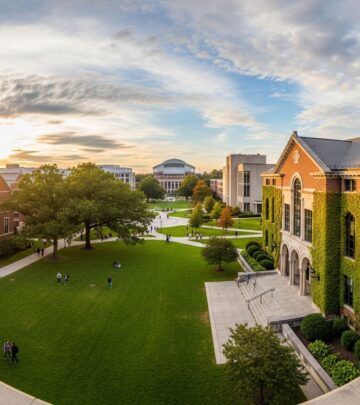
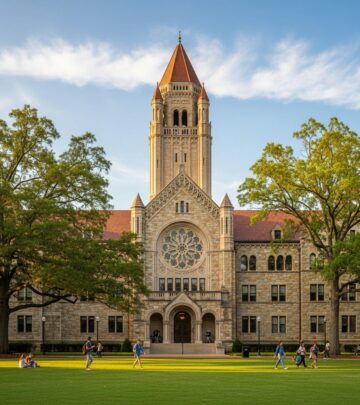
The University of Memphis main campus comprises a mix of historic and modern facilities that support both academic and student life activities. The original campus center features buildings erected in the early 20th century, including Scates Hall, Manning Hall, Mynders Hall, and the Administration Building, which stretch from Patterson Street south to Walker Avenue. These historic structures provide continuity with the institution’s past while surrounding renovated areas including Alumni Mall and Student Plaza.
The university also maintains branch campuses, including the former Lambuth University campus in Jackson, Tennessee, which now operates as a branch campus of the University of Memphis, extending educational access throughout the region. Modern facilities such as the Fogelman Executive Center serve as a major conference venue for regional executives and accommodate specialized academic programs.
Enrollment and Workforce Composition
For the Fall 2025 semester, the University of Memphis reported a total enrollment of 19,652 students, representing a diverse population committed to academic achievement and personal development. The institution demonstrated a 4.3% increase in freshman enrollment for the fall 2025 semester, indicating growing institutional reputation and appeal to prospective students. This enrollment figure positions the University of Memphis among the region’s largest institutions of higher education.
The university employs approximately 2,500 individuals, with more than 1,000 serving as full-time faculty members. This substantial workforce enables the institution to maintain small class sizes in introductory courses, provide individualized student advising, and support extensive research initiatives across multiple disciplines. The diversity of the workforce reflects the institution’s commitment to creating an inclusive environment that values different perspectives and experiences.
Financial Resources and Operational Budget
The University of Memphis operates with an annual budget of $478 million, reflecting its comprehensive mission and extensive operational scope. This substantial budget supports academic programs across multiple colleges and schools, maintains research facilities and centers of excellence, provides student support services, and invests in campus infrastructure improvements. The university’s financial stability enables long-term strategic planning and investment in emerging academic areas and research initiatives.
Student Success and Outcomes
The University of Memphis demonstrates strong commitment to student success through comprehensive support services and innovative academic programs. According to student feedback, 82% of 145 surveyed students reported that the University of Memphis boosted their career prospects, and 85% of students recommend the institution to others. This high satisfaction rate reflects the university’s effectiveness in preparing students for successful careers and meaningful contributions to society.
The institution offers various support mechanisms for student academic success, including tutoring services, writing centers, academic advising, and peer mentoring programs. The Helen Hardin Honors College provides enriched educational experiences for high-achieving students interested in advanced coursework and research opportunities. These comprehensive support structures ensure that students across the ability spectrum receive the guidance and resources necessary to achieve their academic and personal goals.
Diversity, Inclusion, and Community Engagement
The University of Memphis is firmly committed to creating an inclusive campus environment that reflects cultural competency, societal dynamics, and social opportunities. The institution actively works to support an inclusive atmosphere where every individual is respected, included, and given the opportunity to excel. This commitment extends beyond campus boundaries to encompass meaningful engagement with local and regional communities through service learning, community partnerships, and collaborative research initiatives.
The university’s service mission emphasizes that its purpose is to benefit students and society through knowledge and effort, fostering research and innovation that address real-world challenges. Through partnerships with governmental agencies, nonprofit organizations, and private sector entities, the University of Memphis leverages its intellectual and physical resources to contribute meaningfully to regional development and social progress.
Academic Calendar and Important Dates
The University of Memphis operates on a traditional academic calendar with clearly defined academic periods and breaks to support student learning and well-being. For the 2025-2026 academic year, Fall 2025 classes begin on August 25, with Fall Break scheduled for October 11-14 and Thanksgiving Break from November 26-30. Final examinations for the fall semester occur December 5-11. Spring 2026 classes commence on January 20, with Spring Break providing a midyear study and relaxation period.
Leadership and Institutional Governance
Dr. Bill Hardgrave serves as President of the University of Memphis, providing visionary leadership and strategic direction for the institution. Under presidential leadership, the university maintains focus on its core mission while adapting to evolving educational and research landscape demands. The institution operates through clearly defined administrative divisions including Business and Finance, Development, External Relations, Information Technology Services, Athletics, Academic Affairs, Student Academic Success, and Research and Innovation.
Historical Development and Regional Significance
The University of Memphis has experienced remarkable growth parallel to Memphis’s transformation from a town oriented toward rural economy and culture in 1900 to a large urban and commercial center by mid-century. The institution was founded in 1912 as the West Tennessee State Normal School, originally focused on training teachers for the region’s public schools. As regional and metropolitan requirements for more highly trained university graduates increased, the University of Memphis expanded its offerings across arts and sciences, business, fine arts, education, engineering, technology, law, and numerous special professional fields.
Today, the university stands as one of Tennessee’s two comprehensive universities, serving as the state’s primary comprehensive university within the State University and Community College System of Tennessee. This designation reflects the institution’s broad academic mission and its role in serving diverse student populations and community needs throughout the state.
Accreditation and Quality Assurance
The University of Memphis maintains rigorous accreditation standards and quality assurance mechanisms to ensure that academic programs meet established excellence benchmarks. The institution holds appropriate regional and programmatic accreditations that validate the quality of instruction, research support, and student services. These accreditations provide assurance to students, employers, and other stakeholders that University of Memphis credentials represent meaningful academic achievement and preparation for professional practice.
Frequently Asked Questions
Q: What is the current enrollment at the University of Memphis?
A: For Fall 2025, the University of Memphis reports a total enrollment of 19,652 students, representing a diverse population pursuing degrees across multiple academic disciplines and levels.
Q: How many degree programs does the University of Memphis offer?
A: The University of Memphis offers more than 180 academic degree programs at the undergraduate, master’s, doctoral, and professional levels through 13 colleges and schools.
Q: What is the Carnegie Classification of the University of Memphis?
A: The University of Memphis is classified as “Carnegie R1” or “Doctoral: Very High Research Activity and Community Engaged,” reflecting its commitment to advanced research and community service.
Q: What research centers are located at the University of Memphis?
A: The university is home to nationally designated centers including cybersecurity research facilities, transportation workforce development initiatives, the FedEx Institute of Technology, and the Institute of Intelligent Systems, among others.
Q: How many faculty members does the University of Memphis employ?
A: The University of Memphis employs more than 1,000 full-time faculty members, with approximately 80 percent holding the highest possible degree in their respective fields.
Q: What are the core values of the University of Memphis?
A: The institution’s core values include student success, service, innovation, diversity and inclusion, collaboration, and accountability, guiding all institutional decisions and campus culture.
References
- About UofM – University of Memphis — University of Memphis. 2025. https://catalog.memphis.edu/content.php?catoid=30&navoid=1750
- UofM Facts at a Glance — University of Memphis. 2025. https://www.memphis.edu/about/facts.php
- University of Memphis — Wikipedia. 2025. https://en.wikipedia.org/wiki/University_of_Memphis
- Academic Year 2025-2026 — University of Memphis Registrar. 2025. https://www.memphis.edu/registrar/calendars/academic/ay2526.php
- University of Memphis Reviews — OnlineU. 2025. https://www.onlineu.com/online-reviews/university-of-memphis
- University of Memphis sees increased freshman enrollment, overall enrollment declines — Commercial Appeal. 2025-09-10. https://www.commercialappeal.com/story/news/education/2025/09/10/university-of-memphis-enrollment/86073392007/
Similar Articles








Read full bio of medha deb