Unemployment: Definition, Types, and Economic Impact
Understanding unemployment: causes, types, measurement, and effects on the economy and individuals.
What Is Unemployment?
Unemployment refers to the state of being without a job while actively seeking employment. It represents a significant economic indicator that measures the percentage of the labor force that is unable to find work during a specific period. The unemployed are individuals who are willing and able to work but cannot find suitable employment opportunities. This distinction is crucial because not all people without jobs are classified as unemployed—only those actively seeking work are included in unemployment statistics.
Unemployment is a fundamental economic metric that affects individuals, families, and entire economies. When unemployment rates rise, it often indicates economic weakness, reduced consumer spending, and potential social challenges. Conversely, low unemployment typically signals a healthy, growing economy with abundant job opportunities.
Understanding the Labor Force
The labor force comprises all individuals aged 16 and older who are either employed or actively seeking employment. This definition excludes several groups of people, even if they don’t have jobs:
- Students not seeking work
- Retirees
- Individuals with disabilities not seeking employment
- Stay-at-home parents or caregivers
- People who have stopped looking for work (discouraged workers)
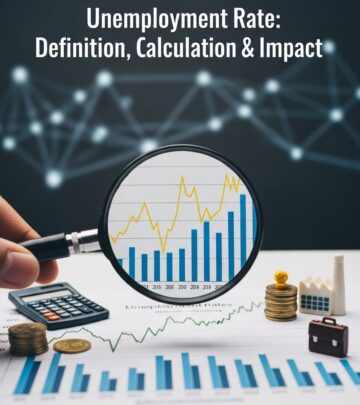
The unemployment rate is calculated by dividing the number of unemployed individuals by the total labor force and multiplying by 100. This percentage provides policymakers, investors, and economists with crucial information about the health of the job market.
Types of Unemployment
Economists have identified several distinct categories of unemployment, each with different causes and implications:
Frictional Unemployment
Frictional unemployment occurs when workers are between jobs or searching for their first position. This type of unemployment is generally temporary and reflects the natural transition period in the job market. For example, a software developer leaving one company to find a better opportunity at another firm experiences frictional unemployment during the search period. This type of unemployment is considered normal and healthy in any economy, as it allows workers to find positions that best match their skills and interests.
Structural Unemployment
Structural unemployment arises from a mismatch between worker skills and job market requirements. This occurs when industries decline, technology changes, or workers lack necessary qualifications for available positions. For instance, if a manufacturing plant closes and workers lack the training for tech industry jobs, they face structural unemployment. This type is more persistent and challenging to resolve than frictional unemployment, often requiring retraining or relocation.
Cyclical Unemployment
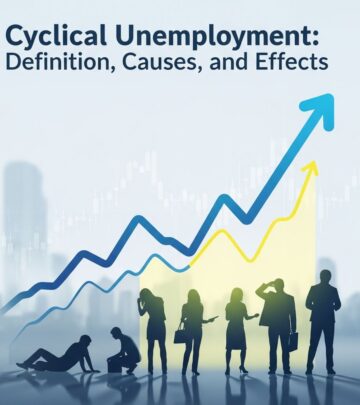
Cyclical unemployment is directly linked to economic cycles and occurs during recessions when overall demand for goods and services declines. As businesses reduce production and revenue, they lay off workers. During economic expansions, cyclical unemployment typically decreases as companies rehire and expand operations. This type of unemployment is most responsive to government policy interventions and economic stimulus measures.
Seasonal Unemployment
Seasonal unemployment occurs in industries with predictable fluctuations throughout the year. Agricultural workers, retail employees, and holiday-related positions experience periods of layoff and rehiring based on seasonal demand. While temporary, seasonal unemployment affects specific regions and industries disproportionately during off-seasons.
How Unemployment Is Measured
Several organizations and agencies measure unemployment using different methodologies:
The U.S. Bureau of Labor Statistics (BLS)
In the United States, the Bureau of Labor Statistics conducts the Current Population Survey (CPS), a monthly survey of approximately 60,000 households. The BLS calculates the official unemployment rate, reported as “U-3,” which includes individuals without jobs who actively sought employment during the previous four weeks. The agency also publishes supplemental unemployment rates (U-1 through U-6) that provide additional perspectives on labor market conditions.
The BLS defines unemployed persons as those aged 16 and older who are not employed, have actively looked for work within the last four weeks, and are currently available to accept employment. This precise definition ensures consistency and comparability across time periods and regions.
International Measurements
The International Labour Organization (ILO) provides standardized unemployment definitions used globally. Most developed nations follow similar frameworks, though specific definitions may vary slightly to reflect local labor market conditions and policies.
Natural Rate of Unemployment
Economists recognize the concept of the “natural rate of unemployment,” also called the Non-Accelerating Inflation Rate of Unemployment (NAIRU). This represents the theoretical lowest unemployment rate achievable without triggering inflation. Typically, the natural rate falls between 4% and 5% in developed economies, accounting for frictional and structural unemployment that cannot be eliminated even in the strongest job markets. When unemployment falls below this rate, inflation pressures typically increase.
Causes and Consequences of Unemployment
Primary Causes
Unemployment results from multiple interconnected factors:
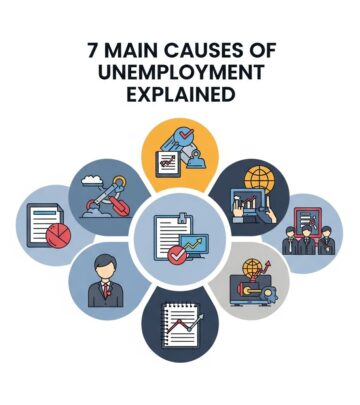
- Economic downturns and recessions: Reduced consumer demand forces businesses to cut costs through layoffs
- Technological advancement: Automation replaces certain job categories, creating structural unemployment
- Globalization: Offshoring and increased international competition can reduce domestic employment
- Skills mismatch: Job requirements evolve faster than workers can acquire new skills
- Business failures: Company closures eliminate positions permanently
- Seasonal factors: Predictable employment fluctuations in certain industries
Economic Consequences
High unemployment rates create significant economic ripple effects. When unemployment rises, consumer spending typically decreases, reducing business revenues and further perpetuating job losses. Tax revenues decline while government spending on unemployment benefits increases, straining public budgets. Additionally, high unemployment can lead to increased poverty rates, reduced economic growth, and lower gross domestic product (GDP) expansion.
Social and Personal Consequences
Beyond economic metrics, unemployment profoundly impacts individuals and communities. Job loss causes psychological stress, anxiety, and depression. Extended unemployment erodes professional skills and can create gaps in employment history that complicate future job searches. Communities with persistently high unemployment often experience increased crime rates, substance abuse, and deteriorating social cohesion.
Unemployment Benefits and Government Response
Most developed nations provide unemployment insurance or benefits to workers who lose jobs through no fault of their own. In the United States, the system combines federal and state programs, providing temporary income support while workers search for new employment. These programs serve dual purposes: providing financial assistance to unemployed workers and maintaining consumer spending during economic downturns.
Government responses to unemployment typically include fiscal stimulus packages, tax incentives for business hiring, job training programs, and monetary policy adjustments. During severe recessions, policymakers may extend unemployment benefit periods or implement targeted employment initiatives.
Unemployment and Inflation: The Phillips Curve
Economists have long observed an inverse relationship between unemployment and inflation, formalized in the Phillips Curve. This concept suggests that lower unemployment rates correlate with higher inflation, as tight labor markets increase wage pressures. Conversely, higher unemployment rates typically coincide with lower inflation as wage growth moderates. Understanding this relationship helps policymakers balance competing objectives of job creation and price stability.
Current Unemployment Trends
Recent labor market dynamics have demonstrated significant shifts. Following the 2008 financial crisis, unemployment gradually declined through the 2010s, reaching historic lows before the 2020 pandemic-induced recession. The subsequent recovery saw rapid job market improvements, followed by ongoing adjustments as economic conditions evolved. Supply chain disruptions, demographic changes, and evolving worker preferences have created unique labor market dynamics in the current period.
Frequently Asked Questions (FAQs)
Q: What is the difference between unemployment and underemployment?
A: Unemployment refers to being without a job while actively seeking work. Underemployment occurs when individuals work part-time involuntarily or in positions below their skill level. An underemployed person is technically employed but not working at full capacity or earning potential.
Q: How long can someone receive unemployment benefits?
A: In the United States, regular unemployment benefits typically last 26 weeks, though this varies by state. During economic downturns, extended benefits may be available. Duration depends on individual circumstances, state regulations, and federal policy decisions.
Q: Why do economists care about the unemployment rate?
A: The unemployment rate is a crucial economic indicator reflecting labor market health. It influences Federal Reserve policy decisions, government spending, and business investment. Rising unemployment often precedes or accompanies recessions, making it vital for economic forecasting.
Q: Can unemployment ever reach zero percent?
A: No, unemployment cannot realistically reach zero due to frictional unemployment (workers transitioning between jobs) and structural unemployment (skills mismatches). Economists view a 4-5% unemployment rate as representing “full employment” in modern economies.
Q: How does education level affect unemployment risk?
A: Generally, workers with higher education levels experience lower unemployment rates. Advanced degrees and specialized skills provide competitive advantages in job markets and better protection during economic downturns compared to workers with only high school education.
Q: What are “discouraged workers” in unemployment statistics?
A: Discouraged workers are individuals who have stopped actively seeking employment due to repeated rejection or lack of suitable opportunities. They aren’t counted in official unemployment statistics but represent genuine labor market slack and underutilization of human capital.
References
- The Employment Situation — U.S. Bureau of Labor Statistics. 2025. https://www.bls.gov/news.release/empsit.nr0.htm
- Labor Force Statistics from the Current Population Survey — U.S. Bureau of Labor Statistics. 2025. https://www.bls.gov/cps/
- Key Indicators of the Labour Market (KILM) — International Labour Organization. 2024. https://www.ilo.org/global/statistics-and-databases/statistics-overview-and-topics/lang–en/index.htm
- Unemployment, Inflation, and Business Cycles — Federal Reserve Board of Governors. 2024. https://www.federalreserve.gov/econres/notes/
- The Economics of Unemployment Benefits — National Bureau of Economic Research. 2023-2025. https://www.nber.org/
Similar Articles








Read full bio of medha deb