Understanding Variable-Rate Home Loans
Explore how adjustable-rate mortgages work and which option suits your needs best.

When shopping for a home loan, borrowers encounter numerous options designed to fit different financial situations and long-term goals. Among the most discussed alternatives to traditional fixed-rate mortgages are adjustable-rate mortgages (ARMs), which feature interest rates that fluctuate based on market conditions. These loans present both opportunities and challenges, making it essential for prospective homeowners to understand how they operate, what variations exist, and whether they align with their circumstances.
The Mechanics Behind Variable-Rate Mortgages
An adjustable-rate mortgage fundamentally differs from a fixed-rate loan in one critical way: the interest rate is not permanently locked at the time of borrowing. Instead, ARMs feature a dual-phase structure that shapes the entire borrowing experience.
During the initial phase, borrowers enjoy a fixed-rate period where the interest rate remains constant and predictable. This introductory phase typically lasts between three and ten years, depending on the specific loan product. The fixed-rate structure during this period allows borrowers to budget with certainty, as monthly principal and interest payments remain unchanged.
Once this fixed period concludes, the loan enters an adjustment phase, during which the interest rate can move up or down in response to broader market conditions and predetermined indices. Most modern ARMs utilize the secured overnight financing rate (SOFR) as their benchmark index. After the initial fixed period, rates typically adjust either every six months or annually, depending on the specific loan terms.
The mechanism driving these adjustments involves adding a lender-specific margin to the benchmark index rate. If the index increases, monthly payments likely rise; conversely, if the index decreases, monthly payments may decline. This variability distinguishes ARMs from fixed-rate mortgages, where payments never fluctuate regardless of market movements.
Why Borrowers Choose Adjustable-Rate Mortgages
ARMs attract certain borrowers for specific strategic reasons. The most compelling advantage is the lower introductory interest rate compared to fixed-rate alternatives. This reduced initial rate translates into lower monthly payments during the fixed period, freeing up cash flow for other financial priorities.
This advantage particularly appeals to borrowers who anticipate:
- Selling the property before the adjustment period begins
- Refinancing into a different loan product during the fixed-rate phase
- Increasing income substantially before rate adjustments occur
- Receiving significant financial windfalls in the near future
For buyers planning a relatively short homeownership timeline, ARMs can represent substantial savings on interest costs. However, this advantage only materializes if circumstances align with expectations.
Decoding ARM Nomenclature and Structure
ARM loan products use a standardized naming system that conveys essential information about the loan’s structure. Understanding this nomenclature is crucial for comparing different offerings and evaluating which aligns with your needs.
The naming convention follows a simple pattern: the first number indicates the duration of the fixed-rate period in years, while the second number indicates how frequently adjustments occur annually after that period ends. For example, a “5/6 ARM” features five years of fixed interest, followed by adjustments every six months. Similarly, a “7/1 ARM” provides seven years of fixed interest, then adjusts annually.
Common ARM Structures Available
| ARM Type | Fixed-Rate Period | Adjustment Frequency | Best For |
|---|---|---|---|
| 3/6 ARM | 3 years | Every 6 months | Short-term owners, quick refinancers |
| 5/1 ARM | 5 years | Annually | Conservative borrowers seeking moderate savings |
| 5/6 ARM | 5 years | Every 6 months | Most popular; moderate fixed period with frequent adjustments |
| 7/1 ARM | 7 years | Annually | Longer-term comfort with controlled adjustment risk |
| 7/6 ARM | 7 years | Every 6 months | Extended fixed period with semi-annual rate reviews |
| 10/1 ARM | 10 years | Annually | Borrowers wanting maximum initial stability |
| 10/6 ARM | 10 years | Every 6 months | Longest initial period with regular rate adjustments |
Among these options, the 5/6 ARM represents the most commonly offered product, balancing a reasonable fixed-rate period with moderate adjustment frequency. However, the optimal choice depends entirely on individual circumstances, risk tolerance, and financial planning horizons.
Understanding Interest Rate Caps: Your Protection Against Runaway Payments
One of the most important features of any ARM is its rate cap structure, which establishes boundaries on how dramatically interest rates can increase during the life of the loan. These safeguards prevent the worst-case scenarios where monthly payments become unaffordable.
Rate caps function at three distinct levels, each serving a specific protective purpose:
Initial Adjustment Cap
When your fixed-rate period concludes and the first adjustment occurs, the initial cap limits how much your interest rate can jump relative to the starting rate. Typical initial caps range from 2% to 5%, though 2% is more common in contemporary loan products. This first adjustment represents the maximum shock to your monthly payment when transitioning from the fixed to the adjustable phase.
Periodic Adjustment Cap
After the initial adjustment, subsequent adjustments face the periodic cap, sometimes called the subsequent adjustment cap. This typically limits each individual adjustment to 2%, meaning your rate cannot jump more than 2 percentage points during any single adjustment period. This protects borrowers from dramatic payment increases happening all at once.
Lifetime Cap
Perhaps the most important safeguard is the lifetime cap, which establishes an absolute ceiling on how much your interest rate can increase above the initial fixed rate across the entire loan duration. Virtually all ARMs include lifetime caps, typically set at 5%. This means if you begin with a 5% fixed rate and a 5% lifetime cap, your interest rate can never exceed 10%, regardless of how much benchmark indices climb.
Example of Cap Structure in Action
Consider a practical scenario: You obtain a 5/6 ARM with a 2/1/5 cap structure and a starting rate of 4.5%. The “2” represents your initial cap when the adjustment period begins. The “1” represents the periodic cap for subsequent adjustments. The “5” represents your lifetime cap.
In year six, when your first adjustment occurs, your rate can increase no more than 2 percentage points, reaching a maximum of 6.5%. At the next adjustment six months later, it can increase another 1 percentage point maximum to 7.5%. However, it can never exceed 9.5% (your starting 4.5% plus the 5% lifetime cap), regardless of market conditions or index movements.
Comparing ARMs to Fixed-Rate Mortgages
Understanding how ARMs differ from traditional fixed-rate mortgages helps borrowers make informed decisions aligned with their circumstances.
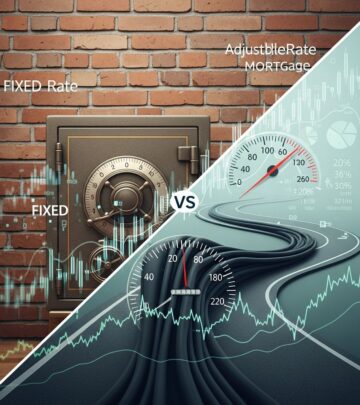
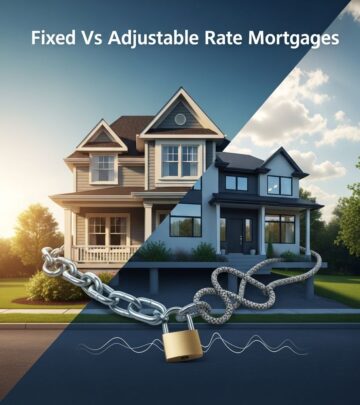
Fixed-rate mortgages maintain identical interest rates and monthly payments throughout the entire loan term, regardless of market fluctuations. This predictability appeals to borrowers seeking budgeting certainty and protection against rising rates.
Adjustable-rate mortgages begin with lower rates but introduce uncertainty after the fixed period. The monthly payment flexibility can be advantageous if rates decline but problematic if rates increase substantially.
The fundamental trade-off involves initial savings versus long-term predictability. ARMs offer lower introductory rates but require borrowers to accept future uncertainty. Fixed-rate mortgages charge higher rates upfront but eliminate adjustment risk entirely.
Critical Considerations Before Selecting an ARM
Before committing to an adjustable-rate mortgage, borrowers should thoroughly investigate specific loan terms and honestly assess their financial resilience.
Essential questions to address include:
- How soon could my interest rate and monthly payments increase after the fixed period?
- What are the maximum possible interest rate increases at each adjustment level?
- How high could my monthly payment become at maximum rate scenarios?
- Will I still afford the loan if rates climb to their absolute maximum?
- What is my realistic timeline for selling or refinancing?
- Do I have financial flexibility to accommodate higher payments if rates rise?
- What index does the ARM use, and how volatile has it been historically?
The Consumer Financial Protection Bureau emphasizes that borrowers should not assume they will definitely sell or refinance before adjustment periods begin—circumstances change, and backup plans may not materialize as expected.
Strategic Scenarios Where ARMs Make Sense
While ARMs carry inherent risks, they can represent intelligent financial choices under specific circumstances:
- Career relocations anticipated: If your job involves likely transfers, ARMs allow you to capture savings before moving.
- Short-term ownership goals: Buyers planning to own for three to seven years can benefit from lower rates without facing significant adjustment risk.
- Expected income growth: If you anticipate substantial salary increases before adjustments occur, higher future payments become more manageable.
- Refinancing opportunities: Borrowers confident they can refinance into better terms during the fixed period can capitalize on ARM savings.
- Rising equity positions: As home values appreciate and you build equity, refinancing becomes more accessible before rate adjustments.
Risk Factors and Potential Drawbacks
Conversely, several scenarios make ARMs particularly risky:
- Planning to remain in the home for 10+ years beyond the fixed period
- Limited financial flexibility for increased monthly payments
- Expecting interest rates to rise significantly in the coming years
- Having minimal emergency savings reserves
- Uncertain employment or income stability
The 2008 housing crisis partially resulted from borrowers overextending into ARMs they couldn’t afford when rates adjusted upward. This history underscores the importance of conservative assumptions when evaluating ARM affordability.
Evaluating Your Personal Suitability for Variable-Rate Mortgages
Determining whether an ARM aligns with your situation requires honest self-assessment regarding your financial position, risk tolerance, and homeownership timeline.
Ask yourself: How comfortable am I with uncertainty? If the thought of potentially increasing payments creates significant anxiety, fixed-rate mortgages may better serve your peace of mind. Can I afford maximum potential payments? If worst-case rate scenarios would strain your finances, ARMs introduce unacceptable risk. How certain is my timeline? If circumstances might change, relying on refinancing or selling may prove unrealistic.
Financial advisors generally recommend that only borrowers with solid emergency reserves, stable income, and confident short-term plans should consider ARMs. For others, the certainty and simplicity of fixed-rate mortgages often provides superior value despite higher initial rates.
The Evolution of ARM Products
Modern ARMs have evolved significantly since their pre-2008 incarnations. Current products feature stronger consumer protections, including mandatory rate caps and clearer disclosure requirements. Federal Housing Administration products and products offered by major lenders now incorporate standardized structures that make comparison more straightforward.
Contemporary lenders typically offer hybrid ARMs featuring three, five, seven, or ten-year fixed periods followed by annual adjustments. This standardization helps borrowers understand their options more readily.
Conclusion
Adjustable-rate mortgages represent legitimate financing tools for borrowers whose circumstances align with their structure and risk profile. The lower introductory rates can generate substantial savings for those planning short-term homeownership or confident in refinancing opportunities. However, the transition to adjustable rates introduces complexity and uncertainty that fixed-rate mortgages eliminate.
By understanding ARM mechanics, cap structures, common product types, and your personal risk tolerance, you can make informed decisions that genuinely serve your financial interests. Whether an ARM or fixed-rate mortgage proves optimal depends on your unique situation—there is no universally superior choice, only better-informed decisions.
References
- Adjustable Rate Mortgage: How an ARM Works, Who It’s For — NerdWallet. 2024. https://www.nerdwallet.com/mortgages/learn/adjustable-rate-mortgage-arm
- What is an adjustable-rate mortgage (ARM)? — Rocket Mortgage. 2024. https://www.rocketmortgage.com/learn/adjustable-rate-mortgage
- Considering an Adjustable-Rate Mortgage? Here’s What You Should Know — Freddie Mac. 2024. https://myhome.freddiemac.com/blog/homebuying/considering-adjustable-rate-mortgage-heres-what-you-should-know
- Common Types of Adjustable-Rate Mortgages — Experian. 2024. https://www.experian.com/blogs/ask-experian/common-types-of-adjustable-rate-mortgages/
- What is the difference between a fixed-rate and adjustable-rate mortgage (ARM) loan? — Consumer Financial Protection Bureau. 2024. https://www.consumerfinance.gov/ask-cfpb/what-is-the-difference-between-a-fixed-rate-and-adjustable-rate-mortgage-arm-loan-en-100/
- Adjustable Rate Mortgages (ARM) — U.S. Department of Housing and Urban Development. 2024. https://www.hud.gov/hud-partners/single-family-203armt
- Adjustable Rate Mortgages (ARMs) Explained — Home Finance Council of Vermont. 2024. https://www.hfcuvt.com/post/adjustable_rate_mortgages_explained.html
Similar Articles








Read full bio of Sneha Tete