Time Value Of Money: A Complete Guide For Investors
Explore how money's value changes over time and impacts financial decisions.

Understanding the Value of Money
Money is one of the most fundamental concepts in economics and personal finance, yet its value is far more complex than the numerical amount printed on a bill. The value of money represents its purchasing power—the quantity of goods and services it can buy at any given time. This concept extends beyond simple arithmetic; it encompasses economic principles, inflation dynamics, and temporal considerations that significantly impact financial decision-making.
The way we think about money’s value has evolved throughout history. In official statistics, the amount of money in an economy is generally measured through what is called broad money, which encompasses everything that provides liquidity and can be used as a medium of exchange. Understanding what determines money’s value is essential for anyone managing personal finances, making investment decisions, or developing business strategies.
The Time Value of Money
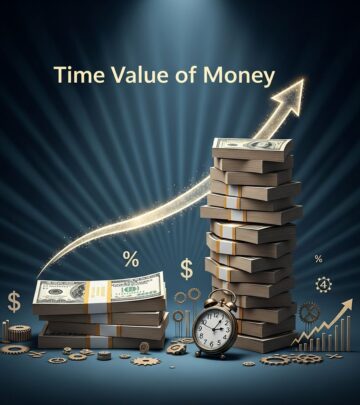
The time value of money (TVM) is a core financial principle that states a sum of money is worth more now than in the future. This fundamental concept underlies much of modern finance and investment analysis. The principle recognizes that money available today has greater value than the same amount in the future, even without considering inflation or other economic factors.
Why Money Has Greater Value Today
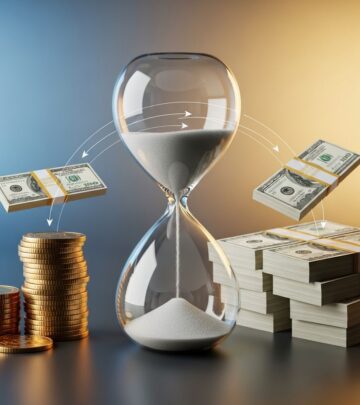
Several interconnected reasons explain why present money is more valuable than future money. First, opportunity cost exists because money you have today can be invested and accrue interest, increasing its value. When you possess funds now, you can immediately deploy them into investments, savings accounts, or business ventures that generate returns. If you must wait for money, you forfeit these earning opportunities.
Second, inflation means your money may buy less in the future than it does today. As prices rise over time due to economic expansion and increased costs, the purchasing power of each dollar diminishes. A dollar today buys more goods and services than a dollar a year from now, assuming typical inflation rates persist.
Third, uncertainty means something could happen to the money before you’re scheduled to receive it. Future payments carry inherent risk. Economic downturns, business failures, or unforeseen circumstances might prevent you from receiving promised funds. Present money eliminates this uncertainty because you already possess it.
Calculating the Time Value of Money
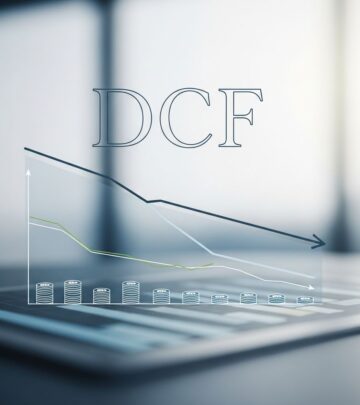
Financial professionals and investors use specific formulas to translate future cash flows into present values, enabling meaningful comparisons between different financial opportunities. TVM calculations “translate” all future cash to its present value, allowing you to directly compare its values and make financially informed decisions.
Practical Application: Comparing Investment Projects
Consider a real-world scenario faced by business decision-makers. Suppose your organization evaluates two projects:
Project A will generate $2 million in one year, while Project B will generate the same $2 million amount in two years. Before making a decision, you must consider the time value of money. $2 million from Project A is worth more than the $2 million from Project B because Project A’s earnings are expected to arrive sooner.
By applying the TVM formula, you can determine that the present value of Project A’s returns significantly exceeds Project B’s present value. In that additional year, you could invest the $2 million in other revenue-generating activities, place it into a savings account to accrue interest, or use it to pay expenses without incurring risk.
Using TVM calculations to assess multiple projects’ predicted returns’ present values enables you to compare them and determine which will provide the most value to your organization. This analytical approach transforms abstract future promises into comparable present-day values, facilitating objective decision-making.
Inflation and Purchasing Power
Inflation represents one of the most significant factors affecting money’s value over time. Purchasing power—the quantity of goods and services your money can purchase—declines as inflation rises. This erosion of purchasing power means that money saved without earning investment returns gradually becomes less valuable in real terms.
Understanding Real Versus Nominal Value
When discussing money’s value, economists distinguish between nominal and real value. Nominal value refers to the face amount of money—the number you see on the bill or account statement. Real value, conversely, accounts for inflation and represents the actual purchasing power that money possesses. A salary increase of 3 percent appears positive nominally, but if inflation runs at 4 percent annually, your real purchasing power has actually declined.
This distinction becomes critical when evaluating savings accounts, investment returns, and retirement planning. A savings account earning 1 percent annual interest seems beneficial until you realize inflation is running at 2.5 percent, meaning your real return is actually negative. Your money is losing purchasing power despite technically earning interest.
Historical Perspectives on Money’s Value
Throughout history, money’s value has been anchored differently depending on the monetary system in place. At first, the value of money was anchored by its alternative uses and the fact that there were replacement costs—for example, you could eat barley or use peppercorns to flavor food. These commodity-based systems provided an inherent floor for money’s value because the underlying materials had intrinsic worth.
The transition from commodity-based money to fiat money systems fundamentally changed how we think about money’s value. Modern money’s value derives from government decree, general acceptance in trade, and the economic confidence of users rather than from any underlying physical commodity.
Money’s Role in the Economy
In the modern economy, the majority of money is created by commercial banks making loans. This understanding contradicts the common misconception that governments create all money in circulation. When banks extend credit, they simultaneously create both the loan obligation and the money supply itself, expanding the total stock of money in the economy.
Money functions to facilitate transactions, though using money can sometimes obscure the real economic activity behind the value of goods and services people exchange. Like a veil, money does not fundamentally change what it represents—the underlying real value of economic exchanges—but it significantly simplifies transactions and enables complex economies to function.
Applications in Personal Finance and Investment Decisions
Understanding money’s value proves invaluable for personal financial planning. When evaluating investment opportunities, comparing savings vehicles, or making major purchase decisions, applying TVM principles improves decision quality. Investors use TVM to assess businesses’ present values based on projected future returns, which helps them decide which investment opportunities to prioritize and pursue.
Wealth Accumulation and Economic Scenarios
Long-term wealth accumulation depends significantly on understanding and working with money’s time value. Different economic scenarios produce vastly different outcomes for wealth preservation and growth. In the United States, up to $160,000 in per capita wealth is at stake by 2033 depending on economic scenarios, productivity trends, and balance sheet developments.
The most favorable scenario combines economic growth in output and wealth while supporting balance sheet health. Under a productivity acceleration scenario, economic growth outpaces debt and asset value growth, with the economy essentially catching up with the balance sheet and providing a sturdier foundation for high asset valuations and debt. Conversely, unfavorable scenarios involving balance sheet resets or sustained economic stagnation create conditions where wealth erodes and financial security deteriorates.
Interest Rates and Real Estate Valuation
Interest rates profoundly influence money’s value and asset valuations. Real estate assets generate value over a long time horizon, and even marginal changes in rental income growth or discount factors can yield large valuation shifts. For context, U.S. real estate was valued at approximately 3.3 times GDP at the end of 2024.
The sensitivity of real estate values to interest rate changes demonstrates money’s value principles in action. An increase in mortgage interest rates of one percentage point would reduce real estate value by about $12 trillion, while a one-percentage-point increase in expected long-run inflation would raise it by about $30 trillion. These enormous valuation swings illustrate how interconnected money’s value, interest rates, and economic expectations truly are.
Equity Markets and Discount Factors
Similar dynamics affect equity valuations. As of the end of 2024, the value of U.S. equity stood at 3.2 times GDP (about $90 trillion), and a one-percentage-point increase in interest rates, which would increase the cost of equity, would reduce total equity value by about $18 trillion. These relationships demonstrate how money’s value—as reflected in interest rates and discount factors—cascades through the entire financial system.
A one-percentage-point increase in either expected inflation or long-run corporate profit growth would raise equity value by about $40 trillion. These sensitivities underscore why understanding money’s value remains critical for investors, policymakers, and financial professionals.
Planning for Wealth Preservation
Households must carefully plan for wealth preservation and growth considering various economic scenarios. Households in the United States need productivity acceleration to maintain current levels of wealth, let alone grow them sustainably; wealth might erode by almost $100,000 per capita in real terms if sustained inflation or a balance sheet reset come to pass.
This sobering reality emphasizes why personal financial strategies must account for money’s time value, inflation dynamics, and macroeconomic risks. Simply holding cash provides no protection against purchasing power erosion and exposes households to significant wealth reduction under unfavorable economic scenarios.
Frequently Asked Questions About Money’s Value
Q: Why is money received today more valuable than money received in the future?
A: Money today is more valuable because you can invest it immediately to earn returns, it maintains full purchasing power without inflation erosion, and it carries no risk of non-receipt. These factors combine to make present money inherently more valuable than future money.
Q: How does inflation affect money’s value?
A: Inflation reduces purchasing power by increasing prices for goods and services. Money that buys $100 worth of goods today will buy less next year if inflation persists, meaning the real value of your money declines even if the nominal amount remains unchanged.
Q: How can investors use time value of money concepts?
A: Investors use TVM principles to compare investment opportunities by converting future cash flows into present values. This allows meaningful comparison between projects with different timelines and helps identify which investments provide the greatest value.
Q: What is the difference between nominal and real value?
A: Nominal value is the face amount of money without adjustment for inflation, while real value accounts for inflation and represents actual purchasing power. An investment earning 2% when inflation runs at 3% has negative real returns despite positive nominal returns.
Q: How do interest rates affect money’s value?
A: Interest rates represent the cost of borrowing and the return on lending, directly reflecting money’s time value. Higher interest rates increase the discount factor for future cash flows, reducing present values, while lower rates increase present values for the same future amounts.
Q: Why should entrepreneurs understand time value of money?
A: Entrepreneurs seeking funding should understand that investors prefer faster returns because present money is more valuable. The quicker a company provides returns to investors, the higher the present value of cash and the greater likelihood of attracting investment capital.
References
- Time Value of Money (TVM): A Primer — Harvard Business School Online. Accessed November 2025. https://online.hbs.edu/blog/post/time-value-of-money
- Global Balance Sheet Trends: Impact on Growth and Wealth — McKinsey Global Institute. 2025. https://www.mckinsey.com/mgi/our-research/out-of-balance-whats-next-for-growth-wealth-and-debt
- Money: At the Center of Transactions — International Monetary Fund. Accessed November 2025. https://www.imf.org/en/publications/fandd/issues/series/back-to-basics/money
- Essentiality of Money: A Historical Perspective — Federal Reserve Bank of Richmond. 2024. https://www.richmondfed.org/publications/research/economic_brief/2024/eb_24-01
- Money Creation in the Modern Economy — Bank of England. 2014. https://www.bankofengland.co.uk/-/media/boe/files/quarterly-bulletin/2014/money-creation-in-the-modern-economy
Similar Articles








Read full bio of medha deb