Understanding Unemployment: Definition, Types, and Impact
Explore unemployment: its definition, types, causes, and economic impact on workers and society.

Unemployment represents one of the most significant economic indicators affecting both individual workers and the broader economy. When someone loses their job or actively seeks employment without success, they become part of the unemployment statistics that economists and policymakers monitor closely. Understanding what unemployment means, how it’s measured, and why it matters provides crucial insight into economic health and labor market dynamics.
What Is Unemployment?
Unemployment occurs when a person is without a job and actively seeking employment. However, the definition extends beyond simply not having work. According to official economic measures, an unemployed person must be part of the labor force, meaning they are either currently employed or actively looking for work. This distinction is important because it excludes individuals who have stopped looking for jobs, students not seeking employment, retirees, and others outside the active labor market.
The unemployment rate represents the percentage of the total labor force that is currently unemployed and actively seeking work. This metric serves as a barometer for economic conditions, as rising unemployment often signals economic weakness, while falling unemployment suggests economic strength and growth.
How Is Unemployment Measured?
The U.S. Bureau of Labor Statistics calculates unemployment through monthly surveys and administrative data. The primary measure comes from the Current Population Survey, which interviews approximately 60,000 households monthly to determine their employment status. Additionally, initial jobless claims data provides weekly snapshots of workers filing for unemployment insurance benefits for the first time.
Recent data illustrates the dynamic nature of these measurements. In November 2025, initial jobless claims fell to 216,000, surpassing economist forecasts of 225,000 and indicating continued labor market resilience. The four-week moving average of claims stood at approximately 223,750, helping smooth out irregular fluctuations caused by seasonal variations. However, the number of insured jobless claims—individuals currently receiving unemployment benefits—increased to approximately 1.9 million, suggesting some workers are taking longer to find new positions.
Types of Unemployment
Economists recognize several distinct types of unemployment, each with different causes and implications:
Frictional Unemployment
Frictional unemployment occurs when workers transition between jobs. This represents the natural movement within the labor market as people search for positions that match their skills and preferences. Even in healthy economies with abundant job opportunities, frictional unemployment exists as workers spend time looking for suitable employment.
Structural Unemployment
Structural unemployment happens when there’s a mismatch between available jobs and workers’ skills or locations. Industries decline, new technologies eliminate certain positions, or workers lack training for emerging fields. This type of unemployment often requires significant retraining or relocation efforts to resolve.
Cyclical Unemployment
Cyclical unemployment fluctuates with economic cycles. During recessions and economic downturns, businesses reduce workforces, causing cyclical unemployment to rise. Conversely, during economic expansions, this type of unemployment typically decreases as businesses hire more workers.
Seasonal Unemployment
Some industries experience predictable seasonal fluctuations in labor demand. Agriculture, retail, and tourism sectors commonly lay off workers during slow seasons. Workers in these industries may experience recurring periods of unemployment as demand fluctuates throughout the year.
Causes of Unemployment
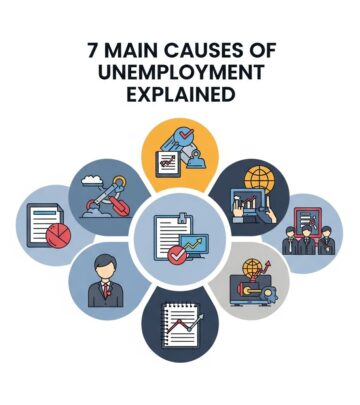
Unemployment stems from various economic and structural factors. Economic recessions and downturns directly increase unemployment as businesses reduce payrolls. Technological advancement can displace workers whose skills become obsolete. Industry shifts reshape labor demand, leaving workers in declining sectors without opportunities. Additionally, demographic changes, globalization, and policy decisions all influence unemployment rates.
Geographic factors also play a significant role. Some regions experience stronger job growth than others, creating localized unemployment challenges. Workers may lack resources to relocate to areas with better employment prospects, contributing to persistent regional unemployment variations.
The Impact of Unemployment on Workers
Unemployment creates substantial hardship for affected workers and their families. Beyond lost income, unemployment disrupts financial stability and forces difficult choices about meeting basic needs. As demonstrated in California’s labor market, unemployment benefits often prove inadequate. In 2023, California workers received an average unemployment insurance benefit of just $368.53 weekly, falling short of what’s needed to afford housing in any county. A worker losing a full-time minimum wage job in Los Angeles County receives approximately $1,465 monthly in unemployment benefits, which falls $69 short of covering studio apartment rent at fair market rates.
Beyond immediate financial pressure, unemployment carries psychological and social costs. Extended joblessness can damage self-esteem, strain relationships, and create long-term career disruptions. Workers may accept lower-paying positions or less desirable jobs simply to regain employment, potentially affecting future earning potential.
Despite these challenges, unemployment insurance remains critical for vulnerable populations. In 2022, unemployment benefits prevented more than 400,000 people nationwide, including 116,000 children, from experiencing poverty.
Economic Consequences of Unemployment
Unemployment affects the broader economy in multiple ways. High unemployment reduces consumer spending, as jobless individuals cut expenses on non-essential items. This reduction in demand ripples through the economy, potentially affecting sales, profits, and employment at other businesses. Retailers, restaurants, and service sectors feel these impacts particularly acutely.
Government spending increases during periods of high unemployment as more people qualify for unemployment insurance, food assistance, Medicaid, and other safety net programs. Simultaneously, tax revenues decline because fewer employed people means lower payroll tax collections. This combination worsens government budget deficits during downturns.
The relationship between unemployment and federal deficits typically works in predictable ways. When unemployment is low, fewer people require government assistance, and tax revenues increase, generally reducing deficits. However, this relationship has broken down in recent years. In fiscal year 2024, despite an unemployment rate averaging just 3.9 percent—well below the 50-year average of 6.2 percent—the federal deficit reached 6.4 percent of GDP, significantly above the 50-year average of 3.8 percent. This unusual situation reflects structural imbalances in spending and revenues driven by demographic factors, rising healthcare costs, high interest rates on debt, and insufficient revenues relative to government commitments.
Labor Market Tightness and Employment Dynamics
Recent jobless claims data reveals important trends about labor market dynamics. The relatively low level of initial claims—historically associated with job growth rather than recession—suggests the labor market maintains considerable strength. However, the gradual increase in continuing claims indicates some underlying cooling in hiring momentum.
For financial markets and policymakers, these employment statistics carry significant implications. A tight labor market with historically low unemployment raises concerns about wage growth and inflation. If workers face strong demand and companies must offer higher wages to attract talent, inflation pressures may persist, potentially affecting Federal Reserve decisions about interest rate policy.
In May 2024, approximately 379,955 California workers relied on unemployment insurance benefits as they sought new employment following layoffs from manufacturing, information technology, and other industries. These figures demonstrate that even during periods of economic growth, unemployment remains relevant for certain worker populations.
Unemployment Insurance and Worker Support
Unemployment insurance serves as a critical lifeline for workers experiencing job loss, providing temporary income support while they search for new employment. The program helps workers meet basic needs including rent, food, and utilities during job transitions. Beyond individual support, unemployment insurance stabilizes the broader economy by maintaining consumer spending during difficult periods.
However, the system faces significant challenges, particularly in states like California where the unemployment insurance system carries a $19.8 billion debt and relies on outdated financing mechanisms. California taxes employers only on the first $7,000 of each employee’s annual earnings—a dramatically lower wage base than most other states. This inadequate financing structure fails to cover the true costs of unemployment benefits, creating structural deficits that hamper the system’s ability to support workers during economic downturns.
Reforming unemployment insurance financing would strengthen worker support and economic resilience. Raising the taxable wage base and restructuring employer contribution systems could eliminate accumulated debt and build reserves for future recessions. When unemployment insurance functions effectively, it enables workers to take time finding suitable positions rather than accepting unsuitable jobs, ultimately leading to better job matches and greater worker satisfaction.
Comparing Unemployment Across Regions and Demographics
| Factor | Impact on Unemployment |
|---|---|
| Geographic Location | Regional economic strength varies, creating different unemployment rates across areas |
| Education Level | Higher education typically correlates with lower unemployment rates |
| Age and Experience | Younger workers and those lacking experience often face higher unemployment |
| Industry Sector | Declining industries experience higher unemployment than growing sectors |
| Economic Cycles | Recessions dramatically increase unemployment; expansions reduce it |
Policy Responses to Unemployment
Governments employ various policy tools to address unemployment. Monetary policy, implemented by central banks through interest rate adjustments and money supply management, influences economic growth and hiring. Lower interest rates typically encourage business investment and hiring, while higher rates may slow economic activity and employment growth.
Fiscal policy, including government spending and taxation, directly affects employment. Infrastructure spending creates jobs, tax incentives encourage business hiring, and job training programs help workers develop skills for available positions. During severe recessions, governments often implement larger stimulus packages to prevent further job losses.
Frequently Asked Questions About Unemployment
Q: What is the difference between unemployment rate and unemployment numbers?
A: The unemployment rate represents the percentage of the labor force that is unemployed, while unemployment numbers reflect the total count of unemployed people. The rate provides a standardized measure for comparing unemployment across time periods and locations.
Q: How long can someone receive unemployment benefits?
A: Unemployment benefit duration varies by state but typically ranges from 12 to 26 weeks. During severe recessions, extended benefits may be available. Individual circumstances and state policies determine specific eligibility periods.
Q: Does unemployment insurance cover all workers?
A: Unemployment insurance does not cover all workers. Self-employed individuals, certain agricultural workers, and government employees may fall outside traditional unemployment insurance programs, though some states offer alternative coverage options.
Q: What causes unemployment to rise during recessions?
A: Recessions reduce consumer demand for goods and services, forcing businesses to reduce expenses. Layoffs increase as companies attempt to maintain profitability during declining sales. This cyclical unemployment typically persists until economic conditions improve.
Q: How do technological advances affect unemployment?
A: Technology can displace workers in certain fields while creating opportunities in others. While overall employment often grows despite technological change, workers in affected industries may experience structural unemployment and need retraining for new roles.
Q: What is the natural rate of unemployment?
A: The natural rate of unemployment represents the lowest unemployment rate sustainable without triggering inflation. It accounts for frictional and structural unemployment that exists even in healthy economies, typically estimated between 4 and 5 percent.
Q: How does unemployment affect inflation?
A: Low unemployment can increase inflation as tight labor markets push wages higher, raising business costs and consumer prices. Higher unemployment typically reduces wage pressure and inflation. This relationship influences Federal Reserve monetary policy decisions.
Q: Are there different types of unemployment statistics published regularly?
A: Yes, the Bureau of Labor Statistics publishes multiple unemployment measures (U-1 through U-6) that capture different aspects of joblessness. The most commonly cited U-3 rate measures unemployment as typically defined, while broader measures include discouraged workers and involuntary part-time employment.
References
- Revitalizing Unemployment Insurance in California — California Budget Center. 2024. https://calbudgetcenter.org/resources/revitalizing-unemployment-insurance-in-california/
- Jobless Claims Dip, Keeping The Labor Market Tight — Finimize. November 2025. https://finimize.com/content/jobless-claims-dip-keeping-the-labor-market-tight
- Why Is the Federal Deficit High If Unemployment Is Low? — Peter G. Peterson Foundation. 2024. https://www.pgpf.org/article/why-is-the-federal-deficit-high-if-unemployment-is-low/
- Unemployment Insurance Data Summary — U.S. Department of Labor, Employment and Training Administration. 2024. https://oui.doleta.gov/unemploy/data_summary/DataSum.asp
- Current Employment Statistics — U.S. Bureau of Labor Statistics. November 2025. https://www.bls.gov/ces/
Similar Articles








Read full bio of medha deb