VIX: A Trader’s Guide To Reading The Market’s Fear
Explore the VIX volatility index, known as the market's fear gauge, and learn how it signals investor sentiment and guides trading decisions.

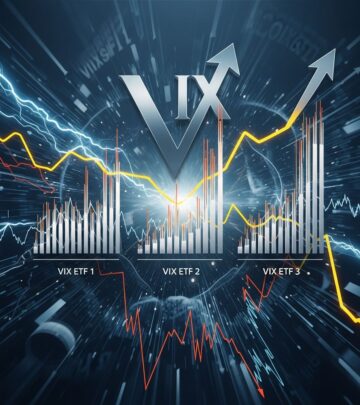
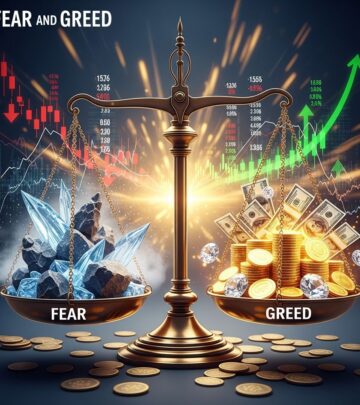
The VIX, or Cboe Volatility Index, serves as a critical barometer for expected fluctuations in the S&P 500 over the next 30 days. Derived from real-time prices of S&P 500 index options, it quantifies market expectations of volatility, often dubbed the “fear gauge” due to its tendency to rise amid uncertainty.
Core Mechanics of the VIX
At its essence, the VIX captures implied volatility, which reflects the market’s forecast of future price swings rather than past movements. Unlike historical volatility, which reviews actual price changes, implied volatility draws from current option premiums to project near-term turbulence.
The index is computed using a blend of out-of-the-money put and call options on the S&P 500 with expiration dates bracketing 30 days—typically near-term (23-37 days) and next-term contracts. These prices indicate how much investors are willing to pay for protection or speculation against potential S&P 500 moves.
The formula simplifies to the square root of the risk-neutral expected variance over 30 days, annualized and multiplied by 100 for readability. Mathematically, it appears as:
VIX = 100 × √[ (T × σ²) ], where T is time to expiration and σ² is variance from option prices.
How VIX Levels Signal Market Mood
VIX readings provide snapshots of investor sentiment. Low values suggest calm, while spikes signal panic. Here’s a breakdown:
| VIX Range | Market Interpretation | Typical Investor Behavior |
|---|---|---|
| Below 15 | High optimism, low volatility | Buying stocks, risk-on environment |
| 15-25 | Normal conditions, moderate swings | Balanced portfolios, steady trading |
| 25-30 | Increasing turbulence, rising fear | Hedging positions, caution |
| Above 30 | Extreme volatility, high uncertainty | Selling, seeking safe havens |
These thresholds aren’t rigid but offer reliable guides. For instance, a VIX under 15 often coincides with bull markets, whereas readings over 30 have preceded downturns like the 2008 crisis or 2020 pandemic crash.
Historical Evolution and Key Milestones
Launched in 1993 by the Chicago Board Options Exchange (now Cboe), the VIX initially used a different methodology focused on eight options. The modern version, introduced in 2003, expanded to a broader options strip for greater accuracy and real-time updates.
Futures trading began in 2004, enabling direct bets on volatility. This paved the way for VIX-related ETFs, ETNs, and options by 2011, democratizing access for retail investors.
- 1990s: Conceptualization as volatility benchmark.
- 2003: Current formula rollout.
- 2004: VIX futures debut.
- 2008: Peaked above 80 during financial crisis.
- 2020: Surged over 80 amid COVID-19 lockdowns.
These events underscore the VIX’s role as a sentiment mirror, often inversely correlated with the S&P 500—rising when stocks fall.
Trading the VIX: Instruments and Strategies
While the VIX itself isn’t directly tradable as it’s an index, investors access it via derivatives. Key vehicles include:
- VIX Futures: Contracts settling to VIX levels, ideal for hedging or speculating on volatility shifts.
- VIX Options: European-style options on the VIX index for leveraged plays.
- Volatility ETFs/ETNs: Products like VXX (long volatility) or SVXY (short volatility) track VIX futures contango or backwardation.
The VIX exhibits mean-reversion, frequently spiking then reverting to long-term averages around 20. Traders exploit this via strategies like:
- Buying VIX calls during low-VIX complacency for anticipated spikes.
- Selling volatility (e.g., short VIX futures) in elevated regimes, mindful of tail risks.
- Portfolio hedging: Allocating 1-5% to VIX products to dampen equity drawdowns.
Caution: VIX products suffer from roll costs in contango markets, where futures exceed spot VIX, eroding long positions over time.
Distinguishing VIX from Other Volatility Measures
Volatility comes in flavors: historical (past std dev), implied (forward-looking), and beta (relative to market). VIX focuses on the latter two for S&P 500.
| Measure | Focus | Use Case |
|---|---|---|
| Historical Volatility | Past price changes | Backtesting strategies |
| Implied Volatility (VIX) | Expected future swings | Options pricing, sentiment |
| Beta | Asset vs. market volatility | Portfolio risk assessment |
VIX uniquely leverages SPX options for a pure, forward 30-day view, updated every 15 seconds during trading hours.
VIX in Portfolio Management
Investors integrate VIX for dynamic allocation. Low VIX may prompt equity overweighting; high readings suggest bonds or cash shifts. It’s also a contrarian signal: Extreme highs often mark buy opportunities as panic subsides.
Advanced users monitor VIX futures term structure:
- Contango: Upward-sloping curve (normal), favors short volatility.
- Backwardation: Downward-sloping (stress), signals sustained fear.
During 2022’s inflation-driven volatility, VIX averaged 25, guiding many to defensive postures.
Common Misconceptions About the VIX
Myths persist:
- Myth: VIX directly predicts direction. Reality: It’s non-directional, measuring swing magnitude.
- Myth: Always inverse to S&P 500. Reality: Correlation holds ~80% of time but breaks in trends.
- Myth: Safe short-term trade. Reality: Mean-reverting but with crash risks.
Future Outlook and Evolving Role
As markets digitize, VIX remains vital amid rising geopolitical tensions, AI disruptions, and policy shifts. Variants like VVIX (VIX of VIX) offer meta-insights into volatility-of-volatility.
With crypto and global indices spawning similar gauges (e.g., VXN for Nasdaq), VIX’s primacy endures for U.S. equities.
Frequently Asked Questions (FAQs)
What does a VIX of 20 mean?
It implies the S&P 500 could move ±20% annualized (about 1.25% monthly) with 68% probability.
Can I buy the VIX like a stock?
No, but via futures, options, or ETFs approximating its performance.
Why does VIX spike suddenly?
Unexpected events boost demand for SPX options, inflating implied volatility.
Is high VIX always bad?
Not necessarily—opportunities arise for value buys post-spike.
How often is VIX updated?
Real-time during Cboe hours, every 15 seconds.
This comprehensive view equips investors to harness the VIX for smarter decisions in volatile times.
References
- VIX – Wikipedia — Wikipedia. 2023-10-01. https://en.wikipedia.org/wiki/VIX
- What Is the VIX Index? Chart and CBOE Volatility Index Explained — NerdWallet. 2024-01-15. https://www.nerdwallet.com/investing/learn/vix
- What is the VIX volatility index & why it matters — Sun Life Global Investments. 2023-05-20. https://www.sunlifeglobalinvestments.com/en/insights/investor-education/understanding-market-volatility/what-is-the-vix-volatility-index-and-why-it-matters/
- What is VIX Volatility Index & How to Trade it? — tastytrade. 2024-02-10. https://tastytrade.com/learn/trading-products/options/what-is-vix-how-to-trade/
- What is the VIX? – Fidelity Investments — Fidelity. 2023-11-05. https://www.fidelity.com/learning-center/smart-money/what-is-vix
- Understanding VIX or Volatility Index — TD Bank. 2023-08-12. https://www.td.com/ca/en/investing/direct-investing/articles/understanding-vix
- VIX Volatility Products — Cboe Global Markets. 2026-01-20. https://www.cboe.com/tradable-products/vix/
Similar Articles








Read full bio of medha deb