Subprime Borrower Status: 5 Practical Steps To Improve Credit
Learn the key indicators that classify you as a subprime borrower and discover pathways to improve your creditworthiness.

Financial institutions use a classification system to categorize borrowers based on their credit profiles and repayment histories. If you’ve encountered the term “subprime borrower” and aren’t sure whether it applies to you, understanding the criteria lenders use can help you assess your financial position and plan improvements. This guide explores the defining characteristics of subprime borrowers, the metrics that determine this classification, and practical strategies for advancing your creditworthiness.
What Defines a Subprime Borrower in Today’s Lending Environment
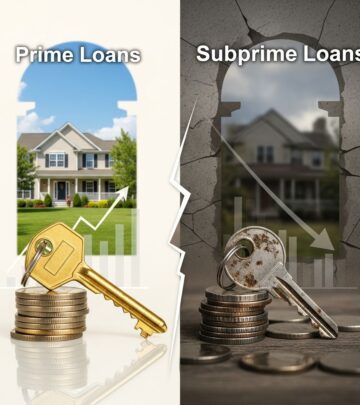
A subprime borrower is fundamentally someone whose credit profile doesn’t meet the standards required for a lender’s most favorable interest rates and terms. Rather than a single factor, this classification results from a combination of credit indicators that signal elevated risk to financial institutions. Lenders evaluate multiple dimensions of your financial behavior to make this determination, not solely your credit score.
The subprime category encompasses a diverse group of individuals. Some may have experienced temporary financial hardship due to external circumstances like job loss or medical emergencies. Others might struggle with ongoing money management challenges. This spectrum means that subprime borrowers have varied circumstances, and the path forward differs for each person.
Credit Score Ranges and Borrower Classification Tiers
While credit scores represent just one factor in determining borrower status, they provide a useful starting point for understanding where you stand. Financial institutions use scoring models to segment borrowers into different risk categories:
- Subprime Range (FICO): Generally 300 to 669. Borrowers in this range face higher interest rates and less favorable terms
- Near-Prime to Prime Range: Typically 670 and above, accessing progressively better rates as scores increase
- Deep Subprime: Credit scores below 580, representing the highest-risk borrower segment with the most restrictive lending terms
- Super-Prime: Scores typically 750 or higher, receiving the best available rates and terms from lenders
It’s important to note that credit scoring varies by model. VantageScore uses a different scale (300-600 for subprime), while FICO scores range from 300-669 for subprime borrowers. Lenders may employ proprietary scoring methods or weighted formulas that emphasize different aspects of your credit history, meaning the same score might result in different classifications at different institutions.
Beyond Credit Scores: Comprehensive Assessment Criteria
Lenders evaluate far more than just numerical credit scores when determining your borrower classification. Your complete financial profile influences their decision:
Payment History and Recent Delinquencies
Recent missed or late payments signal heightened default risk. If you’ve recently failed to make timely payments on credit accounts, lenders will likely classify you as subprime regardless of your historical credit score. The recency of these delinquencies matters significantly—lenders weigh recent problems more heavily than distant historical issues.
Severe Credit Events
Certain major negative events on your credit report trigger subprime classification:
- Charge-offs, where creditors write off debts as uncollectible
- Repossessions of vehicles or other secured property
- Foreclosure proceedings on mortgaged property
- Bankruptcy filings from within the last several years
These events indicate serious financial distress and substantially increase perceived lending risk.
Debt-to-Income Ratio Assessment
Your debt-to-income ratio compares your total monthly debt obligations against your gross monthly income. A high ratio indicates you’re financially stretched, with limited capacity to absorb additional debt or unexpected expenses. Lenders view high debt-to-income ratios as predictive of future payment difficulties.
Credit History Establishment
Conversely, if you’re new to credit and haven’t established any borrowing history, lenders may classify you as subprime. Without data demonstrating your ability to manage credit responsibly, institutions apply cautious underwriting standards. Building credit requires demonstrating consistent, responsible use over time.
The Spectrum of Lending Risk Categories
Rather than a simple binary prime versus subprime distinction, many modern lenders use a more nuanced classification system. Understanding these categories helps you determine where you fall and what improvements would elevate your status:
| Classification | Credit Score Range (FICO) | Typical Characteristics | Interest Rate Profile |
|---|---|---|---|
| Deep Subprime | Below 580 | Significant delinquencies, recent bankruptcy, charge-offs | Highest rates, 15-20%+ for subprime auto loans |
| Subprime | 580-669 | Recent missed payments, some negative history, higher debt ratios | Above-prime rates, 10-15% range typical |
| Near-Prime | 670-739 | Some credit challenges resolved, trending toward stability | Moderately higher than prime, narrowing gap |
| Prime | 740-799 | Good payment history, responsible credit management | Standard favorable rates for qualified borrowers |
| Super-Prime | 800+ | Excellent payment history, minimal credit utilization, strong profile | Best available rates and terms |
Notably, industry researchers have found that approximately half of subprime mortgage borrowers possess credit scores above traditional subprime thresholds, indicating that credit scores alone don’t tell the complete story. Lenders also consider overall financial stability, income consistency, and employment history in their classifications.
Distinct Characteristics of Subprime Lending Products
Lenders offer specialized credit products designed for subprime borrowers, reflecting the higher perceived risk:
- Higher Interest Rates: Subprime loans carry substantially elevated rates compared to prime offerings. While prime rates average around 7.5%, subprime rates can range from 10% to over 20% depending on risk assessment
- Increased Fees: Origination fees, prepayment penalties, and other charges accompany subprime credit products at higher levels than prime alternatives
- Lower Borrowing Limits: Lenders restrict credit limits and loan amounts for subprime borrowers to limit their exposure
- Less Favorable Terms: Conditions like shorter repayment periods, stricter covenants, or mandatory insurance products appear in subprime agreements
For mortgages specifically, subprime loans often feature higher closing costs, increased down payment requirements, and elevated interest rates. Subprime mortgage borrowers frequently receive offers for adjustable-rate mortgages (ARMs) rather than fixed-rate loans, creating future payment uncertainty as rates adjust.
Identifying Predatory Practices in Subprime Lending
While legitimate subprime lending exists, the subprime market has historically attracted predatory lenders employing deceptive practices. Protecting yourself requires understanding common warning signs:
- Pressure to accept higher rates or worse terms than your credit profile warrants
- Steering toward subprime products when you might qualify for better options
- Complex fee structures designed to obscure true borrowing costs
- Loans with features like balloon payments or negative amortization
- Discriminatory practices where protected classes receive worse terms without legitimate business justification
Government agencies including the Federal Reserve, Consumer Financial Protection Bureau, and HUD actively monitor subprime lending practices to protect consumers. If you suspect unfair treatment, these agencies provide complaint mechanisms and enforcement oversight.
Strategic Pathways to Improve Your Borrower Classification
Understanding your subprime status is valuable primarily as a starting point for improvement. Multiple concrete strategies can advance your creditworthiness:
Establish Consistent Payment Performance
The most impactful improvement involves demonstrating reliability. Making all payments on time across all your accounts, without exception, gradually rebuilds trust with lenders. Payment history represents the largest component of most credit scoring models, so this effort yields the greatest scoring improvement.
Reduce Overall Debt Levels
Lowering your absolute debt amount decreases your debt-to-income ratio and demonstrates financial progress. Prioritize paying down high-balance accounts, particularly credit cards, which lenders scrutinize carefully for spending patterns and utilization.
Monitor and Dispute Credit Report Errors
Obtain copies of your credit reports from all three major bureaus and carefully review them for inaccuracies. Errors—from misreported payment statuses to accounts that don’t belong to you—can artificially depress your classification. Disputing inaccuracies can produce immediate improvements.
Build Diverse Credit Experience
Lenders favor borrowers demonstrating responsible management across different credit types: installment loans, revolving credit, and mortgage experience. Gradually diversifying your credit portfolio strengthens your profile, though this should never involve taking unnecessary debt.
Avoid New Negative Events
Obviously, preventing additional delinquencies, defaults, or charge-offs protects your standing. Each new negative event restarts the clock on recovery timelines.
Obtaining Preapproval to Understand Your Options
Rather than guessing about your classification, seeking preapproval from multiple lenders provides concrete information about what credit products and terms you actually qualify for. Preapproval inquiries typically involve soft credit pulls that don’t impact your score, allowing you to compare options without risk. This process reveals whether specific lenders view you as subprime or have moved you into better categories.
FAQs About Subprime Borrower Status
Does being classified as subprime permanently damage my financial future?
No. Subprime classification reflects your current credit situation, not a permanent label. With deliberate effort improving payment history, reducing debt, and managing credit responsibly, borrowers regularly transition to prime status over time.
Will all lenders classify me the same way?
Lenders may apply different criteria and weighting in their assessment models. One institution might offer prime terms while another applies subprime rates based on how they evaluate your specific profile. This variation makes it worthwhile to shop with multiple lenders.
How long does subprime classification typically last?
Duration varies by the specific negative events and how aggressively you address them. Typically, demonstrating several years of perfect payment history can move borrowers from subprime to prime status, though serious events like foreclosure require longer recovery periods.
Are subprime loans ever acceptable financial tools?
Yes. For borrowers unable to access prime credit, subprime products provide genuine financial solutions, allowing people to purchase homes, fund education, or access emergency capital. However, these should be viewed as temporary stepping stones rather than permanent borrowing vehicles.
References
- What Does Subprime Mean? — Experian. 2024. https://www.experian.com/blogs/ask-experian/what-is-subprime/
- Subprime Loan — Cornell Law School Legal Information Institute. 2025. https://www.law.cornell.edu/wex/subprime_loan
- Interagency Guidance on Subprime Lending — U.S. Office of the Comptroller of the Currency. 1999. https://www.occ.gov/news-issuances/bulletins/1999/bulletin-1999-10a.pdf
- What is a Subprime Mortgage? — Consumer Financial Protection Bureau. 2024. https://www.consumerfinance.gov/ask-cfpb/what-is-a-subprime-mortgage-en-110/
- Subprime Mortgage Lending: Benefits, Costs, and Challenges — Federal Reserve Board of Governors. 2004. https://www.federalreserve.gov/boarddocs/speeches/2004/20040521/
- Subprime Lending — Commonwealth of Massachusetts, Division of Banks. 2024. https://www.mass.gov/industry-letter/subprime-lending
- A Homeowner’s Guide to Subprime — New Jersey Department of Banking and Insurance. 2024. https://www.nj.gov/dobi/division_consumers/finance/homeowner_subprime_english.html
Similar Articles








Read full bio of Sneha Tete