Understanding the Right of Rescission
Explore how the right of rescission safeguards homeowners in credit transactions secured by their primary residence, empowering informed financial choices.
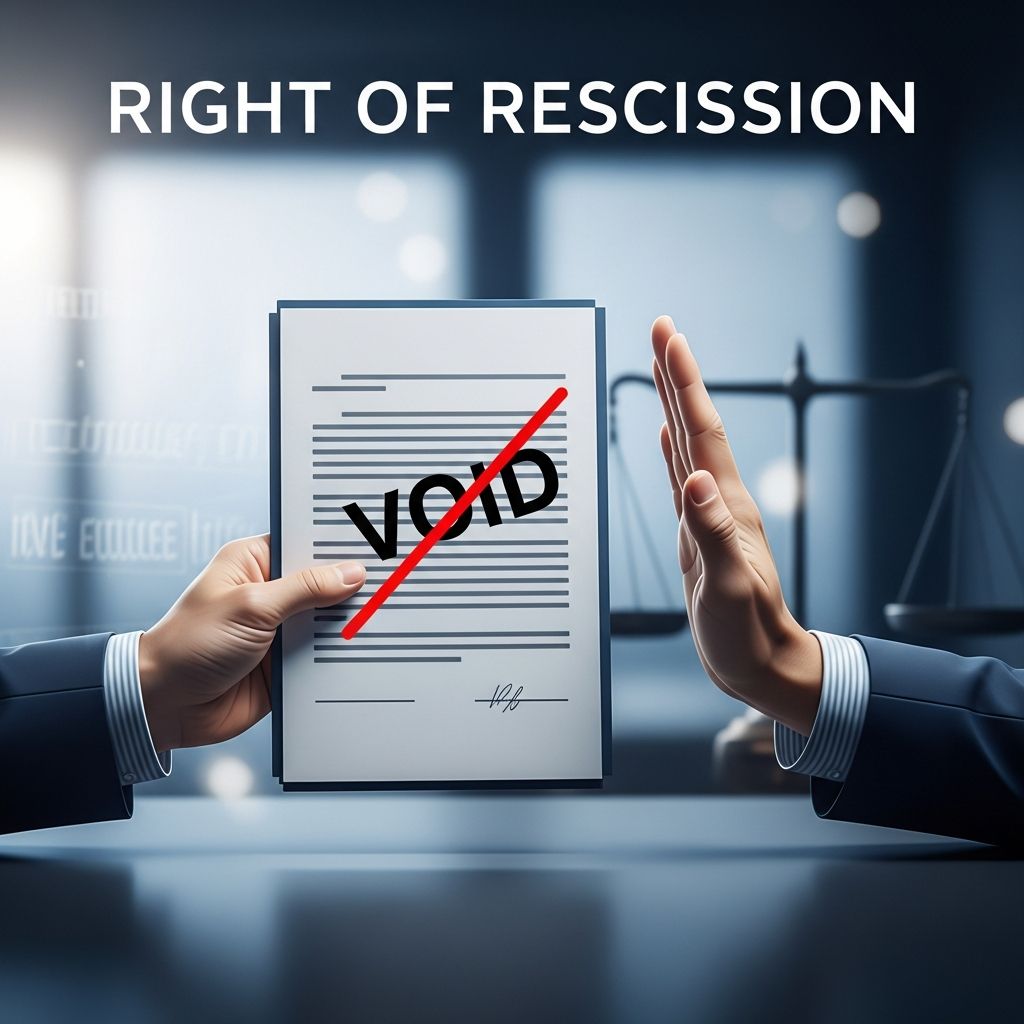
The right of rescission stands as a cornerstone of consumer protection in the realm of credit transactions, particularly those involving a lien on one’s primary home. Enacted under the Truth in Lending Act (TILA), this provision grants borrowers a brief window to reconsider and potentially cancel agreements without penalty, preventing impulsive decisions that could jeopardize their most valuable asset.
Core Principles of Rescission Protection
At its heart, the right of rescission applies to specific consumer credit deals where a security interest is placed or acquired in the borrower’s principal dwelling. This includes scenarios where homeowners use their home as collateral for loans beyond primary purchase mortgages. The mechanism ensures that individuals fully grasp the implications before committing, with clear disclosures mandated by law.
Key triggers for this right include home equity loans, refinances that add a new security interest, and certain lines of credit. Importantly, it does not cover initial home purchases or construction loans solely for building a new principal residence, as these fall under exemptions designed to facilitate housing acquisition.
- Principal Dwelling Definition: Refers to the home where the consumer resides most of the time, not investment properties.
- Security Interest Scope: Encompasses mortgages, deeds of trust, or any lien that could lead to foreclosure.
- Multiple Consumers: All co-owners with an interest in the property must receive notices and can independently exercise rescission.
Qualifying Transactions: What Triggers the Right?
Not every home-secured loan activates rescission rights. Federal regulations delineate precise boundaries to balance consumer safeguards with lending practicality. Transactions exempt include residential mortgages for buying or building a primary home, refinances by the original creditor without new money advanced, and certain state-agency backed plans.
| Transaction Type | Subject to Rescission? | Reason |
|---|---|---|
| Purchase money mortgage | No | Exempt under TILA to promote homeownership |
| Home equity loan | Yes | New security interest on existing dwelling |
| Refinance with new creditor | Yes | Creates additional lien risk |
| HELOC (Home Equity Line of Credit) | Yes (initial advance) | Open-end credit secured by home |
| Construction loan on existing home | Yes | Secures improvements to principal dwelling |
This table illustrates common scenarios, highlighting how rescission promotes caution in non-purchase lending.
The Standard 3-Business-Day Window Explained
Borrowers typically have until midnight of the third business day following the later of three events: transaction consummation, delivery of all material disclosures, or receipt of the rescission notice. Business days exclude Sundays and federal holidays, providing a true cooling-off period.
For instance, if disclosures and notices arrive on a Friday, with consummation that day, the clock starts Monday, expiring Thursday midnight. This structure accounts for weekends, ensuring fairness.
- Consummation: When the consumer becomes contractually obligated, often at signing.
- Material Disclosures: APR, finance charges, payment schedules per TILA.
- Rescission Notice: Two copies per consumer, detailing rights and procedures.
Extended Rescission Periods: When 3 Days Isn’t Enough
Failure by lenders to provide proper notices or disclosures extends the rescission right dramatically—up to three years from consummation, or until property sale/transfer, whichever comes first. This potent remedy underscores TILA’s emphasis on transparency, allowing challenges long after closing if violations occurred.
In administrative proceedings, further extensions may apply, but consumers must act diligently. Lenders mitigate risks by waiting a reasonable period post-3 days or securing written affirmations from all parties before proceeding.
How to Properly Exercise Your Rescission Right
Rescission demands written notification—mail, telegram, or delivery to the creditor’s designated address. It’s effective upon mailing or delivery, not receipt, shifting the burden to prove timely action to the consumer. No specific form is required beyond the provided notice, offering flexibility.
Upon valid rescission, lenders must terminate the security interest, refund all fees/charges within 20 days, and release the borrower from obligation. Borrowers return any funds advanced, restoring pre-transaction status. Non-compliance exposes creditors to lawsuits for damages and attorney fees.
Notification starts the creditor’s 20-day performance clock only upon receipt, emphasizing precise communication.
Waiving Rescission: Rules for Emergencies
In genuine financial emergencies, consumers may waive rescission rights before the period ends. This requires a signed statement from all entitled parties describing the urgent need—e.g., immediate medical costs or disaster repair. Waivers do not absolve lenders of prior disclosure failures.
Courts scrutinize waivers for bona fides; vague or coerced statements fail. For joint borrowers like spouses, both signatures are mandatory.
Lender Duties: Notices, Disclosures, and Compliance
Creditors must furnish two copies of a clear rescission notice per consumer, separate from other documents, outlining rights, exercise methods, and effects. Electronic delivery complies under E-SIGN with consent. Material TILA disclosures must accompany, or risk extension.
Post-rescission, prompt action is critical: void liens, return payments, and take signatures for releases. Delays invite regulatory scrutiny from the Consumer Financial Protection Bureau (CFPB).
Real-World Examples: Navigating Common Pitfalls
Consider a couple refinancing their home equity for debt consolidation. They sign Wednesday, receive notices Thursday. The period ends the following Tuesday (excluding weekend). Mailing rescission Friday triggers lender reversal.
Another case: No disclosures provided. Borrowers discover this two years later amid payment struggles, rescinding successfully before selling the home. These highlight vigilance’s value.
Rescission in Open-End Credit Like HELOCs
For home equity lines, rescission applies to the initial plan opening or advances creating new security interests, not subsequent draws within limits. Notices cover the plan, with effects restoring balances pre-agreement.
State Laws vs. Federal Rescission: Key Distinctions
Federal TILA sets the floor; states may offer broader cooling-off for sales but rarely override home-secured credit rules. Texas, for example, limits state rescission to specific contracts, deferring to TILA for loans.
Frequently Asked Questions (FAQs)
What counts as a business day for rescission?
All calendar days except Sundays and federal holidays.
Can I rescind verbally?
No, written notice is required—mail, telegram, or delivery.
What if only one spouse wants to rescind?
One valid rescission binds the transaction for all.
Does rescission apply to cash-out refinances?
Yes, if it adds a security interest beyond the original mortgage.
What happens if the lender ignores my rescission?
You can sue for enforcement, damages, and fees under TILA.
Is electronic notice acceptable?
Yes, with E-SIGN compliance and consent.
Strategic Tips for Borrowers and Lenders
For Borrowers: Review all documents at closing, track deadlines, and consult advisors if unsure. Use certified mail for notices.
For Lenders: Perfect disclosures, retain proofs, and train staff on procedures to avoid costly reversals.
This right empowers informed decisions, but understanding nuances prevents misuse or oversight.
References
- § 1026.23 Right of rescission — Consumer Financial Protection Bureau. 2024. https://www.consumerfinance.gov/rules-policy/regulations/1026/23/
- 12 CFR § 1026.23 – Right of rescission — Legal Information Institute, Cornell Law School. 2024. https://www.law.cornell.edu/cfr/text/12/1026.23
- § 1026.15 Right of rescission — Consumer Financial Protection Bureau. 2024. https://www.consumerfinance.gov/rules-policy/regulations/1026/15
- General Information – Cancellation of Consumer Contracts — Texas State Law Library. 2024. https://guides.sll.texas.gov/right-to-cancel
- Right of Rescission in Times of Foreclosure — Federal Reserve Bank of Chicago. 2010-04-01. https://www.consumercomplianceoutlook.org/2010/second-quarter/right-of-rescission
Similar Articles








Read full bio of medha deb