Revolving Credit: 4 Common Types And Smart Uses
Master the essentials of revolving credit, from everyday credit cards to business lines, and learn how to use it wisely for financial flexibility.
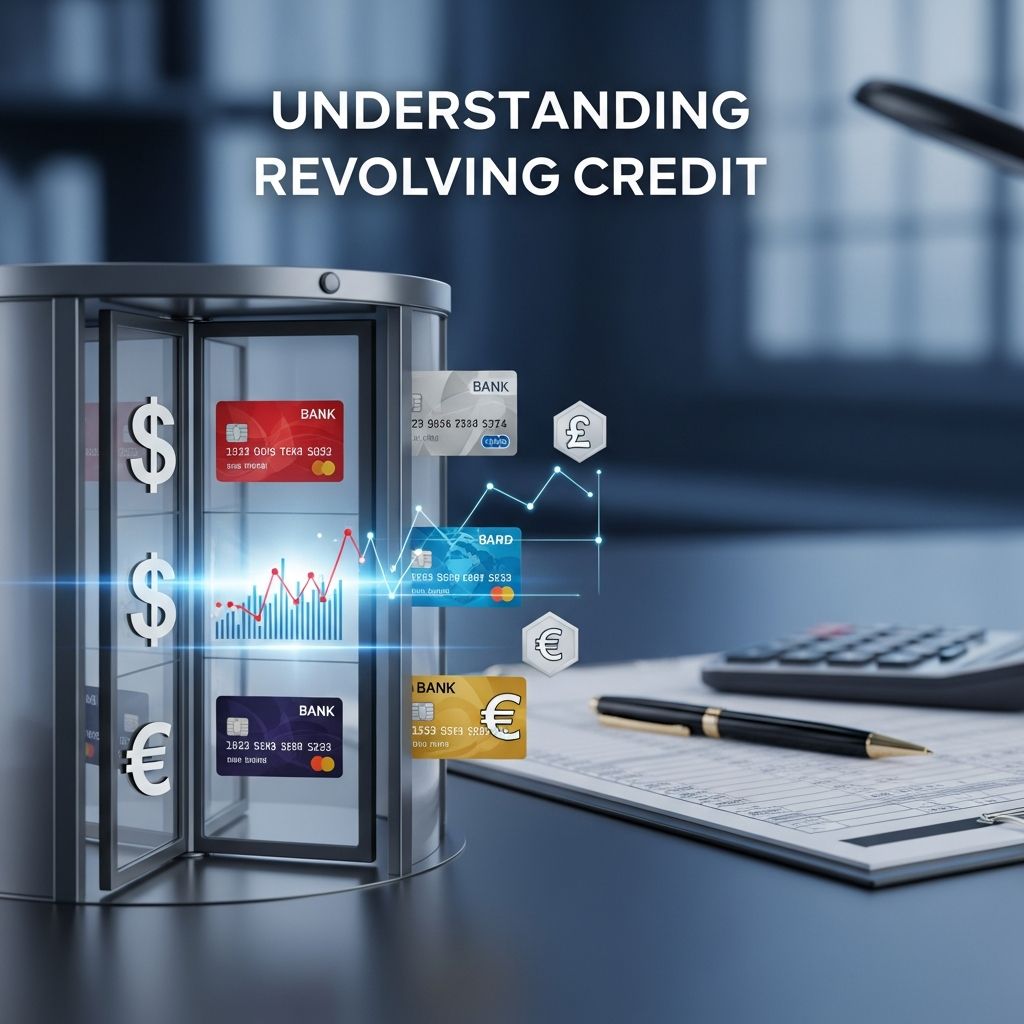
Revolving credit provides borrowers with flexible access to funds up to a predetermined limit, allowing repeated borrowing and repayment without reapplying for new loans. This financial tool contrasts sharply with fixed-term loans, offering ongoing availability as long as payments are made responsibly.
The Fundamentals of Revolving Credit
At its core, revolving credit functions through an open-ended account where users can draw funds, repay them, and redraw as needed. Unlike traditional loans with set repayment schedules, interest accrues only on the outstanding balance, and minimum payments vary based on usage. This setup promotes adaptability for both personal and business needs.
Credit limits represent the maximum borrowable amount, determined by factors like income, credit history, and lender policies. Available credit fluctuates: it decreases with draws and increases with repayments. Borrowers must adhere to minimum payments, which typically cover interest plus a portion of principal, to avoid penalties.
Common Forms of Revolving Credit
Revolving credit manifests in various products tailored to different scenarios. Credit cards stand out as the most ubiquitous, enabling purchases anywhere the card is accepted, with rewards often attached.
- Credit Cards: Versatile for daily spending, travel, and emergencies; balances revolve monthly if not paid in full.
- Personal Lines of Credit (PLOCs): Unsecured options for flexible cash access, similar to cards but often with check-writing capabilities.
- Home Equity Lines of Credit (HELOCs): Secured against home value, ideal for large expenses like renovations; feature draw and repayment periods.
- Business Revolving Facilities: Designed for operational liquidity, supporting cash flow during lean periods.
Each type shares the revolving nature but differs in security, fees, and use cases, making selection dependent on specific financial objectives.
Revolving Credit Versus Installment Credit
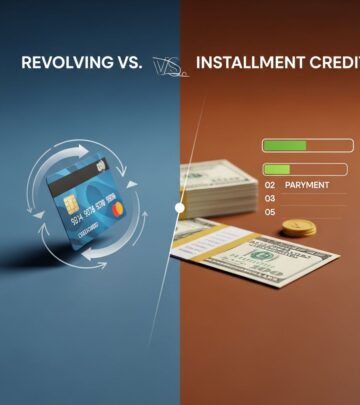
Distinguishing revolving from installment credit is crucial for informed borrowing. Installment credit involves a lump sum disbursed upfront, repaid in fixed monthly installments over a defined term, such as auto loans or mortgages.
| Feature | Revolving Credit | Installment Credit |
|---|---|---|
| Borrowing Style | Reusable up to limit | One-time lump sum |
| Repayment | Variable minimum payments | Fixed installments |
| Term | Open-ended | Fixed duration |
| Examples | Credit cards, HELOCs | Mortgages, car loans |
| Interest Charged On | Outstanding balance | Entire loan amount |
This table highlights key contrasts: revolving credit’s flexibility suits unpredictable needs, while installment credit predictability aids budgeting for known expenses.
How Revolving Credit Affects Your Credit Profile
Responsible use of revolving accounts significantly influences credit scores. Payment history, comprising 35% of FICO scores, rewards on-time minimum payments. Credit utilization—ratio of balances to limits—impacts 30%; keeping it under 30% signals low risk.
Multiple revolving accounts can diversify credit mix positively, but maxing them out raises red flags. Length of credit history and new inquiries also factor in, emphasizing gradual, strategic use. Closing old accounts may shorten history and spike utilization, potentially harming scores.
Strategic Advantages for Consumers and Businesses
For individuals, revolving credit bridges cash shortfalls, funds emergencies, and builds credit through consistent use. Seasonal workers or freelancers benefit from its liquidity during income dips.
Businesses leverage revolvers for inventory purchases, payroll, or expansion without repeated applications. Features like cash sweeps automatically reduce debt with surplus funds, optimizing capital structure. In project finance, revolvers ensure debt service amid variable revenues, such as in renewable energy ventures.
Rewards programs on consumer cards add value, offering cashback, points, or miles, enhancing everyday utility when balances stay low.
Potential Pitfalls and Risk Management
Despite benefits, revolving credit poses risks like accumulating high-interest debt if minimum payments suffice long-term. Average credit card APRs exceed 20%, compounding balances rapidly.
Over-reliance can lead to utilization spikes, credit limit reductions, or account closures by issuers wary of risk. Fees for undrawn amounts in corporate revolvers add costs during low-use periods.
To mitigate:
- Pay more than minimums to reduce principal swiftly.
- Monitor utilization quarterly via free credit reports.
- Avoid new applications during high balances.
- Set spending alerts to curb impulse buys.
Qualifying for and Optimizing Revolving Credit
Approval hinges on creditworthiness: strong scores (above 700), stable income, and low debt-to-income ratios boost limits. Secured options like HELOCs require asset collateral.
Optimization involves requesting limit increases after six months of solid history, transferring balances to 0% APR promotions, or consolidating via balance transfers. Businesses negotiate terms like rollover loans for seamless refinancing.
Real-World Applications Across Industries
Retailers historically pioneered revolvers via store cards, evolving into modern credit cards. Today, a waterpark operator might draw from a revolver in winter to cover payroll, repaying with summer profits. Homeowners tap HELOCs for education funding or medical bills, preserving liquidity.
In corporate settings, revolvers fund mergers, working capital, or swingline short-term needs within sublimits. This versatility underpins economic resilience.
Frequently Asked Questions
What counts as revolving credit?
Credit cards, personal lines of credit, HELOCs, and business revolvers qualify, as they allow repeated borrowing up to a limit.
Does revolving credit build credit faster than installment?
Not inherently, but low utilization and timely payments on revolving accounts strongly boost scores due to their heavy weighting.
Can I have too much revolving credit?
Excessive limits tempt overspending; focus on utilization under 30% rather than total available credit.
How do minimum payments work?
They cover interest plus principal portion; paying only minimums extends debt timeline significantly.
Is revolving credit available for bad credit?
Limited options exist, like secured cards requiring deposits, to rebuild history gradually.
Building a Sustainable Revolving Credit Strategy
Integrate revolving credit into a broader plan: align with emergency funds, avoid lifestyle inflation, and review statements monthly. Tools like budgeting apps track usage, while annual credit checks ensure accuracy.
For businesses, align revolvers with cash flow forecasts, incorporating covenants for limit adjustments. This proactive approach maximizes flexibility while minimizing costs.
References
- Revolving credit – Wikipedia — Wikipedia. 2023-10-15. https://en.wikipedia.org/wiki/Revolving_credit
- What Is Revolving Credit and How Does It Work? – Capital One — Capital One. 2025-12-16. https://www.capitalone.com/learn-grow/money-management/revolving-credit-balance/
- Revolving Credit Definition and Examples | GoCardless — GoCardless. N/A. https://gocardless.com/en-us/guides/posts/revolving-credit-definition-and-examples/
- What is Revolving Credit? | Navy Federal Credit Union — Navy Federal Credit Union. N/A. https://www.navyfederal.org/makingcents/credit-debt/what-is-revolving-credit.html
- Installment vs. Revolving Credit & Key Differences – Equifax — Equifax. N/A. https://www.equifax.com/personal/education/credit/score/articles/-/learn/revolving-credit-vs-installment-credit/
Similar Articles








Read full bio of Sneha Tete