Understanding Real Estate Comps
Discover how comparable sales shape property values, guide pricing decisions, and inform smart buying and selling strategies in today's market.
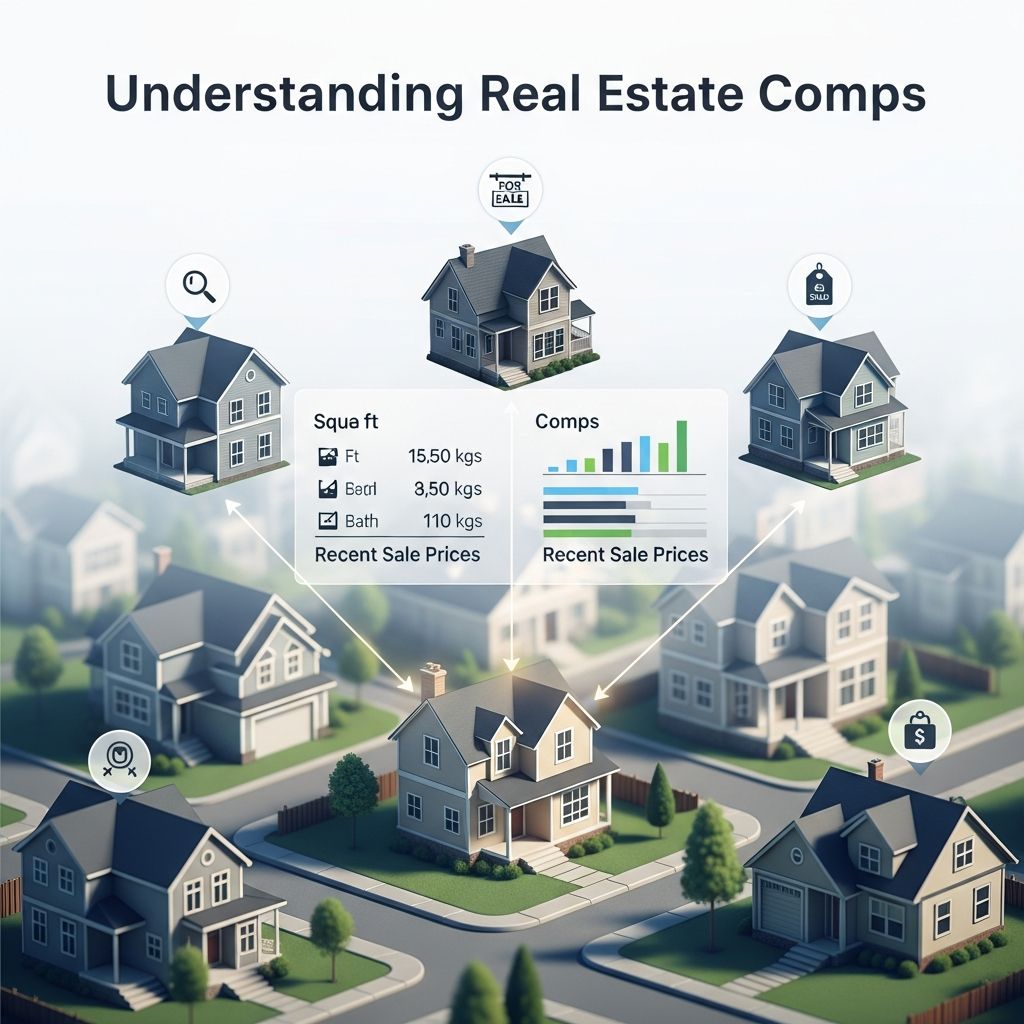
Real estate comps, short for comparable sales, serve as foundational tools in determining a property’s market value by referencing recently sold homes with similar characteristics. These benchmarks help buyers, sellers, agents, and appraisers make data-driven decisions rather than relying on intuition alone.
The Fundamentals of Comparable Properties
At their core, comps represent properties that mirror the subject property in key aspects such as location, size, age, and features. Industry definitions emphasize similarity without requiring exact matches, allowing for adjustments to account for differences. For instance, the Appraisal Institute describes comps as properties used in valuation comparisons, specifying whether they involve sales, rentals, or expenses.
This approach ensures objectivity in pricing. When valuing a three-bedroom home built 20 years ago in a suburban neighborhood, appraisers seek out other three-bedroom homes of comparable age and style sold nearby within the last six months. Such parallels provide a realistic snapshot of market behavior.
Why Comps Matter in Property Transactions
Comps play pivotal roles across real estate activities. Sellers use them to set competitive listing prices, avoiding overpricing that deters buyers or underpricing that leaves money on the table. Buyers leverage comps to craft informed offers, ensuring they don’t overpay relative to recent sales. Lenders mandate appraisals incorporating comps to confirm loan amounts align with fair market value.
- Sellers: Price listings accurately to attract offers quickly.
- Buyers: Negotiate based on evidence of local values.
- Appraisers: Provide unbiased valuations for financing.
- Investors: Assess rental potential or flip profitability.
Without comps, transactions risk subjectivity, leading to disputes or financial losses. In competitive markets, they reveal trends like rising price per square foot, guiding strategic moves.
Key Criteria for Selecting Effective Comps
Not every sold property qualifies as a comp. Selection hinges on specific attributes to ensure relevance. Proximity tops the list—ideally within a half-mile, though up to a mile may suffice in rural areas. Structural similarities follow: matching bedrooms, bathrooms, square footage, and lot size.
| Attribute | Ideal Match | Adjustment Notes |
|---|---|---|
| Location | Same neighborhood | Adjust for school districts or views |
| Size (sq ft) | Within 10-20% | Value scales with area differences |
| Bedrooms/Baths | Exact or +1/-1 | Extra bath adds premium |
| Age/Condition | Similar build year | Renovations increase value |
| Sale Date | 3-6 months prior | Older sales need market trend tweaks |
Age and condition matter greatly; a renovated kitchen can justify a higher value than a dated counterpart. Unique features like pools or garages require careful weighting—square footage often outweighs minor amenities.
Step-by-Step Guide to Finding Comps
Accessing comps starts with public records and digital platforms. County assessor offices maintain sales histories, often online. Platforms like Zillow, Redfin, or Realtor.com offer filters for recent sales by address, size, and price.
- Input the subject property’s address and note basics: beds, baths, sq ft, year built.
- Search sold listings within 0.5-1 mile radius, past 90-180 days.
- Gather 3-6 candidates; exclude outliers like foreclosures unless market-dominant.
- Compile data: sale price, list price, days on market, features.
- Calculate price per square foot for quick normalization.
Agents access MLS databases for comprehensive, verified data. Buyers and sellers can request CMA reports from local professionals for deeper insights.
Analyzing and Adjusting Comps for Accuracy
Raw comp data requires refinement. Create a comparison grid noting differences, then apply monetary adjustments. For example, if a comp lacks a finished basement worth $20,000, add that to its sale price for equivalence.
Common adjustments include:
- Location premiums: $5,000-$50,000 for better schools or views.
- Size variances: $100-$200 per sq ft differential.
- Upgrades: $10,000 for new roof, $15,000+ for gourmet kitchen.
- Market conditions: Trend upward 5% quarterly in hot markets.
Average adjusted values yield the subject’s estimate. Software tools automate this, but manual review ensures context like motivation (e.g., distressed sales skew low).
Common Pitfalls in Using Real Estate Comps
Missteps can distort valuations. Avoid active listings or pending sales—they reflect asking prices, not achieved values. Pending deals risk fallout, contaminating data.
Overlook condition at your peril; photos reveal wear invisible in specs. Ignore market shifts: a comp from a year ago ignores appreciation. Family transfers or auctions often undervalue, acting as outliers.
In unique properties like waterfront homes, expand search radius but prioritize quality over quantity. Always verify public records against platform data for accuracy.
Comps in Professional Appraisals
Appraisers adhere to strict Uniform Standards of Professional Appraisal Practice (USPAP), selecting 3+ comps with detailed adjustments. They pair sales with cost and income approaches for robust reports, influencing loan approvals.
Lenders scrutinize for conservatism; undervaluation protects against defaults. Borrowers facing low appraisals can challenge with superior comps, though success varies.
Leveraging Comps for Investment Decisions
Investors extend comps to rentals (comparable leases) and expenses. Price per unit or cap rates emerge from sales data. Flips compare post-renovation sales; buy-and-holds eye yield gaps versus comp rents.
Track metrics like days on market from comps to gauge competition. Rising comp values signal appreciation potential.
Tools and Resources for DIY Comp Research
Free sites provide solid starts:
- Zillow/Zestimate with sold comps.
- Redfin data downloads.
- Realtor.com neighborhood stats.
- County portals for tax-assessed comps.
Paid services like HouseCanary offer pro-level analytics. Local agents provide free CMAs, blending MLS exclusivity with expertise.
Frequently Asked Questions
What is the ideal time frame for real estate comps?
The best comps sold within 3-6 months; extend to 12 months in slow markets with adjustments for trends.
How many comps should I use?
Three to six provide a balanced view; appraisers typically use three.
Can I use comps from different neighborhoods?
Only if highly similar and no local options; prefer same or adjacent areas.
What if my home is unique?
Appraisers use paired sales analysis, adjusting for standout features like extra land.
Do comps work for new construction?
Yes, compare to recent builds or adjust older homes upward for modernity.
Conclusion: Empower Your Real Estate Journey with Comps
Mastering comps equips you with market intelligence for confident decisions. Whether pricing a sale, bidding on a dream home, or securing financing, these comparables ground choices in reality. Regularly review local sales to stay ahead of shifts.
References
- The Dictionary of Real Estate Appraisal — Appraisal Institute. N/A. https://appraisalbuzz.com/what-is-a-comp/
- Real estate comps: What they are and how to find them — Rocket Mortgage. 2023-10-15. https://www.rocketmortgage.com/learn/real-estate-comps
- Real Estate Comps Definition | What are Comparables? — Realized1031. 2024-05-20. https://www.realized1031.com/glossary/comparables-comps
- What Are Real Estate Comps? — Freedom Mortgage. 2024-02-12. https://www.freedommortgage.com/learn/real-estate/real-estate-comps
- Real Estate Comps: What They Are and How to Find Them — Chase. 2024-08-05. https://www.chase.com/personal/mortgage/education/finding-a-home/real-estate-comps
- Real Estate Comps: How to Find Comparables — Zillow. 2024-11-10. https://www.zillow.com/learn/real-estate-comps/
Similar Articles








Read full bio of medha deb