Understanding Qualified Mortgages
Discover how qualified mortgages protect borrowers and lenders with strict federal standards for safer home financing.
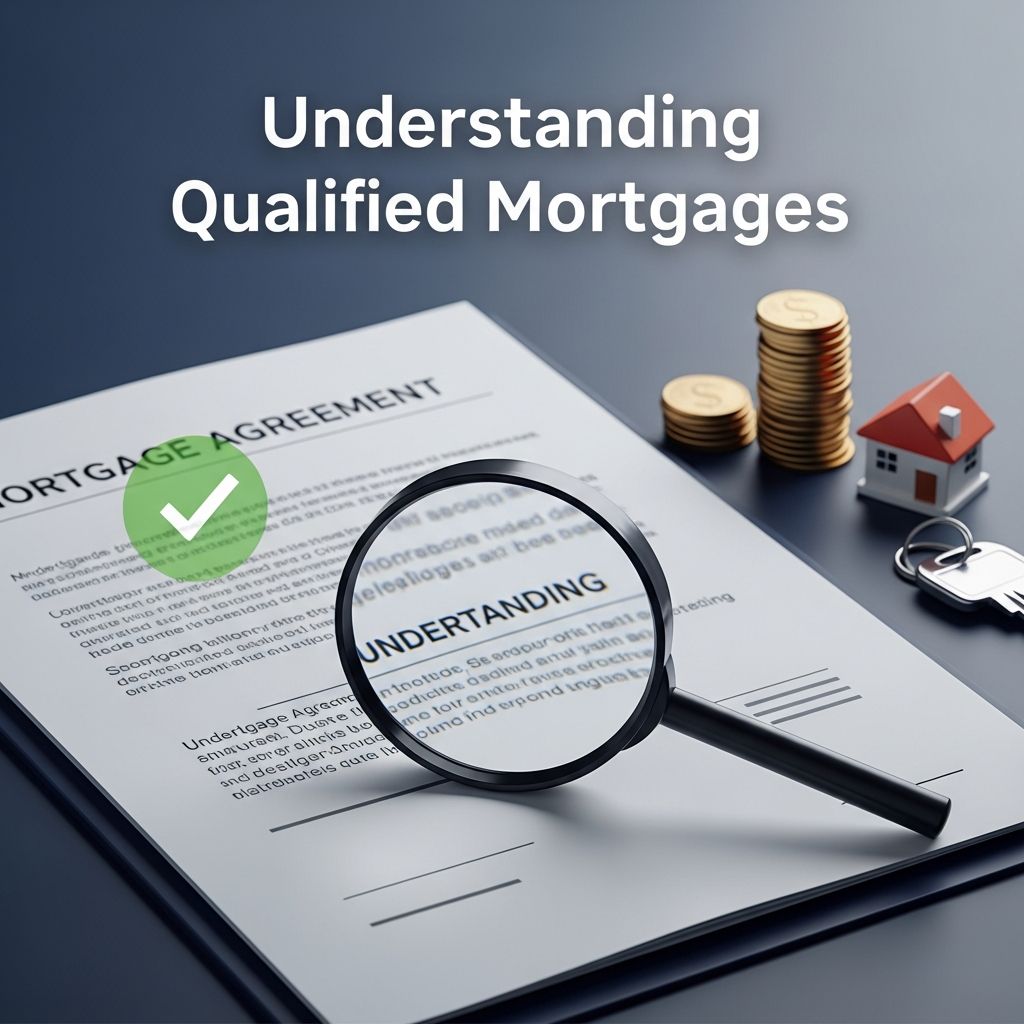
Qualified mortgages represent a cornerstone of modern lending practices, established to promote financial stability in the housing market. These loans adhere to stringent federal criteria that verify a borrower’s capacity to handle payments, minimizing the risks that contributed to past economic downturns.
The Origins and Purpose of Qualified Mortgage Standards
Following the 2008 housing crisis, regulators introduced measures to prevent predatory lending. The core idea is simple: lenders must confirm that applicants can realistically repay their loans before approval. This framework, known as the Ability-to-Repay/Qualified Mortgage Rule, presumes compliance when loans meet specific benchmarks, offering legal protections to lenders while safeguarding consumers from unaffordable debt.
By excluding high-risk elements like balloon payments or negative amortization, these standards foster loans with predictable terms. Borrowers benefit from transparency, while lenders gain a safe harbor from lawsuits if payments default due to verified affordability.
Core Requirements for a Loan to Qualify
To earn qualified status, mortgages must satisfy several mandatory conditions. Lenders evaluate income, assets, debts, and employment history in good faith. A pivotal metric is the debt-to-income (DTI) ratio, typically capped at 43% under the general definition, ensuring housing costs do not overwhelm finances.
- Verification of Financials: Documented proof of monthly income or assets, excluding the property’s value itself.
- DTI Assessment: Ratio of debt payments to income, or residual income after obligations.
- No Teaser Rates: Prohibits loans with low introductory rates that spike later.
Additionally, points and fees cannot exceed 3% of the loan principal for larger amounts, scaling higher for smaller loans to accommodate community lenders.
Categories of Qualified Mortgages Explained
Not all qualified mortgages follow the same path. Regulators outline multiple pathways, each tailored to different loan types and lender profiles. Here’s a breakdown:
| Category | Key Features | DTI Limit | Examples |
|---|---|---|---|
| General QM | Meets product rules; strict verification | ≤43% | Conventional loans |
| GSE-Eligible QM | Backed by Fannie Mae, Freddie Mac, FHA, VA, USDA | No limit | Government-insured mortgages |
| Small Creditor QM | For lenders with <$2B assets, ≤500 loans/year; portfolio-held | No specific limit | Community banks |
Government-backed options, such as FHA or VA loans, automatically qualify regardless of DTI, promoting access for veterans and first-time buyers. Small creditors enjoy flexibility to serve rural areas without rigid caps.
Prohibited Features in Qualified Mortgages
Risky loan structures are outright banned to protect long-term affordability. Common exclusions include:
- Negative amortization, where unpaid interest increases the balance.
- Interest-only periods that defer principal repayment.
- Terms exceeding 30 years, preventing stretched-out obligations.
- Balloon payments demanding large lump sums at maturity (with limited exceptions for small creditors).
APR limits tie the loan’s cost to the Average Prime Offer Rate (APOR), creating safe harbor (≤1.5% above) or rebuttable presumption categories for slightly higher rates.
Benefits for Borrowers and Lenders
Advantages for Homebuyers
These standards ensure loans match your financial reality, reducing default risks. Qualified status signals a stable product, often with competitive rates due to lower lender exposure. First-time buyers, especially those using FHA programs, find entry easier without DTI hurdles.
Protections for Financial Institutions
Lenders receive liability shields: safe harbor QMs are nearly immune to ability-to-repay challenges, while others face higher proof burdens for borrowers claiming violations. This clarity streamlines underwriting and boosts portfolio confidence.
Recent Developments and Evolving Rules
Regulations adapt to market needs. The seasoned QM category, introduced in 2021, grants status to performing loans after 36 timely payments, even if they initially fell short. This rewards responsible borrowers and eases refinances. Small creditor rules have expanded, aiding local banks post-2014 implementation.
As of 2026, core protections remain, but monitor CFPB updates for threshold adjustments amid interest rate shifts.
Comparing Qualified vs. Non-Qualified Mortgages
| Aspect | Qualified Mortgage | Non-Qualified (Non-QM) |
|---|---|---|
| Legal Protection | Safe harbor or presumption | Full ability-to-repay liability |
| DTI Cap | Usually 43% or flexible | No cap, but must verify |
| Risky Features | Prohibited | Possible (e.g., interest-only) |
| Availability | Widespread, esp. government | For unique situations (self-employed) |
Non-QM loans suit complex finances like variable income but carry higher scrutiny and rates.
How to Determine if Your Loan Qualifies
Review your loan estimate for QM indicators. Ask your lender directly about category compliance. Tools from CFPB help simulate DTI impacts. Government loans (FHA, VA) are reliably QM-safe.
Frequently Asked Questions (FAQs)
What happens if a loan isn’t a qualified mortgage?
It must still meet ability-to-repay rules, but lenders lack presumption of compliance, increasing legal risks.
Can jumbo loans be qualified mortgages?
Yes, if they meet general QM criteria like DTI and feature limits.
Do points and fees affect qualification?
Yes, capped at 3% for most loans to curb upfront costs.
Are all FHA loans qualified?
Yes, as GSE-eligible QMs, exempt from standard DTI caps.
How has the rule changed since 2014?
Additions like seasoned QMs and small creditor expansions enhance flexibility.
Practical Tips for Securing a Qualified Mortgage
- Strengthen your credit score and lower DTI before applying.
- Opt for fixed-rate terms under 30 years.
- Shop lenders offering government programs.
- Consult HUD-approved counselors for guidance.
Understanding these rules empowers informed decisions, aligning loans with your budget for lasting homeownership success.
References
- What is a Qualified Mortgage? — Experian. 2023. https://www.experian.com/blogs/ask-experian/whats-a-qualified-mortgage/
- What is a Qualified Mortgage? — Consumer Financial Protection Bureau. 2024-01-10. https://www.consumerfinance.gov/ask-cfpb/what-is-a-qualified-mortgage-en-1789/
- Qualified Mortgage (QM) highlights — MGIC. 2023. https://www.mgic.com/underwriting/qualified-mortgage-highlights
- HUD RELEASES ‘QUALIFIED MORTGAGE’ DEFINITION — U.S. Department of Housing and Urban Development. 2013-12-11. https://archives.hud.gov/news/2013/pr13-187.cfm
- Ability-to-Repay/Qualified Mortgage Rule — Consumer Financial Protection Bureau. 2024. https://www.consumerfinance.gov/rules-policy/final-rules/ability-to-pay-qualified-mortgage-rule/
- Qualified Mortgage Definition Under the Truth in Lending Act — Federal Register. 2020-12-29. https://www.federalregister.gov/documents/2020/12/29/2020-27571/qualified-mortgage-definition-under-the-truth-in-lending-act-regulation-z-seasoned-qm-loan
Similar Articles








Read full bio of medha deb