Understanding Property Taxes
Discover how property taxes are calculated, who sets the rates, exemptions available, and strategies to manage these essential homeowner costs effectively.

Property taxes represent a key obligation for homeowners, funding vital community services like schools, roads, and emergency response. These taxes are levied on the value of real estate, including land and structures, by local governments across the United States. Unlike income or sales taxes, property taxes are based on asset value, making them a stable revenue source for localities. In 2021, state and local governments collected $630 billion from property taxes, underscoring their economic significance.
The Core Mechanism of Property Taxation
At its foundation, property taxation multiplies a property’s taxable value by a designated tax rate. This process involves several stages: valuation, assessment adjustments, exemptions, and rate application. Local assessors determine a property’s worth through methods like comparable sales analysis, replacement cost estimation, or potential rental income projections. Assessments occur annually in some areas or every few years in others, reflecting market fluctuations.
The distinction between market value and assessed value is crucial. Market value reflects current sales prices of similar properties, while assessed value applies a specific ratio to that market figure. For instance, if a home’s market value is $400,000 and the local assessment ratio is 50%, the assessed value becomes $200,000. This ratio varies by state; some use 100% for full market alignment, others fractions like New Mexico’s 33.3%.
Deciphering the Millage Rate
The millage rate, or mill rate, is the tax rate expressed per $1,000 of assessed value—one mill equals 0.1%. A 25-mill rate means 2.5% taxation. For a $100,000 assessed property, this yields $2,500 annually ($100,000 / 1,000 × 25). Millage rates aggregate contributions from counties, cities, school districts, and special entities like fire departments.
| Property Value | Assessment Ratio | Assessed Value | Millage Rate | Annual Tax |
|---|---|---|---|---|
| $400,000 (Market) | 50% | $200,000 | 20 mills (2%) | $4,000 |
| $300,000 (Market) | 100% | $300,000 | 15 mills (1.5%) | $4,500 |
| $500,000 (Market) | 33.3% | $166,500 | 30 mills (3%) | $4,995 |
This table illustrates sample calculations, highlighting how ratios and rates interact to determine bills. Effective rates differ widely; comparing states requires accounting for these variables.
Exemptions and Relief Programs
Many jurisdictions offer exemptions reducing taxable value. Homestead exemptions apply to primary residences, often subtracting a fixed amount like $50,000 from assessed value. Veterans, seniors, and disabled individuals may qualify for additional breaks. Circuit breakers provide credits for low-income households, capping taxes relative to income.
- Homestead Exemption: Lowers taxes on owner-occupied homes, common in states like Florida and Texas.
- Senior Citizen Relief: Discounts or freezes for those over 65, preventing reassessment hikes.
- Veterans’ Benefits: Full or partial exemptions based on service and disability status.
- Circuit Breaker Programs: Refundable credits if taxes exceed income thresholds.
Eligibility requires application; missing deadlines forfeits benefits. These measures ensure fairness, protecting vulnerable groups from rising costs.
Regional Variations in Tax Systems
Property tax frameworks differ significantly by state and locality. California’s Proposition 13 limits annual increases to 2%, basing taxes on acquisition value rather than current market rates. Pennsylvania counties vary assessment bases, some at 100% market value, others fractional. New York apportions levies across property classes and municipalities for equity.
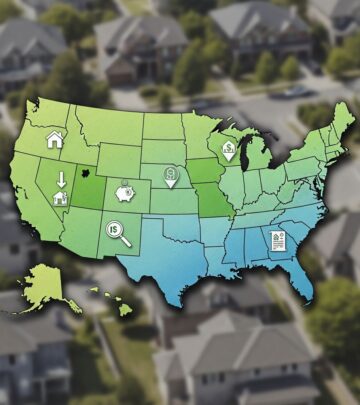
In municipal-dependent systems, cities set and collect taxes directly, funding local priorities. Homestead properties often face different rates from commercial ones, with homesteads supporting education exclusively in some states. Tax rates span from under 1% in Hawaii to over 2.5% in places like New Jersey, but adjusted effective rates level comparisons.
Payment Structures and Schedules
Bills arrive annually, semi-annually, or quarterly, with due dates varying. Mortgaged properties often escrow taxes monthly via lenders, simplifying payments. For example, California’s 2024-2025 installments due November 1 and February 1, delinquent shortly after.
Late payments incur penalties and interest. Some areas offer online portals or automatic deductions. Understanding your schedule prevents surprises; check county websites for specifics.
Challenging Your Assessment
If you believe your assessment overstates value, appeal through local boards. Gather evidence like recent appraisals, comparable sales, or property defects. Deadlines are strict, typically 30-60 days post-notice. Success can lower future bills significantly; about 40-60% of appeals reduce values in active markets.
- Review assessment notice for errors in size, condition, or comps.
- Document market declines or unique issues.
- File formal appeal with supporting photos and data.
- Attend hearings prepared to negotiate.
Tax Deductibility for Homeowners
Under U.S. tax law, state and local property taxes (SALT) are deductible up to $10,000 annually ($5,000 if married filing separately) on federal returns, provided itemizing. This applies to taxes funding public services, not fees like trash collection. Mortgaged homeowners benefit most, as escrow ensures timely payment.
Implications for Homebuyers and Sellers
Prospective buyers should factor taxes into affordability; they add 1-2% of home value yearly. Sellers disclose tax history. Tools like online calculators estimate bills using local rates. Relocating? Compare effective rates: New Jersey high, Hawaii low.
Frequently Asked Questions (FAQs)
What raises my property taxes?
Increases stem from reassessments reflecting market growth, levy hikes for budgets, or lost exemptions. Caps exist in some states.
Can renters be affected?
Indirectly, yes—landlords pass costs via rent. Some areas offer renter credits tied to property taxes paid.
How often are properties reassessed?
Annually in dynamic markets; every 3-5 years elsewhere, or post-sale/improvements.
Are commercial properties taxed same?
Often higher rates; valued on income potential. Personal property like equipment may also be taxed.
What if I can’t pay?
Installment plans, hardship deferrals, or sales possible. Contact tax office early.
Managing Property Tax Burdens Strategically
Minimize impact by claiming all exemptions, appealing unwarranted hikes, and budgeting via escrow. Track local votes on levies affecting rates. For seniors, explore freezes locking assessments. Long-term, energy-efficient upgrades may qualify for abatements in green-focused districts.
Property taxes evolve with policy; monitor state legislatures for reforms. Tools from the National Association of Realtors or county assessors aid planning.
References
- How Do Real Property Taxes Work? — Institute on Taxation and Economic Policy (ITEP). 2023. https://itep.org/how-do-real-property-taxes-work/
- How Real Property Tax Works — New York State Department of Taxation and Finance. 2022. https://www.tax.ny.gov/pdf/publications/orpts/taxworks.pdf
- Features of Property Tax Systems — School State Finance Project. 2024. https://files.schoolstatefinance.org/hubfs/Reports/Features%20of%20Property%20Tax%20Systems.pdf
- What are property taxes and how are they calculated? — Fidelity Investments. 2025. https://www.fidelity.com/learning-center/smart-money/property-taxes
- How do state and local property taxes work? — Tax Policy Center. 2024. https://taxpolicycenter.org/briefing-book/how-do-state-and-local-property-taxes-work
- What is property tax? — Rocket Mortgage. 2025. https://www.rocketmortgage.com/learn/property-tax
- What You Need to Know About Pennsylvania Property Taxes — Bingaman Hess. 2023. https://www.bingamanhess.com/blog/what-you-need-to-know-about-pennsylvania-property-taxes
Similar Articles








Read full bio of Sneha Tete