Property Assessed Value: 5 Steps To Appeal And Lower Your Taxes
Discover how assessed value shapes your property taxes, differs from market worth, and influences homeowners and investors alike.
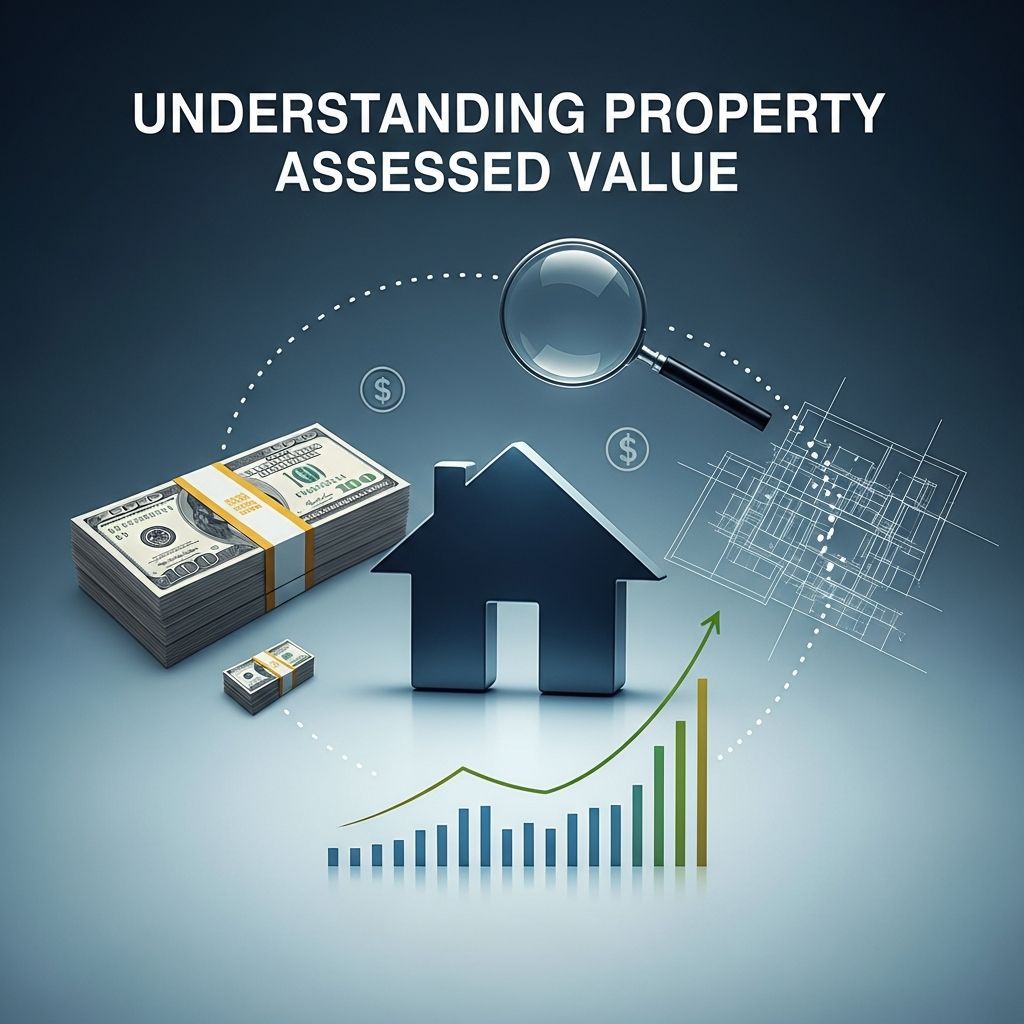
Property assessed value serves as a cornerstone in real estate taxation, representing the figure local governments use to compute annual property taxes for homes and commercial buildings alike. This valuation, determined by municipal assessors, reflects a standardized estimate rather than the price a property might fetch in today’s market.
Defining Assessed Value in Real Estate
The assessed value is essentially the monetary worth assigned to a property by its local taxing authority, primarily to establish the basis for property tax obligations. Unlike fleeting market fluctuations, this value aims for stability to ensure predictable revenue for public services like schools, roads, and emergency response.
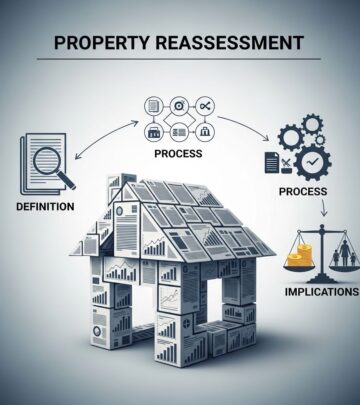
Local assessors, often working at the county or city level, evaluate properties through systematic reviews. These professionals consider factors such as square footage, location, construction quality, and recent comparable sales data. Reassessments occur periodically—typically every one to five years depending on the jurisdiction—to account for changes in property conditions or broader economic shifts.
- Key factors in assessment: Land size, building age, structural improvements, neighborhood trends, and local market data.
- Frequency: Varies by location; some areas reassess annually, others every few years.
- Purpose: Funds community infrastructure without direct reliance on sales prices.
How Local Governments Calculate Assessed Value
Calculation methods differ across states and counties, but most follow a mass appraisal approach. Assessors group similar properties—such as single-family homes in a suburb—then apply uniform valuation models based on recent sales of comparable properties, known as ‘comps.’ Adjustments are made for unique features like additions or deterioration.
In many places, assessed value equals a percentage of the market value, dictated by state-mandated assessment ratios. For instance, if a home’s market value stands at $500,000 and the local ratio is 80%, the assessed value becomes $400,000. This taxable portion prevents full market volatility from directly spiking tax bills.
| State Example | Assessment Ratio | Example Calculation |
|---|---|---|
| South Dakota | 50% | $300,000 market value → $150,000 assessed |
| Generic County | 80% | $450,000 market value → $360,000 assessed |
| New York | 100% (market-based) | $800,000 market value → $800,000 assessed |
Renovations, such as a new roof or expanded garage, can trigger reassessments that raise the value, while neglect might lower it. Commercial properties undergo similar scrutiny, factoring in income potential and occupancy rates.
Assessed Value Versus Market Value: Core Differences
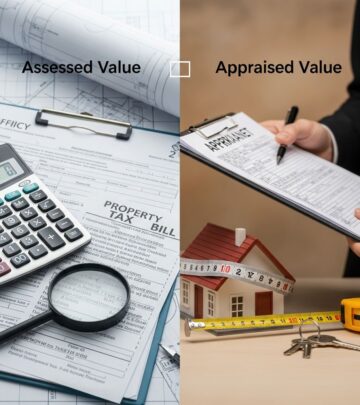
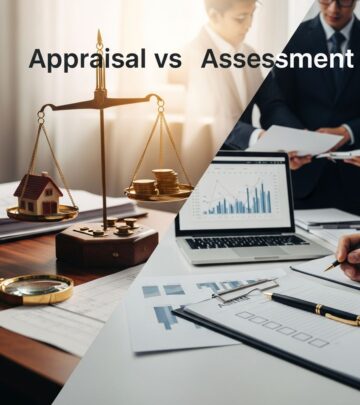
While both involve property worth, assessed and market values diverge in purpose and methodology. Market value reflects what a willing buyer would pay a willing seller in an arm’s-length transaction, driven by supply, demand, and current economic conditions. Assessed value, conversely, prioritizes tax equity and lags behind rapid market changes.
In booming markets, home prices soar due to bidding wars, outpacing slower reassessment cycles, leading to assessed values below market levels. During downturns, the reverse holds: market values dip faster than assessments adjust. Recent sales heavily influence future assessments, bridging the gap over time.
- Market value: Dynamic, buyer-seller driven, ideal for sales/refinancing.
- Assessed value: Static, government-set, tax-focused.
Appraised Value: Another Layer of Valuation
Appraised value enters the picture during mortgage approvals, sales, or refinances. A licensed appraiser conducts an on-site inspection, evaluating condition, upgrades, and comps to estimate current market worth. Lenders rely on this to mitigate risk, often requiring it to match or exceed loan amounts.
Unlike assessments, appraisals are individualized and timely, incorporating interior details like kitchen modernizations or HVAC systems. They typically align closer to market value but can surprise owners if local assessors undervalue upkeep.
| Valuation Type | Determined By | Primary Use | Frequency |
|---|---|---|---|
| Assessed | Local assessor | Property taxes | Periodic (1-5 years) |
| Market | Buyers/sellers | Sales pricing | Real-time |
| Appraised | Licensed appraiser | Lending/sales | As needed |
Impact on Property Taxes and Budgeting
Your annual property tax bill stems directly from assessed value multiplied by the local millage rate (tax rate per $1,000 of assessed value). A $300,000 assessed home in a district with a 20-mill rate owes $6,000 yearly. Homeowners can budget accordingly, but sudden reassessment hikes demand vigilance.
Tax relief programs, like homestead exemptions for primary residences or senior discounts, reduce the taxable assessed value. Investors in commercial real estate must factor assessments into cash flow projections, as they influence net operating income.
Strategies for Homeowners Facing High Assessments
If an assessment seems inflated, appeal it. Start by reviewing your property record for errors in square footage or features. Gather evidence like recent appraisals or comps showing lower values, then file within the deadline—often 30-60 days post-notice.
- Obtain your assessment notice and property card.
- Compare with similar neighborhood properties.
- Contact the assessor’s office for informal review.
- Submit a formal appeal with documentation.
- Consider professional help if values are significantly off.
Preventive maintenance and documentation of repairs can support lower assessments during reviews. Understanding local cycles helps anticipate changes.
Assessed Value in Commercial and Investment Contexts
For businesses, assessed value extends to structures housing operations, often blending real estate with business personal property. Municipalities tax a portion of market value, impacting operational costs. Investors analyze assessment trends alongside cap rates to gauge tax burdens on returns.
Insurance policies may reference assessed value for coverage limits, distinguishing it from replacement cost. Savvy owners monitor reassessments to negotiate leases or plan expansions.
Factors Influencing Changes in Assessed Value
Market booms, natural disasters, or zoning shifts prompt value adjustments. Major improvements like additions boost it, while damage from floods might depress it pending repairs. Economic recessions slow appreciation, stabilizing taxes temporarily.
- Increases: Renovations, rising comps, inflation.
- Decreases: Deterioration, market slumps, appeals.
Navigating Assessments as a New Homeowner
New buyers receive assessments reflecting purchase price, which assessors use as a benchmark. Track notices annually and understand your tax rate for surprises. Tools from county websites provide free access to records, aiding proactive management.
Frequently Asked Questions
What raises my property’s assessed value?
Improvements, neighborhood growth, and updated comps typically increase it. Local reassessments capture these shifts.
Can I lower my assessed value?
Yes, through appeals with evidence of overvaluation or exemptions for qualifying homeowners.
How often is property reassessed?
Varies: annually in some areas, every 4-5 years in others. Check local rules.
Does assessed value affect my mortgage?
Indirectly; lenders focus on appraised value, but taxes based on assessment factor into affordability.
Is assessed value the same nationwide?
No, states set ratios and methods, leading to variations.
Long-Term Implications for Property Owners
Over decades, assessed values track market trends loosely, providing tax stability amid volatility. Investors use them for portfolio stress-testing, while families plan inheritances considering tax bases. Staying informed empowers better financial decisions in real estate ownership.
References
- An Investor’s Guide For Understanding Assessed Value — FNRP. 2023. https://fnrpusa.com/blog/assessed-value-definition/
- Assessed value: What it is and how it’s determined — Rocket Mortgage. 2024. https://www.rocketmortgage.com/learn/assessed-value
- Assessed value vs. appraised value: What’s the difference? — Bankrate. 2024. https://www.bankrate.com/real-estate/assessed-value-vs-appraised-value/
- What Does Assessed Value Mean? — Zillow. 2024. https://www.zillow.com/learn/tax-assessed-value/
- Assessments — New York State Department of Taxation and Finance (Tax.NY.gov). 2025-02-01. https://www.tax.ny.gov/pit/property/learn/asmts.htm
Similar Articles








Read full bio of medha deb