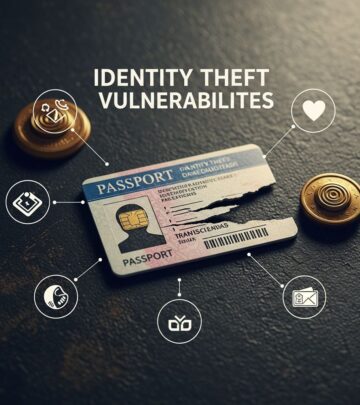
Understanding Personally Identifiable Information
Explore what constitutes PII, its types, risks, and protection strategies in the digital age.

Personally identifiable information, commonly known as PII, represents any data that can be used to pinpoint a specific individual, either directly or when combined with other details. This concept forms the cornerstone of data privacy efforts worldwide, influencing how organizations collect, store, and process user information.
Defining PII in the Modern Context
The term PII lacks a universal legal definition but is broadly understood as information that distinguishes or traces an individual’s identity. According to the National Institute of Standards and Technology (NIST), PII encompasses any data that can identify a person, such as names, social security numbers, or biometric records, as well as information linked or linkable to an individual like financial or medical details.
In the European Union, the General Data Protection Regulation (GDPR) refers to similar concepts as ‘personal data,’ defined as any information relating to an identified or identifiable natural person. This includes identifiers like names, location data, or online factors specific to physical, genetic, or social identity.
Under California’s Consumer Privacy Act (CCPA), personal information includes data that identifies, relates to, or could reasonably be linked to a consumer or household, excluding publicly available government records.
Categories of PII: Direct and Indirect Identifiers
PII falls into two primary categories: linked (direct identifiers) and linkable (indirect or quasi-identifiers). Direct identifiers uniquely point to an individual on their own, while indirect ones require combination with other data for identification.
Linked PII: Direct Identifiers
These are standalone pieces of information sufficient to identify someone. Examples include:
- Government-issued IDs like Social Security Numbers (SSN), passport numbers, or driver’s licenses.
- Biometric data such as fingerprints, retinal scans, or facial recognition profiles.
- Financial account numbers, including credit card or bank details.
- Asset identifiers like IP addresses, MAC addresses, or device IDs that consistently link to a person.
Such data demands the highest protection levels due to its potency in enabling identity verification or theft.
Linkable PII: Indirect Identifiers
These elements alone may not identify someone but become powerful when aggregated. Research indicates that 87% of U.S. citizens can be identified using just gender, ZIP code, and date of birth.
Common examples:
- Demographic details: date of birth, place of birth, race, ethnicity, or religion.
- Contact information: email addresses, phone numbers, or mailing addresses.
- Professional data: employment history, job titles, or educational background.
- Location-based info: ZIP codes, cities, or general geographical indicators.
De-anonymization techniques exploit these combinations, turning seemingly harmless data into identifiable profiles.
Sensitive vs. Non-Sensitive PII
PII is further classified by sensitivity, determining protection needs. Sensitive PII, if compromised, can cause significant harm like financial loss or discrimination.
| Type | Examples | Risk Level |
|---|---|---|
| Sensitive PII | SSN, biometrics, medical records, financial accounts, passwords | High – Leads to identity theft, fraud |
| Non-Sensitive PII | Name, email, phone, IP address, date of birth | Medium – Risk increases when combined |
While some regulations mandate protections only for sensitive PII, best practices recommend safeguarding all types to mitigate cumulative risks.
Legal Frameworks Governing PII
Various laws enforce PII handling standards:
- GDPR (EU): Mandates consent, data minimization, and breach notifications for personal data processing.
- CCPA/CPRA (California): Grants consumers rights to access, delete, and opt-out of personal information sales.
- U.S. Federal Guidelines: NIST and agencies like HHS define PII for government and contractor compliance.
- Sector-Specific Rules: HIPAA protects health-related PII (PHI), while Gramm-Leach-Bliley Act covers financial data.
These frameworks emphasize risk assessments, as PII status depends on context—no fixed list exists.
Risks Associated with PII Exposure
Unauthorized PII access fuels crimes like identity theft, where criminals open fraudulent accounts or commit tax fraud using stolen SSNs. Data breaches expose millions annually, with linkable PII enabling targeted phishing or doxxing.
In rare disease communities, even aggregated data risks identification due to small population sizes. Publicly available PII, like names in directories, becomes dangerous when merged with private details.
Strategies for Protecting PII
Individuals and organizations must adopt proactive measures:
- Data Minimization: Collect only necessary PII and anonymize where possible.
- Encryption and Access Controls: Use strong encryption for storage/transmission and role-based access.
- Regular Audits: Conduct privacy impact assessments to identify vulnerabilities.
- Employee Training: Educate on recognizing phishing and safe data handling.
- Breach Response Plans: Prepare for rapid notification and mitigation.
For consumers: Use privacy settings, monitor credit reports, enable two-factor authentication, and avoid oversharing online.
PIi in Digital Ecosystems
Online trackers like cookies and device IDs qualify as PII when linkable to individuals. Social media posts, browser history, and transaction logs under GDPR can all constitute personal data.
E-commerce sites must secure order IDs and payment details, while apps track location data as quasi-identifiers.
Common Misconceptions About PII
- Myth: Public info isn’t PII. Fact: Public data can become PII when combined.
- Myth: De-identified data is safe. Fact: Re-identification is possible with advanced techniques.
- Myth: Only sensitive data matters. Fact: Non-sensitive PII aggregates into profiles.
Frequently Asked Questions (FAQs)
What counts as PII?
Any data identifying an individual directly (e.g., SSN) or indirectly (e.g., ZIP + DOB).
Is an IP address PII?
Yes, as it links to a device and potentially a person.
How does PII differ from personal data?
PII is a U.S. business term; personal data is GDPR’s legal equivalent.
What are the penalties for mishandling PII?
Fines up to 4% of global revenue under GDPR; civil penalties under CCPA.
Can anonymized data become PII?
Yes, if new public info enables re-identification.
Building a PII-Safe Future
As data proliferation accelerates, understanding PII empowers better privacy decisions. Organizations prioritizing compliance foster trust, while individuals vigilant about sharing reduce risks. Evolving technologies like AI demand adaptive strategies to keep pace with threats.
References
- Personally identifiable information: PII, non-PII & personal data — Piwik PRO. 2023. https://piwik.pro/blog/what-is-pii-personal-data/
- Personally identifiable information guide: a list of PII examples — Matomo. 2023. https://matomo.org/personally-identifiable-information-guide-list-of-pii-examples/
- Personally identifiable information – NCATS Toolkit — National Center for Advancing Translational Sciences (NCATS), NIH (.gov). 2024-02-15. https://toolkit.ncats.nih.gov/glossary/personally-identifiable-information/
- Personally Identifiable Information (PII) — University of Tennessee Office of Information Technology (.edu). 2023. https://oit.utk.edu/research/sensitive-info/data-type/pii/
- Differences Between PII, Sensitive PII, and PHI — CivicPlus Help Center. 2023. https://www.civicplus.help/municipal-websites-central/docs/differences-between-pii-sensitive-pii-and-phi
- What is Personally Identifiable Information? Definition + Examples — UpGuard. 2023-10-01. https://www.upguard.com/blog/personally-identifiable-information-pii
Similar Articles








Read full bio of medha deb