Understanding Personal Loan Interest Rates
Discover how lenders calculate interest and what factors influence your borrowing costs

When considering a personal loan, one of the most critical elements to understand is how interest rates function and what they ultimately cost you. Interest rates represent the price of borrowing money, expressed as a percentage of the loan amount you receive. However, the actual cost of your loan extends beyond this basic rate, encompassing fees, terms, and other financial considerations that collectively determine your total borrowing expense.
What Makes Up Your Loan’s True Cost
The interest rate on a personal loan is fundamentally the amount you pay to a lender for the privilege of borrowing their money. However, this rate tells only part of the story. Your actual borrowing cost includes several components that work together to determine how much you’ll ultimately pay.
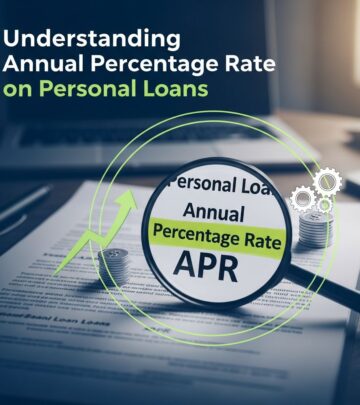
The primary distinction exists between the interest rate and the annual percentage rate, commonly abbreviated as APR. While many borrowers use these terms interchangeably, they represent different measurements of cost. The interest rate reflects only the cost of the principal amount borrowed, whereas the APR encompasses the interest rate plus additional fees and charges the lender imposes.
Consider a practical example: if you borrow $18,000 at a 12.99% interest rate with no origination fees, your APR matches the interest rate at 12.99%. However, if that same loan carries a 5% origination fee, the APR increases to 15.18%, despite the identical base interest rate. This difference illustrates why comparing APRs rather than interest rates alone provides a more accurate picture of your borrowing costs.
Components That Influence Your Interest Rate
Lenders do not assign interest rates randomly. Instead, they employ a systematic evaluation process to determine the appropriate rate for each borrower. Several interconnected factors shape this decision, each contributing to the overall risk assessment lenders conduct.
Your Creditworthiness and Credit History
Among the most significant determinants of your interest rate is your credit score. This numerical representation of your credit history signals to lenders how reliably you have managed past debt obligations. Borrowers with higher credit scores, typically those demonstrating consistent on-time payments and responsible credit use, qualify for lower interest rates. Conversely, those with lower credit scores or limited credit histories often face substantially higher rates, as lenders adjust their terms to compensate for perceived increased risk.
Your credit report extends beyond a single number, encompassing details about payment history, outstanding debts, length of credit accounts, and recent credit inquiries. Lenders review these elements to construct a comprehensive risk profile before determining your rate.
Loan Amount and Repayment Duration
The size of the loan you request and the timeframe over which you will repay it also influence your interest rate. Larger loans and extended repayment periods typically attract higher interest rates. This relationship exists because longer loan terms mean interest accrues over an extended period, increasing the lender’s exposure to risk over time.
Additionally, your monthly payment amounts vary based on these factors. A smaller loan over a brief period requires higher monthly payments, while a larger loan extended over many years distributes payments across numerous months. Lenders factor these considerations into their rate calculations.
Market Conditions and Macroeconomic Factors
Interest rates across all lending products respond to broader economic conditions and monetary policy decisions. The Federal Reserve’s decisions regarding the federal funds rate—the target rate at which banks lend to one another—cascade through the financial system and influence personal loan rates. When the Federal Reserve raises its rates, personal loan rates typically increase. Conversely, rate cuts generally lead to lower personal loan rates over time.
Beyond Federal Reserve actions, general market conditions affecting loan demand, inflation expectations, and economic outlook all play roles in determining available rates. During periods of economic uncertainty or rising inflation, lenders typically increase rates to protect their returns. During stronger economic periods with lower inflation, rates may decline.
Loan Term Selection
Your choice of repayment term directly impacts your interest rate and monthly payment. Shorter repayment periods generally qualify for lower interest rates, while longer terms often carry higher rates. This relationship reflects the increased risk to lenders when funds remain outstanding for extended periods.
How Lenders Calculate Interest on Your Balance
Once a lender establishes your interest rate, they employ specific methodologies to calculate how much interest you owe. Two primary approaches exist in the personal lending industry, each producing different payment structures and total interest costs.
Simple Interest Calculation
Most personal loans utilize simple interest methodology, which represents the most straightforward approach to interest calculation. With simple interest, the lender calculates interest solely on the principal amount borrowed, not on accumulated interest over time.
The formula for simple interest is:
Interest = Principal × Rate × Time
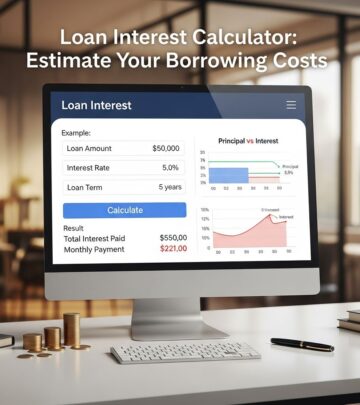
For example, borrowing $10,000 at a 10% annual interest rate over 3 years would generate $3,000 in total interest ($10,000 × 0.10 × 3). This method produces predictable, consistent monthly payments throughout your loan term, making budgeting straightforward.
Precomputed Interest Methodology
Some lenders employ precomputed interest, which calculates the total interest amount upfront for the entire loan term. Rather than computing interest monthly based on your remaining balance, the lender determines total interest at loan origination and includes it in your payment schedule. This approach can result in higher total interest payments if you pay off your loan early, as you may still owe the full precomputed amount despite reducing the loan term.
The Range of Available Interest Rates
Personal loan interest rates vary substantially across the lending landscape. As of the fourth quarter of 2024, the national average interest rate for personal loans stood at 12.32%. However, individual rates can range dramatically based on borrower qualifications and lender offerings.
Qualified borrowers with excellent credit scores and strong financial profiles may secure rates beginning around 6% or lower. Conversely, borrowers with limited credit histories or lower credit scores might encounter rates approaching 36% or higher, depending on state regulations governing maximum allowable rates. This wide spectrum underscores the importance of understanding your personal financial situation and working to improve factors within your control, particularly your credit score.
Fixed Rates Versus Variable Rate Options
Most personal loans feature fixed interest rates, meaning your rate remains constant throughout your entire repayment period. This stability allows precise payment calculations and budget planning, as your monthly obligation never changes due to rate fluctuations.
Some lenders offer variable-rate personal loans, where the interest rate fluctuates based on market conditions and broader interest rate environments. While variable rates initially may seem attractive due to lower starting rates, they introduce payment uncertainty. If market rates rise, your interest rate may increase, raising your monthly payment. Conversely, falling rates could decrease your payment, though this benefit is not guaranteed.
Distinguishing Between Interest Rate and APR in Practice
Understanding the practical implications of the interest rate versus APR distinction helps borrowers make informed lending decisions. Consider a real-world scenario:
You obtain a $15,000 personal loan with a 13% interest rate, a three-year repayment term, and a 9.99% origination fee. The lender withholds $1,498.50 (9.99% of $15,000) as an upfront origination fee, reducing the funds you receive. However, you repay the full $15,000 principal over three years.
The calculation reveals that despite your 13% interest rate, your true APR reaches approximately 16.33% when accounting for the origination fee. This example demonstrates why lenders must disclose APR information—it provides borrowers with a more complete picture of their total borrowing costs.
Common Fees Beyond the Interest Rate
Beyond interest charges, personal loans typically include additional fees that increase your total borrowing costs. Understanding these charges allows you to compare loan offers more effectively and avoid unpleasant surprises.
- Origination fees: Most commonly, lenders charge origination fees ranging from 1% to 12% of your loan amount, though some loans charge no origination fee. These fees compensate the lender for processing and underwriting your application.
- Late payment fees: If you miss a payment deadline, the lender typically imposes a late fee. While these fees are not included in APR calculations, they significantly impact your out-of-pocket costs if you experience payment difficulties.
- Prepayment penalties: Some lenders charge fees if you pay off your loan early. These penalties compensate the lender for lost interest income. However, many modern personal loans eliminate prepayment penalties, allowing you to pay faster without additional charges.
- Other possible charges: Depending on your lender, additional fees might include account maintenance fees, returned check fees, or documentation fees.
Strategies for Obtaining Favorable Interest Rates
While lenders determine your rate based on factors partially outside your control, several strategies can position you to receive better terms.
Improve your credit score: The single most impactful action you can take is enhancing your credit score before applying for a personal loan. Pay all bills on time, reduce outstanding debt, and correct any errors on your credit report. Even modest credit score improvements can meaningfully lower your interest rate.
Shop multiple lenders: Different lenders assess risk differently and may offer varying rates for similar borrowers. Obtaining rate quotes from multiple lenders allows you to compare offers and select the most favorable terms. Rate inquiries typically do not harm your credit score if completed within a short timeframe.
Consider a larger down payment or co-signer: If available, providing a down payment or adding a creditworthy co-signer can reduce lender risk and potentially qualify you for lower rates.
Select an appropriate loan term: While longer terms reduce monthly payments, they increase total interest costs. Shorter terms cost less overall, though they require larger monthly commitments. Balance your monthly budget needs with your total interest expense when selecting a term.
Comparing Personal Loan Offers Effectively
When evaluating personal loan offers, moving beyond interest rates to examine complete terms ensures you select the most suitable option for your financial situation.
| Factor to Compare | Importance | Impact on Total Cost |
|---|---|---|
| APR | High | Reflects total annual borrowing cost including fees |
| Monthly Payment | High | Determines your budget impact |
| Total Interest Cost | High | Cumulative interest paid over loan term |
| Origination Fees | Medium | Upfront cost reducing funds received |
| Late Fees | Medium | Penalty if payments are missed |
| Prepayment Penalties | Low to Medium | Cost if you pay early |
Frequently Asked Questions
What constitutes a favorable personal loan interest rate?
A favorable rate generally falls below the national average, which was 12.32% as of the fourth quarter of 2024. However, favorable rates depend on your individual credit profile and current market conditions. Rates can range from under 6% for highly qualified borrowers to 36% or higher for those with lower credit scores.
How do I calculate my total interest payment?
For loans using simple interest, multiply your principal by your interest rate and the number of years of the loan. For example, $10,000 principal × 10% rate × 3 years = $3,000 total interest. For more precise calculations involving monthly payments, use online loan calculators or consult your lender’s payment schedule.
Can I lower my interest rate after my loan begins?
Some lenders offer rate reduction options or refinancing opportunities, though these vary by lender. Refinancing into a new loan with better terms is possible if your credit score improves or market rates decline, though this typically involves new application processes and fees.
Why does my APR differ from my interest rate?
APR includes fees and other charges beyond the base interest rate. A loan with a 12.99% interest rate but a 5% origination fee has an APR of approximately 15.18%, as the fee increases your total borrowing cost.
Should I choose a fixed or variable rate?
Fixed rates provide payment stability and budgeting certainty, making them suitable for most borrowers. Variable rates introduce payment uncertainty but may initially offer lower rates. Choose based on your comfort level with payment variability and your expectations regarding future interest rate movements.
Key Takeaways
- Interest rates represent the cost of borrowing money expressed as a percentage of your principal loan amount
- APR provides a more complete picture than interest rate alone by including fees and total borrowing costs
- Your credit score, loan amount, repayment term, and market conditions all influence your interest rate
- Most personal loans use simple interest calculated on the principal only
- Personal loan rates typically range from under 6% to 36%, with the national average around 12.32%
- Fixed rates remain constant, while variable rates fluctuate with market conditions
- Comparing complete loan terms and APRs helps identify the most favorable offers
References
- What’s a Good Interest Rate on a Personal Loan? — Experian. 2024. https://www.experian.com/blogs/ask-experian/whats-a-good-interest-rate-for-a-personal-loan/
- APR vs. Interest Rate on a Loan: Key Differences — Discover. https://www.discover.com/personal-loans/resources/consolidate-debt/apr-vs-interest-rate/
- What is the APR on a personal loan? — Bankrate. 2026. https://www.bankrate.com/loans/personal-loans/what-is-the-apr-on-a-personal-loan/
- How Do Personal Loan Interest Rates Work? — OneMain Financial. https://www.onemainfinancial.com/resources/loan-basics/how-do-personal-loan-interest-rates-work
- How Interest Is Calculated on Personal Loans — JG Wentworth. https://www.jgwentworth.com/resources/mp-how-interest-is-calculated-on-personal-loans
- What is the difference between a loan interest rate and the APR? — Consumer Finance Protection Bureau. https://www.consumerfinance.gov/ask-cfpb/what-is-the-difference-between-a-loan-interest-rate-and-the-apr-en-733/
Similar Articles








Read full bio of medha deb