Understanding Personal Loan Dangers
Discover critical financial risks before securing a personal loan

Personal loans have become increasingly popular for individuals seeking quick access to capital for various purposes. Whether consolidating existing debt, financing home renovations, or covering unexpected expenses, personal loans offer a seemingly straightforward borrowing solution. However, beneath the surface of these financial products lie significant risks that borrowers must understand before signing any agreement. Taking on a personal loan without fully comprehending its potential downsides can lead to serious financial consequences that extend far beyond the initial loan amount.
The Interest Rate Challenge: Understanding the True Cost of Borrowing
One of the most substantial risks associated with personal loans involves the interest rates attached to these products. The annual percentage rate (APR) you receive depends heavily on your creditworthiness, creating a system where those who need money most—individuals with poor credit histories—often pay the highest rates. For borrowers with bad credit, APRs can easily exceed 30%, with some lenders charging rates approaching or surpassing 35%. This creates a paradoxical situation where financially vulnerable individuals face the most expensive borrowing options available.
The difference in interest rates across credit score ranges is dramatic and can substantially impact the total amount you repay. Consider the interest rate variations: borrowers with excellent credit (800-850) might receive rates around 12.50%, while those with poor credit (300-579) could face rates exceeding 260%. This disparity means that a $10,000 loan borrowed at 12.50% versus 35% results in thousands of dollars in additional interest payments over the loan term.
Understanding how long you’ll be paying and calculating the total cost requires careful analysis before committing to a loan agreement. A long repayment timeline combined with a high interest rate can severely limit the effectiveness of borrowing money for debt consolidation or major purchases. Many borrowers focus solely on monthly payment amounts without considering the cumulative interest expense, which can be substantially higher than anticipated.
Origination Fees and Hidden Charges: The Upfront Costs
Beyond interest rates, personal loans frequently include origination fees that many borrowers fail to consider adequately during the decision-making process. Lenders often retain a percentage of your loan amount through these charges, with typical origination fees ranging from 0.99% to 12%. For borrowers with poor credit, origination fees are more likely to appear and often fall at the higher end of this range.
The mechanics of origination fees create an additional financial burden: a high origination fee might necessitate borrowing a larger loan amount to receive the funds you actually need after the fee is deducted. This situation creates a compounding problem—a larger loan amount means more interest paid over the repayment period. If you needed $5,000 but face a 10% origination fee, you might need to borrow $5,556 to receive your intended $5,000 after fees, thereby increasing the total interest expense significantly.
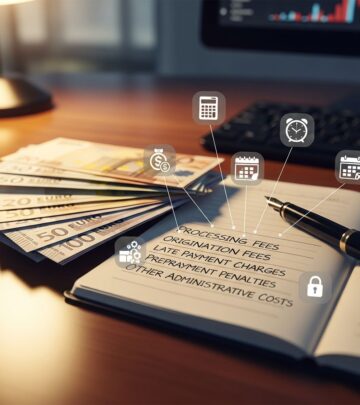
Beyond origination fees, personal loans may include other charges such as late payment penalties, prepayment penalties (which discourage early repayment), and annual fees. These additional costs can accumulate quickly, particularly for borrowers who experience financial difficulties and miss payments during the loan term.
The Unsecured Loan Premium: Why Personal Loans Cost More
Most personal loans are unsecured financial products, meaning they don’t require collateral such as a home or vehicle to back the loan. While this structure provides borrowers with advantages—specifically, the protection of valuable assets—it also results in higher interest rates compared to secured alternatives. When lenders lack collateral to seize in case of default, they compensate for this elevated risk by charging borrowers higher rates.
Home equity loans and home equity lines of credit (HELOCs), by contrast, use residential property as collateral, allowing lenders to charge substantially lower rates. This fundamental structural difference means borrowers typically face interest rates 5-15 percentage points higher on personal loans than on comparable secured products. For someone borrowing $20,000, this difference could mean paying thousands of dollars more in interest across the loan term.
Credit Score Deterioration: Immediate and Long-Term Consequences
Taking out a personal loan creates multiple pathways through which your credit score can suffer damage. The initial inquiry process itself—when lenders perform a hard credit inquiry to evaluate your application—results in a temporary dip to your credit score. While this effect typically fades within several months, applying for multiple loans in a short timeframe compounds the damage.
Beyond the application process, your credit score faces ongoing risks once you’ve been approved and borrowed the funds. The new installment loan gets added to your credit profile, immediately increasing your total outstanding debt. Credit scoring models consider your total debt levels when calculating scores, so this increase can produce immediate score reductions. Additionally, taking on new debt increases your debt-to-income (DTI) ratio, a metric that lenders examine when evaluating future credit applications and that factors into some credit scoring calculations.
If you encounter difficulty making payments after receiving the loan, the credit damage intensifies substantially. Even a single missed or late payment can significantly harm your credit score and remain on your credit report for seven years. Multiple missed payments or default on the loan creates severe, long-term credit consequences that make obtaining favorable credit terms for years afterward extremely difficult.
The Debt Accumulation Trap: Creating Financial Vulnerability
Personal loans present a significant risk of increasing overall debt levels rather than alleviating financial stress. While these loans can serve legitimate purposes such as consolidating high-interest credit card debt, they simultaneously enable borrowers to accumulate additional debt without addressing underlying financial behaviors. Individuals who borrow money without establishing spending discipline and budgeting practices often find themselves with both the personal loan payment and continued credit card balances.
The debt accumulation risk becomes particularly acute when borrowers borrow more money than they actually need. Receiving loan funds beyond what’s necessary tempts borrowers toward discretionary spending that compounds their financial burden. What began as a solution for a specific financial challenge transforms into a multi-faceted debt situation that becomes increasingly difficult to manage.
Furthermore, personal loans create rigid, non-adjustable payment obligations that remain constant throughout the repayment term regardless of changing personal circumstances. Unlike credit cards where you can reduce your monthly obligations by paying down the balance, a personal loan locks you into a fixed monthly payment that persists even if your income decreases or unexpected expenses arise.
The Debt-to-Income Ratio Problem: Future Borrowing Complications
Adding a personal loan to your financial profile increases your debt-to-income ratio—the percentage of your monthly income allocated toward debt repayment. Lenders carefully examine this metric when evaluating credit applications because it indicates your capacity to assume additional debt responsibly. Many lenders establish maximum DTI ratios around 43%, meaning your total monthly debt payments shouldn’t exceed 43% of your gross monthly income.
Taking on a personal loan can push your DTI ratio higher, making it difficult or impossible to qualify for additional credit at competitive rates. If you’re planning major purchases like a home or vehicle in the near future, a personal loan added to your current debt obligations could disqualify you from mortgage approval or result in substantially higher interest rates on auto loans. The short-term solution of a personal loan may ultimately prevent you from accessing better-quality credit products when you need them most.
The Payment Affordability Risk: Budgetary Strain and Default Danger
Personal loans impose rigid repayment schedules that require consistent, predictable income to sustain. When life circumstances change—job loss, medical emergencies, or unexpected major expenses—your ability to continue making loan payments may disappear even though your obligation to the lender remains unchanged. Unlike some other credit products that offer flexibility, personal loan payments remain locked in place, creating financial vulnerability for borrowers experiencing temporary or permanent income disruptions.
Borrowers who underestimate the burden of personal loan payments or who overestimate their capacity to repay face mounting stress as payments strain their monthly budgets. This financial pressure can force difficult choices between meeting loan obligations and covering essential expenses like housing, food, and healthcare. The psychological and practical stress of unaffordable debt creates additional problems beyond the financial mechanics of the loan itself.
Comparing Personal Loan Risks Across Credit Profiles
| Credit Score Range | Average APR | Risk Level | Typical Use Case |
|---|---|---|---|
| Excellent (800-850) | 12.50% | Low | Debt consolidation, strategic financing |
| Very Good (740-799) | 15.74% | Low to Moderate | Debt consolidation, major purchases |
| Good (670-739) | 28.72% | Moderate | Emergency expenses, consolidation |
| Fair (580-669) | 92.45% | High | Limited options available |
| Poor (300-579) | 260.34% | Very High | Predatory lending risk |
This table demonstrates how dramatically personal loan risks escalate as credit scores decline. Borrowers with poor credit face interest rates exceeding 20 times those available to borrowers with excellent credit, creating vastly different financial outcomes from otherwise identical loan amounts and terms.
Strategies for Mitigating Personal Loan Dangers
While personal loans carry substantial risks, borrowers can implement strategies to minimize these dangers before and after obtaining loans. First, improving your credit score before applying for a personal loan can result in dramatic savings. Raising a credit score from the fair range (580-669) to the very good range (740-799) can save over $1,800 in interest on a typical personal loan. This substantial savings justifies delaying a loan application to spend months improving creditworthiness through on-time payments and debt reduction.
Second, developing a clear repayment strategy before borrowing establishes realistic expectations about loan payoff. Understanding whether you’ll employ debt avalanche methods (focusing on highest-interest debt first) or debt snowball approaches (targeting smallest balances first) helps ensure your personal loan fits into a comprehensive debt management plan rather than existing in isolation.
Third, borrowing only the amount you actually need prevents unnecessary debt accumulation and limits the total interest expense. Resisting the temptation to pad loan requests with extra cash protects your financial future from additional burden. Fourth, shopping among multiple lenders ensures you receive competitive rates rather than accepting the first offer presented. Interest rate variations among lenders can amount to several percentage points, translating into thousands of dollars in differences over the loan term.
Common Personal Loan Mistakes to Avoid
- Rushing into borrowing without thoroughly evaluating whether you can actually afford the loan payments within your current budget
- Failing to compare offers from multiple lenders, resulting in unnecessarily high interest rates
- Borrowing excessive amounts beyond your actual needs, creating unnecessary debt and interest expense
- Selecting longer loan terms than required, which reduces monthly payments but substantially increases total interest paid
- Ignoring hardship options and allowing missed payments to accumulate rather than contacting your lender proactively
- Overlooking alternatives such as credit unions, secured loans, or debt management programs that might offer better terms
Frequently Asked Questions About Personal Loan Risks
What credit score do I need to qualify for affordable personal loan rates?
Most lenders consider 670+ as the minimum for reasonably affordable rates, though you typically won’t access the best rates until your score reaches 740 or higher. Excellent credit (800+) qualifies for rates around 12.50%, while scores below 670 face rates exceeding 28%.
Can I avoid origination fees when obtaining a personal loan?
Some lenders offer personal loans without origination fees, though these are less common and may require excellent credit. Always compare multiple lenders to identify no-fee options if available for your credit profile.
How does a personal loan affect my ability to get a mortgage?
Personal loans increase your DTI ratio, which lenders examine when evaluating mortgage applications. A high DTI can disqualify you from mortgage approval or result in higher interest rates, potentially costing tens of thousands of dollars over the life of a 30-year mortgage.
What should I do if I can’t afford my personal loan payments?
Contact your lender immediately to discuss hardship plans before missing payments. Many lenders offer temporary payment reductions or deferrals rather than allowing default, which would severely damage your credit.
Conclusion: Making Informed Personal Loan Decisions
Personal loans carry multiple interconnected risks that extend beyond simple interest rate considerations. High interest rates for borrowers with poor credit, origination fees, unsecured loan premiums, credit score damage, debt accumulation potential, DTI ratio concerns, and payment affordability challenges all combine to create substantial financial hazards. Understanding these risks before borrowing enables you to make informed decisions about whether a personal loan aligns with your financial circumstances and goals. By improving your credit score first, shopping among lenders, borrowing only what you need, and developing clear repayment strategies, you can mitigate these risks and use personal loans as genuine financial solutions rather than pathways toward deeper financial distress.
References
- Risks of Taking Out a Personal Loan — Experian. 2024. https://www.experian.com/blogs/ask-experian/risks-of-taking-out-personal-loan/
- Disadvantages of Personal Loans — LendingTree. 2024. https://www.lendingtree.com/personal/risks-of-taking-out-a-personal-loan/
- Pros and Cons of Personal Loans — Experian. 2024. https://www.experian.com/blogs/ask-experian/pros-cons-personal-loans/
- Pros and Cons of Personal Loans: Should You Get One? — Bankrate. 2024. https://www.bankrate.com/loans/personal-loans/pros-cons-of-personal-loans/
Similar Articles








Read full bio of medha deb