Understanding the Mortgage Approval Process
Learn each stage of the mortgage approval process, from prequalification to closing, and how to improve your chances of getting approved.

Buying a home is one of the biggest financial decisions most people make, and getting a mortgage is often the most complex part of that journey. Understanding the mortgage approval process in advance can help you prepare the right documents, avoid delays, and improve your chances of getting approved for the loan you want.
This guide walks through the key stages of mortgage approval, explains what lenders are looking for at each step, and offers practical tips to help you move from initial application to closing day with confidence.
What Is the Mortgage Approval Process?
The mortgage approval process is the sequence of steps a lender follows to decide whether to give you a home loan, under what terms, and for what amount. In simple terms, lenders are trying to answer three questions:
- Can you repay the loan? (your income and debts)
- Will you repay the loan? (your credit history)
- Is the property worth the loan amount? (the home's value and condition)
To answer those questions, lenders review your application, verify your financial information, assess the property, and then issue an approval or denial. This process typically takes 30 to 45 days from full application to closing, though the timeline can be shorter or longer depending on the lender, the property, and how quickly you provide documentation.
Key Stages of Mortgage Approval
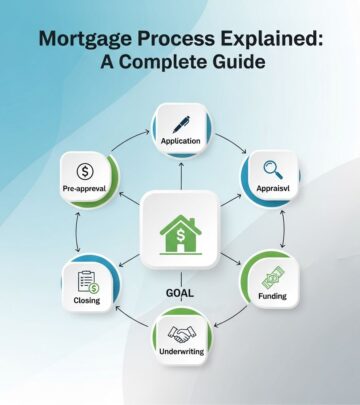
While specific steps can vary by lender, most mortgage approval processes follow a similar structure:
- Prequalification (sometimes optional)
- Preapproval
- Home shopping and offer
- Full mortgage application
- Loan processing
- Underwriting
- Appraisal and inspection
- Final approval and clear to close
- Closing
Understanding what happens in each stage helps you know what to expect and how to prepare.
Prequalification vs. Preapproval
Many buyers start the mortgage journey with either a prequalification or a more formal preapproval. These terms are often used interchangeably, but they are not the same.
Prequalification
Prequalification is typically a quick, informal estimate of how much you may be able to borrow based on basic information you provide to a lender, such as income, debts, and savings. This information may not be fully verified.
Key characteristics of prequalification:
- Usually based on self-reported information
- May involve a soft credit check or no credit pull at all
- Gives a rough estimate of price range
- Helpful for early budgeting, but weaker in negotiations with sellers
Preapproval
Preapproval is more detailed and requires you to submit documentation so the lender can verify your financial situation. Many lenders pull a full credit report and review pay stubs, tax returns, and bank statements to determine a more accurate loan amount.
Key characteristics of preapproval:
- Requires supporting documents (income, assets, debts)
- Includes a full credit check (hard inquiry)
- Results in a written preapproval letter
- Stronger signal to sellers that you are a serious, qualified buyer
In competitive markets, a strong preapproval can significantly improve the chances that a seller accepts your offer.
Documents You'll Typically Need
Being organized can speed up the mortgage approval process. Lenders usually request similar types of documents regardless of which lender you choose.
Common documentation includes:
- Identification Government-issued ID and Social Security number
- Proof of income Recent pay stubs, W-2 forms, 1099s, and possibly tax returns
- Employment history Employer contact details, length of employment, and explanations for gaps
- Bank and investment statements Checking, savings, retirement, and brokerage accounts
- Debt information Statements for credit cards, auto loans, student loans, and other obligations
- Property details (once you have an accepted offer) Purchase contract, listing details, and HOA information if applicable
If you are self-employed or have variable income, you may need to supply extra documentation such as business tax returns or profit-and-loss statements.
Submitting Your Mortgage Application
Once you have chosen a lender and an accepted offer on a home, you will complete a full mortgage application. Much of the information may have been gathered during preapproval, but now the lender formally collects everything needed for underwriting.
During this step:
- You provide updated financial documents if anything has changed
- The lender pulls or updates your credit report
- Required disclosures and estimates (such as a Loan Estimate) are provided to you
- Fees for credit checks and appraisals may be collected or scheduled
From this point, your file is ready to move into loan processing and underwriting.
Loan Processing: Verifying Your Information
After submission, your mortgage file is assigned to a loan processor, who organizes and verifies your documentation before sending it to an underwriter.
The processor typically:
- Checks that all required documents are present and legible
- Verifies employment and income (for example, by contacting employers)
- Orders services such as the home appraisal and title search
- Reviews your bank statements for large or unexplained deposits
- Requests additional documents if anything is missing or unclear
This stage is largely administrative but critical to ensuring the underwriter has a complete and accurate file. Responding quickly to requests helps keep the process on schedule.
Mortgage Underwriting: How Lenders Decide
Underwriting is the core decision-making phase of the mortgage approval process. An underwriter reviews your application in detail to determine whether the loan meets the lender's guidelines and risk standards.
The Three Cs of Underwriting
Most underwriters focus on three main categories, sometimes called the three Cs:
| Factor | What It Means | What Underwriters Look At |
|---|---|---|
| Credit | Your history of borrowing and repaying debt | Credit scores, payment history, collections, bankruptcies, and overall credit profile |
| Capacity | Your ability to afford monthly payments | Income, employment stability, debt-to-income ratio, and other monthly obligations |
| Collateral | The value and condition of the property securing the loan | Appraisal report, property type, condition, and marketability |
Possible Underwriting Outcomes
After reviewing your file, the underwriter may issue several types of decisions:
- Approval with conditions You are approved, but you must provide additional documents (for example, updated bank statements, letters of explanation, or proof that certain debts have been paid off).
- Suspension The file is put on hold because key information is missing or unclear. Once the issues are resolved, the underwriter can resume the review.
- Denial The loan does not meet the lender's guidelines, based on factors such as excessive debt, insufficient income, or severe credit problems.
If your loan is approved with conditions, your lender or processor will give you a list of items to satisfy before you can receive final approval.
Home Appraisal and Inspection
Lenders want to confirm that the property is worth at least the amount they are lending and that it is suitable collateral for the loan. Two key steps help with this: the appraisal and the home inspection. The appraisal is usually required by the lender; the inspection is often optional but strongly recommended.
Home Appraisal
An independent, licensed appraiser evaluates the property and compares it to recent sales of similar homes in the area to determine its fair market value.
The appraisal helps the lender decide:
- Whether the agreed purchase price is reasonable
- How much they are willing to lend, especially for loans with lower down payments
- Whether any conditions should be attached to the approval (for example, required repairs)
If the appraisal comes in lower than the purchase price, you may need to renegotiate the price, increase your down payment, or consider cancelling the purchase, depending on the contract terms and loan program.
Home Inspection
Although lenders usually do not require an inspection for approval, buyers commonly hire a professional inspector to examine the home's structure, systems, and overall condition. Identifying issues early can help you request repairs, negotiate credits, or decide whether to move forward.
Common inspection focus areas include:
- Roof, foundation, and structural components
- Plumbing, electrical, and HVAC systems
- Windows, doors, insulation, and safety issues
Conditional and Final Approval
Once underwriting is complete and the appraisal and other checks are finished, your lender will move from conditional approval to final approval, sometimes called a clear to close.
To get from conditional to final approval, you may need to:
- Provide updated pay stubs or bank statements
- Explain large deposits or recent credit inquiries
- Show proof of homeowners insurance
- Deliver final versions of closing-related documents
Once all conditions are satisfied and the lender gives you a clear to close, the closing department prepares final loan documents and coordinates with the title company or closing attorney.
Closing on Your Mortgage
Closing is the last stage of the mortgage approval process, when you sign the final paperwork, pay your closing costs and down payment, and receive the keys to your new home.
Shortly before closing, you will receive a Closing Disclosure that outlines your final loan terms and closing costs. In many jurisdictions, regulations require that this document be provided several days before closing so you have time to review it.
On closing day, you typically:
- Review and sign the promissory note, mortgage or deed of trust, and other legal documents
- Pay closing costs and your down payment (usually via wire transfer or cashier's check)
- Confirm details such as taxes, insurance, and escrow arrangements
- Receive copies of everything you sign for your records
After all parties sign and funds are disbursed, the transaction is recorded with the appropriate government office, and you officially become the owner of the property.
Factors That Affect Your Chances of Approval
Lenders rely on standardized guidelines, but each borrower's profile is different. Several key factors influence whether you are approved and what interest rate you receive.
- Credit score and history Higher scores generally qualify for better rates and broader loan options.
- Debt-to-income ratio (DTI) This compares your monthly debts to your gross monthly income. Lower DTIs indicate more capacity to handle a new payment.
- Employment stability A consistent work history in the same field can be favorable.
- Down payment Larger down payments reduce lender risk and may lower your rate or reduce the need for mortgage insurance.
- Savings and reserves Having extra funds after closing (reserves) can strengthen your application.
How to Improve Your Odds of Mortgage Approval
Preparing well in advance of applying can make a significant difference. Consumer and housing agencies recommend taking steps such as monitoring your credit, paying down debt, and building savings before you start the mortgage process.
Practical tips include:
- Check your credit reports and dispute any errors.
- Pay bills on time for several months leading up to your application.
- Reduce credit card balances to lower your DTI and improve your credit utilization ratio.
- Avoid new loans or major purchases (like cars or furniture) before and during underwriting, as these can change your qualification.
- Save for closing costs and reserves so you have a cushion after the purchase.
If you are denied for a mortgage, federal law generally gives you the right to an explanation and, in many cases, a copy of the credit report used in the decision. This information can help you understand what to improve before trying again.
Frequently Asked Questions (FAQs)
Q: How long does the mortgage approval process usually take?
A: From full application to closing, the mortgage process typically takes around 30 to 45 days, though timelines can vary depending on the lender, the complexity of your finances, and how quickly you provide documents.
Q: Does a preapproval guarantee final mortgage approval?
A: No. A preapproval is a strong indication that you qualify based on the information reviewed at that time, but final approval depends on full underwriting, a satisfactory appraisal, and no major changes to your financial situation before closing.
Q: What credit score do I need to get a mortgage?
A: Minimum credit score requirements vary by loan type and lender, but many conventional mortgages require scores in the low- to mid-600s, while some government-backed loans may accept lower scores with additional conditions. Lenders also consider your overall credit history, not just the score.
Q: Should I get a prequalification or go straight to preapproval?
A: Prequalification can be useful for early planning, but a full preapproval is generally more valuable when you are ready to make offers on homes, because it demonstrates to sellers and agents that you have been more thoroughly vetted by a lender.
Q: What can cause delays in mortgage approval?
A: Common causes of delay include missing or incomplete documents, slow responses to lender requests, issues uncovered in the appraisal or title search, major changes in employment or income, and large unexplained bank deposits. Staying organized and responding promptly helps keep things on track.
References
- How Does the Mortgage Application Process Work? CS Bank. 2023-04-10. https://www.cs.bank/articles/how-does-the-mortgage-application-process-work
- 9 Steps of the Mortgage Process The Mortgage Reports. 2023-08-15. https://themortgagereports.com/65881/mortgage-loan-process-explained-in-9-steps
- Understanding the Mortgage Process: A Step-By-Step Guide Liberty Bank. 2023-06-01. https://www.libertybank.com/understanding-the-mortgage-process-a-step-by-step-guide/
- Mortgage Underwriting ProcessHow Long Does It Take? U.S. Bank. 2024-01-05. https://www.usbank.com/home-loans/mortgage/first-time-home-buyers/mortgage-underwriting-process.html
- Your Step-by-Step Mortgage Guide Freddie Mac Single-Family. 2021-03-10. https://sf.freddiemac.com/docs/pdf/update/step_by_step_mortgage_guide_english.pdf
Similar Articles








Read full bio of Sneha Tete