Understanding MERS in Mortgage Ownership
Discover how the Mortgage Electronic Registration System simplifies tracking loan ownership and servicing for homeowners and lenders alike.
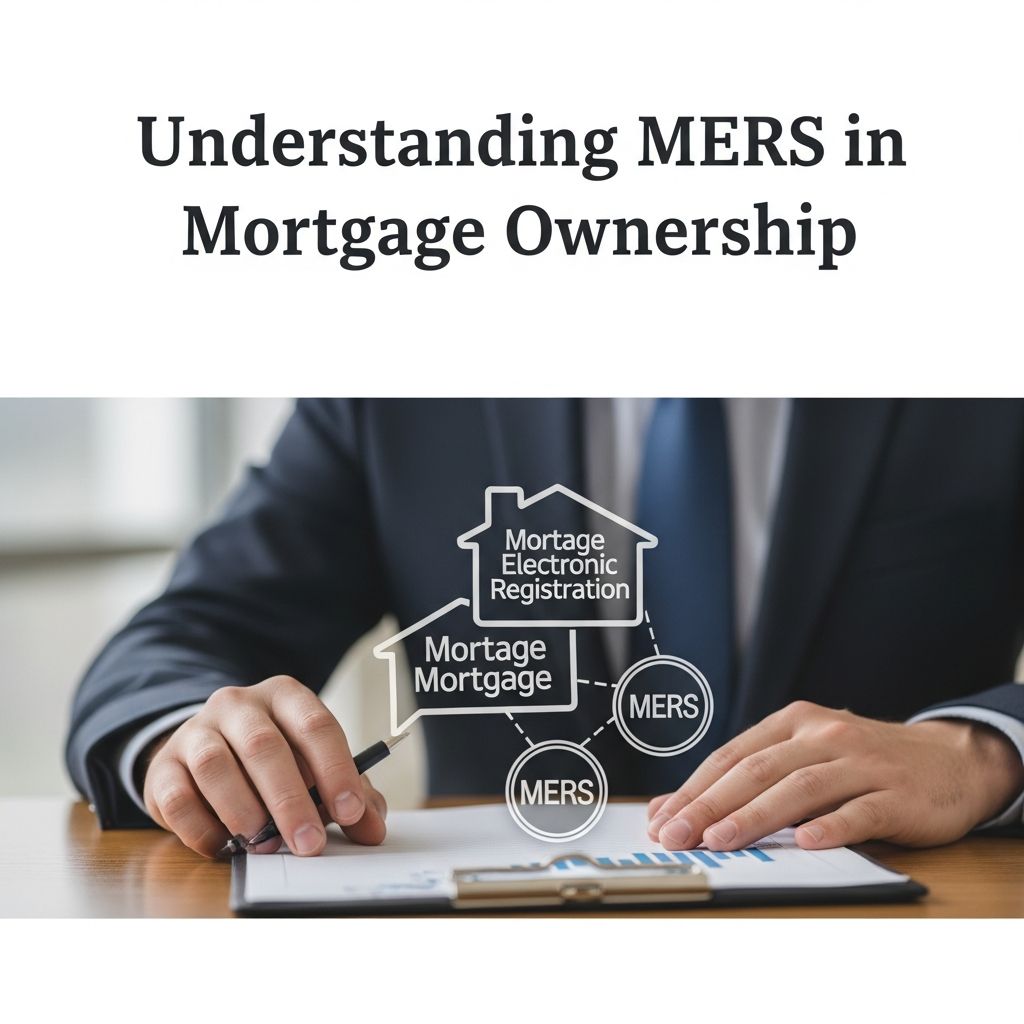
The Mortgage Electronic Registration System, commonly known as MERS, represents a pivotal innovation in the U.S. housing finance landscape. This digital platform streamlines the management of mortgage loans by maintaining an electronic record of ownership transfers and servicing responsibilities, reducing reliance on traditional county recording offices.
The Evolution and Core Purpose of MERS
Developed during the 1990s amid a surge in mortgage securitization, MERS addressed the inefficiencies of paper-based tracking. As loans frequently changed hands between lenders, investors, and government-sponsored enterprises like Fannie Mae, the need for a centralized system became evident. MERS provides a national database where participating financial institutions register loans, enabling seamless updates without physical document filings each time.
At its heart, MERS functions as a nominee for the actual lender. When a mortgage is originated and enrolled, MERS is named in public land records as the mortgagee, holding legal title to the lien on behalf of the true owner. This setup ensures that subsequent transfers—whether to investors or servicers—are logged digitally within the MERS network, minimizing costs and delays associated with county clerk recordings.
How MERS Operates in Practice
Enrollment begins at loan origination if the lender is a MERS member. Each mortgage receives a unique 18-digit Mortgage Identification Number (MIN), serving as its digital identifier. This MIN links to details on the current servicer (who collects payments) and beneficial owner (who holds the economic interest).
For example, when Fannie Mae acquires a loan, it instructs MERS to update the ownership records electronically. No new assignment document needs county filing unless foreclosure or payoff occurs. This process supports the secondary mortgage market, where loans underpin securities traded among institutions.
- Key Operational Steps:
- Loan origination: Lender registers with MERS, assigning itself as initial investor.
- Transfer: New owner/servicer updates via MERS portal.
- Payoff: Final reconveyance recorded locally, clearing the title.
- Default: Servicer assigns interest from MERS to itself for foreclosure proceedings.
Distinguishing Ownership, Servicing, and MERS Role
Many homeowners encounter confusion when seeing MERS listed on their mortgage documents. Importantly, MERS does not service loans or collect payments; it merely tracks changes. The servicer handles day-to-day administration, while the owner reaps the financial benefits.
| Role | Responsibilities | MERS Involvement |
|---|---|---|
| Beneficial Owner | Holds economic interest; profits from payments | Tracked electronically |
| Servicer | Collects payments, manages escrow, handles defaults | Updated in database |
| MERS | Nominee mortgagee in land records | Records transfers digitally |
In MERS as Original Mortgagee (MOM) loans, MERS appears from the start, streamlining future assignments.
Advantages of the MERS Framework
MERS delivers substantial efficiencies to the mortgage ecosystem. By eliminating countless county recordings—estimated at thousands per loan lifetime—it cuts administrative expenses, which can translate to marginally lower borrower costs.
Lenders benefit from faster transactions, facilitating quick sales to entities like Freddie Mac or Ginnie Mae. This agility supports a fluid secondary market, enabling competitive lending rates. Homeowners indirectly gain through streamlined refinances and modifications, as servicers access clear ownership chains swiftly.
- Efficiency Gains: Reduced paperwork speeds loan processing.
- Cost Savings: Avoids $50–$200 per recording fee per transfer.
- Transparency Tool: Borrowers query ownership instantly online.
Challenges and Criticisms Surrounding MERS
Despite its efficiencies, MERS has faced scrutiny, particularly post-2008 financial crisis. Critics argue it obscures ownership trails from public records, complicating borrower disputes or foreclosures. Some courts have questioned MERS’ standing to foreclose, though rulings like Michigan’s Supreme Court affirm its interest as lienholder dependent on debt repayment.
Homeowners may puzzle over MERS’ prominence, mistaking it for the payment recipient. Transparency concerns persist, as not all loans register with MERS, and non-members must use traditional methods.
- Common Issues:
- Perceived opacity in ownership.
- Legal challenges in certain states.
- Limited borrower control over registration.
Accessing Your Mortgage Information via MERS
Determining your loan’s status is straightforward. Visit the MERS ServicerID tool at mers-servicerid.org. Input your MIN (from statements), property address, or FHA/VA certificate number for free results showing current servicer and investor.
This access empowers informed decisions, like targeting payoff inquiries or modification requests correctly. Lenders must disclose ownership annually under federal rules, but MERS offers real-time updates.
Costs Associated with MERS Participation
MERS imposes membership dues on lenders, ranging $500–$7,500 annually, plus ~$25 per registration. These are business expenses, not direct borrower charges, though origination fees may embed them indirectly. Homeowners access data gratis.
Non-participation means conventional recordings, potentially raising lender costs passed to consumers.
Legal Standing and Foreclosure Implications
MERS’ nominee status has been litigated extensively. Courts generally uphold its right to assign mortgages for foreclosure, as it holds the security instrument. A pivotal Michigan ruling clarified MERS owns a contingent interest in the lien, authorizing non-judicial foreclosures.
Fannie Mae guidelines ensure proper MIN registration and assignments, maintaining chain-of-title integrity.
Can Homeowners Opt Out of MERS?
Borrowers lack unilateral removal power; it’s lender-driven. Seeking non-MERS lenders is possible but rare, as most major players participate. Upon payoff, MERS facilitates title release.
Future Outlook for MERS in Digital Mortgage Era
As blockchain and fintech evolve, MERS may integrate advanced tech for even greater transparency. Its role remains crucial amid rising homeownership demands, balancing efficiency with accountability.
Frequently Asked Questions
What exactly is a MOM loan?
A MOM loan designates MERS as the original mortgagee in county records, preventing repeated filings during transfers.
Does MERS affect my monthly payments?
No, payments go to your designated servicer, unchanged by MERS.
Is MERS available for all mortgages?
Primarily for conventional loans; some FHA/VA use it via MIN.
How secure is the MERS database?
Restricted to members, it employs robust cybersecurity for confidential tracking.
What if my loan isn’t in MERS?
Ownership changes via county assignments; check statements or lender portals.
Navigating Your Mortgage with Confidence
Armed with MERS knowledge, homeowners can better manage their loans. Whether verifying servicers or understanding transfers, this system underpins a more efficient market. Consult professionals for personalized advice amid evolving regulations.
References
- What is the MERS System for mortgages? — Rocket Mortgage. 2023. https://www.rocketmortgage.com/learn/mers-mortgage
- Mortgage Electronic Registration Systems (MERS), Inc. — Fannie Mae Selling Guide. 2024. https://selling-guide.fanniemae.com/sel/b8-7-01/mortgage-electronic-registration-systems-mers-inc
- Mortgage Electronic Registration System (MERS), Explained — Chase. 2024. https://www.chase.com/personal/mortgage/education/owning-a-home/mers-mortgage
- Mortgage Electronic Registration Systems — Wikipedia (references court cases). 2024. https://en.wikipedia.org/wiki/Mortgage_Electronic_Registration_Systems
- If you have a MERS mortgage, you should know… — Kentucky Attorney General. 2012 (authoritative state guidance). https://www.ag.ky.gov/pdf_news/MERS-poster.pdf
- MERS® System — MERSINC. 2024. https://www.mersinc.org/products-services/mers-system
- About MERS Frequently Asked Questions — MERSINC. 2024. https://www.mersinc.org/about/faq
Similar Articles








Read full bio of Sneha Tete