Understanding Medical Payments Coverage in Auto Insurance
Discover how medical payments coverage protects your health costs after a car accident, regardless of fault—essential insights for smart policy choices.

Medical payments coverage, often shortened to Med Pay, serves as a vital safety net in auto insurance policies by covering immediate medical costs following a vehicle-related injury. This optional endorsement pays for treatments needed by the policyholder, listed drivers, and passengers, irrespective of who caused the collision.
Core Benefits of Adding Med Pay to Your Policy
Opting for Med Pay ensures quick reimbursement for health-related expenses without the delays of determining fault. It activates for incidents involving your covered vehicle, even if you’re riding in another car with permission or hit as a pedestrian. Common reimbursable items include:
- Emergency room evaluations and hospital stays
- Diagnostic imaging like X-rays and MRIs
- Ambulance transportation fees
- Chiropractic adjustments and physical therapy sessions
- Funeral costs in fatal cases
This coverage bridges gaps left by primary health plans, such as high deductibles that might otherwise burden your savings after a sudden crash.
Key Exclusions to Know Before Purchasing
While Med Pay handles acute care, it has boundaries. It excludes ongoing issues like lost income from missed workdays, non-accident-related ailments, or substitute services such as hiring help for household chores. Importantly, it does not extend to occupants of other vehicles involved in the accident—those claims fall under the at-fault party’s liability insurance.
| Covered Expenses | Excluded Expenses |
|---|---|
| Doctor consultations | Lost wages |
| Surgery and prosthetics | Childcare replacements |
| Nursing care | Non-injury treatments |
| Funeral expenses | Other drivers’ injuries |
This table highlights the focused scope of Med Pay, emphasizing its role in short-term recovery rather than comprehensive financial support.
Comparing Med Pay with Personal Injury Protection (PIP)
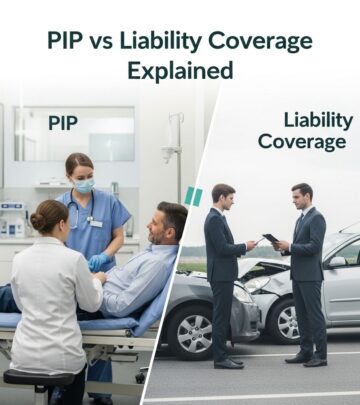
Med Pay and PIP both address medical needs post-accident but differ in availability and breadth. PIP operates in no-fault states, often mandating coverage for wage loss and essential services alongside medical bills. Med Pay prevails in at-fault jurisdictions, sticking to medical and funeral payouts without economic extras.
- State Availability: PIP in no-fault areas; Med Pay elsewhere, sometimes both coexist.
- Mandatory Status: PIP required in some states; Med Pay nearly always elective.
- Scope: PIP includes income replacement; Med Pay limited to health costs.
Drivers in PIP states might still add Med Pay for layered protection, but check local regulations via state insurance departments.
Selecting the Right Coverage Limits for Your Needs
Limits typically range from $500 to $5,000 per person, representing the cap on payouts per injured individual per incident. Consider your health plan’s out-of-pocket maximums— an ER visit could rack up $2,000+ in deductibles alone. A $3,000 Med Pay limit might fully offset such hits, preserving your emergency fund.
For families or frequent passengers, higher limits provide peace of mind. Scenario: You carry two colleagues when a side-impact collision occurs. With $2,500 Med Pay, each gets up to that amount for treatments, totaling potential $7,500 coverage without sub-limits.
State-Specific Rules and Requirements
Availability and mandates vary widely. Most states treat Med Pay as optional, but a few integrate it into standard policies. For instance, Virginia law outlines direct payments to providers for copays and deductibles if health insurance exists, protecting patients from balance billing. Arizona defines it for reasonable medical and funeral needs post-accident.
Consult your state’s department of insurance for mandates—some no-fault states like Michigan require robust PIP, rendering Med Pay redundant or unavailable.
Integration with Health Insurance and Liability
Med Pay often acts as primary or supplemental to health coverage. It can cover copays exceeding plan allowances or fund treatments before health claims process. Unlike bodily injury liability, which handles the other party’s costs if you’re liable, Med Pay safeguards your side promptly.
If another driver is responsible, their liability might reimburse you later, but Med Pay offers immediate aid without lawsuits.
Cost-Benefit Analysis: Is Med Pay Worth It?
Premiums are modest—often $10-30 annually for $1,000-$5,000 limits—making it a low-cost hedge against surprises. Evaluate based on:
- Existing health deductible size
- Personal risk tolerance for out-of-pocket hits
- Household passenger count
- Driving exposure (commutes, ridesharing)
Those with robust health plans might skip it, but high-deductible holders or uninsured drivers benefit most.
Real-World Claims Process
Filing is straightforward: Notify your insurer post-accident with medical receipts. Payments go directly to you or providers, bypassing fault disputes. Keep records of all treatments tied to the event for smooth approval.
Frequently Asked Questions
Is medical payments coverage the same as collision coverage?
No, collision repairs vehicles; Med Pay funds injuries.
Does Med Pay cover hit-and-run incidents?
Yes, if you’re in or struck by a covered auto.
Can I use Med Pay for my pet’s vet bills?
No, it’s human injury only.
How does Med Pay affect my premiums after a claim?
Minimal impact since it’s no-fault.
Is Med Pay available in all states?
Offered widely but not in every no-fault state.
Enhancing Your Auto Policy Holistically
Pair Med Pay with uninsured motorist coverage for fuller protection. Regularly review limits amid rising healthcare costs—adjust as deductibles climb. Agents from providers like GEICO, Allstate, or State Farm can tailor quotes.
Understanding Med Pay empowers informed decisions, ensuring accidents don’t derail finances.
References
- What is Medical Payments Coverage (Med Pay)? — GEICO. Accessed 2026. https://www.geico.com/information/aboutinsurance/auto/med-pay/
- What Is Medical Payments Coverage? — Allstate. 2025-08. https://www.allstate.com/resources/car-insurance/medical-payments-coverage
- Auto Insurance Medical Payments Coverage — Travelers. Accessed 2026. https://www.travelers.com/car-insurance/coverage/medical-payments
- § 38.2-2201. Provisions for payment of medical expense and loss of… — Virginia Code. Accessed 2026. https://law.lis.virginia.gov/vacode/title38.2/chapter22/section38.2-2201/
- What is Medical Payments Coverage? — State Farm. Accessed 2026. https://www.statefarm.com/insurance/auto/coverage-options/medical-payments-coverage
- Medical Payments Coverage — Arizona Department of Insurance and Financial Institutions. Accessed 2026. https://www.difi.az.gov/consumer/i/auto/medical-payments
- Medical Payments Coverage for Auto Insurance — The Hartford. Accessed 2026. https://www.thehartford.com/aarp/car-insurance/medical-payments-coverage
Similar Articles








Read full bio of Sneha Tete