Understanding Loan Forbearance: Relief Options
Learn how loan forbearance provides temporary payment relief during financial hardship.

When unexpected financial challenges strike, borrowers often find themselves struggling to meet loan obligations. Whether due to job loss, medical emergencies, or significant income reduction, temporary payment difficulties can create serious stress. Fortunately, lenders offer various relief options to help borrowers navigate these challenging periods. One such option is loan forbearance, a program that allows borrowers to temporarily reduce or suspend their regular loan payments without facing immediate legal consequences.
Loan forbearance represents a mutual agreement between borrower and lender designed to provide breathing room during times of financial stress. Unlike loan forgiveness, which eliminates the debt entirely, forbearance simply pauses or reduces payments temporarily. Understanding how forbearance works, when it applies, and what happens after the relief period ends is essential for anyone facing financial difficulties.
What Constitutes Loan Forbearance?
Forbearance is defined as a lender’s agreement to permit the temporary cessation of payments, allow an extension of time for making payments, or temporarily accept smaller payment amounts. In practical terms, this means a borrower facing financial hardship can request a pause or reduction in their regular monthly loan payments for a defined period.
The key distinction between forbearance and other relief options lies in its flexibility. Forbearance can take multiple forms:
- Complete suspension of monthly payments for a set duration
- Reduction in payment amounts while the borrower recovers financially
- Combination of reduced payments and extended timelines
- Temporary interest rate reductions in some cases
Unlike forbearance, deferment typically focuses solely on pausing payments, while forbearance offers a broader range of relief options that can be tailored to individual circumstances. For borrowers with federal student loans, forbearance may allow interest to accrue, which then gets added to the principal balance if unpaid during the relief period.
The Fundamental Differences: Forbearance Versus Related Terms
Borrowers often encounter several terms when researching payment relief options. Understanding the distinctions between these concepts is crucial for making informed decisions.
Forbearance Compared to Deferment
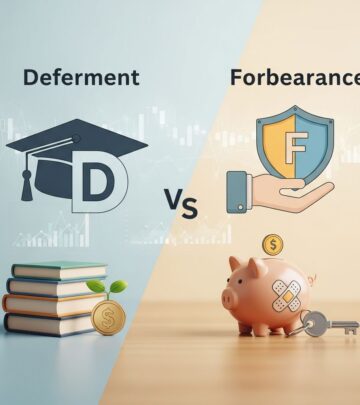
While deferment and forbearance both provide temporary payment relief, they function differently. Deferment is primarily a pause in loan payments, whereas forbearance encompasses both payment pauses and reductions. With deferment, you typically make up missed payments by extending your loan term, adding those payments to the end of your repayment schedule. Forbearance requires you to make up missed payments without changing the loan’s overall term, usually through increased payments once the relief period ends.
A critical difference emerges regarding interest accrual. For federal student loans specifically, subsidized deferment may not accrue interest, while forbearance causes interest to accrue across all loan types. This distinction significantly impacts the total amount owed after the relief period concludes.
Forbearance Distinguished from Loan Forgiveness
Many borrowers confuse forbearance with forgiveness, yet these represent fundamentally different concepts. Forbearance requires eventual repayment of all paused or reduced amounts, plus any accrued interest. Loan forgiveness, by contrast, means the lender completely eliminates the debt obligation, and no further payments are required. Forgiveness programs typically target specific borrower populations, such as public service employees or those meeting particular income thresholds, and are generally more difficult to qualify for than forbearance.
Eligibility Criteria and Qualifying Circumstances
Not all borrowers automatically qualify for forbearance. Lenders evaluate requests carefully and typically approve forbearance only when they believe the financial hardship is temporary and the borrower will resume regular payments afterward.
Common qualifying circumstances for forbearance include:
- Unemployment or significant income reduction
- Substantial medical bills or health emergencies
- Natural disasters or unexpected catastrophic events
- Economic hardship due to business failure
- Temporary reduction in work hours or seasonal employment
- Other demonstrable financial difficulties creating temporary hardship
For mortgage forbearance specifically, lenders typically require documentation of hardship, evidence that the difficulty is temporary, and your commitment to resume payments and repay the excused amounts plus interest after the forbearance period concludes.
How to Request Loan Forbearance
Forbearance is never automatically granted—borrowers must actively request it from their lender or loan servicer. The application process varies depending on the loan type and servicing entity, but generally follows these steps:
- Gather Documentation: Compile supporting materials that demonstrate your financial hardship, such as layoff letters, medical bills, recent pay stubs, or unemployment documentation.
- Contact Your Lender: Reach out to your loan servicer through their preferred method—mail, email, phone, or online portal. Each servicer maintains different procedures and contact information.
- Complete the Application: Submit the forbearance request form along with required documentation. Be thorough and honest about your circumstances.
- Continue Making Payments: Keep making your regular payments until you receive written confirmation that forbearance has been approved.
- Follow Up: If you don’t receive a response within a reasonable timeframe, contact your servicer again to ensure your request is being processed.
Once approved, your lender will establish the specific terms of your forbearance agreement, including duration, payment amounts (if any), and repayment procedures.
Understanding Forbearance Terms and Duration
Forbearance agreements are not open-ended. Lenders establish clear parameters that borrowers must understand before agreeing to the arrangement.
Duration Limitations
Typical forbearance periods last no more than 12 months, after which borrowers are expected to resume regular payments. Some programs permit renewals at the end of a 12-month period if you can demonstrate that your financial hardship continues and you meet specific criteria. Certain forbearance programs impose a lifetime limit of three years’ total forbearance over the life of the loan.
For federal student loans, forbearance can be approved in increments of up to 12 months, with general forbearances typically capped at three years total, while mandatory forbearances follow the 12-month rule but can be renewed if eligibility continues. Private loan forbearance terms depend entirely on the individual lender’s policies.
Interest and Fee Accumulation
During forbearance, interest continues to accrue on most loan types. Unless you actively pay this accruing interest during the forbearance period, it will be added to your loan balance, increasing the total amount owed. Some forbearance agreements may allow waiving of late fees during the relief period, but interest accumulation remains standard practice.
Repayment Obligations After Forbearance Ends
One of the most important aspects of forbearance that borrowers must understand is that it does not eliminate debt—it merely postpones it. When the forbearance period concludes, you must address the paused or reduced payments through one of several methods:
Repayment Methods
| Repayment Option | Description | Best For |
|---|---|---|
| Lump Sum Payment | Pay all missed payments in a single payment at the end of forbearance | Borrowers with sufficient financial recovery |
| Repayment Plan | Add a surcharge to regular monthly payments for several months until past-due amounts are paid | Borrowers needing gradual repayment |
| Loan Modification | Change existing loan terms to incorporate past-due payments into the new structure | Borrowers seeking permanent loan adjustments |
| Extended Term | Add missed payments to the end of the loan term, extending repayment period | Borrowers unable to afford immediate repayment |
| Deferral or Partial Claim | Set aside a number of payments to be paid when the loan is satisfied, with no additional interest charges | Specific mortgage situations |
Mortgage forbearance typically requires repayment in a lump sum or in no more than 12 monthly installments at the end of the forbearance period. The specific repayment method depends on your agreement with the lender and your financial situation at the time forbearance ends.
Mandatory Versus Discretionary Forbearance
Forbearance falls into two categories: general and mandatory. Understanding this distinction helps borrowers know their rights and expectations.
General Forbearance
General forbearance is offered at the discretion of the loan servicer. It may provide relief when you face steep medical bills, unemployment, or significant income reduction. If you qualify, payments can be reduced or paused for up to 12 months, with the possibility of requesting another forbearance period if your circumstances warrant it. This discretionary nature means servicers evaluate each request individually.
Mandatory Forbearance
Mandatory forbearance requires your loan servicer to accept your forbearance request if specific qualifying circumstances exist. These typically include situations where you demonstrate clear financial hardship that prevents full payment. Your lender must grant mandatory forbearance when legal or contractual obligations require it, regardless of their assessment of your situation’s temporary nature.
Impact on Credit Scores and Reports
A significant concern for many borrowers considering forbearance is its effect on credit. Understanding this impact is essential for making informed decisions about payment relief.
While forbearance provides relief from payment obligations, it generally appears on your credit report as a modification to your loan terms. If your loan payments are current at the time forbearance begins, and you maintain this status throughout the forbearance period, the impact on your credit score may be minimal. However, if you entered forbearance after missing payments, those late payments remain on your credit report.
The arrangement demonstrates to lenders that you are managing your financial difficulties proactively rather than defaulting on obligations. This may be viewed more favorably than delinquency or default, though it still indicates financial stress to potential creditors.
Key Considerations Before Pursuing Forbearance
Before requesting forbearance, borrowers should carefully evaluate whether this option aligns with their circumstances:
- Temporary Hardship: Forbearance works best when your financial difficulty is genuinely temporary, and you can reasonably expect to resume regular payments within 12 months.
- Interest Accumulation: Be prepared for interest to accrue during the forbearance period, increasing your total obligation if not paid immediately.
- Repayment Capacity: Consider whether you can realistically repay the paused amounts plus accrued interest after forbearance ends, whether through lump sum, modified payments, or extended terms.
- Loan Servicer Requirements: Different servicers and loan types have varying forbearance policies, so contact your specific lender for their requirements and options.
- Alternative Solutions: Explore whether other options, such as loan modification, refinancing, or income-driven repayment plans, might better suit your situation.
Frequently Asked Questions About Loan Forbearance
Q: Is forbearance the same as loan forgiveness?
A: No. Forbearance temporarily pauses or reduces payments, while you remain obligated to repay the full loan amount. Forgiveness eliminates the debt entirely, requiring no further payments.
Q: Will forbearance eliminate my late payment record?
A: Forbearance does not erase existing late payments from your credit history. It only prevents future late payments during the relief period if you adhere to the forbearance terms.
Q: Can I request forbearance multiple times?
A: Yes, you may request renewal after the initial 12-month forbearance period if you still qualify, though many programs cap total forbearance at three years over the loan’s life.
Q: What happens if I cannot resume payments after forbearance ends?
A: Contact your lender immediately to discuss alternative solutions, such as loan modification, another forbearance period (if eligible), or other relief options. Defaulting on the loan creates serious consequences.
Q: Does forbearance apply to all loan types?
A: Forbearance is available for mortgages, student loans, personal loans, and other credit products, though terms vary significantly by lender and loan type.
References
- What Is Loan Forbearance? — Experian. Accessed 2026. https://www.experian.com/blogs/ask-experian/what-is-loan-forbearance/
- Forbearance Agreement: What It Means — Rocket Mortgage. Accessed 2026. https://www.rocketmortgage.com/learn/mortgage-forbearance-agreement
- What Is the Difference Between Deferment and Forbearance? — Citibank Personal Loans Learning Center. Accessed 2026. https://www.citi.com/personal-loans/learning-center/basics/loan-deferment-vs-loan-forbearance
- Mortgage Forbearance FAQ — North Carolina Housing Finance Agency. Accessed 2026. https://www.nchfa.com/mortgage-forbearance-faq
- Forbearance on Student Loans: What You Need to Know — HESC Loans. Accessed 2026. https://www.hescloans.com/blog/forbearance-on-student-loans
- Forbearance — Federal Student Aid, U.S. Department of Education. Accessed 2026. https://studentaid.gov/manage-loans/lower-payments/get-temporary-relief/forbearance
- 34 CFR 682.211 — Forbearance — Electronic Code of Federal Regulations. Accessed 2026. https://www.ecfr.gov/current/title-34/subtitle-B/chapter-VI/part-682/subpart-B/section-682.211
Similar Articles








Read full bio of medha deb