Investment Portfolios: 6 Steps To Build A Successful Plan
Discover how to build, diversify, and manage an investment portfolio for long-term financial success and risk reduction.

An investment portfolio represents a strategic collection of financial assets designed to meet specific goals while balancing risk and return. Investors assemble these holdings—ranging from stocks and bonds to alternative investments—to pursue growth, generate income, or preserve capital over time.
Core Elements of an Investment Portfolio
At its foundation, a portfolio combines various assets to optimize performance. This approach stems from the principle that no single investment performs consistently across all market conditions. By spreading resources across categories like equities, fixed-income securities, and cash equivalents, individuals mitigate potential losses from any one area underperforming.
The value of each asset influences the overall risk-reward profile. For instance, volatile stocks might drive higher potential gains but also greater fluctuations, while stable bonds offer predictability. Financial institutions and individual investors alike tailor portfolios to align with personal objectives, timelines, and comfort with uncertainty.
Why Diversification Matters in Portfolio Construction
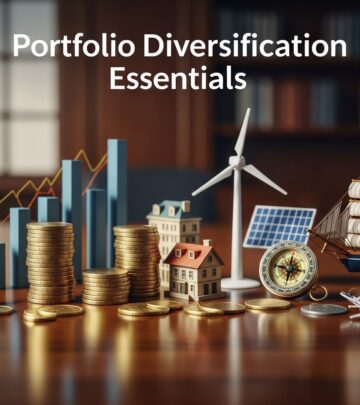
Diversification serves as the cornerstone of effective portfolio management, reducing exposure to isolated risks. When one asset class declines, others may remain stable or appreciate, cushioning the impact on the total value.
- Spreads investments across stocks, bonds, real estate, and commodities to avoid over-reliance on a single market.
- Utilizes low-cost index funds or ETFs to gain broad market exposure efficiently.
- Balances growth potential with stability, adapting to economic shifts worldwide.
This strategy not only protects capital but also positions the portfolio to capture opportunities from global growth trends.
Primary Types of Investment Portfolios
Portfolios vary based on investor priorities, with distinct compositions for different aims. Below, we outline key categories, each suited to specific profiles.
| Portfolio Type | Primary Assets | Goal | Risk Level | Ideal For |
|---|---|---|---|---|
| Equity Portfolio | Stocks, growth-oriented equities | Capital appreciation | High | Long-term growth seekers |
| Fixed-Income Portfolio | Bonds, treasuries | Income generation, capital preservation | Low to Moderate | Conservative investors |
| Balanced Portfolio | Mix of stocks and bonds | Moderate growth and income | Moderate | Mid-term horizon investors |
| Growth Portfolio | Mostly equities, emerging sectors | High returns | High | Risk-tolerant individuals |
| Hybrid Portfolio | Stocks, bonds, alternatives like real estate | Diversified returns | Moderate to High | Versatile strategies |
Equity portfolios focus on shares in companies poised for expansion, ideal for those with extended timelines. Fixed-income options prioritize steady payments from debt instruments, appealing to those nearing retirement. Balanced and hybrid variants blend these for equilibrium.
Asset Allocation: The Blueprint for Success
Asset allocation determines how funds distribute across categories, directly impacting outcomes. This decision hinges on factors like age, income needs, and market outlook.
- Strategic Allocation: Maintains fixed ratios over time, rebalancing periodically to stay on course.
- Tactical Allocation: Adjusts short-term based on market forecasts for enhanced returns.
- Dynamic Allocation: Shifts aggressively with economic indicators.
For example, younger investors might allocate 70% to stocks for growth, tapering to 40% bonds as retirement approaches. Vanguard emphasizes models like balanced (stocks and bonds) or growth-heavy setups for tailored fits.
Steps to Build Your Own Portfolio
Constructing a portfolio requires a systematic process to ensure alignment with personal circumstances.
- Define Objectives: Clarify goals such as retirement funding or home purchase, alongside timeline and required returns.
- Assess Risk Tolerance: Evaluate comfort with volatility through questionnaires or historical simulations.
- Select Assets: Choose vehicles like mutual funds for diversification or individual securities for control.
- Allocate and Diversify: Divide investments proportionally, incorporating global exposure.
- Monitor and Rebalance: Review quarterly or annually, adjusting for drifts or life changes.
- Implement Tax Strategies: Favor tax-advantaged accounts like IRAs for efficiency.
Tools from brokerages simplify this, often providing model portfolios as starting points.
Risk Management Techniques
Managing uncertainty involves more than diversification. Techniques include:
- Regular rebalancing to restore target allocations.
- Hedging with options or inverse ETFs during downturns.
- Stress testing against scenarios like recessions.
Modern Portfolio Theory underscores optimizing for maximum return at given risk levels, using metrics like Sharpe ratio.
Common Portfolio Strategies Explained
Various approaches cater to preferences:
- Passive Investing: Tracks indices via ETFs for cost efficiency.
- Active Investing: Seeks outperformance through stock picking.
- Income-Focused: Emphasizes dividends and interest.
- Sustainable Investing: Integrates ESG factors for ethical alignment.
Hybrid models combine elements, such as equities with commodities, to decorrelate returns.
Tools and Vehicles for Modern Portfolios
Today’s investors access diverse instruments:
- ETFs for liquid, broad exposure.
- Mutual funds managed professionally.
- Robo-advisors for automated allocation.
- Real estate via REITs without property management.
Asset allocation funds automatically maintain mixes, ideal for hands-off investors.
Frequently Asked Questions (FAQs)
What is the main purpose of an investment portfolio?
It aggregates assets to achieve financial goals while managing risk through diversification.
How often should I rebalance my portfolio?
Annually or when allocations deviate by 5-10%, depending on your strategy.
Can beginners build a portfolio?
Yes, starting with low-cost index funds or robo-advisors makes it accessible.
What role does time horizon play?
Longer horizons allow more equities for growth; shorter ones favor bonds for stability.
Is diversification a guarantee against losses?
No, but it significantly reduces the impact of any single asset’s poor performance.
Advanced Considerations for Portfolio Optimization
Beyond basics, incorporate inflation hedging via TIPS or commodities. Factor in fees, as they erode returns over decades. Behavioral finance warns against emotional decisions; stick to plans.
For institutions, strategies like risk parity equalize volatility contributions across assets. Individuals benefit from similar principles scaled down.
Global diversification taps emerging markets for growth, balanced against developed stability. Currency risks require consideration in international holdings.
References
- Guide To Portfolio Investment: How It Works & Types — MetLife. 2023. https://www.metlife.com.bd/blog/financial-security/guide-to-portfolio-management/
- Portfolio (finance) — Wikipedia. 2024-02-01. https://en.wikipedia.org/wiki/Portfolio_(finance)
- What Is an Investment Portfolio? — SmartAsset. 2024. https://smartasset.com/investing/what-is-an-investment-portfolio
- Investment portfolios: Asset allocation models — Vanguard. 2025-01-15. https://investor.vanguard.com/investor-resources-education/education/model-portfolio-allocation
- What Is a Portfolio and Ways To Build One — Chase. 2024. https://www.chase.com/personal/investments/learning-and-insights/article/what-is-a-portfolio
Similar Articles








Read full bio of medha deb