Understanding Interchange Fees: A Complete Merchant and Consumer Guide
Discover how credit card processing fees impact your wallet and business operations.

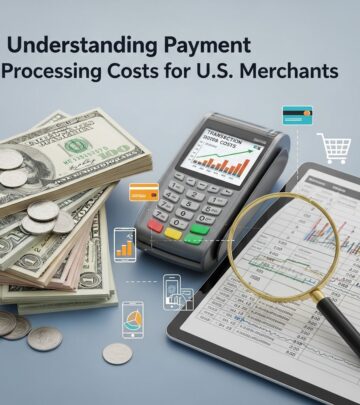
When you swipe your credit card at the checkout counter, multiple financial institutions work behind the scenes to process your transaction. Each of these entities—from your card issuer to the payment network to the merchant’s processor—charges a fee for their role in facilitating that payment. These combined costs are collectively known as interchange fees, commonly referred to as swipe fees in the retail industry. Understanding how these charges work is essential for both consumers seeking to minimize their expenses and merchants trying to manage operational costs.
What Constitutes a Payment Processing Charge?
A payment processing charge represents the cost that a merchant incurs each time a customer completes a purchase using a credit card. These fees are not a single, unified cost but rather a combination of charges levied by multiple parties involved in the transaction ecosystem. The payment network (such as Visa or Mastercard) takes a portion, the card-issuing financial institution receives a cut, and the merchant’s payment processor collects its own fees for facilitating the transaction.
The fees compensate these entities for the critical services they provide: securely transmitting payment information across networks, verifying funds availability, authorizing transactions, and implementing fraud prevention measures. Without these systems and safeguards, modern electronic commerce would not be possible.
How Fee Structures Are Organized
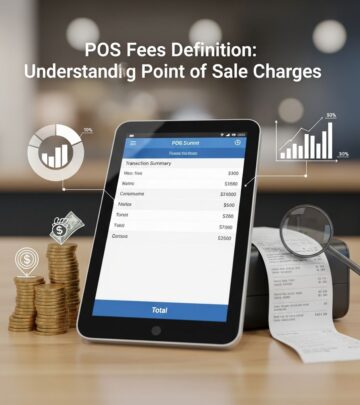
Merchants encounter swipe fees through three primary structural models. Some charges take the form of a flat fee per transaction, regardless of the purchase amount. Others are calculated as a percentage of the total transaction value. Many merchants face a hybrid approach combining both methods.
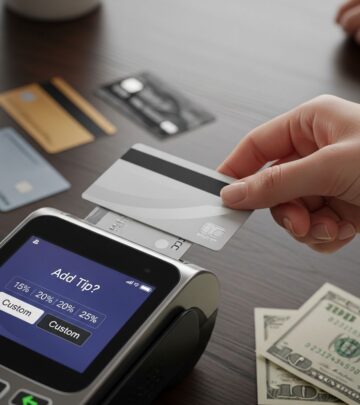
For practical context, consider a retailer charged 3.5% per transaction: a $100 purchase would generate a $3.50 fee. In 2023, interchange fees averaged 2.24% across the industry. However, transaction methods significantly influence the final rate. Card-present transactions (physical swiping, inserting, or tapping at a point-of-sale terminal) typically attract lower fees than card-not-present transactions, such as online or telephone purchases, because the latter carry higher fraud risk.
| Transaction Type | Typical Fee Range | Rationale |
|---|---|---|
| In-person (card present) | 2.6% + 15¢ | Lower fraud risk with physical verification |
| Online (card not present) | 2.9% – 3.5% + 30¢ | Higher fraud risk requires additional security costs |
| Manually entered | 3.5% + 15¢ | Increased fraud susceptibility |
| Invoice payments | 3.3% + 30¢ or 1% minimum | Administrative processing costs |
The Financial Burden on American Households
The cumulative impact of interchange fees on consumer finances is substantial and often invisible. Research indicates that the average American family paid approximately $1,024 in swipe-related charges during 2022. When examined on a per-transaction basis, these costs become more apparent. A typical $50 gasoline purchase may include more than $1 in swipe fees, meaning annual fuel purchases involve at least $50 in such charges for an average driver making 50 annual fill-ups. Similarly, a $100 grocery bill includes approximately $2.25 in swipe fees.
The trajectory of these fees has been concerning. Over the past decade, swipe fees have more than doubled, now exceeding $160 billion annually. This represents a dramatic increase from 2001 levels of $16 billion, demonstrating how these charges have outpaced general inflation. The growth accelerates during inflationary periods and when credit card usage increases, as fees are calculated as percentages of purchase amounts.
Regulatory Framework and Legal Restrictions
While merchants possess some legal authority to pass swipe fees to consumers, significant restrictions apply. Most states permit merchant surcharges, but with important limitations. Some jurisdictions, including Connecticut, Maine, Massachusetts, and Oklahoma, prohibit all credit card surcharges entirely. Others, such as Colorado, impose maximum caps—in Colorado’s case, a 2% ceiling.
Visa has independently capped surcharges at 3%, while other card networks allow merchants to charge up to 4% of the purchase price. The U.S. Supreme Court has ruled that merchant surcharges are legally protected under law, but this protection comes with mandatory merchant obligations:
- Clear disclosure of surcharge existence prior to completing the transaction
- Visible display of the surcharge amount on the customer’s receipt
- Enforcement of the 4% cap (or the actual fee paid to card networks, whichever is lower)
Given these regulations, consumers should familiarize themselves with their state’s specific laws to identify illegal surcharges.
Who Controls Fee Rates and Why?
The financial institutions controlling fee rates have significant power over the economics of retail operations. Visa and Mastercard establish the interchange fee rates for thousands of banks issuing their branded cards, with these changes occurring twice annually in April and October. More than 80% of all interchange fees come from Mastercard and Visa transactions.
This concentration creates a significant challenge for merchants: the interchange portion of swipe fees cannot be negotiated or reduced, as it is predetermined by the card networks themselves. Some components of total processing fees may be negotiable through payment processors, but the largest component remains fixed and inflexible. This limited negotiating power frustrates many business owners seeking to control operational costs.
Consumer Strategies to Mitigate Fee Impact
While consumers cannot completely eliminate the effects of interchange fees, several strategies can reduce their financial burden. When merchants offer surcharge options, consumers retain choice: they can pay the surcharge or select alternative payment methods. Since businesses cannot legally charge surcharges on debit or prepaid cards, these options provide fee-free alternatives. Cash payments eliminate surcharges entirely, though this requires trips to automated teller machines that may incur their own fees, potentially offsetting savings.
For those who prefer credit card convenience, strategic use of rewards credit cards can offset some costs. Cash back programs, airline miles, and other cardholder benefits partially compensate for fees paid through higher prices or surcharges. The calculation becomes favorable when cardholders manage their accounts responsibly by paying balances in full monthly, maximizing rewards value while avoiding interest charges.
The Hidden Cost Mechanism: Price Increases
While some merchants transparently pass fees through surcharges, many integrate these costs into product pricing instead. When businesses raise prices to recoup interchange fees, the cost becomes less obvious to consumers but equally real. These price increases accumulate across every transaction and purchase category, making the total financial impact difficult to quantify at the individual transaction level.
Shoppers cannot easily determine in advance which businesses charge transparent surcharges versus which ones embed fee costs into prices, creating budgeting uncertainty. The hidden nature of integrated fee costs means many consumers never recognize the full extent to which interchange fees increase their expenses.
Business Implications and Operating Costs
For merchants, interchange fees represent a significant operational expense that directly impacts profitability. U.S. businesses collectively incurred approximately $137.8 billion in total card processing fees in 2021, with interchange fees comprising 70% to 90% of those costs. These expenses influence critical business decisions including pricing strategies, profit margins, and business model sustainability.
Small retailers often struggle more than large enterprises, lacking the transaction volume to negotiate better rates with payment processors. The fees affect not only financial institutions but also gas stations, restaurants, grocery stores, convenience retailers, and every other merchant category dependent on credit card acceptance. Many businesses feel trapped: rejecting credit card payments risks losing customers in an increasingly cashless society, yet accepting them erodes already tight profit margins.
Future Trends and Industry Evolution
The trajectory of interchange fees suggests continued cost pressures. As credit card usage increases and inflation persists, consumers should expect mounting expenses from swipe fees. The 2023 record of $172.05 billion in total interchange fees demonstrates the scale of this ongoing financial transfer from consumers and merchants to financial institutions.
Technology innovations, including mobile payments and alternative payment systems, may eventually disrupt traditional interchange models, but such transformation remains years away. In the near term, understanding these fees and making informed payment choices represents the most practical approach for managing personal finances.
Frequently Asked Questions
Q: Can I negotiate interchange fees as a merchant?
A: The interchange portion cannot be negotiated as it is set by card networks like Visa and Mastercard. However, you may negotiate other components of processing fees with your payment processor.
Q: Is charging a credit card surcharge legal everywhere?
A: No. Several states prohibit surcharges entirely, while others impose restrictions or caps. Some states allow up to 4% surcharges with proper disclosure.
Q: Do debit cards have swipe fees?
A: Businesses cannot legally charge surcharges on debit card transactions, making them a fee-free alternative when available.
Q: How often do interchange rates change?
A: Card networks update interchange rates twice annually, typically in April and October.
Q: What’s the difference between card-present and card-not-present fees?
A: Card-present transactions (in-store) have lower fees due to reduced fraud risk, while card-not-present transactions (online) have higher fees because they carry greater fraud susceptibility.
Taking Control of Your Payment Decisions
Understanding interchange fees empowers both consumers and merchants to make more informed financial decisions. For consumers, recognizing how these charges accumulate across purchases validates the importance of payment method selection and strategic credit card use. For merchants, acknowledging the significant impact on operating costs reinforces the need for careful fee structure analysis and transparent communication with customers about how costs are passed along.
The reality of modern commerce is that credit card transactions involve multiple parties, each contributing to the ecosystem and expecting compensation. Until regulatory or technological changes fundamentally transform payment processing, interchange fees will remain a fixture of consumer spending and merchant operations. By understanding their mechanics and impact, individuals can better navigate the financial landscape and make choices aligned with their personal circumstances and values.
References
- What Are Credit Card Swipe Fees? — Experian. 2024. https://www.experian.com/blogs/ask-experian/what-are-credit-card-swipe-fees/
- Credit Card Processing Fees and Rates Explained — Square. 2024. https://squareup.com/us/en/the-bottom-line/managing-your-finances/credit-card-processing-fees-and-rates
- What do I Need to Know about Credit Card Merchant Fees? — Diamond Valley Federal Credit Union. 2024. https://diamondvalleyfcu.org/blog_entry/what-do-i-need-know-about-credit-card-merchant-fees/
- What’s Going On With Credit Card Swipe Fees? — NACS (National Association of Convenience Stores). 2024. https://www.convenience.org/Media/conveniencecorner/What-Is-All-This-Talk-About-Swipe-Fees
- Interchange Fees 101: What They Are and How They Work — Stripe. 2024. https://stripe.com/resources/more/interchange-fees-101-what-they-are-how-they-work-and-how-to-cut-costs
Similar Articles








Read full bio of medha deb