Insured Mortgages: Guide To Costs, Qualifications, Benefits
Discover how insured mortgages make homeownership accessible with lower down payments and lender protection.
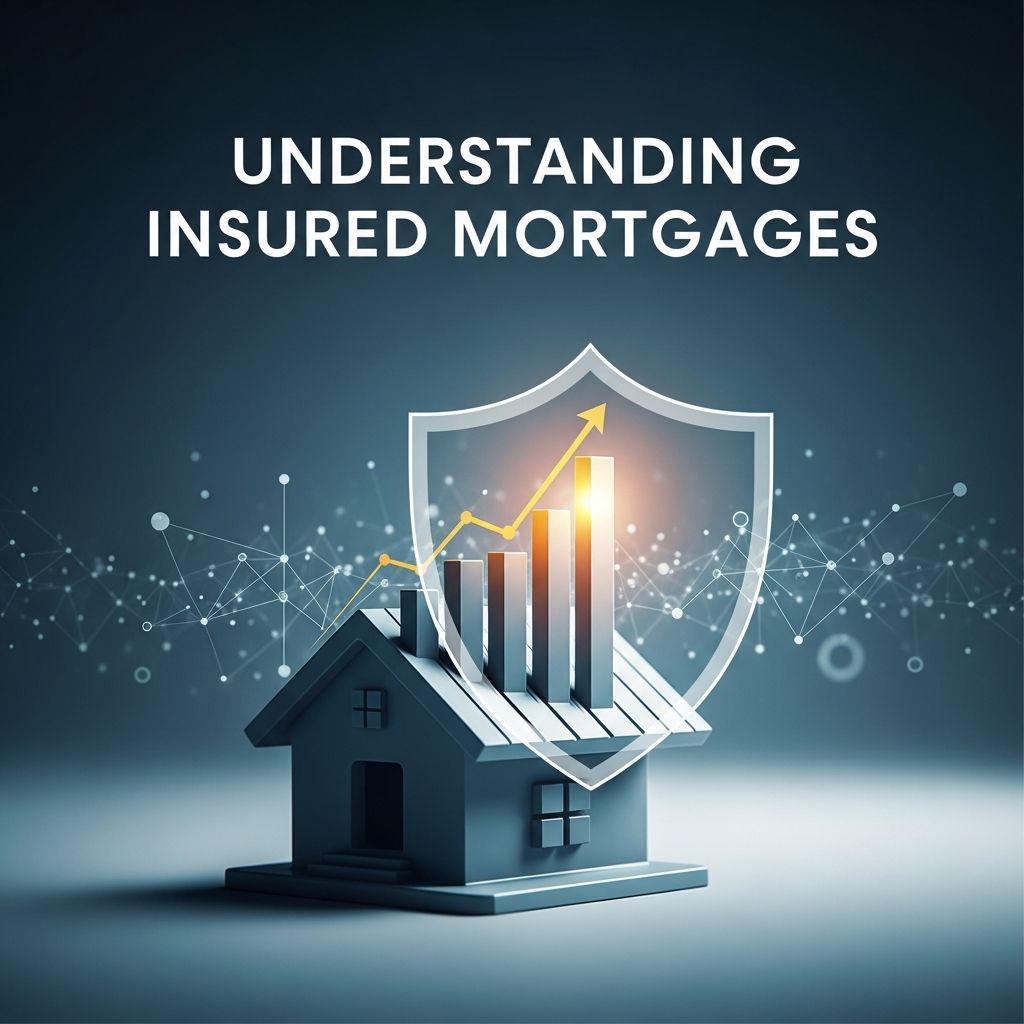
Insured mortgages represent a vital financing option for many homebuyers, particularly those unable to afford large upfront payments. These loans feature mortgage insurance that safeguards lenders against borrower defaults, allowing for smaller down payments and broader eligibility.
Defining Insured Mortgages and Their Core Purpose
An insured mortgage is a home loan backed by third-party insurance, which compensates the lender if the borrower fails to repay. This protection is crucial for high loan-to-value (LTV) ratios, where the down payment is less than 20% of the home’s value. Unlike borrower-focused policies, this insurance exclusively benefits the lender, reducing their financial exposure in case of foreclosure or default.
The insurance premium is typically paid by the borrower, either upfront or added to monthly payments, increasing overall costs but enabling access to homeownership. In regions like Canada and the U.S., government-backed programs such as FHA loans exemplify this, mandating insurance for low-down-payment mortgages.
Why Lenders Insist on Mortgage Insurance
Lenders require insurance primarily for loans with high LTV ratios, as smaller down payments heighten default risk. By transferring this risk to insurers, lenders can approve more applications, comply with regulations, and maintain portfolio stability. This setup encourages lending to first-time buyers, self-employed individuals, or those with imperfect credit.
- Risk Reduction: Covers losses from defaults, foreclosures, or property sales yielding less than the loan balance.
- Regulatory Adherence: Meets legal standards for high-risk loans, ensuring operational compliance.
- Market Expansion: Boosts lending volume, stabilizing housing markets by increasing buyer participation.
Advantages for Homebuyers
While designed for lenders, insured mortgages offer substantial borrower benefits, democratizing homeownership.
Minimal Down Payment Thresholds
Borrowers can enter the market with as little as 3-5% down, compared to 20% for uninsured conventional loans. This lowers the savings barrier, ideal for young professionals or families building equity gradually.
Streamlined Approval Processes
With reduced lender risk, approvals are faster and more lenient, accommodating lower credit scores or non-traditional incomes. This inclusivity aids newcomers, gig workers, and those recovering from financial setbacks.
Potentially Lower Interest Rates
Insured status often secures competitive rates, offsetting premium costs over time. Lenders pass on savings from mitigated risk, making long-term payments more manageable.
| Feature | Insured Mortgage | Conventional Mortgage |
|---|---|---|
| Minimum Down Payment | 3-5% | 20% |
| Approval Flexibility | High (lower credit OK) | Strict |
| Insurance Requirement | Mandatory for high LTV | None |
| Typical Borrowers | First-time, low savings | Established savers |
Understanding Mortgage Insurance Providers and Options
Mortgage insurance comes from government agencies or private firms. In the U.S., the Federal Housing Administration (FHA) insures loans with premiums paid upfront and monthly. Canada’s system features providers like CMHC, offering varying premiums, coverage limits, and policy perks such as portability.
Shoppers should compare providers for:
- Premium rates based on LTV and credit.
- Maximum insurable amounts.
- Specialization in property types or borrower profiles.
- Features like prepayment flexibility.
Costs and Financial Implications for Borrowers
Borrowers bear the insurance premium, which adds 0.5-3% of the loan amount annually, financed into payments. For a $300,000 loan with 5% down, expect $100-250 monthly extras. These costs persist until reaching 20% equity or refinancing, unlike some private insurances that cancel earlier.
Other drawbacks include stricter loan limits and documentation, potentially delaying closings. Despite this, net benefits often outweigh for low-equity buyers.
Qualification Criteria for Insured Mortgages
Eligibility blends lender and insurer rules:
- Down Payment: Minimum 5% for high-ratio loans; 20%+ may optionalize insurance.
- Credit Score: Typically 620+, with flexibility for FHA-like programs.
- Debt-to-Income Ratio: Under 43-50%, assessing repayment ability.
- Property Standards: Must meet insurer appraisals for condition and value.
- Income Verification: Stable proof, accommodating varied sources.
First-time buyers often qualify easiest, with programs targeting them specifically.
Comparing Insured vs. Uninsured Mortgages
Uninsured (conventional) loans demand 20% down, avoiding premiums but requiring stronger profiles. Insured options suit immediate needs, while building equity unlocks uninsured refinancing later.
- Choose insured for quick entry with modest savings.
- Opt for conventional if equity is ready, dodging premiums.
Real-World Applications and Market Impact
Insured mortgages fuel market vitality by onboarding diverse buyers, countering rising prices. They promote economic growth via construction, jobs, and wealth-building. In volatile economies, they stabilize lending, preventing credit crunches.
Frequently Asked Questions (FAQs)
Does mortgage insurance protect the borrower?
No, it solely protects the lender from default losses. Borrowers risk credit damage and foreclosure without coverage.
Can I remove mortgage insurance later?
Yes, once equity hits 20-22% via payments or appreciation, request cancellation or auto-termination per rules.
Are insured mortgages only for first-time buyers?
No, but they target those with smaller down payments, including repeat buyers or investors in eligible cases.
How do premiums affect monthly payments?
Added as a line item, increasing totals by $50-300 based on loan size and LTV. Shop providers for savings.
What properties qualify for insured mortgages?
Primarily owner-occupied single-family homes; some condos or multi-units if insurer-approved.
Strategic Tips for Pursuing an Insured Mortgage
To maximize value:
- Boost credit pre-application for better rates.
- Compare insurers via brokers.
- Calculate total costs with online tools.
- Plan equity growth for early premium drop.
- Consult advisors for personalized fits.
Insured mortgages bridge savings gaps, fostering inclusive housing access while prudently managing lender risks.
References
- What is an Insured Mortgage? | Lending Hub — Lending Hub. 2023. https://lendinghub.ca/blog/the-basics-of-insured-mortgages-what-you-need-to-know
- What is an Insured Mortgage? – Jason Anbara — Jason Anbara. 2023. https://jasonanbara.com/blog/what-is-an-insured-mortgage/
- What is Insured Mortgage? – Society Mortgage — Society Mortgage. 2023. https://societymortgage.com/glossary/insured-mortgage/
- What is mortgage insurance and how does it work? – CFPB — Consumer Financial Protection Bureau (.gov). 2024-02-06. https://www.consumerfinance.gov/ask-cfpb/what-is-mortgage-insurance-and-how-do-it-work-en-1953/
- Insured Mortgage Definition – Gate City Bank — Gate City Bank. 2023. https://www.gatecity.bank/education/glossary/insured-mortgage/
- Who is insured by FHA Mortgage Insurance – HUD — U.S. Department of Housing and Urban Development (.gov). 2023. https://answers.hud.gov/FHA/s/article/Who-is-insured-by-FHA-Mortgage-Insurance-and-what-are-the-benefits
Similar Articles








Read full bio of medha deb