Understanding Housing Fraud: Safeguards for Tenants
Learn how to identify deceptive rental practices and protect your finances
The rental housing market has become increasingly vulnerable to fraudulent schemes, affecting millions of individuals annually. According to the Federal Trade Commission (FTC), rental scams represent a significant portion of housing-related consumer complaints, with young adults aged 19-29 being disproportionately targeted. These schemes exploit the urgency many renters feel when seeking affordable housing in competitive markets, making awareness and prevention critical for protecting your financial security and personal information.
Recognizing Common Deceptive Tactics in Rental Markets
Fraudulent rental schemes have evolved considerably, becoming increasingly sophisticated in their execution. Understanding these deceptive approaches helps renters identify potential threats before financial harm occurs. The methods employed by dishonest actors range from simple misrepresentation to complex identity theft schemes.
Price-Based Warning Indicators
One of the most obvious red flags appears in the listing price itself. Rental rates significantly below market average in your geographic area warrant immediate skepticism. Scammers intentionally underprice properties to generate rapid inquiries and applications. This psychological tactic creates urgency and reduces critical evaluation by potential renters who perceive an exceptional opportunity. Before responding to any listing, research typical rental costs in the specific neighborhood or building to establish realistic expectations for your area.
Communication Pattern Anomalies
Legitimate property managers and landlords typically maintain professional communication standards and provide verifiable contact information. Suspicious communication patterns include:
- Unsolicited offers arriving via text message or email from unknown contacts
- Pressure to complete payments before lease signing or application submission
- Refusal to engage in scheduled property viewings or live video tours
- Contact information that differs from the official property management company website
- Generic responses that fail to address specific tenant inquiries
Verification and Documentation Gaps
Fraudulent operators frequently lack comprehensive documentation and operational procedures that characterize legitimate rental businesses. Warning signs include absence of formal application processes, verbal-only agreements without written confirmation, and inability or unwillingness to provide lease documentation containing standard rental terms, payment schedules, and maintenance responsibilities.
Essential Verification Strategies for Property and Landlord Authentication
Protecting yourself begins with thorough verification of both the property and the person or entity claiming to manage it. This investigation phase requires time and attention but substantially reduces fraud risk.
Property Ownership Confirmation
Before engaging further with any listing, verify actual property ownership through public records. Most jurisdictions maintain property records accessible through county assessor offices, tax assessor databases, or online property search platforms. Cross-reference the claimed owner or management company with these official records. Properties in foreclosure, recently sold to financial institutions, or with unresolved ownership disputes present heightened fraud risks.
Cross-Platform Listing Analysis
Fraudsters frequently post identical or nearly identical listings across multiple platforms with varying details or contact information. Search for the property address on established rental platforms, property management websites, and social media. Inconsistencies in price, amenities, lease terms, or contact details across platforms indicate probable fraud. Legitimate properties typically appear on consistent platforms with identical information.
Direct Contact Verification
Never rely on contact information provided in listing emails or text messages. Instead, visit the official property management company website directly or call their main office number. Ask specific questions about the property and verify that the listing is legitimate before providing any personal information. Scammers often create email addresses and phone numbers that superficially resemble legitimate business contacts.
Physical Property Inspection as a Non-Negotiable Requirement
Perhaps the most effective fraud prevention measure is refusing to commit financially to any property without in-person verification. Scammers operating without actual property access cannot facilitate legitimate showings, making this step particularly revealing.
In-Person Viewing Importance
Schedule in-person property tours before submitting applications or deposits. During viewings, verify that the property matches listing descriptions, photograph conditions to document current state, and meet the actual property manager or owner. If traveling to view a property is impractical, arrange for a trusted local contact to inspect the space and provide detailed descriptions or video documentation. Accept only live video tours with real-time interaction, not pre-recorded video content that scammers can reuse.
What to Assess During Property Visits
Beyond verifying the property exists, conduct a thorough evaluation during your visit. Compare actual conditions with listing descriptions, test utilities and appliances, examine lease terms and rental agreements, and assess the neighborhood. Document any discrepancies between advertised and actual conditions. Request contact information from existing tenants if permitted, as they can provide insights into management practices and reliability.
Financial Protection Through Secure Payment Methods
Payment method selection significantly impacts your ability to recover funds if fraud occurs. Understanding secure versus risky payment approaches is fundamental to financial protection.
High-Risk Payment Methods to Avoid
Certain payment methods provide minimal protection and create audit trails that make recovery extremely difficult:
- Cash payments – Completely untraceable and irretrievable if fraud occurs
- Wire transfers – Functionally equivalent to cash; funds cannot be recovered after transmission
- Money transfer services – Western Union, MoneyGram, and similar services provide no fraud protection or recourse
- Cryptocurrency – Irreversible transactions with no consumer protection mechanisms
- Gift cards or prepaid cards – No transaction documentation or fraud protection
- Peer-to-peer payment apps – Venmo, Cash App, and similar platforms lack buyer protection for rental transactions
Recommended Secure Payment Approaches
Utilize payment methods that provide documented transactions, fraud protection, and potential recovery mechanisms:
- Bank transfers and cashier’s checks – Create verifiable payment records traceable by law enforcement
- Credit cards – Offer fraud protection and chargeback mechanisms
- Escrow services – Third-party services that hold funds until both parties complete agreed-upon actions
- Certified checks – Provide verification of fund availability and create documented payment trails
Lease Agreement Review and Legal Documentation
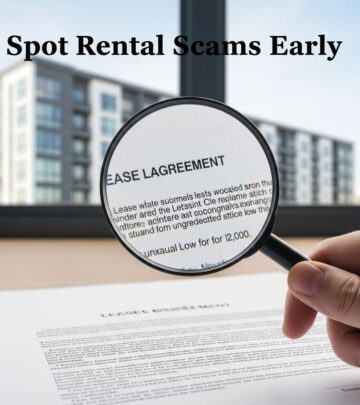
A comprehensive written lease serves as your primary legal protection and evidence of legitimate rental arrangements. Never proceed with payment without documented lease terms.
Essential Lease Components
A legitimate lease should contain specific information addressing the complete rental relationship:
- Monthly rent amount and payment due dates
- Security deposit amount and refund conditions
- Lease duration and renewal terms
- Maintenance responsibilities for tenant and landlord
- Utility responsibilities and payment methods
- House rules and occupancy restrictions
- Landlord and tenant contact information
- Move-in and move-out procedures
- Dispute resolution processes
Legal Review Considerations
If lease terms appear ambiguous, overly favorable, or contain non-standard language, consult with a local attorney or tenant rights organization before signing. State and local laws governing landlord-tenant relationships vary considerably, and legal review ensures your rights are protected. Many jurisdictions offer free or low-cost legal aid services for housing-related matters.
Background Investigation of Property Management Entities
Researching the property management company or individual landlord provides critical context about their legitimacy and operational history.
Online Research Methods
Conduct comprehensive internet searches combining the landlord or company name with terms such as “scam,” “complaint,” “lawsuit,” or “fraud.” Review business rating platforms including Better Business Bureau (BBB), Google Business, and industry-specific review sites. Check social media presence and verify that official pages have consistent information across platforms. Look for professional certifications or memberships in property management associations, which indicate commitment to industry standards.
Reference Verification
Request contact information for recent tenants or property references. Contact these individuals to inquire about their rental experience, landlord responsiveness, maintenance handling, and deposit return processes. Ask specifically about any disputes and how they were resolved. Multiple positive references from verifiable tenants substantially reduce fraud probability.
Strategic Protections for Property Managers and Owners
While tenant protection is critical, property owners and managers must implement systems to prevent tenant-related fraud and protect their assets.
Tenant Screening Procedures
Implement rigorous screening processes including background checks, credit verification, and reference calls to previous landlords. Verify employment and income to confirm financial capacity to pay rent. Request government-issued identification to confirm identity. These practices identify fraudulent applicants and reduce exposure to problematic tenants.
Fraud Detection Systems
Deploy technology tools that monitor unusual showing patterns, detect multiple applications from the same individual using different identities, and flag suspicious activity. Maintain updated blacklists of known fraudsters or problematic applicants. Regularly search classified sites and social media for unauthorized listings of your properties with fraudulent contact information. Coordinate with local property manager associations to share information about scammers operating in your area.
Listing Security Measures
Place signage at properties displaying company contact information and official channels. If scammers create fraudulent listings, prospects directed to your property can verify legitimacy through official signage. Respond quickly to reports of unauthorized listings by flagging them on rental platforms and pursuing takedown requests through legal channels.
Responding to Suspected or Confirmed Fraud
If you suspect you have encountered rental fraud or have already become a victim, immediate action increases the likelihood of recovery and prevents further harm.
Immediate Actions
Contact your bank or payment provider immediately to report the fraudulent transaction. If funds were transferred, request immediate suspension of further payments and explore recovery options. Document all communications with the suspected fraudster, including emails, text messages, and call records. Preserve screenshots of the listing, advertisements, and any misleading representations.
Formal Reporting Procedures
File a complaint with the Federal Trade Commission (FTC) through their Consumer Sentinel database, which aggregates fraud reports and helps law enforcement identify patterns. Report the incident to your local police department or sheriff’s office, providing comprehensive documentation of the fraud. Contact your state’s attorney general office, which maintains consumer protection divisions responsible for investigating rental fraud. Notify the rental platform where you found the listing and request removal of fraudulent postings to protect others.
Warning Other Potential Victims
Report the fraudulent listing on rental platforms using their reporting mechanisms. Post warnings on community forums, neighborhood social media groups, and local tenant organizations. Contact local news outlets that may report on scam trends, helping raise community awareness. Provide information to tenant rights organizations in your area so they can alert their constituents.
Frequently Asked Questions About Rental Fraud
What demographic groups face the highest fraud risk?
Renters aged 19-29 experience disproportionately high fraud victimization rates. This age group frequently relocates for education or career opportunities, often seeking housing in unfamiliar cities where they lack local knowledge. The combination of urgency, unfamiliarity with local markets, and relative inexperience with fraud prevention makes them attractive targets for scammers.
Can I recover funds after wire transfer fraud?
Recovery from wire transfer fraud is extremely difficult and often impossible. Wire transfers are essentially irreversible, making them functionally equivalent to cash. Banks can attempt to recall transfers in limited circumstances, but once scammers access the funds, recovery becomes unlikely. This is why financial institutions and law enforcement consistently advise against wire transfers for rental payments.
How do scammers access legitimate listings to post fraudulently?
Scammers employ various methods including compromising property owner email accounts, gaining unauthorized access to property management company systems, or simply downloading photos and information from legitimate listings to create unauthorized duplicate postings. They then change contact information to their own details, directing inquiries to fraudulent accounts they control.
What should I do if I cannot visit a property in person?
Request a live video tour with real-time interaction with the property manager or landlord. Alternatively, hire a local property inspector or ask a trusted friend or family member to conduct the viewing on your behalf. Reject any rental arrangement that cannot provide live verification of the property’s existence and condition through one of these methods.
Conclusion: Building a Fraud-Resistant Approach to Housing
Rental fraud persists because it exploits genuine housing needs and time constraints that characterize the rental search process. However, implementing systematic verification procedures, utilizing secure payment methods, requiring comprehensive lease documentation, and conducting thorough landlord research substantially mitigates fraud risk. Both renters and property managers benefit from fraud prevention practices that protect financial resources and personal information. By approaching housing transactions with appropriate skepticism, verifying claims through independent sources, and understanding common deceptive tactics, you can navigate rental markets confidently and securely.
References
- How To Avoid Rental Scams — Authenticate. 2024. https://authenticate.com/resources/blog/how-to-avoid-rental-scams
- Avoiding Rental Scams — Off Campus Engagement and Support, Northeastern University. 2024. https://offcampus.housing.northeastern.edu/explore-housing-options/rental-scams/
- Rental Listing Scams — Federal Trade Commission Consumer Advice. 2024. https://consumer.ftc.gov/articles/rental-listing-scams
- 12 Tips to Avoid Rental Scams — Brabender Law. 2024. https://bc-firm.com/avoiding-rental-scams/
- Avoid Rental Scams | AMC Resident Safety Tips — AMC Resident Services. 2024. https://www.liveamc.com/avoid-rental-scams
- The Property Manager’s Guide to Preventing Apartment Rental Scams — Showmojo. 2024. https://hello.showmojo.com/blog/rental-property-scam-protection/
Similar Articles








Read full bio of medha deb