Understanding Home Mortgages: A Complete Guide
Learn how mortgages work, what lenders evaluate, and the key steps in securing home financing.

Purchasing a home represents one of the most significant financial decisions most people will make in their lifetime. For the vast majority of buyers, achieving homeownership requires securing a mortgage—a specialized loan designed specifically for purchasing real estate. Yet despite how common mortgages are, many prospective buyers don’t fully understand how they work, what lenders evaluate, or what to expect during the approval and closing process. This comprehensive guide demystifies mortgages and provides the knowledge you need to navigate the homebuying journey with confidence.
What Exactly Is a Mortgage?
At its core, a mortgage is a legal loan agreement between a borrower and a lender that enables the purchase of real property. The fundamental structure involves the lender providing funds upfront to purchase the home, while the borrower commits to repaying those funds plus interest over an extended period, typically 15 to 30 years.
The defining characteristic that distinguishes mortgages from other loan types is that the property itself serves as collateral for the loan. This means if the borrower fails to make payments, the lender has the legal right to foreclose—taking ownership of the property and selling it to recover the money loaned. This collateral arrangement is what allows lenders to offer mortgages with lower interest rates compared to other consumer loans, since the lender’s risk is secured by the underlying asset.
When you sign a mortgage document, you’re essentially entering into a binding contract with specific terms. The promissory note outlines your obligation to make regular monthly payments, detailing how much of each payment goes toward the principal amount borrowed, interest charges, and various fees. Understanding these terms before signing is crucial to successful homeownership.
Key Players in the Mortgage Transaction
A typical mortgage involves several important parties, each with distinct roles and responsibilities:
- The Borrower (Mortgagee): This is you—the person purchasing the property who signs the promissory note and commits to repaying the loan.
- The Lender (Mortgagor): Financial institutions such as banks, credit unions, or online lending companies provide the capital for your purchase. Lenders evaluate your ability to repay and establish the loan terms.
- Co-signers: Sometimes a second party with stronger finances co-signs the mortgage to strengthen the application or help a borrower qualify.
- Title Company: These professionals ensure clear property ownership and handle closing procedures.
- Appraisers: Licensed professionals assess the property’s market value to ensure the loan amount aligns with what the home is worth.
What Lenders Examine Before Approving Your Mortgage
Before committing to lend you hundreds of thousands of dollars, lenders conduct thorough financial investigations. Understanding what they examine helps you prepare stronger applications and anticipate documentation requests.
Credit History and Credit Score
Your credit history demonstrates your track record with borrowed money. Lenders review this history to assess whether you’ve consistently made on-time payments on previous obligations. Your credit score—a numerical summary of your creditworthiness—heavily influences both whether you’ll qualify for a mortgage and what interest rate you’ll receive.
Debt-to-Income Ratio
Lenders calculate your debt-to-income ratio (DTI) by dividing your total monthly debt payments by your gross monthly income. This metric reveals what percentage of your income already goes toward existing obligations. Most lenders prefer to see DTI ratios below 43%, meaning your new mortgage payment plus existing debts shouldn’t exceed 43% of your gross income. Some lenders may approve ratios up to 50% for well-qualified borrowers.
Employment and Income Verification
Lenders need proof that you have stable, verifiable income sufficient to cover mortgage payments. During processing, mortgage consultants verify employment history and current employment status. You’ll typically need to provide recent pay stubs, tax returns, and sometimes written verification from your employer.
Assets and Down Payment Funds
Lenders want confirmation that you have genuine funds available for your down payment and closing costs. They’ll request bank statements showing liquid assets and may track the source of funds to ensure you’re not borrowing money that would need to be repaid, which would further strain your finances.
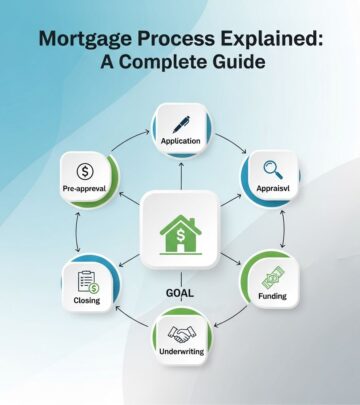
The Five-Stage Mortgage Process
Securing a mortgage involves multiple stages, each serving a specific purpose in the lender’s evaluation process. Understanding these stages helps you know what to expect and what to prepare for at each point.
Stage One: Determining Your Budget
Before you even begin house hunting, assess what you can realistically afford. Financial advisors recommend that your total housing costs—including mortgage principal and interest, property taxes, insurance, and homeowners association fees—should not exceed 28% of your gross monthly income. Using mortgage calculators helps you estimate monthly payments for different loan amounts and interest rates, giving you a clear spending ceiling based on your finances.
Stage Two: Pre-Qualification and Pre-Approval
These initial steps differ in depth but serve the purpose of establishing how much a lender is willing to loan you:
- Pre-Qualification: A preliminary evaluation where lenders review your self-reported financial information to estimate how much you might be able to borrow. This doesn’t involve verification and carries no obligation from the lender.
- Pre-Approval: A more rigorous process where lenders conduct thorough reviews of your credit history, employment status, and finances, often using automated underwriting systems. Pre-approval provides a written commitment for a specific loan amount, making you a more competitive buyer when making offers.
Stage Three: Formal Application and Documentation
Once you’ve found a home and had your offer accepted, you’ll submit a complete mortgage application. At this stage, the lender requests comprehensive documentation to verify everything you’ve claimed about your finances. Common documentation requests include:
- Evidence of earnest money deposit
- Complete asset verification statements
- Verification of employment letters
- The fully executed sales contract
- Gift letters (if applicable)
- Borrower explanations for any credit issues
Your lender simultaneously orders a professional appraisal of the property. The appraiser examines the home’s condition and compares it to recently sold properties in the area to determine fair market value. The appraisal ensures the property’s value justifies the loan amount—lenders won’t lend more than the property is worth.
During this period, the lender also orders a title search to confirm clear ownership and identify any liens or encumbrances on the property. A title company reviews public records to ensure you’ll receive undisputed ownership rights.
Stage Four: Underwriting and Conditional Approval
Underwriting is the critical evaluation process where lenders determine the risk you present as a borrower. Underwriters—specialized loan specialists—meticulously review every document submitted, examining your financial records, employment history, debt obligations, and the property appraisal. They verify that information matches across all documents and assess your overall creditworthiness.
Most loans receive conditional approval rather than immediate final approval. This status means the underwriter has approved your loan in principle but requires additional documentation or clarification before issuing final approval. Common conditional approval requirements include:
- Updated bank statements showing current balances
- Recent tax returns and W-2 forms
- Current employment verification
- Final appraisal report
- Recent pay stubs
- Homeowners insurance quotes
This stage typically lasts 1-2 weeks after conditional approval. Your mortgage consultant will work with you to gather any remaining items needed and prepare additional paperwork for closing, such as the purchase agreement, deed, and mortgage note.
Stage Five: Clear to Close and Funding
When all conditions are satisfied and documents reviewed, you’ll receive clear to close status. This final approval means the underwriter has signed off on everything, and your lender will send you a clear to close letter and a Closing Disclosure—a critical document detailing your loan terms, all costs, and final numbers.
At closing, you’ll sign the final documents with a representative from the title company or lender explaining each document. For purchases, lenders typically release funds after signing, though the wire transfer may need to clear before you receive keys. For refinances, timing varies by property type and local regulations.
Mortgage Components: What Your Monthly Payment Covers
Your monthly mortgage payment isn’t simply a repayment of borrowed funds. Instead, it’s composed of multiple components:
| Component | Purpose | Details |
|---|---|---|
| Principal | Repayment of borrowed amount | The actual loan amount you borrowed, paid back gradually over 15-30 years |
| Interest | Lender compensation | Fee charged by the lender for providing capital; rate depends on credit profile and market conditions |
| Property Taxes | Local government obligations | Annual taxes assessed by your municipality; included in escrow account |
| Insurance | Property protection | Homeowners insurance protecting the structure; lenders require this |
| HOA Fees | Community maintenance (if applicable) | Common area upkeep in condominiums or planned communities |
Frequently Asked Questions About Mortgages
How long does the entire mortgage process take?
From application to closing typically takes 30-45 days, though this varies based on how quickly you provide documentation and how complex your financial situation is.
Can I improve my chances of mortgage approval?
Yes. Before applying, work on improving your credit score, reducing existing debt, saving for a larger down payment, and ensuring employment stability. These factors all strengthen your application.
What if my application is denied?
Ask your lender for specific reasons. Common denial causes include insufficient income, high debt levels, or credit issues. You may reapply after addressing these concerns or seek alternative lenders.
Are there different mortgage types?
Yes. Options include conventional loans, FHA loans (government-backed), VA loans (for veterans), and USDA loans (for rural properties). Each has different requirements and benefits.
What’s the difference between pre-approval and conditional approval?
Pre-approval is an early commitment based on unverified information. Conditional approval comes after underwriting has verified your documents but requires final items before final approval.
Protecting Yourself During the Mortgage Process
As you navigate mortgage acquisition, maintain transparency with your lender, respond promptly to documentation requests, and carefully review all closing documents before signing. Avoid making large purchases or opening new credit accounts during the process, as these actions affect your debt ratios and may jeopardize approval. Keep copies of all submitted documents for your records.
Conclusion
Mortgages enable millions of people to achieve homeownership without requiring the complete purchase price upfront. By understanding how mortgages function, what lenders evaluate, and the multi-stage approval process, you can approach homebuying with realistic expectations and better preparation. Whether you’re a first-time buyer or returning to the market, this knowledge positions you to make informed decisions and navigate the journey successfully.
References
- How does the mortgage loan process work? — Guaranteed Rate. 2024. https://www.rate.com/mortgage/resource/mortgage-loan-processing
- What is a mortgage? Meaning and steps — Rocket Mortgage. 2024. https://www.rocketmortgage.com/learn/what-is-a-mortgage
- Your 10-Step Guide to the Mortgage Loan Process — Bank of America. 2024. https://www.bankofamerica.com/mortgage/learn/guide-to-the-mortgage-loan-process/
- Mortgage 101 – Everything You Need to Know about Mortgages — First Merchants. October 18, 2023. https://www.firstmerchants.com/resources/learn/blogs/blog-detail/resource-library/2023/10/18/mortgage-101-everything-you-need-to-know-about-mortgages
- What is a mortgage and how does it work? — Fidelity. 2024. https://www.fidelity.com/learning-center/personal-finance/what-is-a-mortgage
Similar Articles








Read full bio of medha deb