Understanding a Holding Company: Structure, Types & Benefits
Master holding company structures: Learn how parent companies control subsidiaries and manage diversified business portfolios effectively.

Understanding a Holding Company: Complete Overview
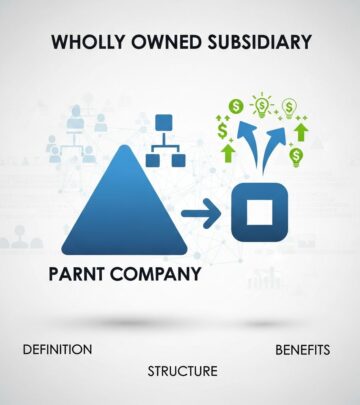
A holding company is a legal entity, typically structured as a corporation or limited liability company (LLC), that exists primarily to own and control other businesses known as subsidiaries. Unlike operating companies that produce goods or provide services directly to customers, holding companies focus on ownership, strategic oversight, asset protection, and high-level management of their subsidiary companies. This distinctive corporate structure has become increasingly popular among businesses seeking to diversify operations, manage risk, and optimize their organizational framework.
The fundamental purpose of a holding company is to provide centralized governance and strategic direction while allowing individual subsidiaries to maintain operational independence. Through majority shareholding or controlling interests in subsidiary companies, holding companies gain the authority to elect board directors, influence strategic decisions, and manage capital across the entire corporate group. This arrangement creates a clear hierarchical structure where the parent holding company sits at the top, overseeing multiple operating entities below it.
How Holding Companies Function
Holding companies operate through a carefully structured ownership model that grants them control over subsidiary operations while maintaining legal separation between entities. When a holding company acquires a controlling interest in another company, it typically owns at least 51 percent of the subsidiary’s stock, though many holding companies own substantially higher percentages or 100 percent ownership.
The primary revenue streams for holding companies derive from dividends paid by subsidiaries, interest income, capital gains from investments, and strategic asset appreciation. Rather than generating revenue through direct business operations, holding companies build wealth through their investment portfolio and the performance of their subsidiary companies. This passive income model allows holding companies to focus on strategic planning, risk management, and long-term value creation.
A critical advantage of the holding company structure is the legal separation it creates between entities. If one subsidiary declares bankruptcy or faces legal liability issues, the parent holding company and its other subsidiaries remain protected from those specific financial obligations. This liability shield extends to protecting valuable assets such as intellectual property, patents, trademarks, real estate, and equipment that the holding company may own separately.
Types of Holding Company Structures
Holding companies can be organized in several distinct ways, each serving different strategic purposes and business objectives.
Pure Holding Companies
Pure holding companies exist solely to own and control other businesses without conducting any independent business operations. These entities do not manufacture products, provide services, or engage in direct revenue-generating activities. Their sole function is managing their portfolio of subsidiary companies and making strategic decisions about capital allocation and corporate direction.
A classic example of a pure holding company is Berkshire Hathaway Inc., one of the most successful investment vehicles in the world. Under Warren Buffett’s leadership, Berkshire Hathaway owns controlling interests in numerous companies across diverse industries including GEICO (insurance), Precision Castparts (manufacturing), Lubrizol (specialty chemicals), McLane Co. (wholesale distribution), and BNSF Railway (transportation). Another example is Ahold Delhaize, a Dutch-Belgian multinational that owns major retail and wholesale brands including Albert Heijn, Stop & Shop, Food Lion, and Hannaford across multiple countries.
Mixed Holding Companies
Mixed holding companies operate their own primary business while simultaneously holding controlling interests in other subsidiary companies. This hybrid model allows a company to function as both an operating entity and a parent company overseeing additional investments.
Alphabet Inc. represents a prominent example of strategic mixed holding company restructuring. When Google reorganized in 2015, it created Alphabet as a parent entity to own Google (its primary operating business) and numerous subsidiaries including Waymo (autonomous vehicles), Nest (smart home technology), CapitalG (venture capital), and DeepMind (artificial intelligence). This structure enables Google to maintain focus on its core search and advertising business while pursuing innovative ventures through subsidiary companies.
Microsoft Corporation demonstrates another mixed holding company model, producing software and services while holding significant ownership stakes in complementary technology companies. Similarly, Walt Disney operates its own divisions including Disney Parks, Disney Studios, and Disney Media and Entertainment Distribution while also holding controlling interests in ESPN, ABC Television Network, and Marvel Studios.
Immediate Holding Companies
An immediate holding company functions as a direct parent to its subsidiary entities, serving as the immediate layer of ownership between the ultimate parent corporation and operating subsidiaries. These holding companies typically manage specific business functions, divisions, or geographic regions within a larger corporate structure.
Sony Financial Group Inc., owned by Sony Group Corporation, exemplifies an immediate holding company structure by focusing specifically on managing the group’s financial services through subsidiaries including Sony Life Insurance, Sony Assurance, Sony Bank, Sony Lifecare, and Sony Financial Ventures. Similarly, Facebook Operations, LLC operates as a subsidiary of Meta Platforms, Inc. while simultaneously serving as a holding company for other entities including Edge Network Services Limited and Cassin Network ApS.
Intermediate Holding Companies
An intermediate holding company occupies a middle position within a multi-tiered corporate structure, functioning simultaneously as a subsidiary to a larger parent company and as a holding company for lower-tier subsidiaries. This structure proves particularly valuable for multinational corporations with complex regional operations and foreign business interests.
JP Morgan Chase Bank illustrates this model as a subsidiary of JPMorgan Chase & Co., overseeing multiple banking and financial subsidiaries within the group. HSBC North America Holdings Inc. similarly operates under HSBC Holdings plc as an intermediate holding company, managing regional and U.S.-based subsidiaries. The intermediate holding company structure allows multinational enterprises to streamline management of regional operations and potentially optimize tax liabilities across different jurisdictions.
Conglomerate Structures
When a parent company owns subsidiaries operating in unrelated industries, the corporate group is classified as a conglomerate. Conglomerates represent the most diversified form of holding company structure, spreading business interests across multiple distinct sectors to reduce industry-specific risk and create diverse revenue streams.
Structural Benefits and Advantages
The holding company structure offers numerous strategic advantages that explain its widespread adoption across industries:
Liability Protection
One of the most significant benefits is the legal separation between entities. If a subsidiary faces bankruptcy, lawsuits, or other financial crises, creditors typically cannot pursue the parent holding company or its other subsidiaries for payment. This compartmentalization protects valuable corporate assets from being seized to satisfy obligations of a struggling subsidiary.
Asset Management and Protection
Holding companies can own and manage valuable assets including intellectual property, patents, trademarks, real estate, equipment, and vehicles in separate subsidiaries. Operating companies pay to use or lease these assets, creating internal revenue streams while protecting them from creditors of operating entities.
Operational Flexibility
New acquisitions, ventures, or partnerships can be added under the holding company structure without disrupting existing operations. This modularity allows businesses to expand into new markets or industries while maintaining the stability of established operations.
Tax Optimization
The holding company structure provides opportunities for tax planning and optimization across multiple jurisdictions. By strategically organizing subsidiaries in different tax environments, companies can potentially reduce overall tax burdens and improve after-tax returns on investments.
Enhanced Governance and Oversight
The model naturally supports clearer oversight, strategic alignment, and accountable management across multiple entities. Holding companies can implement consistent governance standards, reporting requirements, and strategic direction across all subsidiaries while allowing operational independence.
Capital Access and Investment Efficiency
As majority owners, holding companies receive dividends from subsidiaries and gain better access to capital and investment opportunities. This centralized capital management allows for more efficient resource allocation and strategic investment across the corporate group.
Common Holding Company Structures
Most holding company setups follow consistent organizational patterns that have proven effective across industries:
A parent holding entity: The top-level company that owns controlling interests in subsidiary companies
One or more operating subsidiaries: Companies that conduct actual business operations, manufacturing, or service delivery
Asset-holding subsidiaries: Entities that own real estate, intellectual property, equipment, or other valuable corporate assets
Defined ownership relationships: Clear hierarchical structures defining parent-subsidiary relationships and control mechanisms
Governance and oversight frameworks: Formal systems for strategic decision-making, financial reporting, and management accountability
Industry-Specific Applications
Different industries utilize holding company structures in specialized ways. Comcast Corporation operates as a holding company owning major entertainment and telecommunications assets including NBCUniversal, Sky Group, and Xfinity. UnitedHealth Group functions as a healthcare holding company with two primary subsidiaries: Optum (healthcare technology and pharmacy services) and UnitedHealthcare (health insurance provider).
In real estate, holding company structures prove particularly popular. Each rental property may be owned by a separate LLC, with a parent holding company maintaining overall control and coordination. This approach protects individual properties from liabilities affecting others while simplifying management and tax planning.
Frequently Asked Questions
Q: What is the primary difference between a holding company and an operating company?
A: A holding company owns and controls other businesses but typically does not conduct day-to-day operations or produce goods/services. An operating company directly engages in business activities and produces revenue through products or services. A mixed holding company combines both functions.
Q: Can a holding company own 100 percent of a subsidiary?
A: Yes, holding companies can own any percentage of subsidiary stock from just over 50 percent (controlling interest) to 100 percent complete ownership. The specific percentage depends on the company’s strategic objectives and governance preferences.
Q: How does a holding company generate revenue?
A: Holding companies generate revenue primarily through dividends paid by subsidiaries, interest income on investments, capital gains from asset appreciation, and royalties from intellectual property licensing to operating subsidiaries.
Q: What are the tax advantages of a holding company structure?
A: Tax advantages may include consolidation of tax positions, optimization across multiple jurisdictions, deferral of capital gains through strategic timing, and potential reduction of overall corporate tax burdens through careful structuring.
Q: Why would a company restructure as a holding company?
A: Companies restructure to achieve liability protection, improve asset management, facilitate acquisitions, optimize tax positions, enhance governance and oversight, provide operational flexibility, and create clearer organizational structures for diverse business portfolios.
Q: Can a holding company be structured as an LLC instead of a corporation?
A: Yes, holding companies can be organized as corporations, limited liability companies (LLCs), partnerships, or other legal entities. The choice depends on tax considerations, liability protection needs, and specific business objectives.
References
- What is a Holding Company Structure? Types, Benefit & Example — Cueto Law Group. 2024. https://cuetolawgroup.com/what-is-a-holding-company/
- Types of holding company structures | Operating Model — PE Sync. 2024. https://www.pesync.com/holding-company-structure-overview.html
- What is Holding Company: Definition, Types, Examples, and Benefits — Azeus Convene. 2024. https://www.azeusconvene.com/articles/holding-company
- What is a holding company? Complete guide and best practices — Diligent. 2024. https://www.diligent.com/resources/blog/what-is-a-holding-company
- What is a Holding Company Structure and Why is it so Popular? — National Association of Secretaries of State (NASS). July 2023. https://www.nass.org/sites/default/files/2023-07/issue-paper-CT-Corp-NASS-summer23.pdf
- What is a Holding Company? (Overview, Definition, and Examples) — OnBoard Meetings. 2024. https://www.onboardmeetings.com/blog/holding-company/
- What Is An LLC Holding Company? — IncNow. May 17, 2024. https://www.incnow.com/blog/2024/05/17/llc-holding-company-2/
Similar Articles








Read full bio of medha deb