High-Risk Business Loans: 5 Types, Costs, And How They Work
Learn how high-risk business loans work, who they’re for, and how to compare costs, terms, and qualification requirements wisely.

High-risk business loans are financing products aimed at businesses that traditional banks consider more likely to default, such as startups, companies with weak credit, limited collateral, or volatile revenue streams. Because the lender takes on greater risk, these loans usually feature higher interest rates, shorter repayment terms, and stricter repayment schedules than standard bank loans.
Despite the name, the “high risk” label refers to the risk taken by the lender, not necessarily to the loan being reckless or irresponsible for the borrower. Used strategically, high-risk financing can bridge funding gaps, support growth, or stabilize cash flow for businesses that cannot qualify for conventional funding.
How Do Lenders Define High-Risk Borrowers?
Every lender has its own underwriting model, but most identify high-risk business borrowers using a combination of quantitative and qualitative criteria.
Common Risk Factors
- Poor or limited credit history – Low personal or business credit scores, or a thin credit file, increase the perceived probability of default.
- Short time in business – Startups and young firms often lack predictable cash flow and performance history, making future repayment harder to forecast.
- Inconsistent or low revenue – High revenue volatility, seasonal income swings, or low current revenue make it harder to support fixed loan payments.
- Limited collateral – When a business has few assets that can be pledged as security, lenders have less protection if the loan goes unpaid.
- Prior delinquencies or defaults – Late payments, charge-offs, bankruptcies, or prior loan restructurings signal higher risk to lenders.
- Operating in a volatile or restricted industry – Certain industries experience more regulatory scrutiny, legal risk, or chargeback exposure, which can concern lenders.
Examples of Industries Often Labeled High Risk
Lenders commonly rely on business classification systems such as NAICS or SIC codes to categorize industry risk. Some examples of sectors that may be considered high risk for financing include:
- Adult entertainment, dating services, and subscription-based content
- Online gaming, casinos, and lottery-related services
- Travel agencies, ticketing, and certain transportation providers
- Used car dealers and some automotive sales operations
- Telemarketing and recurring billing subscription businesses
- Vape, tobacco, and some cannabis-related ventures where permitted
Being in a high-risk category does not automatically mean your business will be denied credit, but it can narrow the lender pool and influence pricing and terms.
Key Features of High-Risk Business Loans
High-risk loans share several structural characteristics, even though specific products can differ widely between lenders.
| Feature | Typical High-Risk Loan | Conventional Bank Loan |
|---|---|---|
| Interest cost | Higher rates to offset default risk | Lower rates for strong, established borrowers |
| Term length | Shorter terms (often months to a few years) | Longer terms (several years) |
| Eligibility | More flexible credit standards, accepting weaker profiles | Strict credit, collateral, and documentation requirements |
| Collateral | May require collateral or personal guarantee; some products unsecured | Often secured by real estate, equipment, or business assets |
| Funding speed | Fast decisions and disbursement (sometimes days) | Slower underwriting and closing |
Types of High-Risk Business Financing
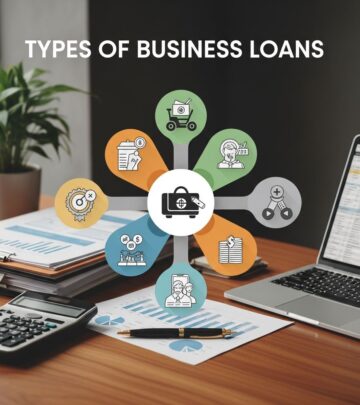
High-risk business loans are not a single product but a category that includes several funding types designed for higher-risk borrowers.
1. Merchant Cash Advances (MCA)
A merchant cash advance is not technically a loan but an advance on future sales. The provider gives your business a lump sum and, in exchange, collects a fixed percentage of daily or weekly sales until a pre-agreed total is repaid.
- Repayment method: Percentage of card sales or fixed daily/weekly ACH debits.
- Cost structure: Often expressed as a factor rate rather than APR, which can translate into very high effective annual costs.
- Best suited for: Businesses with strong card sales but limited collateral or weak credit, needing quick access to cash.
Because repayment adjusts with sales volume, MCAs can offer flexibility but also risk creating cash flow strain if multiple advances are stacked.
2. Short-Term High-Risk Business Loans
Short-term business loans operate like conventional term loans but with condensed repayment periods, often ranging from several months up to roughly 18–24 months.
- Funding: Lump sum of capital disbursed upfront.
- Repayment: Fixed daily, weekly, or monthly payments that include principal and interest.
- Use cases: Covering short-term working capital needs, inventory purchases, or bridging seasonal gaps.
Because the lender recoups funds quickly, underwriting criteria are often more flexible than traditional multi-year loans, though costs may be higher.
3. Accounts Receivable Financing and Invoice Factoring
Accounts receivable (AR) financing and invoice factoring allow businesses to access cash tied up in unpaid invoices. Lenders or factoring companies advance a percentage of the invoice face value, then are repaid when customers pay the invoices.
- Risk focus: The creditworthiness of your customers often matters more than your own credit profile.
- Structure: In factoring, the provider may purchase the invoices; in AR financing, invoices act as collateral for a revolving credit facility.
- Ideal for: B2B companies with reliable customers but slow-paying invoices, such as manufacturers or service firms.
These products can be attractive to higher-risk businesses because they rely heavily on customer payment behavior rather than only on the business owner’s credit.
4. High-Risk Equipment Financing
Equipment financing leverages the equipment being purchased as collateral for the loan. This built-in security can make it more accessible to higher-risk borrowers than unsecured credit.
- Collateral: The equipment itself secures the loan; if you default, the lender may repossess it.
- Uses: Vehicles, machinery, technology, and specialized tools.
- Benefits: Preserves working capital while enabling businesses to acquire essential assets that generate revenue.
Lenders may be more willing to finance essential, durable equipment that retains value over time, especially in industries like construction, manufacturing, or transportation.
5. Asset-Based and Hard Money Loans
Asset-based loans and hard money loans focus primarily on the value of pledged collateral rather than solely on credit scores.
- Backed by: Real estate, inventory, equipment, or other business assets.
- Hard money focus: Private lenders often evaluate the underlying asset or deal (for example, property value) more than credit history.
- Risks: Failure to repay may result in collateral seizure, including real estate.
These loans can be attractive to businesses with significant assets but limited traditional lending options; however, they still require careful analysis of repayment capacity.
Who Should Consider a High-Risk Business Loan?
High-risk business loans may fit certain profiles and situations better than others.
Typical Borrower Profiles
- Startups and young businesses that lack multi-year financial records.
- Owners with poor personal or business credit who have difficulty qualifying for bank loans.
- Businesses in fast-changing or heavily regulated industries facing limited access to conventional capital.
- Companies with strong sales but weak collateral that can support cash flow–based products like MCAs or revenue-based financing.
- Firms with significant assets seeking asset-based or hard money financing as a bridge solution.
Common Funding Needs
- Bridging short-term cash flow gaps
- Purchasing inventory or equipment on tight timelines
- Covering payroll or operating costs during rapid growth phases
- Financing expansion when bank credit is unavailable
Pros and Cons of High-Risk Business Loans
Advantages
- Expanded access to capital – Provides financing where traditional lenders may decline the application, especially for newer or credit-challenged businesses.
- Faster approval and funding – Streamlined processes and alternative underwriting allow many high-risk products to fund in days.
- Flexible eligibility criteria – Lenders may rely on cash flow, card sales, or collateral instead of only credit scores.
- Opportunity to build business credit – Successfully repaying high-risk financing can potentially improve a business’s credit profile over time if the lender reports to commercial credit bureaus.
Drawbacks
- Higher borrowing costs – Elevated interest rates, fees, and factor rates can significantly increase the total cost of capital.
- Shorter repayment terms – Compressed schedules mean higher periodic payments, which can strain cash flow.
- Frequent payment requirements – Daily or weekly payments, common with MCAs and some short-term loans, require meticulous cash management.
- Collateral and personal guarantees – Some products may require pledging key assets or signing personal guarantees, increasing personal financial exposure.
How to Qualify for a High-Risk Business Loan
While underwriting is more flexible than at traditional banks, high-risk lenders still evaluate your ability to repay. Preparing your application can improve both approval odds and offered terms.
Steps to Improve Your Eligibility
- Review your credit reports – Check personal and business credit for errors and address any inaccuracies. The U.S. Consumer Financial Protection Bureau recommends disputing documented errors with credit reporting agencies.
- Organize financial documentation – Gather bank statements, tax returns, profit-and-loss statements, and accounts receivable aging reports, as lenders use these to assess cash flow.
- Clarify your business model and plan – A concise business plan and financial projections help demonstrate viability, especially for younger businesses.
- Stabilize cash flow where possible – Reducing unnecessary expenses and smoothing revenue variability can make repayment capacity clearer.
- Prepare collateral information – If you are open to secured financing, document asset values, ownership, and any existing liens.
Comparing High-Risk Loan Offers
Because costs and structures vary widely, careful comparison is critical before accepting a high-risk loan.
Key Factors to Evaluate
- Total cost of capital – Convert factor rates or flat fees into an estimated APR where possible, and calculate the total dollar cost over the life of the financing.
- Repayment frequency – Assess whether daily, weekly, or monthly payments align with your revenue cycle.
- Prepayment policies – Understand whether early repayment reduces costs or if fees are front-loaded.
- Collateral and guarantees – Note what assets are at risk and whether a personal guarantee is required.
- Lender reputation – Research reviews, complaints, and licensing. Reputable sources such as state financial regulators or the U.S. Small Business Administration can provide guidance on evaluating lenders.
Alternatives to High-Risk Business Loans
Before committing to an expensive high-risk product, it is worth exploring alternatives that might offer lower costs or more favorable terms.
- SBA-backed loans – The U.S. Small Business Administration partially guarantees loans made by approved lenders, reducing lender risk and often allowing more flexible credit standards with competitive rates.
- Community banks and credit unions – Local institutions sometimes use relationship-based underwriting that can benefit smaller or newer businesses.
- Business credit cards – May be suitable for smaller, short-term needs if used carefully and paid down regularly.
- Equity or revenue-share financing – Bringing in investors or revenue-based partners can reduce immediate debt obligations, though it may dilute ownership.
- Supplier and trade credit – Negotiating longer payment terms with vendors can improve cash flow without formal loans.
Frequently Asked Questions (FAQs)
Q: Are high-risk business loans always a bad idea?
A: No. High-risk loans can be useful tools when traditional financing is unavailable, provided you understand the costs and have a realistic plan for repayment. The key is to use the funding for productive purposes that generate enough revenue to cover the higher cost of capital.
Q: What credit score is needed for a high-risk business loan?
A: Many high-risk lenders accept lower credit scores than banks, and some products focus more on cash flow or collateral than on credit scores alone. However, improving your credit can still help you access better terms and lower rates.
Q: How fast can I get approved and funded?
A: Depending on the product and lender, decisions may take anywhere from a few hours to several days, with funding sometimes available shortly after approval. Faster timelines often apply to online lenders, MCAs, and short-term loans.
Q: Will a high-risk business loan hurt my credit?
A: Late or missed payments can negatively impact your credit if the lender reports to credit bureaus. Conversely, timely repayment can support your credit history. Always confirm whether the lender reports to personal or business credit bureaus before accepting an offer.
Q: How can I avoid predatory lending?
A: Read all terms and disclosures carefully, ask for the total repayment amount and estimated APR, and compare multiple offers. Government and nonprofit resources, such as those referenced by the U.S. Small Business Administration and consumer protection agencies, can offer guidance on recognizing unfair practices.
References
- Loans — U.S. Small Business Administration. 2024-05-01. https://www.sba.gov/funding-programs/loans
- What Are High-Risk Business Loans? — NerdWallet. 2023-11-15. https://www.nerdwallet.com/business/loans/learn/high-risk-business-loans
- High-Risk Business Loans — Headway Capital. 2023-08-10. https://www.headwaycapital.com/high-risk-business-loans
- What Is a High-Risk Business Loan and What Industries Can It Help? — Business.com. 2022-09-21. https://www.business.com/articles/high-risk-business-loans/
- Credit for High-Risk Businesses: What You Need to Know — Nav. 2023-03-02. https://www.nav.com/blog/credit-for-high-risk-businesses-3791862/
- Disputing Errors on Your Credit Reports — Consumer Financial Protection Bureau. 2023-04-05. https://www.consumerfinance.gov/ask-cfpb/how-do-i-dispute-an-error-on-my-credit-report-en-314/
Similar Articles








Read full bio of Sneha Tete