FICO Scores: 5 Key Factors To Boost Your Credit
Unlock the secrets of FICO scores: Learn how they're calculated, what they mean, and actionable steps to boost yours for better financial opportunities.
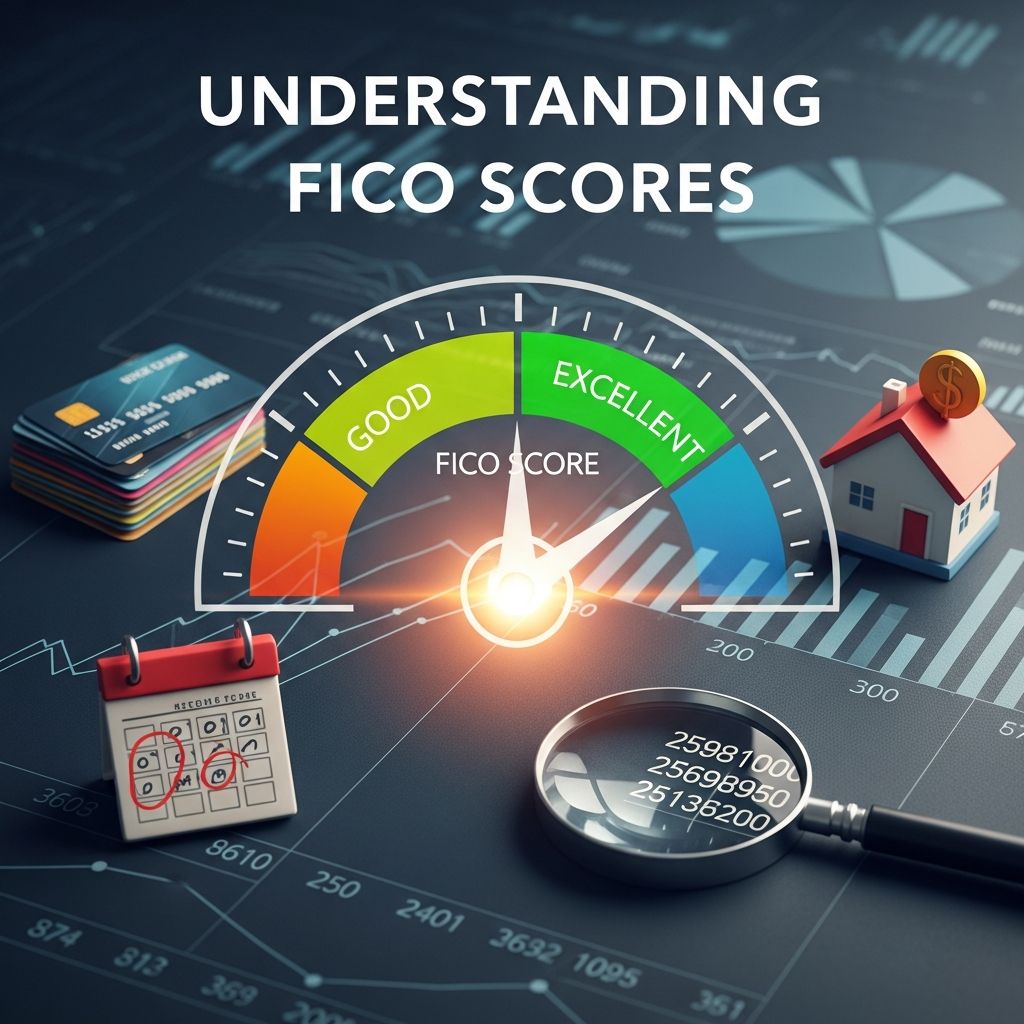
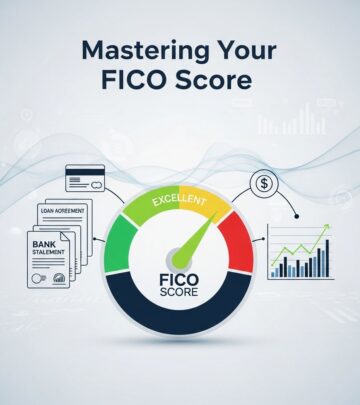
A FICO score is a three-digit number ranging from 300 to 850 that summarizes your creditworthiness based on your credit report data. Lenders rely on it to assess the risk of lending you money, influencing everything from interest rates to approval odds.
The Origins and Role of FICO Scores in Modern Finance
Developed by Fair Isaac Corporation, FICO scores have become the industry standard since the 1980s, used by 90% of top U.S. lenders. They provide a quick, objective snapshot of your financial reliability by analyzing patterns in your credit history.
Unlike other models, FICO emphasizes both positive and negative credit behaviors, ensuring a balanced evaluation. This score doesn’t predict the future but uses past behavior as the best indicator of future repayment likelihood.
Breaking Down the FICO Score Range
FICO scores categorize credit risk into distinct tiers, helping lenders set terms. Here’s a clear overview:
| Score Range | Category | Lender Perception |
|---|---|---|
| 300-579 | Poor | High risk; limited approvals, high rates |
| 580-669 | Fair | Moderate risk; some approvals possible |
| 670-739 | Good | Average; favorable terms likely |
| 740-799 | Very Good | Low risk; competitive rates |
| 800-850 | Exceptional | Minimal risk; best offers |
Scores above 740 often unlock premium perks like lower APRs on mortgages or auto loans.
Key Factors That Shape Your FICO Score
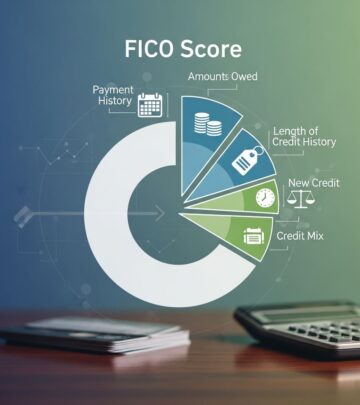
FICO calculates scores using five weighted categories from your credit reports provided by Equifax, Experian, and TransUnion. Weights can vary slightly by individual profile, but the standard breakdown is consistent.
1. Payment History: The Cornerstone (35%)
This heaviest factor tracks on-time payments across accounts like credit cards, loans, and retail lines. Late payments, delinquencies, bankruptcies, and collections drag scores down severely—the longer the delay, the worse the impact.
- Positive: Consistent on-time payments build trust.
- Negative: Even one 30-day late mark can drop scores by 60-110 points.
- Tip: Set autopay to avoid oversights.
2. Amounts Owed (Credit Utilization): 30%
Focuses on total debt relative to available credit, especially revolving accounts. Utilization under 30% is ideal; over 50% signals risk.
- Key metric: Balances divided by limits (e.g., $2,000 on $10,000 limit = 20%).
- Installment loans compare remaining balance to original amount.
- Strategy: Pay down balances before statement closing dates.
3. Length of Credit History: 15%
Measures how long accounts have been open, including average age and age of oldest account. Longer histories suggest experience managing credit.
- Shorter histories can limit scores unless offset by strong other factors.
- Average age ideally over 7-10 years boosts reliability perception.
4. New Credit: 10%
Evaluates recent inquiries and new accounts. Multiple hard inquiries or openings in a short period (e.g., 12 months) indicate potential risk.
- Hard inquiries from applications temporarily ding scores (5-10 points each).
- Rate-shop wisely: Mortgage/auto inquiries count as one for 14-45 days.
5. Credit Mix: 10%
Diversification across revolving (cards) and installment (loans) shows versatility. No need for every type, but variety helps thin files.
- Ideal: Mix of 2-3 types without overextending.
- Avoid opening unused accounts just for mix.
How FICO Scores Differ from Other Models
While FICO dominates, VantageScore (used by 30% of lenders) shares similar factors but different weights and ranges (501-990). FICO ignores non-credit data like income; both pull from the same bureaus but may yield varying results due to report differences.
| Aspect | FICO | VantageScore |
|---|---|---|
| Range | 300-850 | 501-990 |
| Payment History Weight | 35% | 40% |
| Trended Data | Limited | 24 months of behavior |
Practical Ways to Improve and Maintain Your FICO Score
Building a strong score takes time but yields rewards. Focus on controllable factors:
- Pay bills on time: Automate payments; contact creditors early for hardships.
- Lower utilization: Request limit increases (if responsible) or consolidate debt.
- Keep old accounts open: Preserve history length.
- Limit applications: Space out new credit by 6+ months.
- Diversify wisely: Add installment if heavy on revolving.
Monitor via free weekly reports at AnnualCreditReport.com. Scores update monthly; improvements appear in 1-2 cycles.
Common Myths About FICO Scores Debunked
- Myth: Checking your score hurts it. Soft pulls (self-checks) have zero impact.
- Myth: Closing cards helps. It often raises utilization, hurting scores.
- Myth: Rent/utilities count. Traditional FICO ignores them; newer versions may include opt-ins.
- Myth: One factor dominates fixes. All interplay; holistic management wins.
FICO Scores in Everyday Financial Decisions
Beyond loans, scores affect rentals, jobs, insurance premiums, and utilities. A 100-point boost can save thousands in interest over a loan life. For example, 680 vs. 780 on a $300K mortgage at 6% vs. 5% saves ~$100K over 30 years.
Frequently Asked Questions (FAQs)
What is a good FICO score?
670+ is good; 740+ excellent for top terms.
How often do FICO scores update?
Whenever a bureau receives new data, typically monthly per lender.
Can I get a FICO score for free?
Yes, via myFICO, banks, or credit card perks; avoid unverified sites.
Do authorized user accounts help?
Yes, if the primary account is strong, but risks exist if mismanaged.
How long do negatives linger?
Lates: up to 7 years; bankruptcies: 7-10 years, fading over time.
Advanced Strategies for Score Optimization
For scores near 800, fine-tune: Pay twice monthly to lower reported balances; negotiate removals for inaccuracies via disputes. Use tools like credit builder loans for thin files. Track progress quarterly.
Understanding these dynamics empowers proactive credit health, turning scores into financial leverage.
References
- Components of a Credit Score — Southern Wesleyan University. 2023. https://www.swu.edu/financial-literacy/credit-score/
- How are FICO Scores Calculated? — myFICO. 2024-10-15. https://www.myfico.com/credit-education/whats-in-your-credit-score
- How Credit Scores Are Calculated — Lendio. 2024. https://www.lendio.com/blog/small-business-credit-score-calculated
- FAQs About FICO Scores in the US — FICO. 2025-01-20. https://www.ficoscore.com/faqs-about-fico-scores-us
- FICO Score Info — TrueCore Federal Credit Union. 2023. https://www.truecore.org/loans-and-credit-cards/fico-score-info
Similar Articles








Read full bio of medha deb