Federal Funds Rate: A Comprehensive Guide
Explore how the Fed's benchmark interest rate shapes borrowing costs and economic policy across America.
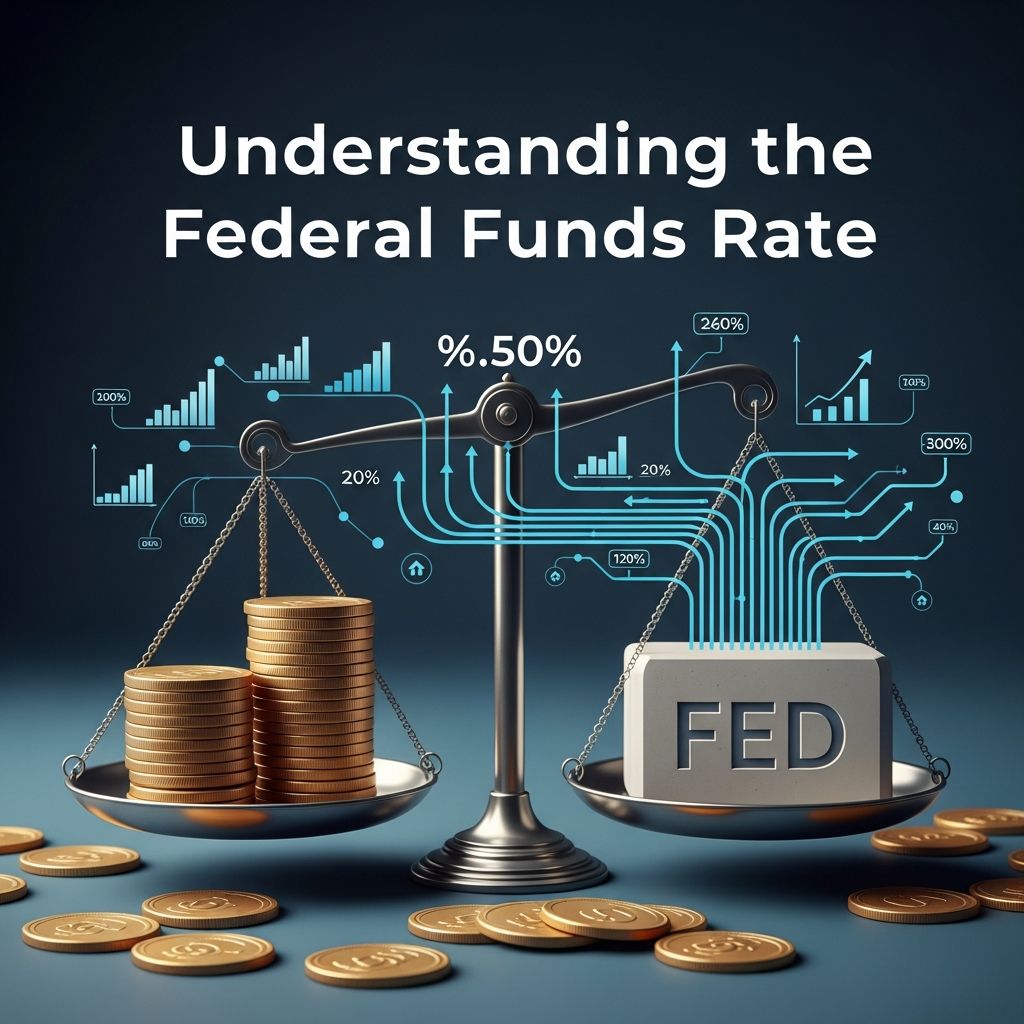
The federal funds rate represents one of the most influential economic indicators in the United States, yet many people remain unfamiliar with what it is or how it affects their daily lives. This foundational interest rate, managed by the nation’s central banking authority, ripples through the entire financial system, influencing everything from mortgage payments to savings account returns. Understanding this mechanism provides valuable insight into how monetary policy shapes economic conditions and personal financial decisions.
What Exactly Is the Federal Funds Rate?
At its core, the federal funds rate is an interest rate that banks charge each other when borrowing and lending reserve balances on an overnight basis. When a bank finds itself short of the required amount of liquid assets it must maintain, it borrows funds from banks with surplus reserves. The interest rate negotiated between these two institutions becomes part of the federal funds market, a crucial component of the nation’s financial infrastructure.
It is important to note that this is not a rate the Federal Reserve directly imposes on every transaction. Rather, the Federal Open Market Committee (FOMC), a specialized group within the Federal Reserve, establishes a target range for this rate. Banks then conduct their overnight lending at rates that fluctuate within this range. The actual average rate at which these transactions occur is called the effective federal funds rate (EFFR), which the Federal Reserve Bank of New York calculates and publishes daily based on real market transactions.
This distinction between the target range and the effective rate is crucial. The target range represents the Fed’s policy objective, while the effective rate shows what actually happens in the market. The Fed uses various tools to nudge market rates toward its target, creating a system of indirect influence rather than direct control.
The Architecture Behind the Federal Funds Rate System
Understanding how the federal funds rate operates requires examining the mechanisms that banks use to maintain adequate liquidity. Federal banking regulations require all depository institutions to hold sufficient liquid assets to cover potential cash outflows. These assets include deposits maintained directly or indirectly at Federal Reserve Banks.
When a bank’s reserves fall below its required threshold, it has several options. The quickest solution is borrowing from another bank that holds excess reserves. This overnight borrowing market serves as the foundation for the federal funds rate system. The rates negotiated in these transactions, when aggregated across all such deals, produce the effective federal funds rate that the financial world monitors.
The FOMC meets approximately eight times annually to review economic conditions and set the target range for the federal funds rate. This regular schedule, combined with the ability to convene special meetings when circumstances warrant, allows the Fed to adjust monetary policy in response to evolving economic conditions. The FOMC considers inflation data, employment trends, global economic developments, and other factors when making these decisions.
Tools the Federal Reserve Uses to Influence Rates
The Federal Reserve possesses multiple sophisticated tools to guide market interest rates toward its target range. These mechanisms work together to create both a floor and a ceiling for the federal funds rate, effectively keeping actual rates within the desired band.
Interest on Reserve Balances (IORB)
The most significant tool in the Fed’s arsenal is the Interest on Reserve Balances program. Through this mechanism, the Federal Reserve pays interest to banks for holding deposits at Federal Reserve Banks. Since this offers a risk-free return on funds, banks have little incentive to lend to other banks at rates below what the Fed pays. This effectively establishes a floor beneath the federal funds rate, preventing it from falling too low. Banks essentially ask themselves: “Why lend to another bank at a lower rate than the Fed will pay us?”
Overnight Reverse Repurchase Agreement Facility
For financial institutions that do not qualify for IORB payments, the Federal Reserve provides an alternative through the Overnight Reverse Repurchase Agreement (ON RRP) Facility. This program allows non-bank entities to earn interest on their funds through agreements with the Fed. By ensuring these institutions can earn a competitive rate, the Fed reinforces the floor on the federal funds rate across a broader range of market participants.
The Discount Rate and the Ceiling
While IORB and ON RRP establish the floor, the discount rate serves as the ceiling for the federal funds rate. This is the interest rate the Federal Reserve charges when banks borrow directly from the Fed’s “discount window.” Banks naturally avoid borrowing from other banks at rates higher than what they can borrow directly from the Fed, so the discount rate acts as a natural upper boundary. A bank facing a liquidity shortage will not pay more to borrow from another bank than it would pay to borrow from the Fed itself.
Why Does the Federal Reserve Adjust This Rate?
The Federal Reserve does not adjust the federal funds rate arbitrarily. The FOMC operates according to a specific mandate established by Congress: to maintain stable prices and promote maximum sustainable employment. These two objectives guide every policy decision, including decisions to raise, lower, or maintain the federal funds rate.
Combating Inflation
When inflation rises above the Fed’s target of 2%, the FOMC typically responds by raising the federal funds rate. Higher borrowing costs discourage spending and encourage saving. As consumers and businesses reduce their spending due to increased borrowing expenses, demand for goods and services decreases. Lower demand theoretically leads to lower prices or at least slower price growth, bringing inflation back toward the 2% target.
This mechanism works through several channels. Higher rates mean credit card companies, banks, and lenders increase the interest rates they charge consumers and businesses. A family considering a home purchase faces a higher monthly mortgage payment. A small business evaluating expansion weighs higher loan costs against potential returns. These economic actors collectively pull back on spending, creating the deflationary pressure the Fed seeks.
Supporting Economic Growth During Downturns
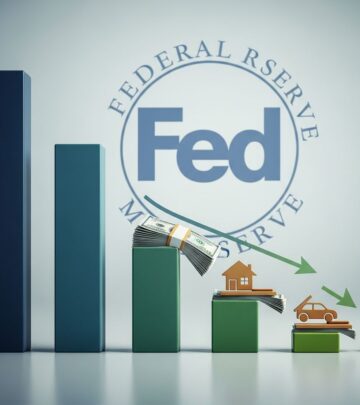
Conversely, when the economy enters a recession and employment falls below sustainable levels, the FOMC may reduce the federal funds rate. Lower rates reduce borrowing costs and decrease the returns available from saving. In this environment, consumers have less incentive to defer spending, and businesses find expansion projects more financially attractive. This increased borrowing and spending stimulates economic activity, helping to restore employment and growth.
The logic behind rate cuts during recessions reflects a fundamental economic principle: monetary policy should lean against the prevailing economic wind. When the economy is overheating and inflation accelerates, tighter monetary policy cools things down. When the economy is struggling, easier monetary policy provides stimulus.
Connection to Consumer Interest Rates
While the federal funds rate is an overnight lending rate between banks, it serves as a crucial benchmark that influences virtually all other interest rates in the economy. Banks and financial institutions do not set their rates independently; instead, they use the federal funds rate as a foundational reference point.
The Prime Rate Connection
One of the most important relationships exists between the federal funds rate and the prime rate. The prime rate, determined by major lending institutions, typically runs approximately 3 percentage points higher than the federal funds rate. This spread reflects the additional risk and costs banks incur when lending to consumers and businesses rather than to other banks overnight.
For example, with a federal funds rate target range of 4.00% to 4.25%, the prime rate for many institutions stands at 7.25%. This prime rate then serves as the reference point for countless consumer loan products, from credit cards to home equity lines of credit.
Individual Loan Rate Variation
From the prime rate, individual lenders add additional spreads based on borrower creditworthiness and loan characteristics. A bank’s most creditworthy borrowers might receive rates at prime plus 2%, while borrowers with less stellar credit histories might face prime plus 5% or more. A business seeking a commercial loan will negotiate rates based on its financial strength, industry, and the lender’s assessment of risk.
This tiered system means that while the Federal Reserve cannot directly control what you pay on your credit card or mortgage, it substantially influences these rates through its management of the federal funds rate. When the Fed raises rates, the ripple effects eventually reach consumer interest rates. Conversely, when the Fed cuts rates to stimulate the economy, consumers typically see lower rates on variable-rate loans.
Comparing the Federal Funds Rate and Discount Rate
Understanding the distinction between the federal funds rate and the discount rate prevents confusion when reading financial news. While both involve interest rates set or influenced by the Federal Reserve, they serve different purposes and apply to different borrowing relationships.
| Characteristic | Federal Funds Rate | Discount Rate |
|---|---|---|
| Applies To | Bank-to-bank overnight lending | Direct Fed lending to banks |
| Borrower Type | Depository institutions | Eligible financial institutions |
| Loan Term | Overnight, unsecured | Short-term, collateralized |
| Primary Purpose | Monetary policy transmission | Emergency liquidity provision |
| Role in System | Core policy tool | Safety valve/ceiling |
The federal funds rate represents the foundation of monetary policy, while the discount rate functions more as an emergency safety valve. Banks prefer to borrow from each other at the federal funds rate when possible, reserving the discount window for times when other borrowing options are unavailable or insufficient.
How the Fed Implements Rate Changes
When the FOMC decides to adjust the federal funds rate target range, the Federal Reserve does not simply announce the new rate and expect it to happen. Instead, the Fed executes a series of coordinated adjustments to its administered rates: the interest on reserve balances, the overnight reverse repurchase agreement rate, and the discount rate.
The Fed typically adjusts all three rates by the same amount and at the same time, allowing them to move in tandem. This synchronized approach ensures that the floor and ceiling for the federal funds rate move together with the Fed’s policy target. The adjustment process reflects careful coordination between Federal Reserve leadership and the operating desks that execute transactions in financial markets.
Open market operations, conducted by the Federal Reserve Bank of New York’s trading desk, further influence the federal funds rate by adjusting the supply of reserves in the banking system. When the Fed wants to reduce the federal funds rate, it purchases government securities, injecting money into the system and lowering borrowing costs. Conversely, selling government securities removes money from circulation, increasing the federal funds rate.
The Broader Economic Impact
The federal funds rate’s influence extends far beyond the banking system. Economic researchers and policymakers recognize it as perhaps the single most important lever for controlling inflation and supporting employment. Markets track every FOMC announcement with intense focus, as even small shifts in the target range can signal major changes in monetary policy direction.
Investors, business owners, and consumers all respond to changes in the federal funds rate by adjusting their financial decisions. A manufacturing company reconsidering a $10 million plant expansion calculates returns differently when borrowing costs jump by 1 percentage point. A household deciding whether to purchase a home runs new mortgage calculations whenever rates change. These millions of individual decisions, aggregated across the entire economy, determine whether the economy accelerates, maintains steady growth, or contracts.
Frequently Asked Questions About the Federal Funds Rate
How often does the FOMC review the federal funds rate?
The Federal Open Market Committee typically meets approximately eight times per year, with meetings scheduled roughly seven weeks apart. However, the committee retains the authority to hold additional unscheduled meetings and implement rate changes outside the normal calendar if economic conditions warrant emergency action.
Is the federal funds rate the same for all banks?
No. The federal funds rate operates as a target range, and actual rates vary slightly depending on the specific banks involved in the transaction and market conditions. The effective federal funds rate represents the weighted average of all overnight federal funds transactions during a business day.
Can I directly borrow at the federal funds rate?
No. The federal funds rate applies only to borrowing between banks and certain other financial institutions. Consumer rates are based on the prime rate and other benchmarks that incorporate the federal funds rate plus additional spreads reflecting credit risk and operating costs.
What was the federal funds rate historically?
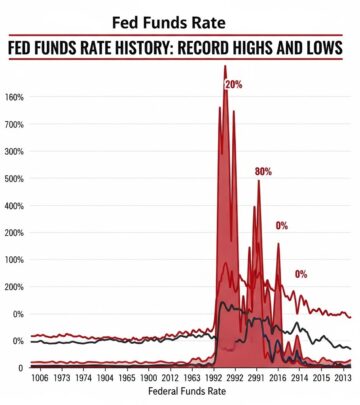
The federal funds rate has fluctuated considerably over decades, ranging from near zero during economic crises to double-digit levels during periods of high inflation. Historical rates reflect the economic conditions and policy priorities of different eras.
Conclusion
The federal funds rate represents a fundamental pillar of American monetary policy and financial system functioning. Though it operates as an overnight interest rate between banks, its effects permeate the entire economy, influencing borrowing costs, employment levels, and inflation. By understanding how the Federal Reserve adjusts this rate to balance price stability with employment support, individuals and businesses gain valuable perspective on economic forces shaping their financial lives. The next time financial news mentions federal funds rate decisions, readers now possess the knowledge to grasp their significance and potential implications.
References
- What Is the Federal Funds Rate? — Experian. https://www.experian.com/blogs/ask-experian/what-is-federal-funds-rate/
- Federal Funds Rate — Wikipedia. https://en.wikipedia.org/wiki/Federal_funds_rate
- How the Fed Implements Monetary Policy with Its Tools — Federal Reserve Bank of St. Louis. https://www.stlouisfed.org/in-plain-english/the-fed-implements-monetary-policy
- What is the Federal Funds Rate? A Guide — Rocket Mortgage. https://www.rocketmortgage.com/learn/federal-funds-rate
- Effective Federal Funds Rate — Federal Reserve Bank of New York. https://www.newyorkfed.org/markets/reference-rates/effr
Similar Articles








Read full bio of medha deb