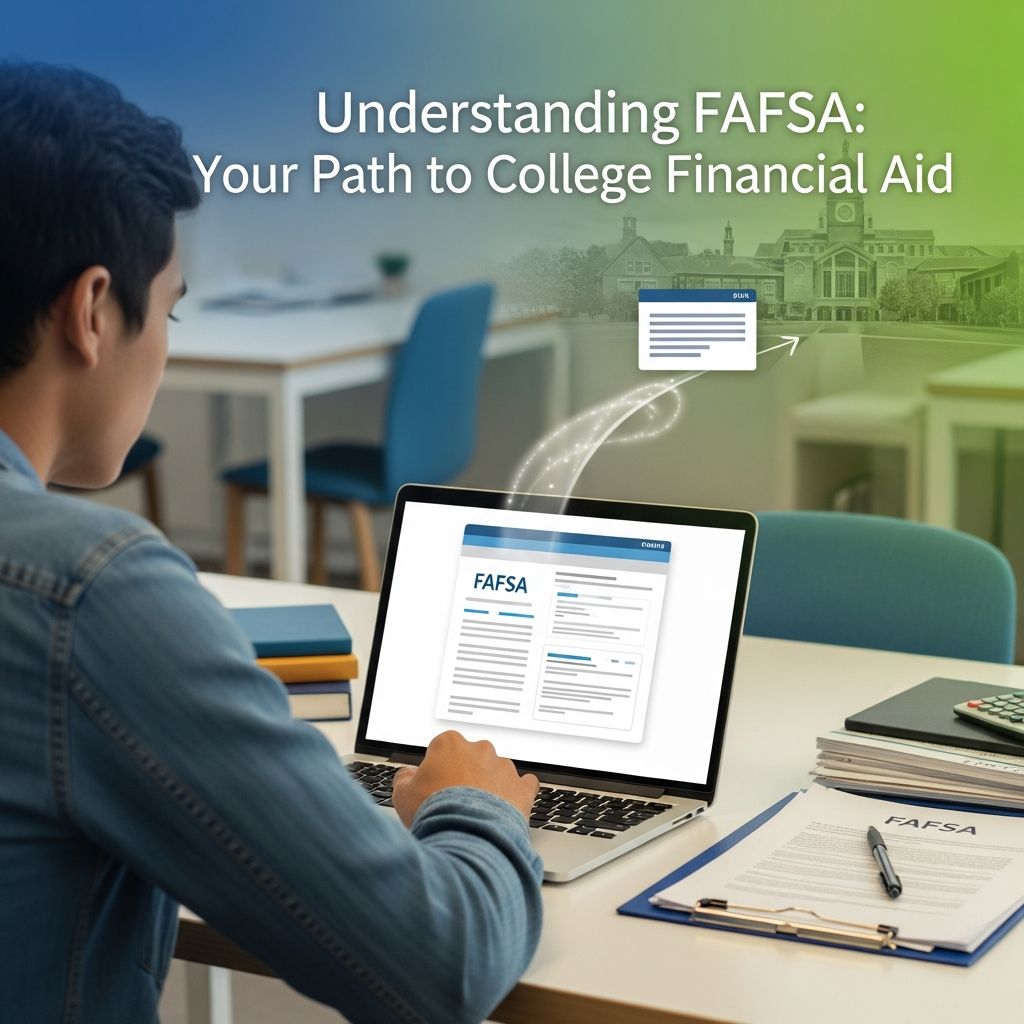
Understanding FAFSA: Your Path to College Financial Aid
Master the fundamentals of federal student aid applications and maximize your education funding opportunities.
Decoding the FAFSA Acronym and Its Purpose
FAFSA stands for the Free Application for Federal Student Aid, a critical document that serves as the gateway to accessing the largest source of financial assistance for students pursuing higher education in the United States. This application represents the primary mechanism through which the federal government, individual states, and colleges determine how much financial support students are eligible to receive. The significance of this single form cannot be overstated—it is the only pathway through which students can apply for federal financial aid to help pay for college or career school.
The FAFSA has undergone significant modernization in recent years. The U.S. Department of Education has simplified and streamlined the application process, making it faster and more accessible for students and families. Today, most students and families can complete the form in less than 15 minutes, compared to the historically longer time commitments required. This enhancement has democratized access to financial aid information and has resulted in broader eligibility for assistance programs across the student population.
The Range of Financial Assistance Available Through FAFSA
When you complete a FAFSA application, you gain access to multiple categories of financial aid designed to help cover educational expenses. Understanding what types of assistance are available helps students make informed decisions about their funding strategy.
- Federal Pell Grants – Non-repayable funds distributed to students with demonstrated financial need. Recent changes have expanded Pell Grant awards significantly, with over 665,000 additional students becoming eligible and 1.7 million more students gaining access to maximum grant amounts.
- Federal Student Loans – Borrowing options including subsidized and unsubsidized loans that must be repaid with interest. These include Stafford loans and other federally-backed borrowing products.
- Work-Study Programs – Employment opportunities that allow students to earn money while attending school, helping offset education costs through part-time work.
- State and Institutional Aid – Supplementary funding provided by individual states and colleges themselves, which often utilize FAFSA information to determine award amounts.
- Scholarships – Merit-based and need-based scholarships that educational institutions offer to qualifying applicants.
Who Should Complete the FAFSA Application
The FAFSA application process is not limited to a narrow demographic. Current students and prospective students at both the undergraduate and graduate levels should complete this form. Whether you are a first-time college applicant, a returning student, or someone pursuing advanced education, submitting the FAFSA ensures you are considered for all available aid opportunities.
Many students incorrectly assume that FAFSA is only relevant for those demonstrating financial hardship. However, students from all economic backgrounds benefit from completing this application. Even students whose families have substantial resources may qualify for certain aid categories, particularly loans and work-study opportunities. By skipping the FAFSA process, students risk leaving aid on the table, regardless of their family’s financial situation.
Core Eligibility Requirements for Federal Student Aid
To be considered for federal student aid through the FAFSA, applicants must meet specific baseline requirements established by the U.S. Department of Education. These criteria ensure that aid resources are directed to qualified individuals pursuing legitimate educational goals.
| Eligibility Requirement | Details |
|---|---|
| Citizenship Status | Applicant must be a U.S. citizen, U.S. national, or eligible non-citizen |
| Social Security Number | A valid Social Security number is required for application processing |
| Educational Background | High school diploma or General Educational Development (GED) certificate is required |
| Academic Progress | Must maintain Satisfactory Academic Progress (SAP) standards to remain eligible |
| Financial Need | Demonstration of financial need is required for need-based aid consideration |
| Loan Obligations | Must not be in default on federal student loans or owe repayment on federal grants |
| Intended Use | Must sign certification that federal aid will be used exclusively for educational purposes |
Creating Your Federal Student Aid Identity
The FAFSA process begins with establishing a Federal Student Aid (FSA) ID, a unique identifier that connects you to your federal student aid account. This ID serves multiple purposes throughout your educational journey and becomes your gateway to all federal aid-related transactions.
To create an FSA ID, you will need to provide basic personal information including your Social Security number and a valid phone number or email address. This information is essential for identity verification and account security purposes. Once you have successfully created your FSA ID, you can begin filling out your FAFSA immediately and submit it. However, it’s important to note that full functionality of your FSA ID may require up to three days for confirmation with the Social Security Administration.
Protecting your FSA ID information is crucial. Only create this account through the official FAFSA website at studentaid.gov to avoid fraudulent sites that may attempt to collect your personal information for malicious purposes. Third-party websites offering FAFSA assistance may charge fees or engage in deceptive practices, so always verify you are on the legitimate government portal.
The FAFSA Application Process Explained
Completing the FAFSA involves providing detailed information about your household finances, family composition, and educational background. This information allows the government and educational institutions to calculate your Expected Family Contribution (EFC) and determine your eligibility for various aid categories.
The application typically requests demographic data about yourself and, in most cases, your parents or guardians. Financial information includes household income, assets, and other relevant details that impact your financial need calculation. You will also have the opportunity to list up to ten colleges or career schools that should receive your FAFSA results once your application is processed.
One commonly asked question concerns whether the order in which you list schools on your FAFSA application might influence their admission or financial aid decisions. Historically, there was concern that this ordering could affect outcomes, but current practices among legitimate institutions do not support this practice. Schools should evaluate applications and determine financial aid packages based on institutional policies and your individual circumstances, not on FAFSA listing order.
Understanding Your Student Aid Report (SAR)
After submitting your FAFSA, you will receive a Student Aid Report (SAR), a document that summarizes the information you provided and outlines your eligibility for various aid categories. The SAR includes your Expected Family Contribution, a crucial figure that colleges use to determine your financial aid package.
An electronic version of the SAR, known as the ISIR (Institutional Student Information Record), is automatically transmitted to the colleges and universities you listed on your FAFSA. State agencies responsible for distributing need-based aid also receive this electronic record, allowing them to make their own aid determinations. Reviewing your SAR carefully is essential—if you notice errors or omissions in the information, you can make corrections before the submission deadline to ensure accurate aid calculations.
Critical Deadlines and Timing Considerations
Understanding FAFSA deadlines is essential for maximizing your financial aid opportunities. Submitting your application on time ensures consideration for time-sensitive aid programs, particularly federal Pell Grants, which have limited funding.
The federal FAFSA deadline for the 2025-26 academic year is June 30, 2026. For the 2026-27 academic year, the federal deadline is June 30, 2027. However, it’s important to note that many states impose earlier deadlines for their own aid programs. Additionally, individual colleges may have priority filing deadlines that precede the federal deadline. Missing your state’s or school’s priority deadline could result in reduced institutional aid awards even if you meet the federal deadline. Students are encouraged to verify their specific state and school deadlines to ensure timely submission.
Choosing the Right Application Method
The U.S. Department of Education offers multiple pathways for completing and submitting the FAFSA, recognizing that students have different preferences and technological capabilities.
- Online Portal – Completing the FAFSA at studentaid.gov is the most common and efficient method. This digital approach provides immediate feedback on submission and allows you to monitor your application status in real-time.
- Mobile Application – The myStudentAid mobile app offers a convenient option for students who prefer completing applications on smartphones or tablets.
- Telephone Application – Students without internet access can call 1-800-433-3243 to request a PDF version of the form, which can be completed and mailed.
Regardless of your chosen method, ensure you are using only official government channels. Fraudulent third-party websites offering FAFSA services may charge unnecessary fees or compromise your personal information security.
How Colleges Use Your FAFSA Information
Schools employ FAFSA data to construct financial aid packages tailored to individual students’ needs. When you are accepted to a college, the institution reviews your FAFSA information to assess your demonstrated financial need and determine what types and amounts of aid to offer. Your financial aid award letter will typically detail your eligibility for grants, loans, and work-study opportunities, along with any institutional scholarships for which you qualify.
Some institutions, particularly private colleges, may also require completion of the CSS Profile in addition to the FAFSA. The CSS Profile is a separate, fee-based application operated by the College Board that allows schools to distribute their own institutional funds based on additional financial information. Understanding whether your target schools require the CSS Profile is important for comprehensive financial aid planning.
The Distinction Between FAFSA and Other Financial Aid Applications
While FAFSA serves as the foundation for federal aid eligibility, it is important to recognize that other forms and applications may be necessary for comprehensive financial aid packages. The CSS Profile, mentioned above, is one such example. Additionally, some merit-based scholarships require separate applications with different eligibility criteria than those assessed through FAFSA.
Free scholarship search platforms and legitimate financial aid websites can help you identify opportunities beyond those available through the FAFSA. However, be cautious of scholarship guarantee services that promise awards in exchange for fees—legitimate scholarships never require application fees.
Monitoring Your Application Status
After submitting your FAFSA, you can track its processing status through your online account. Logging into your account at studentaid.gov allows you to monitor progress and receive notifications when your application has been processed. If you submitted a paper FAFSA form, allow 7 to 10 days after mailing before checking your status. For students who prefer personalized assistance, the Federal Student Aid Information Center offers support for status inquiries.
Annual Reapplication Requirements
Many students mistakenly believe that completing the FAFSA once covers their entire college career. In reality, you must submit the FAFSA each academic year that you remain enrolled in a qualifying educational program. Your financial situation, family circumstances, and aid eligibility may change annually, making yearly reapplication essential for accurate aid determination. Establishing a habit of submitting your FAFSA early each year ensures you maintain eligibility for all available aid programs.
Frequently Asked Questions About FAFSA
- How long does it take to complete the FAFSA?
- Most students complete the FAFSA in less than 15 minutes with the streamlined form, though some may require up to an hour if gathering financial documents.
- Is there a charge for submitting the FAFSA?
- No, completing and submitting the FAFSA is completely free. Any website charging a fee for FAFSA assistance is not an official government portal.
- What information do I need before starting the FAFSA?
- Having your Social Security number, driver’s license, FSA ID, tax return information, and W-2 forms readily available will make the application process smoother.
- Can non-citizens apply for FAFSA?
- Eligible non-citizens can apply, including permanent residents and certain other immigration statuses. However, undocumented immigrants are generally not eligible for federal student aid.
- What happens if I make a mistake on my FAFSA?
- You can correct errors in your FAFSA submission by logging into your account and making changes before the deadline.
Moving Forward with Your FAFSA Application
The FAFSA represents an invaluable opportunity to access the largest source of financial aid available for college and career school education. By understanding what FAFSA means, meeting eligibility requirements, and submitting your application on time, you position yourself to receive maximum financial support for your educational goals. Take action today by creating your FSA ID and beginning your FAFSA application at studentaid.gov.
References
- Free Application for Federal Student Aid (FAFSA) — U.S. General Services Administration. 2025-10-02. https://www.usa.gov/fafsa
- Free Application for Federal Student Aid — Wikipedia. 2024. https://en.wikipedia.org/wiki/FAFSA
- How to Complete the FAFSA – What You Need to Know — ELFI (Education Loan Finance Initiative). 2024. https://www.elfi.com/what-is-fafsa-how-does-it-work/
- The FAFSA: What You Need to Know — U.S. Department of Education. 2024. https://www.ed.gov/higher-education/paying-college/fafsar-what-you-need-know
- How FAFSA Works & Important Things to Know — Ascent Funding. 2024. https://www.ascentfunding.com/blog/fafsa-101/
- What is the FAFSA® form and why should I fill it out? — Federal Student Aid. 2024. https://studentaid.gov/help/fafsa
Similar Articles








Read full bio of medha deb