Understanding DSCR for Business Loan Approval
Learn how the debt service coverage ratio (DSCR) shapes your chances of qualifying for affordable business financing.

The debt service coverage ratio (DSCR) is one of the core financial metrics lenders use to decide whether your business qualifies for a loan and how much you can safely borrow. A strong DSCR improves your chances of approval and may help you secure better interest rates and terms.
What Is Debt Service Coverage Ratio (DSCR)?
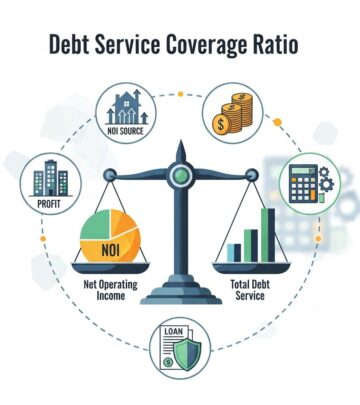
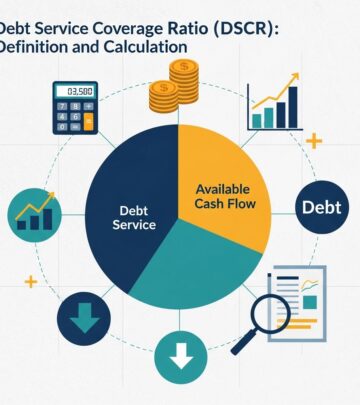
Debt service coverage ratio is a measure of how easily your business can cover its debt payments with its operating cash flow. In simple terms, it compares the money your company generates to the total amount it must pay toward principal and interest on loans during a given period.
In commercial and small-business lending, DSCR helps answer one main question: Does this business generate enough income to reliably repay its debts, including the new loan being requested?
Key components of DSCR
- Net operating income (NOI) or EBITDA – the cash flow your business produces from operations, before financing costs.
- Total debt service – the sum of all required principal and interest payments on existing and proposed debt for the period.
- Time period – typically calculated on an annual basis when used for loan underwriting.
How DSCR Is Calculated
There are several acceptable ways to calculate DSCR, but the logic is the same: income divided by required debt payments.
Standard DSCR formula
The most common formula lenders use is:
DSCR = Net Operating Income (or EBITDA) ÷ Total Debt Service
Where:
- Net operating income (NOI) is revenue minus operating expenses, excluding interest and taxes.
- EBITDA (earnings before interest, taxes, depreciation, and amortization) is also frequently used as a proxy for cash flow.
- Total debt service includes all scheduled principal and interest payments for the period on business loans, lines of credit, and other financial obligations.
Worked example of DSCR
Assume your business has the following annual figures:
- EBITDA: $150,000
- Annual principal payments on all loans: $60,000
- Annual interest payments on all loans: $30,000
Your total debt service is $90,000 ($60,000 principal + $30,000 interest).
Using the formula:
DSCR = $150,000 ÷ $90,000 = 1.67
A DSCR of 1.67 means your business generates 1.67 times as much cash as it needs to cover its annual debt commitments. This would generally be considered strong by many lenders.
Interpreting DSCR values
| DSCR Value | Interpretation | Likely Lender View |
|---|---|---|
| < 1.0 | Insufficient income to cover debt service | High risk; applications may be declined or require strong compensating factors |
| ≈ 1.0 | Break-even; just enough income to cover payments | Borderline; vulnerable to cash flow shocks |
| 1.1 – 1.24 | Modest cushion above payments | May qualify with some lenders, often on conservative terms |
| ≥ 1.25 | Comfortable ability to repay | Generally considered a good DSCR for many small-business loans and SBA programs |
| > 2.0 | Substantial excess cash flow | Strong candidate; may access better pricing and larger credit lines |
Why DSCR Matters for Business Loan Approval
Lenders rely heavily on DSCR as a quantitative, objective way to assess your business’s repayment capacity. It is often weighed alongside credit scores, collateral, time in business, and industry risk when they underwrite a loan.
How lenders use DSCR
- Initial screening tool – Many banks and SBA lenders have minimum DSCR thresholds (for example, 1.2 or 1.25) to determine basic eligibility.
- Loan sizing – Underwriters adjust the requested amount or term so that the projected DSCR meets their internal standards.
- Pricing and terms – Businesses with higher DSCRs are often viewed as lower risk and may receive more favorable interest rates or fewer covenants.
- Ongoing monitoring – For larger or long-term facilities, lenders may review DSCR annually to ensure the borrower remains in good standing.
Typical DSCR requirements
- For conventional bank loans, lenders may look for a DSCR of at least 1.1–1.25, depending on business risk and collateral.
- For many SBA 7(a) loans, underwriters commonly seek a DSCR around 1.25 or higher, though exact standards vary by lender.
- For SBA 504 loans used for commercial real estate, a DSCR around 1.2:1 or higher is typical.
These benchmarks are guidelines, not guarantees: a strong DSCR does not override all other risk factors, but a weak DSCR often makes approval difficult.
What Is Considered a Good DSCR?
From a lender’s perspective, the higher your DSCR, the more comfortably you can handle your repayments. While the minimum acceptable ratio varies, there is broad alignment on what constitutes a good DSCR for small-business borrowing.
Minimum DSCR vs. target DSCR
- A DSCR of 1.0 means you are breaking even on debt service with no margin for disruptions.
- Many lenders consider 1.1–1.2 the minimum range for safe repayment, but may still view it as thin.
- For most small-business and SBA loans, a DSCR of 1.25 or higher is widely cited as a target that gives lenders confidence.
For example, if your DSCR is 1.25, your business generates 25% more annual cash flow than it needs to cover its debt payments. This cushion helps absorb fluctuations in sales, expenses, or interest rates.
Why a higher DSCR is better
- Greater resilience – More room to absorb seasonal revenue drops or unexpected expenses without missing payments.
- Improved financing options – Stronger ratios can unlock access to traditional bank loans rather than costlier online products.
- Potentially better pricing – Lenders may offer lower interest rates or fees to borrowers who demonstrate low default risk.
- Strategic flexibility – Higher DSCR gives you room to take on future projects or investments without overleveraging.
How DSCR Influences Loan Amount, Terms, and Cost
DSCR does not only affect whether you are approved; it also shapes how much you can borrow and under what conditions. Underwriters model your projected cash flow under different loan structures to keep DSCR within acceptable boundaries.
Impact on maximum loan size
When you apply for a business loan, lenders often “size” the loan to your cash flows:
- If the requested amount would push your projected DSCR below their minimum, they may reduce the loan amount or require a longer term to lower annual payments.
- If your DSCR remains comfortably above the minimum even with the requested amount, you may be approved for the full amount or even considered for additional credit capacity.
Impact on repayment term and structure
- Longer terms reduce annual debt service, which can improve DSCR but increase total interest paid over the life of the loan.
- Shorter terms may be available to borrowers with high DSCR who can safely manage larger payments.
- Lenders might also structure interest-only periods or balloon payments in some cases, but these are more common in commercial real estate and require very careful DSCR analysis.
Impact on interest rate and fees
Although pricing decisions depend on many factors, DSCR is a central part of risk-based pricing:
- Businesses with strong DSCRs are often categorized as lower risk, supporting lower interest margins.
- Borrowers with borderline DSCRs may still qualify but at higher rates or with stricter covenants and collateral requirements.
How to Improve Your DSCR Before Applying
If your DSCR is lower than you would like, you can act on both sides of the equation: increasing cash flow and reducing required debt payments.
Boosting operating income
- Increase revenue via pricing adjustments, higher-margin products, or targeted sales campaigns.
- Reduce operating expenses by renegotiating supplier contracts, trimming nonessential costs, or improving operational efficiency.
- Improve collections to accelerate inflows and reduce bad debt, supporting more predictable cash flow.
- Delay noncritical investments until after your DSCR is strong enough to support new debt.
Managing and restructuring debt
- Refinance high-cost loans into a lower interest rate or longer-term facility to reduce annual debt service.
- Pay down short-term or expensive obligations before applying, which directly lowers total debt service.
- Avoid taking on new nonessential debt in the months leading up to your loan application.
Adjusting your loan request
- Consider requesting a smaller amount if the projected DSCR on your initial amount is too low.
- Discuss longer amortization periods with your lender to lower annual payments and improve DSCR, while recognizing it may increase total interest cost.
DSCR, SBA Loans, and Other Common Standards
Government-backed loan programs, such as SBA financing in the United States, often publish guidelines that reflect typical market standards for DSCR.
DSCR for SBA 7(a) loans
- Many SBA 7(a) lenders look for a minimum DSCR around 1.25 in their underwriting models.
- The DSCR test often includes existing business debt plus the proposed SBA loan to ensure the company can support its full capital structure.
DSCR for SBA 504 commercial real estate loans
- For SBA 504 projects, underwriters often want to see a DSCR of approximately 1.2 or higher, although criteria vary by lender and project risk.
- Because these loans commonly finance fixed assets over long terms, DSCR plays a major role in determining the sustainability of the debt load.
Common DSCR Mistakes Business Owners Make
Misunderstanding how DSCR works can lead to unpleasant surprises late in the loan process. Awareness of common pitfalls can help you prepare a stronger application.
- Ignoring existing obligations – Lenders include all current debt payments, not just the new loan you are requesting.
- Overestimating cash flow – Using revenue instead of NOI or EBITDA can inflate DSCR; lenders will recalculate using their own definitions.
- Relying on short-term spikes – One unusually strong month or quarter will not offset a history of weak cash flow in the lender’s analysis.
- Not planning for interest rate changes on variable-rate loans, which can increase future debt service and reduce DSCR.
- Waiting too long to adjust – Improving DSCR often takes several months of consistent performance; last-minute changes may not be reflected in historical financials.
Frequently Asked Questions (FAQs)
Q: What DSCR do most lenders require for a small-business loan?
Many traditional lenders prefer a DSCR of at least 1.2–1.25, with 1.25 commonly cited as a minimum benchmark for stronger applicants.
Q: Is a DSCR of 1.0 enough to get approved?
A DSCR of 1.0 means your business generates just enough cash to cover current debt payments, with no cushion; some lenders may consider this too risky, especially for long-term loans or in volatile industries.
Q: Does a higher DSCR lower my interest rate?
A higher DSCR generally signals lower default risk, which can help you qualify for more favorable interest rates and terms, although final pricing also depends on credit history, collateral, and market conditions.
Q: How often should I calculate my DSCR?
It is prudent to calculate DSCR at least annually, and more frequently if you are planning a major financing event or operate in a cyclical industry; regular tracking helps you make better borrowing decisions and spot emerging cash flow issues early.
Q: Can I still get a loan with a low DSCR?
Some online and alternative lenders may approve borrowers with lower DSCRs, but often at higher interest rates and shorter terms; improving your DSCR beforehand can expand your options and reduce total borrowing costs.
References
- What Is the Required Debt Service Coverage Ratio (DSCR) for SBA 7(a) Loans? — SBA7a.loans. 2023-06-15. https://www.sba7a.loans/sba-7a-loans-small-business-blog/required-dscr/
- What Is Debt-Service Coverage Ratio? — Bankrate. 2023-08-10. https://www.bankrate.com/loans/small-business/what-is-dscr/
- What Is Debt Service Coverage Ratio (DSCR)? — Experian. 2022-11-28. https://www.experian.com/blogs/ask-experian/what-is-the-debt-service-coverage-ratio-dscr/
- What is the Required Debt Service Coverage Ratio (DSCR) for SBA 504 Loans? — SBA504.loans. 2022-09-05. https://sba504.loans/sba-504-blog/debt-service-coverage-ratio-and-sba-504-loans/
- What Is the Debt-Service Coverage Ratio? — Nav. 2023-03-09. https://www.nav.com/resource/debt-service-coverage-ratio/
- What is the debt service coverage ratio (DSCR)? — Business Development Bank of Canada (BDC). 2023-01-20. https://www.bdc.ca/en/articles-tools/entrepreneur-toolkit/templates-business-guides/glossary/debt-service-coverage-ratio
- What is the debt-service coverage ratio (DSCR)? — JPMorgan Chase & Co. 2022-10-18. https://www.chase.com/business/knowledge-center/start/what-is-the-debt-service-coverage-ratio
Similar Articles








Read full bio of Sneha Tete