Understanding the Different Types of Auto Loans
Learn how new, used, refinance and specialty auto loans work so you can choose the smartest way to finance your next vehicle.
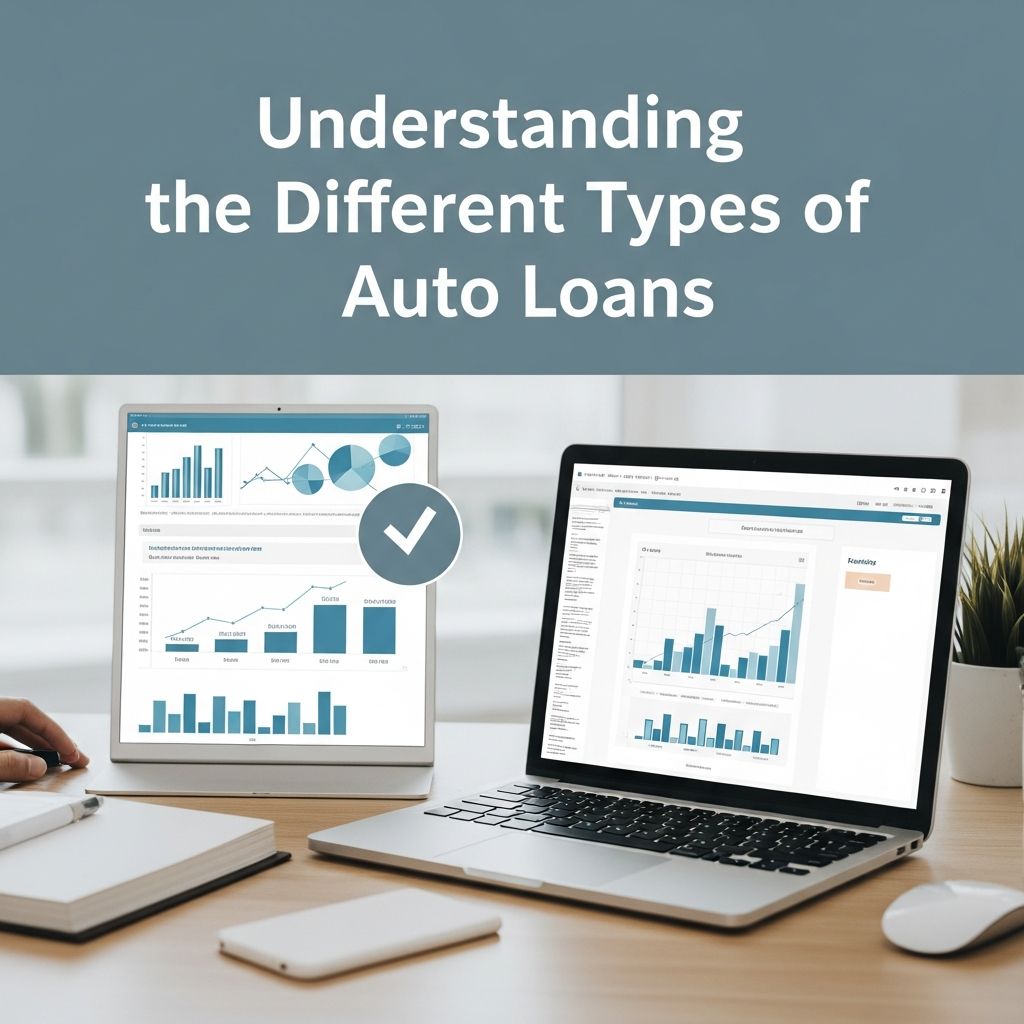
Auto loans are among the most common forms of consumer credit, and understanding the different types available can help you save substantial money over the life of your loan. Auto financing options vary by how the loan is secured, who provides the funding, how interest is calculated, and whether you are buying, leasing, or refinancing a vehicle.
This guide explains the major types of auto loans, how they work, and when each one might be right for you, so you can approach your next vehicle purchase or refinance with confidence.
How Auto Loans Work
An auto loan is typically a closed-end, installment loan used to purchase a vehicle. You borrow a set amount, repay it over a fixed term with interest, and the loan ends when you make the final payment.
- Principal: The amount you borrow to buy the car.
- Interest: The cost of borrowing, expressed as an annual percentage rate (APR).
- Term: The length of the loan, commonly 36–72 months, but sometimes longer.
- Monthly payment: A fixed payment that covers interest and principal; fees may also be financed.
Most auto loans are secured, which means the vehicle acts as collateral and can be repossessed if you fail to make payments.
Major Categories of Auto Loans
Auto loans can be grouped into several broad categories that often overlap:
- By collateral: Secured vs. unsecured loans
- By lender relationship: Direct vs. indirect financing
- By purpose: Purchase, refinance, lease buyout, or cash-out refinance
- By interest method: Simple-interest vs. precomputed-interest loans
Secured vs. Unsecured Auto Loans
| Feature | Secured Auto Loan | Unsecured Auto Loan |
|---|---|---|
| Collateral | Vehicle secures the loan | No specific collateral; based on credit profile |
| Typical APR | Usually lower due to reduced lender risk | Usually higher to compensate for more risk |
| Approval difficulty | Often easier, even with limited credit | Requires stronger credit and income |
| Risk to borrower | Vehicle can be repossessed if you default | No direct lien on the car, but credit damage and collection actions are possible |
| Common use | Standard car purchase and refinance loans | Personal loans used to buy a car or cover related costs |
Secured Auto Loans
With a secured auto loan, the lender places a lien on the vehicle title until the loan is repaid. If you default, the lender can repossess and sell the car to recover losses.
Pros:
- Generally lower interest rates than unsecured loans
- More accessible for borrowers with fair or limited credit
- Can allow higher loan amounts and longer terms
Cons:
- Risk of repossession if you fall behind on payments
- Comprehensive and collision insurance often required
Unsecured Auto Loans
An unsecured auto loan works like a personal loan used to purchase a vehicle. The lender does not place a lien on the car but relies on your creditworthiness and income.
Pros:
- No lien on the car; easier to sell or transfer without lender approval
- May be used to cover fees, taxes, or other expenses that some auto lenders will not finance
Cons:
- Higher APRs, especially for weaker credit profiles
- Lower maximum loan amounts and shorter terms
Direct vs. Indirect Auto Financing
How you obtain your loan also matters. You can work directly with a lender or let the dealership arrange financing for you.
Direct Auto Loans
With direct financing, you apply straight to a bank, credit union, or online lender and secure your loan before or while you shop.
Advantages of direct loans:
- Ability to compare offers from multiple lenders
- Preapproval can clarify your budget and strengthen your negotiating position at the dealership
- Often more transparent interest rates and fees
Potential drawbacks:
- More legwork to gather and compare offers
- Some promotional dealer incentives may require captive or in-house financing
Indirect Auto Loans (Dealership Financing)
With indirect financing, the dealership collects your information and sends your application to its network of lenders or its own captive finance company.
Advantages of indirect loans:
- Convenience: one-stop shopping for car and financing
- Access to manufacturer special offers, such as low- or 0% APR for qualified buyers
- Dealers may have relationships with multiple lenders, including those serving borrowers with weaker credit
Potential drawbacks:
- Dealer may mark up the APR above the lender’s base rate as compensation
- Less transparency if you do not compare with outside offers
Interest Structures: Simple vs. Precomputed Interest
Beyond the APR, how interest is calculated affects how quickly you can pay down your loan and how much you save with extra payments.
Simple-Interest Auto Loans
Most modern auto loans in the U.S. are simple-interest loans. Interest accrues daily on the outstanding principal balance; each payment first covers the accrued interest, and the remainder pays down principal.
Key features:
- Interest cost depends on how quickly you reduce the principal
- Extra or early payments can reduce total interest and shorten the loan term if the lender applies them correctly
- Missing or late payments can increase total interest paid
Precomputed-Interest Auto Loans
With precomputed-interest loans, the lender calculates total finance charges up front and adds them to the principal. The total is then divided into equal payments over the term.
Implications:
- Less benefit from paying off early because much of the interest is built into the payment schedule
- May use methods such as the Rule of 78s, which front-load interest and can disadvantage borrowers who pay off or refinance early
New vs. Used Car Loans
Although the same lenders often provide both, loans for new and used vehicles can differ in cost and eligibility requirements.
New Car Loans
New car loans are used to finance vehicles that have not been previously titled. Lenders often offer:
- Lower APRs compared with used cars because new cars are easier to value and resell
- Access to promotional manufacturer financing (e.g., low APR with shorter terms)
- Longer maximum terms due to higher purchase prices
However, new cars also depreciate rapidly in the first few years, which can increase the risk of owing more than the car is worth if you choose a long term or make a small down payment.
Used Car Loans
Used car loans finance pre-owned vehicles. These loans may come with:
- Slightly higher interest rates due to higher risk and uncertainty about the vehicle’s condition
- Shorter maximum terms and stricter limits for very old or high-mileage vehicles
- Lower loan amounts that reflect lower vehicle prices
Because used vehicles typically cost less, total interest paid over the life of the loan can still be lower even if the APR is higher.
Refinance and Specialized Auto Loans
Beyond standard purchase loans, there are several specialized auto loan types that address specific needs.
Standard Auto Loan Refinance
Refinancing means replacing your existing auto loan with a new one, usually to secure a lower APR or change the term.
- Can reduce monthly payments by extending the term or lowering the rate
- Can reduce total interest paid by lowering the APR or shortening the term
- May be limited by vehicle age, mileage, and remaining balance
Cash-Out Auto Refinance
With a cash-out auto refinance, you borrow more than your remaining loan balance and receive the difference in cash, using your car’s equity.
- Provides access to cash without selling the car
- May come with higher rates or tighter credit requirements than standard refinancing
- Increases your loan balance and may lengthen the time you remain in debt
Auto Lease Buyout Loans
If you are leasing a vehicle, a lease buyout loan lets you finance the purchase of the car at the end of the lease or, in some cases, earlier.
- Loan amount is generally based on the vehicle’s residual value plus fees
- Available from the lessor or from outside lenders such as banks and credit unions
- Can make sense if the buyout price is below the car’s market value or you want to keep a well-maintained vehicle
Private Party Auto Loans
Private party loans are used when buying a car directly from an individual rather than a dealer.
- Offered by some banks, credit unions, and online lenders
- Often cover only the purchase price, not taxes and registration, so you may need extra cash on hand
- May require more documentation about the vehicle (title, bill of sale, inspection)
Specialized and High-Risk Auto Loans
Certain loan types are designed for borrowers with unique circumstances and often come with higher costs.
- Subprime or bad-credit auto loans: Target borrowers with low credit scores; APRs can be significantly higher than prime rates.
- Buy here, pay here (BHPH) loans: In-house dealer financing that may not require a traditional credit check but often carries high interest rates and frequent payment schedules.
- Title loans: Short-term, high-cost loans secured by a paid-off or nearly paid-off vehicle, with APRs that can reach 300% or more; regulators have documented high default and repossession rates.
- Military-focused auto loans: Some dealers and credit unions offer discounts or favorable terms for active-duty service members and veterans.
Key Factors to Compare Across Auto Loan Types
Regardless of which type of auto loan you choose, comparing a few core elements can help you identify the most affordable option.
- APR: The single best measure of borrowing cost, including interest and certain fees.
- Loan term: Longer terms lower monthly payments but can significantly increase total interest paid.
- Total cost: Consider the overall amount you will pay over the life of the loan, not just the monthly payment.
- Fees and penalties: Check for origination fees, prepayment penalties, and late fees.
- Loan-to-value (LTV) limits: Some lenders cap how much of the car’s value they will finance, affecting your down payment.
- Repayment flexibility: Confirm how extra payments are applied and whether there are restrictions on paying off the loan early.
Frequently Asked Questions (FAQs)
Q: What is the most common type of auto loan?
A: The most common type is a secured, simple-interest auto loan obtained either directly from a bank, credit union, or online lender, or indirectly through a dealership.
Q: Is it better to finance a car through a bank or a dealership?
A: Direct bank or credit union financing can offer more transparent and competitive rates, while dealership financing can be convenient and may include promotional offers. Comparing preapproved direct offers with dealer quotes is often the best way to find the lowest cost.
Q: When does it make sense to refinance an auto loan?
A: Refinancing can make sense if interest rates have dropped, your credit profile has improved, or you want to adjust your monthly payment. However, you should weigh potential savings against any fees and the remaining term of your current loan.
Q: Are long-term auto loans (72 months or more) a good idea?
A: Longer terms reduce monthly payments but typically increase total interest and can keep you in a negative equity position longer. Financial institutions and consumer advocates generally recommend using the shortest term you can comfortably afford.
Q: How can I avoid paying too much for my auto loan?
A: Improving your credit, making a larger down payment, shopping multiple lenders, choosing a shorter term when possible, and avoiding high-cost loan types (such as title loans or certain subprime offers) can all reduce your total borrowing cost.
References
- What Are the Different Types of Car Loans? — Experian. 2023-06-21. https://www.experian.com/blogs/ask-experian/types-of-car-loans/
- 10 Types of Car Loans — SoFi Bank. 2023-03-01. https://www.sofi.com/learn/content/types-of-car-loans/
- Types of Car Loans: Which Is Right for You? — Bankrate. 2024-01-10. https://www.bankrate.com/loans/auto-loans/auto-loan-types/
- Different Types of Car Loans, Explained — Auto-Mattox. 2023-08-15. https://www.auto-mattox.com/financing/different-types-of-car-loans.htm
- How Do Car Loans Work? A Guide to Auto Loan Financing — PNC Bank. 2023-05-05. https://www.pnc.com/en/personal-banking/borrowing/auto-loans/learn/how-to-finance-a-vehicle-guide.html
- Everything You Need to Know About Car Loans — Space Coast Credit Union. 2023-11-02. https://www.sccu.com/articles/auto/the-essential-guide-to-car-loans
Similar Articles








Read full bio of medha deb