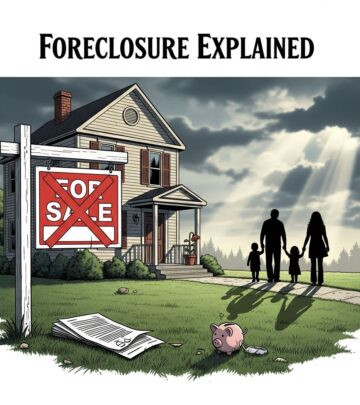
Understanding Deed in Lieu of Foreclosure
Explore voluntary property transfer as a foreclosure alternative

When homeowners face significant financial hardship and can no longer maintain mortgage payments, foreclosure looms as a threatening prospect. However, an alternative path exists that may offer borrowers greater control and fewer consequences than a traditional foreclosure sale. A deed in lieu of foreclosure represents a voluntary agreement between a struggling borrower and their lender, enabling the transfer of property ownership in exchange for debt relief and protection from foreclosure proceedings.
This arrangement has gained recognition as a practical solution for both borrowers seeking to minimize damage to their financial future and lenders aiming to avoid costly and time-consuming foreclosure processes. Understanding how this mechanism works, what advantages and drawbacks it presents, and how it compares to other alternatives can help homeowners make informed decisions during periods of financial distress.
Defining the Deed in Lieu of Foreclosure
At its core, a deed in lieu of foreclosure is a legal document through which a property owner voluntarily transfers their interest in real estate to their mortgage lender. This conveyance occurs in full satisfaction of the outstanding mortgage obligation, allowing the borrower to avoid the formal foreclosure process entirely. The arrangement represents a mutual agreement where both the borrower and lender consent to the terms, distinguishing it from an involuntary foreclosure sale initiated by the lender alone.
The essential characteristic defining this arrangement is its voluntary nature. Both parties must enter into the transaction willingly and in good faith, with neither side coercing the other. This fundamental requirement protects borrowers by establishing that the transfer resulted from mutual negotiation rather than lender pressure. For lenders, this voluntary aspect requires that borrowers submit written offers expressing their intention to pursue this option, which protects the lender from subsequent claims of bad faith conduct.
When executed properly, the deed in lieu arrangement releases the borrower from personal indebtedness associated with the defaulted mortgage. Rather than remaining liable for any remaining balance after a foreclosure sale, the borrower achieves a clean break from the loan obligation, provided the lender agrees to waive deficiency rights.
How the Process Unfolds: Step-by-Step Mechanics
The deed in lieu process follows a structured pathway that requires active borrower participation and lender evaluation at multiple stages. Understanding each phase helps borrowers prepare for the discussions and documentation involved.
Initial Communication and Eligibility Assessment
The process begins when a borrower experiencing financial hardship contacts their lender to discuss foreclosure alternatives. During this conversation, the borrower explains the circumstances creating the inability to make mortgage payments—whether job loss, medical emergency, divorce, or other substantial financial disruption. The lender then evaluates whether the borrower qualifies for this option by reviewing financial statements, income documentation, and the nature of the hardship.
Lenders typically require borrowers to demonstrate that they have already explored other loss mitigation options before considering a deed in lieu. This might include attempting loan modifications, refinancing efforts, or short sale negotiations. By establishing that other alternatives have been exhausted, the lender confirms that the deed in lieu represents a genuine last resort rather than a borrower’s first choice.
Property Valuation and Financial Analysis
Once preliminary eligibility is established, the lender orders a professional appraisal or conducts a market analysis to determine the property’s current fair market value. This valuation proves critical to the lender’s decision-making process. If the property value substantially exceeds the outstanding loan balance, the lender may decline the deed in lieu offer, preferring instead to foreclose and sell the property through traditional channels where they might recover more of their investment.
Conversely, if the property’s value approximates or falls short of the outstanding debt, the lender gains incentive to accept the deed in lieu arrangement. This is because the lender would likely recover more value by avoiding expensive foreclosure proceedings, which typically involve legal fees, court costs, property maintenance expenses, and extended holding periods before sale. The cost-benefit analysis often favors the deed in lieu option for lenders facing significant deficiencies.
Agreement Negotiation and Documentation
Should the lender agree in principle to the deed in lieu, both parties enter formal negotiations regarding the arrangement’s specific terms. The agreement must explicitly state consideration exchanged between parties—typically the lender’s agreement to cancel the borrower’s indebtedness and waive foreclosure rights in exchange for the property transfer. The document should acknowledge that the property value, combined with any additional payments or credits, equals or satisfies the outstanding mortgage obligation.
The formal deed document is then prepared by legal professionals, often the lender’s attorneys or a neutral title company. The borrower must sign this document, which is typically notarized to establish authenticity and create a legal record of the voluntary transfer. Some agreements include a “cash-for-keys” provision, offering the borrower a modest financial payment—sometimes a few thousand dollars—to facilitate an orderly moving process and ensure the property is vacated in acceptable condition.
Title Transfer and Debt Cancellation
After execution and notarization, the deed is recorded with the local land registry or county recorder’s office, officially transferring ownership from the borrower to the lender. Simultaneously, the lender files a mortgage satisfaction document, which removes the mortgage lien from the property record and signals that the original debt obligation has been settled. This creates a clear public record showing the transaction’s completion.
The lender should provide the borrower with written documentation releasing the borrower from any further liability on the mortgage loan. This release document proves essential should any future disputes arise regarding the borrower’s obligations. Without this written release, borrowers risk potential claims that they remain liable for deficiency amounts.
Property Vacation and Transition
The agreement specifies a date by which the borrower must vacate the property. Depending on the arrangement negotiated, borrowers may be offered three options: immediate vacation, a three-month rent-free transition lease, or a twelve-month lease at market rental rates. These options provide varying degrees of time to locate alternative housing and complete relocation, easing the practical burden of losing the property.
Weighing Benefits and Drawbacks
Like any significant financial decision, the deed in lieu option presents both meaningful advantages and substantial disadvantages that borrowers must carefully consider.
Advantages for Borrowers
- Avoids Public Foreclosure Proceedings: The deed in lieu arrangement remains private, avoiding the public notoriety and social stigma associated with formal foreclosure sales. Neighbors, employers, and community members need not become aware of the transaction, preserving the borrower’s privacy and dignity during an already stressful period.
- Prevents Deficiency Judgments: When structured correctly with explicit deficiency waivers, the deed in lieu releases borrowers from liability for loan balances exceeding the property’s value. This contrasts sharply with foreclosure sales, where borrowers may face lawsuits for deficiency amounts depending on state law and the lender’s policies.
- Reduces Financial Strain: By eliminating foreclosure proceedings, borrowers avoid months or years of legal expenses, accumulated interest, penalties, and the emotional toll of litigation. The process typically concludes far more quickly than formal foreclosure, allowing borrowers to move forward with rebuilding their financial lives.
- Potentially Better Credit Impact: While deed in lieu still damages credit scores, some borrowers report that this option causes less severe credit consequences than a foreclosure judgment, though this varies based on how the lender reports the transaction to credit bureaus.
- Flexibility in Exit Terms: Negotiated cash-for-keys provisions or extended lease terms provide borrowers with financial assistance or additional time to secure alternative housing, easing the practical challenges of relocation.
Disadvantages for Borrowers
- Credit Score Damage: The deed in lieu negatively impacts the borrower’s credit rating, though potentially less severely than foreclosure. The transfer will appear on credit reports, making future borrowing more difficult and expensive.
- Loss of Property Equity: Any equity the borrower has built in the property transfers to the lender without compensation. For homeowners with substantial equity, this represents a significant financial loss.
- Potential Tax Consequences: The forgiveness of mortgage debt may be treated as taxable income by the Internal Revenue Service, potentially creating unexpected tax liabilities in subsequent years.
- Lender Discretion: Lenders are not obligated to accept a deed in lieu offer, particularly if they believe foreclosure will yield better financial results. Borrowers have no guarantee that their proposal will receive approval.
- Relocation Requirements: The borrower must vacate the property within a specified timeframe, necessitating the significant disruption and expense of moving during an already challenging period.
Comparative Analysis: Deed in Lieu Versus Other Alternatives
| Alternative Option | Process Speed | Credit Impact | Cost to Borrower | Lender Recovery |
|---|---|---|---|---|
| Deed in Lieu | Moderate (months) | Significant Negative | Minimal | Avoids foreclosure costs |
| Loan Modification | Fast (weeks) | Minimal | None | Maintains loan relationship |
| Short Sale | Slow (6+ months) | Moderate Negative | Realtor commissions | Market-based recovery |
| Foreclosure | Slow (12+ months) | Severe Negative | Legal/court fees | Reduced by process costs |
Critical Considerations Before Proceeding
Before pursuing a deed in lieu arrangement, borrowers should thoroughly evaluate several important factors. First, borrowers must understand their state’s deficiency laws, which determine whether lenders can pursue borrowers for remaining debt after property sales. In some states, lenders are prohibited from obtaining deficiency judgments, while in others they retain this right unless explicitly waived through deed in lieu agreements.
Second, borrowers should seek professional guidance from real estate attorneys and financial advisors who can review the specific agreement terms before signing. These professionals can identify potential pitfalls, negotiate more favorable terms, and ensure the borrower fully understands the consequences of the transaction.
Third, borrowers should confirm in writing that the lender agrees to waive deficiency rights, release all claims against the borrower, and report the transaction accurately to credit bureaus. Without these written commitments, borrowers risk ongoing liability despite surrendering the property.
The Lender Perspective
Understanding why lenders accept deeds in lieu illuminates the mutual benefit underlying these arrangements. Lenders face substantial expenses during foreclosure proceedings, including attorney fees, court costs, property appraisal fees, property maintenance and insurance during the foreclosure period, and eventual selling costs. These expenses can consume 20-40% of the property’s value, leaving lenders with significantly reduced recovery.
By accepting a deed in lieu, lenders immediately acquire property ownership without foreclosure costs, legal proceedings, or extended timelines. This allows them to liquidate the property more quickly through conventional sales or other means. For lenders with numerous defaulted loans, the operational efficiency of deed in lieu arrangements can substantially improve overall portfolio performance.
Frequently Asked Questions
Does a deed in lieu eliminate all mortgage debt?
Yes, when structured with explicit deficiency waivers, the deed in lieu releases borrowers from the entire mortgage obligation, including any remaining balance after property transfer. However, the written release document is essential to confirm this protection.
How does a deed in lieu affect credit scores?
The deed in lieu negatively impacts credit ratings by appearing as a non-standard loan resolution on credit reports. However, many borrowers experience less severe credit damage than they would from foreclosure, though the exact impact varies by credit bureau and lender reporting practices.
Can a borrower refuse to vacate after signing the deed in lieu?
The deed in lieu agreement typically specifies a vacation date, and refusal to vacate could result in eviction proceedings. Borrowers should carefully review vacation terms before signing and ensure they provide adequate time for relocation planning.
What happens to property taxes and homeowner’s insurance?
Once the deed is recorded and ownership transfers to the lender, the borrower is no longer responsible for property taxes or insurance on the property. These obligations transfer to the new owner (the lender).
Are there tax implications of deed in lieu?
Potentially yes. The forgiveness of mortgage debt may be classified as taxable income by the IRS in some situations. Borrowers should consult tax professionals to understand potential tax liability before pursuing this option.
Conclusion
The deed in lieu of foreclosure represents a pragmatic option for homeowners facing foreclosure who wish to minimize the damage to their financial future and personal circumstances. By voluntarily transferring property ownership to their lender in exchange for debt release, borrowers can avoid lengthy, costly, and public foreclosure proceedings while protecting themselves from deficiency liability. However, this option requires careful consideration of credit consequences, professional legal guidance, and thorough evaluation of alternative solutions. When pursued with full understanding of its implications and with adequate legal protection, a deed in lieu arrangement can provide a controlled exit from an untenable mortgage situation.
References
- Deed in lieu of foreclosure — Wikipedia. Accessed February 2026. https://en.wikipedia.org/wiki/Deed_in_lieu_of_foreclosure
- Deed in Lieu of Foreclosure — MREI. Accessed February 2026. https://www.mrei.co.uk/post/deed-in-lieu-of-foreclosure
- Understanding a Deed in Lieu of Foreclosure in Pennsylvania — Sadek Law. August 28, 2024. https://sadeklaw.com/2024/08/28/deed-in-lieu-of-foreclosure/
- Deed in Lieu of Foreclosure — Law Office of Marc G. Alster. Accessed February 2026. https://marcgalster.com/non-bankruptcy-alternatives/deed-in-lieu-foreclosure/
- Deeds in Lieu of Foreclosure: Advantages, Disadvantages, and Drafting — ATGF. Accessed February 2026. https://www.atgf.com/tools-publications/pubs/deeds-lieu-foreclosure-advantages-disadvantages-and-drafting
- What is a deed-in-lieu of foreclosure? — Consumer Finance Protection Bureau. Accessed February 2026. https://www.consumerfinance.gov/ask-cfpb/what-is-a-deed-in-lieu-of-foreclosure-en-291/
Similar Articles








Read full bio of medha deb