Creditworthiness: 5 Practical Strategies To Boost Your Score
Discover what creditworthiness means, how lenders evaluate it, and practical steps to strengthen your financial profile for better loan opportunities.
Creditworthiness represents a lender’s judgment of your reliability in repaying borrowed funds on schedule. It influences everything from interest rates on mortgages to approval odds for credit cards. Lenders scrutinize various data points to gauge risk before extending credit.
Why Creditworthiness Shapes Your Financial Future
A strong creditworthiness profile unlocks lower borrowing costs and broader options. Conversely, weak profiles lead to rejections or punitive rates. For consumers, it affects home purchases, vehicle financing, and even rental applications. Businesses rely on it for operational capital.
Lenders mitigate default risks by evaluating historical behavior and current stability. This process ensures sustainable lending practices while rewarding responsible borrowers with advantageous terms.
Core Elements Lenders Evaluate
Beyond numerical scores, creditworthiness encompasses multiple dimensions. Primary factors mirror those in widely used scoring models like FICO, which weight components distinctly.
- Payment History (35% weight): Tracks on-time payments across accounts. Delinquencies signal unreliability.
- Amounts Owed (30% weight): Measures credit utilization—balances relative to limits. High ratios suggest overextension.
- Credit History Length (15% weight): Longer histories provide deeper reliability insights.
- Credit Mix (10% weight): Diversity in account types (e.g., revolving vs. installment) demonstrates versatility.
- New Credit (10% weight): Frequent inquiries or openings indicate potential risk.
These elements form a composite score from 300 to 850, with scores above 740 deemed excellent.
The 5 Cs: A Comprehensive Lender Framework
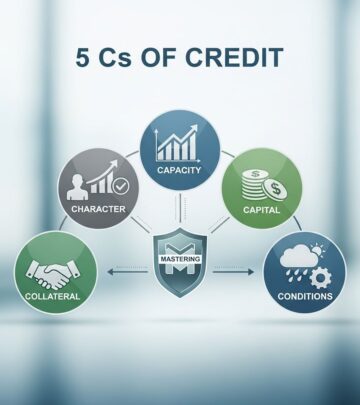
Lenders often apply the 5 Cs of Credit for holistic assessments, particularly for larger loans. This model balances qualitative and quantitative aspects.
| C Factor | Description | Key Metrics |
|---|---|---|
| Character | Assesses trustworthiness based on past behavior | Credit reports, references, payment consistency |
| Capacity | Evaluates repayment ability | Debt-to-income ratio, income stability |
| Capital | Reviews net worth and investments | Savings, assets minus liabilities |
| Collateral | Identifies assets securing the loan | Property, vehicles offered as security |
| Conditions | Considers loan purpose and economic context | Market trends, purpose viability |
This framework helps predict repayment under varied scenarios.
Distinctions Between Personal and Business Creditworthiness
Personal evaluations center on individual credit reports and scores. Businesses face scrutiny of financial statements, revenue, and commercial scores.
- Individuals: FICO/VantageScore dominant.
- Businesses: D&B scores, cash flow analysis.
Overlap exists in payment history and capacity checks, but businesses emphasize operational metrics.
Practical Strategies to Elevate Your Creditworthiness
Improving creditworthiness demands consistent actions over time. Start with foundational habits.
Establish Positive Payment Patterns
Automate payments to avoid lapses, as history comprises the largest score factor. Dispute inaccuracies via credit bureaus promptly.
Optimize Debt Levels
Maintain utilization under 30%. Pay down revolving balances strategically.
Expand and Diversify Wisely
Retain old accounts for history length. Introduce varied credit types sparingly.
Build Capital Reserves
Increase savings and reduce liabilities to bolster net worth, appealing in 5 Cs reviews.
Monitor Progress Regularly
Access free weekly reports from AnnualCreditReport.com. Track score changes.
These steps can yield score gains within months, though full recovery from setbacks like bankruptcy spans years.
Common Pitfalls Undermining Creditworthiness
Avoid actions that erode your profile:
- Maxing credit limits.
- Ignoring small balances that accrue fees.
- Applying impulsively, triggering inquiries.
- Closing unused cards, shortening history.
Economic shifts also impact conditions; lenders adjust criteria during downturns.
Creditworthiness in Everyday Scenarios
Securing an auto loan? Capacity and collateral weigh heavily. Mortgages demand strong history and low DTI. Credit cards prioritize utilization and mix.
Even non-lending contexts like insurance or employment checks reference credit data.
Frequently Asked Questions
What primarily influences creditworthiness?
Payment history at 35%, followed by amounts owed.
How long do negative marks linger?
Late payments: 7 years; bankruptcies: 10 years.
Can thin credit files be overcome?
Yes, via secured cards or credit-builder loans.
Does income directly affect scores?
Not in FICO models, but informs capacity.
How do lenders verify business creditworthiness?
Through statements, trade references, and commercial reports.
Long-Term Financial Wellness Through Credit Management
Creditworthiness extends beyond approvals—it’s a financial health barometer. Proactive management fosters stability, enabling goals like homeownership or entrepreneurship. Regularly reassess via the 5 Cs lens to adapt to life changes.
Incorporate budgeting tools and financial education for sustained improvement. Over time, disciplined habits compound into superior terms and opportunities.
References
- What Are the 5 Cs of Credit and Why Are They Important? — Community First Credit Union. 2023-05-15. https://www.communityfirstfl.org/resources/blog/what-are-the-5-cs-of-credit
- How to determine creditworthiness and build your credit — Stripe. 2024-08-20. https://stripe.com/resources/more/how-to-determine-creditworthiness-and-build-your-credit
- What Is Creditworthiness and Why Does It Matter? — SoFi. 2024-11-10. https://www.sofi.com/learn/content/what-is-creditworthiness-2/
- Creditworthiness: The Key to Predict Payments within Terms — CIAL Dun & Bradstreet. 2023-09-05. https://en.cialdnb.com/blog/creditworthiness
- What data can lenders use to assess creditworthiness? — Plaid. 2024-07-12. https://plaid.com/resources/lending/creditworthiness/
- What Being Creditworthy Means & How to Improve Yours — National Funding. 2024-03-28. https://www.nationalfunding.com/blog/what-being-creditworthy-means-how-to-improve-yours/
- § 1002.6 Rules concerning evaluation of applications — Consumer Financial Protection Bureau. 2024-01-01. https://www.consumerfinance.gov/rules-policy/regulations/1002/6
- Five Cs of Credit – What Lenders Look For — Wells Fargo. 2024-06-18. https://www.wellsfargo.com/financial-education/credit-management/five-c/
Similar Articles








Read full bio of Sneha Tete