Understanding Credit Scores: Your Financial Gateway
Learn how credit scores shape your financial opportunities and borrowing power

When you apply for a loan, mortgage, or credit card, lenders face a fundamental challenge: determining whether you’ll repay borrowed money responsibly. Rather than conducting an exhaustive investigation into each applicant’s finances, the lending industry relies on a standardized numerical summary known as a credit score. This three-digit number encodes years of your financial behavior and serves as a shorthand indicator of creditworthiness. Understanding how these scores work, what influences them, and why they matter is essential for navigating modern finance effectively.
The Foundation of Credit Assessment
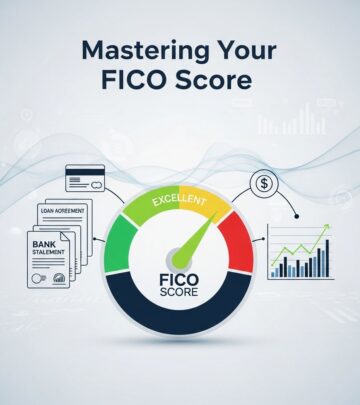
A credit score represents your creditworthiness—essentially, a lender’s assessment of your reliability as a borrower. These scores derive from information compiled in your credit reports, which track your borrowing history, payment patterns, and existing debt obligations. The most widely recognized credit scoring model is FICO, developed by the Fair Isaac Corporation. FICO scores dominate the lending landscape, with nearly 90% of lending decisions relying on this model. Other scoring models exist, such as VantageScore, but FICO remains the industry standard that most lenders and financial institutions prioritize when evaluating credit applications.
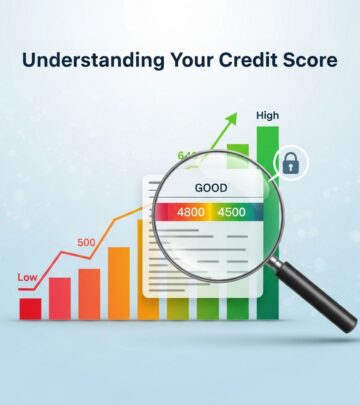
The numerical range for standard FICO scores spans from 300 to 850. At the lower end, scores in the 300s indicate serious financial distress and represent extreme borrowing risk. At the upper end, scores approaching 850 demonstrate exceptional financial stewardship and creditworthiness. This range establishes a meaningful scale that lenders can use consistently across millions of transactions and consumer interactions.
How Lenders Use Your Credit Score
Your credit score influences multiple dimensions of any borrowing arrangement. When you submit a credit application, lenders examine your score to determine whether to approve your request. This decision isn’t binary—different score ranges lead to different outcomes. A strong score increases approval likelihood, while a weaker score may result in rejection or conditional approval with additional requirements.
Beyond approval decisions, your score directly affects the terms you receive. The loan amount available to you depends partly on your creditworthiness. A higher score typically qualifies you for larger credit lines or loan amounts, while lower scores may limit your borrowing capacity. The repayment timeline also varies by score: borrowers with strong credit receive longer repayment periods with manageable monthly payments, whereas riskier borrowers may face shorter timelines or balloon payments.
Most significantly, your interest rate—the cost of borrowing—varies substantially based on your score. Consumers with exceptional credit enjoy the lowest available rates, meaning they pay less total interest over the life of their loans. Those with fair or poor credit face higher rates, paying considerably more for the same borrowed amount. This cost differential can amount to tens of thousands of dollars across major purchases like homes or vehicles.
The Five Components of FICO Calculations
FICO scores result from a sophisticated algorithm that weighs five distinct categories of credit information. Understanding these components reveals which financial behaviors matter most and where to focus improvement efforts.
Payment History: The Dominant Factor (35%)
Your payment history carries the heaviest weight in FICO calculations, accounting for 35% of your score. This category examines whether you’ve paid bills on time across all your credit accounts. Lenders scrutinize this factor because it directly predicts future behavior—borrowers who paid on time historically tend to continue this pattern.
Late payments create substantial score damage, particularly recent delinquencies. A single 30-day late payment can reduce your score significantly, while 60-day, 90-day, or severe delinquencies cause even more dramatic drops. Accounts sent to collections or resulting in defaults inflict severe damage that persists on your credit report for years. Conversely, maintaining perfect or near-perfect payment history on all accounts demonstrates reliability and pushes your score upward over time.
Amounts Owed: Your Debt Burden (30%)
Credit utilization—the second-most important factor at 30%—measures how much credit you’re actively using relative to your available credit limits. This ratio compares your current balances to your credit limits across all revolving accounts like credit cards and lines of credit.
Lenders view high credit utilization as concerning because it suggests financial strain and increased default risk. Someone using 90% of available credit appears to be relying heavily on borrowing, indicating potential vulnerability if their income decreases or unexpected expenses arise. Conversely, someone using only 10-20% of available credit demonstrates prudent financial management and reserve capacity. Financial experts typically recommend maintaining utilization below 30% to optimize your score, though lower is generally better for this metric.
Credit History Duration: Time’s Advantage (15%)
The length of your credit history accounts for 15% of your FICO score. This component considers how long your oldest credit account has been open and calculates the average age across all your accounts. Longer credit histories generally indicate greater creditworthiness because they provide more data demonstrating sustained responsible borrowing behavior.
Someone with fifteen years of credit experience has demonstrated their ability to manage credit across economic cycles, life changes, and varying circumstances. New borrowers with limited credit history face disadvantages because their track records are minimal. This factor explains why closing old credit accounts can harm your score—you’re reducing your average account age and limiting the historical data available for assessment.
Credit Mix: Demonstrating Versatility (10%)
Your credit mix represents the variety of credit types you’ve managed successfully, comprising 10% of your score. Different credit forms include installment loans (auto loans, personal loans, student loans), revolving credit (credit cards, lines of credit), and retail accounts.
Lenders view diverse credit management favorably because it demonstrates your ability to handle different borrowing structures. Someone who’s maintained auto loans, mortgage payments, and credit card accounts has shown competence across installment and revolving formats. This versatility suggests financial sophistication and reduces perceived risk. However, you shouldn’t open unnecessary accounts solely to improve your mix—the impact is relatively modest compared to other factors.
New Credit Inquiries: Caution Against Accumulation (10%)
Recent credit applications and newly opened accounts constitute the final 10% of your FICO score. When you apply for new credit, lenders submit inquiries that appear on your credit report. Multiple inquiries within short timeframes can indicate financial desperation or risky behavior—someone simultaneously applying for multiple credit cards or loans may be preparing for overspending or facing financial emergency.
Recently opened accounts also lower your score slightly because you haven’t yet demonstrated that you’ll manage them responsibly. The impact diminishes over time, particularly if you make consistent on-time payments. Strategic spacing of credit applications minimizes this damage while still allowing you to seek necessary borrowing.
Interpreting Your Score: Ranges and Meanings
Credit scores fall into five broad categories that lenders use to make rapid assessments:
| Score Range | Rating | Typical Implications |
|---|---|---|
| Below 580 | Poor | High default risk; approval difficult; best to avoid new credit applications |
| 580-669 | Fair | Moderate risk; approval possible but with higher rates and fees |
| 670-739 | Good | Average risk; competitive rates available; mainstream loan products accessible |
| 740-799 | Very Good | Low risk; favorable rates and terms; preferred customer status |
| 800+ | Exceptional | Minimal risk; best available rates; premium credit products accessible |
The average FICO score in the United States reached 715 in 2023, placing the typical borrower in the “good” category. This benchmark means that roughly half of Americans score above this level while half score below. Approximately one-third of consumers maintain scores between 600 and 750, while an additional 48% achieve higher scores, indicating that most borrowers maintain reasonable creditworthiness.
Beyond Standard Scores: Industry-Specific Alternatives
While standard FICO scores range from 300 to 850 and serve general lending purposes, FICO also produces industry-specific scores tailored for particular lender types. Auto lenders receive “auto scores” that emphasize factors particularly predictive of automobile loan performance. Credit card issuers receive “bankcard scores” that highlight variables most relevant to revolving credit management. These specialized scores range from 250 to 900 and focus their algorithms on different risk factors within each industry.
Industry-specific scores maintain the same middle-range category definitions, so a “good” auto score still spans the 670-739 range. However, the emphasis differs—an auto score might weight recent auto loan performance more heavily, while a bankcard score might emphasize credit card payment history. Lenders often use these specialized scores alongside standard FICO scores for comprehensive risk assessment.
Why Credit Scores Matter Beyond Borrowing
Credit scores influence far more than just loan approvals. Many employers examine credit reports during hiring processes, viewing financial responsibility as predictive of workplace reliability. Rental property managers and landlords review credit scores before leasing apartments, using them as indicators of whether tenants will pay rent consistently. Insurance companies increasingly use credit-based insurance scores to determine premiums. Even utility companies, cell phone providers, and other service businesses may review credit before extending service or requiring deposits.
Your credit score essentially becomes your financial reputation in the modern economy. A strong score opens doors and reduces costs across numerous transactions, while a weak score creates barriers and increases expenses throughout your financial life.
Taking Control: Building Creditworthiness
The most important insight about credit scores is that you can influence them through deliberate financial choices. Unlike some measures of creditworthiness that feel arbitrary or beyond your control, credit scores reward specific behaviors:
- Paying all bills on time, every time, to maximize your most important factor
- Keeping credit card balances low relative to limits to improve utilization ratios
- Maintaining older accounts in good standing to extend your average credit history
- Diversifying your credit across installment and revolving formats when strategically appropriate
- Spacing new credit applications to minimize inquiry impact and avoid appearing desperate
Improvement takes time—significant changes to your score typically require months or years of consistent positive behavior—but this extended timeline reflects the reality that creditworthiness develops through demonstrated reliability over time. Someone rebuilding from poor credit after past financial mistakes can gradually improve their score through sustained responsible behavior, eventually accessing better terms and opportunities.
Accessing Your Credit Information
Understanding your current credit position requires accessing your actual credit report and score. Federal law entitles you to one free credit report annually from each of the three major credit bureaus: Equifax, Experian, and TransUnion. Many lenders and credit monitoring services offer free FICO score access to their customers. Reviewing this information helps you identify errors, understand your current standing, and develop targeted improvement strategies.
Conclusion: Financial Empowerment Through Understanding
Credit scores represent the financial system’s attempt to distill complex borrowing history into a simple, standardized metric that enables rapid lending decisions. While the specific algorithm remains proprietary and closely guarded, the components and their relative importance are transparent. This transparency means you can make informed choices to build and maintain strong creditworthiness. By understanding what influences your score and consistently making financially responsible decisions, you position yourself to access credit on favorable terms, reduce borrowing costs throughout your life, and maintain greater financial flexibility. Your credit score ultimately reflects your financial trustworthiness—and that trustworthiness opens doors across the entire economy.
References
- What Is a FICO Score & Why Is It Important? — California Credit Union. 2024. https://www.ccu.com/learn/banking-basics/what-is-a-fico-score/
- What is a FICO Score and why is it important? — myFICO. 2024. https://www.myfico.com/credit-education/what-is-a-fico-score
- What is a Credit Score? Types, Ranges & More — Intuit Blog. 2024. https://www.intuit.com/blog/innovative-thinking/what-is-credit-score/
- What Is a Good Credit Score? — Experian. 2024. https://www.experian.com/blogs/ask-experian/credit-education/score-basics/what-is-a-good-credit-score/
- How are FICO Scores Calculated? — myFICO. 2024. https://www.myfico.com/credit-education/whats-in-your-credit-score
- What is a FICO® Score, How is It Calculated — Equifax. 2024. https://www.equifax.com/personal/education/credit/score/articles/-/learn/what-is-a-fico-score/
Similar Articles








Read full bio of medha deb