Understanding Credit Score Fluctuations
Learn what causes credit score changes and when to take action.

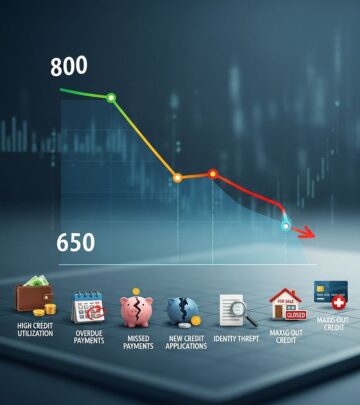
Your credit score is a dynamic reflection of your financial behavior, constantly shifting based on the information in your credit reports. Whether a modest decrease or a dramatic plunge, understanding the mechanisms behind these changes empowers you to make smarter financial decisions. This guide explores the primary drivers of credit score movement, helps you distinguish between insignificant and meaningful declines, and provides actionable strategies for safeguarding your creditworthiness.
The Foundation: How Credit Scores Work
Credit scores are calculated using a weighted formula that prioritizes different aspects of your credit history. Payment history accounts for 35% of your FICO score, making it the single most influential component. The remaining factors include amounts owed (30%), length of credit history (15%), credit mix (10%), and new credit applications (10%). Understanding these weights helps clarify why certain changes matter more than others.
When lenders evaluate your creditworthiness, they examine your track record of managing different types of debt and your current financial obligations. This multifaceted approach allows creditors to assess risk more accurately than any single metric could provide.
Payment Disruptions: The Primary Culprit
Late and missed payments represent the most consequential reason for credit score declines. Payment history encompasses the largest portion of your score, and any disruption to this record sends a direct signal to potential creditors about your reliability.
The reporting timeline matters significantly. Most creditors report delinquencies to the three major credit bureaus at specific intervals:
- 30 days past due
- 60 days past due
- 90 days past due
- 120 days past due
- 150 days past due
Even a single missed payment can trigger a noticeable score decline once reported. As delinquency extends beyond 30 days, the impact intensifies substantially. Research from FICO indicates that late payments of 60 to 90 days can reduce scores by 80-100 points, while more severe delinquencies cause even greater damage. If your account eventually moves to collections, the negative impact can persist for up to seven years.
The best defense against payment-related score damage involves proactive account management. Setting up automatic payments for regular bills reduces the likelihood of accidental lapses. If you face temporary financial hardship, contacting creditors immediately may lead to alternative arrangements that prevent reporting to credit bureaus.
Credit Utilization Ratio: The Silent Saboteur
Credit utilization—the percentage of available credit you’re actually using—comprises 30% of your FICO score. This metric signals to lenders whether you’re managing your available resources responsibly or becoming dangerously overextended.
Financial experts generally recommend maintaining utilization below 30% of your total available credit. When you exceed this threshold, your score can drop noticeably, even if you’re making all payments on time. The concerning signal is that high utilization suggests you may be relying too heavily on borrowed funds and therefore present greater default risk.
Several scenarios can elevate your utilization ratio without any action on your part:
- A creditor reduces your credit limit without your request, shrinking available credit while your balance remains unchanged
- You pay off a large balance, but your credit bureau hasn’t yet updated the information
- You make a substantial purchase shortly before your statement closing date, temporarily increasing your reported balance
- A credit card issuer lowers your limit due to inactivity or perceived risk
For example, if your credit limit drops from $10,000 to $6,000 while you maintain a $3,000 balance, your utilization jumps from 30% to 50%, potentially triggering a score decline. This scenario illustrates how external factors beyond your spending habits can affect your creditworthiness rating.
To mitigate utilization-related score damage, request credit limit increases when your financial situation improves, and consider paying down balances before your statement closing date rather than waiting until after the bill arrives.
The Account Closure Paradox
Closing a credit card seems like a prudent financial move, yet it frequently results in an unexpected score decline. This counterintuitive outcome stems from two interconnected mechanisms.
First, closing an account removes available credit from your total, increasing your utilization ratio among remaining cards. If you had three cards with $10,000 total limit and closed one with a $4,000 limit, your available credit drops to $6,000. If you maintain a $2,000 balance, utilization rises from 20% to 33.3%.
Second, closing an older account reduces the average age of your credit history. Credit history length represents 15% of your FICO score, and lenders view longer-standing accounts favorably. If you close your oldest card, the average age of all your accounts decreases, potentially lowering your score.
However, the impact isn’t necessarily permanent. If you closed the account in good standing, the positive payment history remains on your report for approximately a decade. The score decline may reverse as time passes and newer negative information (if any exists) ages.
New Credit Applications and Hard Inquiries
When you apply for a new credit card, loan, or line of credit, lenders typically request a hard inquiry of your credit report. New credit applications account for 10% of your FICO score, and hard inquiries can cause immediate, though usually modest, score decreases.
Each hard inquiry may reduce your score by a few points, but the impact compounds when you apply for multiple credit accounts within a short timeframe. Applying for several credit cards in one month signals to lenders that you’re seeking substantial additional credit, potentially indicating financial stress or risky behavior.
Hard inquiries remain on your credit report for approximately two years, though their impact on your score typically diminishes after several months. In contrast, soft inquiries—such as when you check your own credit or when existing creditors monitor your account—don’t affect your score.
Derogatory Marks: Long-Term Consequences
Beyond missed payments, more severe negative events can dramatically impact your credit profile. Derogatory marks result from significant failures to meet obligations and include:
- Charge-offs, where creditors write off unpaid debt
- Collections accounts, when unpaid debt transfers to collection agencies
- Tax liens, filed when you owe back taxes
- Civil judgments against you
- Bankruptcy filings
These marks carry substantially greater weight than simple late payments. Bankruptcy filings can reduce scores by up to 200 points and remain on reports for up to 10 years. Similarly, foreclosures and short sales typically decrease scores by 100 points or more and remain visible to lenders for extended periods.
Vehicle repossessions, which result from extended non-payment on auto loans, also produce severe score damage and can linger on your report for seven years.
The Unexpected Consequence of Debt Payoff
One of credit scoring’s most counterintuitive features is that paying off debt can occasionally cause score declines. This outcome occurs when debt elimination affects the factors that compose your score, particularly credit mix and utilization.
For instance, paying off an auto loan removes an installment credit account from your portfolio. If your remaining accounts consist entirely of credit cards (revolving credit), your credit mix becomes less diverse. Creditors value borrowers who demonstrate competence managing multiple credit types, so reducing that diversity can slightly lower your score.
Typically, these score declines are modest and temporary. Over time, as positive payment history accumulates and the account aging effects stabilize, scores generally recover and exceed their previous levels.
Distinguishing Between Minor and Serious Score Movements
Not every credit score fluctuation warrants concern. Understanding which changes matter helps you prioritize your financial responses.
Minor score movements (1-10 points) often result from normal credit activity and typically don’t require intervention. Routine statement updates, minor utilization changes, and accumulated positive payment history can cause these small variations.
Moderate declines (11-50 points) may indicate utilization increases, recent credit applications, or account closures. While worth noting, these changes rarely prevent you from accessing credit at competitive rates if your overall profile remains strong.
Significant drops (50+ points) deserve immediate attention. These usually stem from missed payments, derogatory marks, or substantial credit limit reductions. Investigate the cause and take corrective action promptly.
Proactive Credit Management Strategies
Protecting your credit score requires consistent, intentional financial behavior:
- Automate payments: Set up automatic minimum or full-balance payments to eliminate missed payment risk
- Monitor utilization: Aim to keep balances below 30% of limits; pay down balances before statement closing when possible
- Maintain account diversity: Keep multiple credit types active; avoid closing older accounts unless absolutely necessary
- Limit credit applications: Space out new credit applications to avoid multiple hard inquiries in short windows
- Review credit reports: Check your reports annually from all three bureaus (Experian, Equifax, TransUnion) for errors and dispute inaccuracies
- Address delinquencies promptly: Contact creditors immediately if you face payment challenges; explore payment plans or deferment options
When Score Drops Signal Broader Problems
Significant unexplained score declines warrant investigation. Common culprits include:
- Identity theft: Fraudulent accounts opened in your name or unauthorized charges
- Reporting errors: Mistakes in your credit report attributing others’ negative history to your file
- Account mix-ups: Confusion with similarly named individuals or account misattribution
- Creditor system errors: Accidental misreporting of payment status or balance information
If your score drops dramatically without corresponding financial actions, contact your creditors to verify account information and request copies of your credit reports from all three bureaus to identify discrepancies.
Frequently Asked Questions
How long does a credit score drop last?
The duration depends on the cause. Late payments become less damaging after 24 months and fall off your report after seven years. Hard inquiries fade within six to twelve months. Derogatory marks like bankruptcy persist for seven to ten years. Positive payment history can counteract past negatives over time.
Can I recover from a major credit score drop?
Yes. Consistent on-time payments, reducing utilization, and maintaining account diversity gradually rebuild scores. Even significant declines from derogatory marks eventually fade as negative events age and positive history accumulates.
Should I close old credit cards once paid off?
Generally, no. Keeping old cards active maintains credit history length and available credit, both beneficial for your score. If you keep them open but unused, resist the temptation to accumulate additional debt.
Does checking my own credit hurt my score?
No. Checking your own credit generates a soft inquiry, which doesn’t affect your score. Only hard inquiries from creditors during application processes impact scoring.
What’s a good credit score to target?
FICO scores range from 300 to 850. Generally, 670+ is considered good, 740+ is very good, and 800+ is excellent. However, even modest scores often qualify for credit if other factors appear favorable.
Conclusion: Perspective and Action
Credit score fluctuations are normal and expected as your financial situation evolves. Understanding the mechanics behind these changes empowers you to distinguish between insignificant variations and meaningful declines requiring action. By prioritizing on-time payments, managing utilization strategically, and maintaining account diversity, you create a financial profile that weathers temporary score movements while trending toward long-term creditworthiness. Remember that scores measure financial behavior, not character—and behavior can be modified through consistent, intentional choices.
References
- What Is a Credit Score? — Federal Trade Commission. 2024. https://consumer.ftc.gov/articles/how-your-credit-score-calculated
- Why Credit Scores May Drop After Paying Off Debt — Equifax Inc. 2024. https://www.equifax.com/personal/education/credit/score/
- Why Did My Credit Score Drop? 10 Common Reasons — Upstart Network, Inc. 2024. https://www.upstart.com/learn/why-did-my-credit-score-drop/
- Why Did My Credit Score Drop? — Experian Information Solutions, Inc. 2024. https://www.experian.com/blogs/ask-experian/why-did-my-credit-score-drop/
- Why Credit Scores May Drop After Paying Off Debt — Credit Karma, Intuit Inc. 2024. https://www.creditkarma.com/credit/i/credit-score-drop
Similar Articles








Read full bio of medha deb