Understanding Your Credit Report and Score
Learn how credit reports work and what impacts your financial future.

Your credit score is a three-digit number that holds significant power over your financial life. It determines whether you qualify for loans, the interest rates you receive, and even influences insurance premiums. Yet many people remain unclear about how this number is calculated and what information contributes to it. Understanding the mechanics behind your credit score empowers you to make better financial decisions and take control of your creditworthiness.
What Is a Credit Score and Why Does It Matter?
A credit score is a numerical representation of your creditworthiness, typically ranging from 300 to 850. This number estimates the likelihood that you will repay borrowed money on time. Financial institutions use your credit score to assess risk when you apply for credit products such as mortgages, auto loans, personal loans, and credit cards.
Your credit score directly impacts your financial opportunities. A higher score demonstrates responsible credit management and results in better approval odds and more favorable interest rates. Conversely, a lower score may lead to loan denials or significantly higher borrowing costs. Beyond lending, some insurance companies use credit information to determine whether to provide coverage and what premiums to charge.
The Foundation: How Credit Scores Are Generated
Credit scoring was first developed in 1958 by Fair Isaac Corporation to help predict whether borrowers would repay loans on time. Lenders began adopting this scoring system as a standard measure of consumer credit risk in 1989. Today, credit scoring models are statistical analyses used by credit bureaus that evaluate your worthiness to receive credit.
Your personal credit score is generated through a mathematical formula that analyzes information contained in your credit report. Credit scoring calculations are based on multiple factors including your payment record, frequency of payments, amount of debts, credit charge-offs, and number of credit cards held. These factors are assigned different weights within the scoring formula to determine your final score.
The most widely used scoring model is the FICO score. However, several scoring models exist, and your score can vary depending on which model is used and what type of business is requesting it.
The Five Key Components of Your Credit Score
FICO scores are calculated using five distinct categories of information from your credit report. Understanding each component helps you recognize which areas of your financial behavior most significantly impact your creditworthiness.
Payment History — 35% of Your Score
Payment history is the single most important factor in determining your credit score, accounting for 35% of your FICO score. This category reflects your track record for paying back debts on time. Your payment history includes credit cards, retail accounts, installment loans such as automobile or student loans, finance company accounts, and mortgages.
Late or missed payments significantly damage your score. The later a payment is made, the more your score is penalized. Conversely, a long record of making timely payments substantially boosts your score. Additionally, credit scoring models consider public records such as lawsuits, liens, bankruptcies, and foreclosures when evaluating your payment history.
Amounts Owed — 30% of Your Score
The second most critical factor in your credit score is the amount of debt you owe relative to your available credit, accounting for 30% of your FICO score. This is commonly referred to as your credit utilization ratio or the balance-to-limit ratio.
Your credit utilization ratio is calculated by dividing your total credit debt by your total available credit. For example, if you have $3,000 in debt across credit cards with a combined $10,000 limit, your utilization ratio is 30%. Financial experts generally recommend keeping your utilization ratio below 30% to maintain a healthy credit score. Even if you pay your balances in full each month, the utilization ratio reported to credit bureaus is typically based on the balance at your billing statement date.
Length of Credit History — 15% of Your Score
The duration of your credit history accounts for 15% of your FICO score. This factor reflects how long you have had and actively used credit. The longer your history of responsible credit usage, the better your score will be.
Credit bureaus consider multiple time-related aspects when evaluating this category. These include the length of your credit report, the length of time your credit history has been in the bureau’s database, and the age of your oldest credit account. This is why closing old credit accounts can sometimes negatively impact your score—it shortens your average account age.
Credit Mix — 10% of Your Score
Credit mix refers to the variety of credit types you have managed, accounting for 10% of your FICO score. A diverse credit portfolio demonstrates your ability to responsibly handle different forms of debt.
Favorable credit mix includes credit cards, installment loans, lines of credit, and mortgages. A good record across a broad range of credit types is viewed as a positive sign of your debt management skills. You don’t need to have every type of credit available, but demonstrating that you can manage various credit responsibilities strengthens this component of your score.
New Credit — 10% of Your Score
New credit inquiries and recently opened accounts account for the final 10% of your FICO score. When you apply for new credit, lenders typically conduct a hard inquiry into your credit report, which may temporarily lower your score by a few points.
Multiple credit inquiries within a short period can negatively impact this category. However, credit scoring models recognize that responsible consumers occasionally shop for rates on similar products, so multiple inquiries for the same type of credit within a short timeframe typically count as a single inquiry. Additionally, newly opened accounts may temporarily lower your average account age, affecting your overall score.
Beyond the Basic Factors: Additional Considerations
While the five categories above form the foundation of FICO scoring, credit scoring models may evaluate additional information depending on the context. Factors considered by some models include your occupation and employment tenure, whether you own or rent your residence, your time at your current location, and your age.
For mortgage lending specifically, credit scoring models might also consider your down payment amount, total debt obligations, and income. This demonstrates that while the core scoring factors remain consistent, lenders may incorporate additional financial information relevant to specific lending products.
Understanding Different Scoring Models
While FICO is the most commonly used scoring model, alternatives exist. VantageScore is another prominent scoring model that uses a different weighting system.
VantageScore weighs factors differently than FICO: payment history (40%), age and type of credit (21%), percentage of credit limit used (20%), balances (11%), recent credit (5%), and available credit (3%). These variations mean your score can differ depending on which model is used.
You may have multiple credit scores because different scoring models and versions are in use across the financial industry. This is normal and expected. When applying for credit, lenders typically use the scoring model most relevant to that product type.
Credit Score Ranges and What They Mean
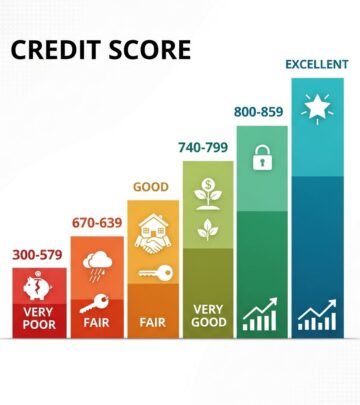
| Score Range | Rating | Typical Outcomes |
|---|---|---|
| 300-579 | Poor | Limited credit approval; unfavorable terms likely |
| 580-669 | Fair | Approval possible; worse-than-average interest rates |
| 670-739 | Good | Approval likely; competitive interest rates |
| 740-799 | Very Good | Strong approval odds; favorable rates |
| 800-850 | Excellent | Excellent approval odds; best available rates |
Understanding where your score falls within these ranges helps you set realistic expectations for credit applications and identify improvement opportunities.
The Role of Your Credit Report
Your credit report is the document that contains all the information used to calculate your credit score. It includes details about your credit accounts, payment history, public records, and inquiries made into your credit.
Your credit report is maintained by three major credit bureaus: Equifax, Experian, and TransUnion. Each maintains its own independent records, which is why your scores may vary slightly across bureaus. Reviewing your credit report regularly allows you to verify accuracy, dispute errors, and understand what information is influencing your score.
Why Regular Credit Monitoring Matters
Monitoring your credit report provides several important benefits. First, it allows you to identify and correct errors before they significantly impact your creditworthiness. Second, it helps you detect fraudulent activity or identity theft early. Third, it gives you visibility into your credit profile as you work toward improvement goals.
Experts recommend checking your credit report yearly to ensure accuracy and protect your identity. You are entitled to one free credit report annually from each of the three major credit bureaus through AnnualCreditReport.com.
Practical Steps to Improve Your Credit Score
Understanding your credit score’s components empowers you to take targeted actions for improvement:
- Pay bills on time: Since payment history comprises 35% of your score, prioritizing on-time payments is your most impactful action
- Reduce credit utilization: Paying down debt or requesting credit limit increases can lower your utilization ratio
- Maintain older accounts: Keeping established credit accounts open preserves your average account age and credit history length
- Limit new credit applications: Minimize hard inquiries by spacing out credit applications strategically
- Diversify credit types: If appropriate for your financial situation, responsibly managing different credit types strengthens this category
- Dispute errors: Challenge inaccuracies on your credit report through the dispute process with credit bureaus
Conclusion
Your credit score is a powerful number that influences your financial opportunities and borrowing costs. By understanding the five key components—payment history, amounts owed, length of credit history, credit mix, and new credit—you can make informed financial decisions that strengthen your creditworthiness. Regular credit report monitoring combined with responsible financial habits positions you for long-term financial success and access to better credit terms and opportunities.
References
- How to Understand Your Credit Score & Report — TD Bank. Accessed February 2026. https://www.td.com/us/en/personal-banking/learning/understanding-your-credit
- Credit Scoring Models: FICO, VantageScore & More — Debt.org. Accessed February 2026. https://www.debt.org/credit/report/scoring-models/
- How are FICO Scores Calculated? — MyFICO. Accessed February 2026. https://www.myfico.com/credit-education/whats-in-your-credit-score
- What is a Credit Score? Factors, Types & More — Intuit. Accessed February 2026. https://www.intuit.com/blog/innovative-thinking/what-is-credit-score/
- Credit Scores — Federal Trade Commission Consumer Advice. Accessed February 2026. https://consumer.ftc.gov/credit-scores
- Credit Scores: How To Understand Yours — Credit Karma. Accessed February 2026. https://www.creditkarma.com/credit-scores
- What Affects Your Credit Scores? — Experian. Accessed February 2026. https://www.experian.com/blogs/ask-experian/credit-education/score-basics/what-affects-your-credit-scores/
- Understanding Credit — UC Berkeley Financial Aid & Scholarships. Accessed February 2026. https://financialaid.berkeley.edu/center-for-financial-wellness/financial-literacy-hub/understanding-credit/
Similar Articles








Read full bio of Sneha Tete