Credit Card Numbers: 4 Essential Parts To Understand
Discover the hidden meaning behind every digit on your credit card and how it protects your financial transactions.

Credit card numbers serve as unique identifiers for financial transactions, encoding essential details about the issuing network, bank, and account holder. These sequences of 13 to 19 digits enable secure processing worldwide.
The Anatomy of a Credit Card Number
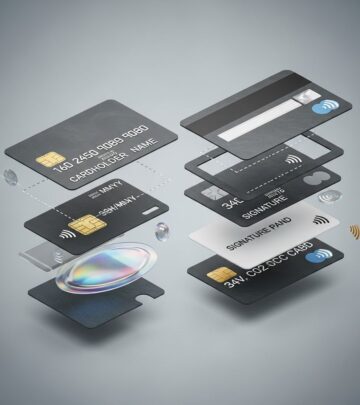
Every credit card number follows a standardized format designed for efficiency and verification. Typically 16 digits long, it breaks down into distinct components that facilitate routing and authentication during payments.
- Major Industry Identifier (MII): The initial digit categorizes the card’s industry and network.
- Issuer Identification Number (IIN) or Bank Identification Number (BIN): The first 6 to 8 digits pinpoint the issuing institution.
- Account Identifier: Middle digits uniquely tag the cardholder’s account.
- Check Digit: The final digit validates the entire number’s integrity.
This structure, governed by ISO/IEC 7812, ensures payments reach the correct destination without errors.
Breaking Down the Major Industry Identifier
The leading digit, known as the MII, signals the card network to processors. Common assignments include:
| MII Digit | Network |
|---|---|
| 3 | American Express |
| 4 | Visa |
| 5 | Mastercard |
| 6 | Discover |
| Other (e.g., 3 for Diners Club variants) | JCB, UnionPay |
For instance, a card starting with 4 routes through Visa’s infrastructure. This quick identifier allows systems to direct transactions appropriately from the outset.
Role of the Bank Identification Number
Following the MII, the BIN (first 6 digits total) specifies the issuing bank or financial entity. Examples include ranges like 414720 for certain Chase cards or 6011 for Discover products.
BINs not only identify issuers but also help in fraud detection by flagging unusual geographic or merchant patterns. Merchants use this data to apply specific processing rules.
Individual Account Identification
The core of the number, spanning 6 to 12 digits, represents the personal account. Issuers assign these to distinguish millions of customers, even within the same BIN range.
Privacy regulations like PCI DSS mandate protecting this segment, as it directly links to sensitive financial data.
The Crucial Check Digit and Luhn Algorithm
The trailing digit acts as a checksum, computed via the Luhn algorithm. This method doubles every second digit from right to left, sums the results, and checks if the total modulo 10 equals zero.
During entry, systems apply Luhn to confirm validity instantly, reducing typos and blocking many fabricated numbers. For a sample 5432123456789101:
- MII: 5 (Mastercard)
- BIN: 543212
- Account: 345678910
- Check: 1 (validates via Luhn)
This self-verifying feature bolsters security without extra hardware.
Variations Across Card Networks
Not all cards adhere to 16 digits. American Express uses 15, while some corporate or store cards reach 19.
| Network | Typical Length | BIN Ranges |
|---|---|---|
| Visa | 16 | 4xxx-xxxx |
| Mastercard | 16 | 5xxx-xxxx or 2xxx-xxxx |
| Discover | 16 or 19 | 6011, 65xx-xxxx |
| American Express | 15 | 34xx-xxxxxxx, 37xx-xxxxxxx |
| JCB | 16 | 35xx-xxxx-xxxx-xx |
These differences reflect network-specific standards but maintain the core MII-BIN-account-check structure.
Security Codes: CVV, CID, and CVC
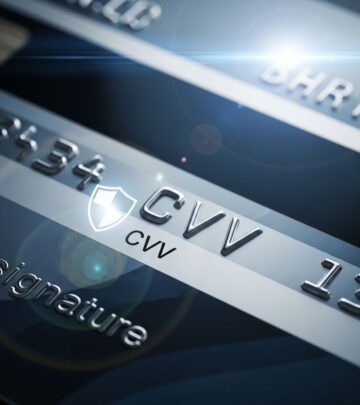
Beyond the primary number, cards feature verification codes. Visa/Mastercard/Discover use a 3-digit CVV on the back signature strip. American Express places a 4-digit CVV above the number on front, with a separate 3-digit CID on back for extra checks.
These prove possession of the physical card for online or phone transactions, inaccessible via digital scans alone.
Protecting Your Credit Card Number
Treat the full number as sensitive; exposure risks fraud. Best practices include:
- Shielding the card during use.
- Avoiding emails or unsecured sites with full details.
- Using virtual numbers or tokenization services.
- Monitoring statements regularly.
- Enabling transaction alerts.
PCI DSS compliance ensures merchants handle data securely, minimizing breach impacts.
Historical Evolution of Card Numbering
Originating in the 1950s with simple embossed numbers, standards evolved via ISO 7812 in 1987, standardizing IINs globally. The Luhn algorithm, from 1954, predates cards but fits perfectly for error-checking.
Modern updates extend BINs to 8 digits for more issuers, accommodating fintech growth.
Common Misconceptions Clarified
Many believe longer numbers mean premium cards—false; length ties to network. Others think check digits encrypt data—no, they only validate format.
- Myth: First digits reveal balance. Fact: They identify issuer only.
- Myth: CVV is optional. Fact: Essential for non-presentment sales.
Implications for Merchants and Consumers
Consumers benefit from seamless, protected payments; merchants gain efficient routing and fraud tools. Understanding BINs aids in choosing cards with optimal rewards or acceptance.
Frequently Asked Questions
What does the first digit of my credit card mean?
It identifies the card network, like 4 for Visa or 5 for Mastercard.
How is the check digit calculated?
Using the Luhn algorithm on preceding digits to ensure validity.
Where is the CVV located?
Back for most cards (3 digits); front for Amex (4 digits).
Can I share my full card number safely?
Only with trusted merchants; prefer tokenization for recurring payments.
Why do some cards have 15 digits?
American Express standard; others vary slightly by network.
References
- Decoding the numbers on your credit card — The Points Guy. 2023-05-15. https://thepointsguy.com/credit-cards/decoding-credit-card-numbers/
- Payment card number — Wikipedia. 2024-01-10. https://en.wikipedia.org/wiki/Payment_card_number
- Credit Card Data Formats and the Luhn Algorithm — Ground Labs. 2023-08-22. https://www.groundlabs.com/blog/anatomy-of-a-credit-card
- Credit Card Anatomy: Explaining the PAN, BIN, CVV, & Others — Basis Theory. 2024-02-14. https://blog.basistheory.com/credit-card-anatomy
- What Is a Credit Card Number (CC# / CCN)? — Sycurio. 2023-11-30. https://sycurio.com/knowledge/glossaries/credit-card-number-cc-ccn
- What do credit card numbers mean? — Helcim. 2024-03-05. https://www.helcim.com/guides/what-do-credit-card-numbers-mean/
Similar Articles








Read full bio of Sneha Tete