Credit Card Debt Traps: How They Form And How To Escape In 2025
Learn how credit card debt spirals and discover actionable strategies to escape the cycle.
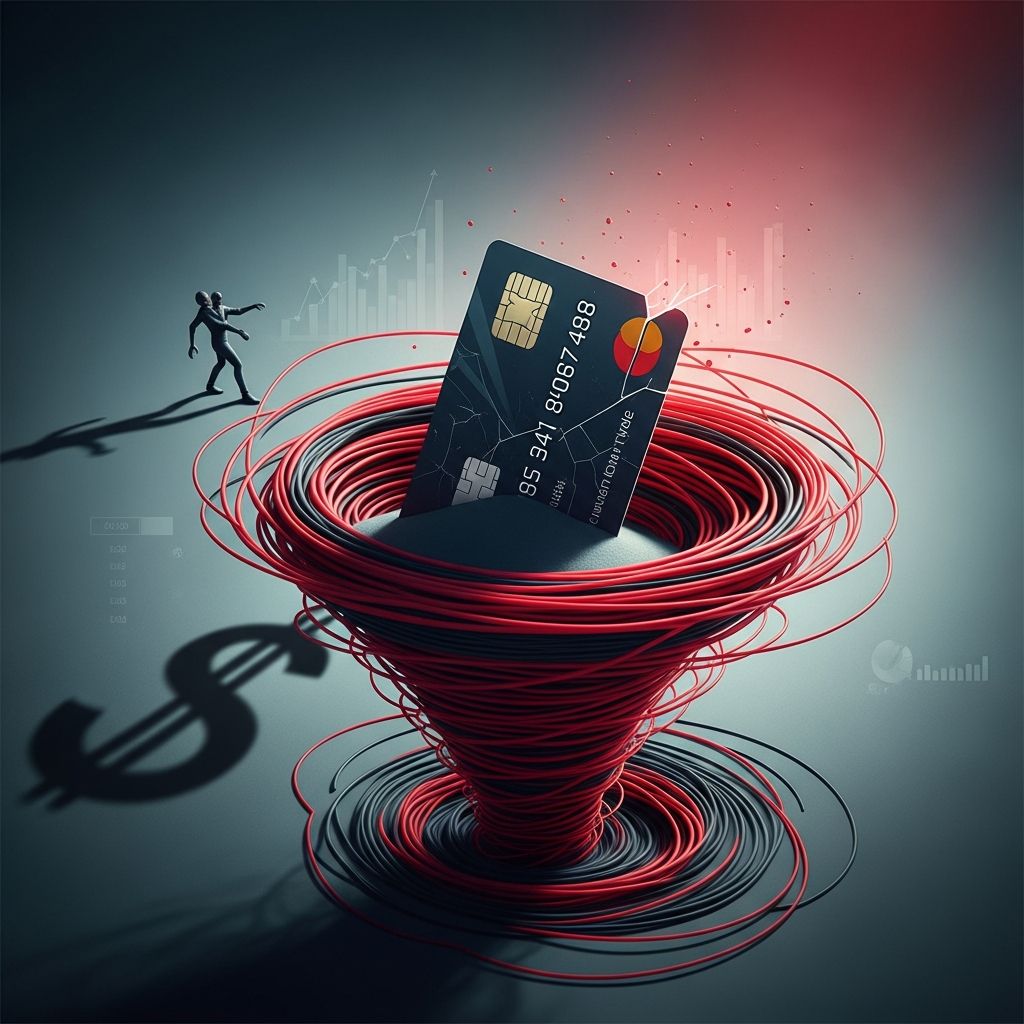
Credit cards have become indispensable tools in modern financial life, offering convenience, purchasing flexibility, and the ability to build credit history. Yet beneath their appeal lies a significant risk that ensnares millions of consumers annually. When mismanaged, credit cards transform from financial conveniences into mechanisms of financial distress, creating what financial experts call a debt trap—a self-perpetuating cycle where borrowed money grows faster than the ability to repay it.
The scale of this problem is staggering. American credit card debt exceeded $1.2 trillion as of early 2025, with average interest rates surpassing 20% annually. For many cardholders, this represents not merely an inconvenience but a serious threat to long-term financial stability. Understanding how these traps form, recognizing their warning signs, and knowing how to escape them are essential skills for anyone carrying credit card balances.
What Constitutes a Credit Card Debt Trap?
A credit card debt trap exists when an individual’s outstanding balances grow at a faster rate than their capacity to repay them. Unlike installment loans with fixed repayment schedules and predetermined interest rates, credit cards operate under different mechanics. They charge perpetually accruing interest, sometimes reaching 40% annually in extreme cases, on any unpaid balance carried from month to month.
The trap differentiates itself from simple debt through its cyclical nature. It occurs not as a single financial mistake but as a series of decisions and circumstances that compound into an increasingly difficult situation. A consumer might begin with manageable balances, but through the combination of high interest charges, unexpected expenses, and minimum payment structures, finds themselves unable to meaningfully reduce their outstanding debt despite consistent payment efforts.
What makes credit card debt particularly dangerous is its velocity. A $5,000 balance at a 24.99% interest rate, when addressed through minimum payments alone, can accumulate nearly $4,823 in interest charges over five years—nearly doubling the original amount borrowed. This exponential growth transforms modest debt into a substantial financial burden within a remarkably short timeframe.
The Mechanics: How Cardholders Slide Into Financial Difficulty
Credit card debt traps rarely announce themselves. Instead, they develop gradually through patterns that initially seem manageable. Understanding these patterns helps identify vulnerable moments before they become critical problems.
The Minimum Payment Trap
The most common entry point into credit card debt traps involves the minimum payment mindset. When a cardholder receives their monthly statement, they observe the minimum payment required—typically a small percentage of their total balance—and assume this amount represents a reasonable obligation. This logic appears sound on the surface: making a payment demonstrates responsibility and keeps the account in good standing.
The reality differs significantly. On a $5,000 balance, a typical minimum payment of $150 monthly allocates only $47.30 toward reducing the principal debt, with the remainder consumed by interest charges. Over time, this means paying substantially more total money while barely reducing the actual debt. For example, a $2,500 balance at 20% interest with a $50 monthly minimum payment requires over eight years to eliminate, resulting in more than $2,750 paid in interest alone.
This structure creates a psychological trap. Each month, the cardholder makes a payment and receives acknowledgment that their account is in good standing. Yet the balance remains stubbornly high, growing whenever additional purchases are added. The cardholder may feel they are making progress while actually falling deeper into debt.
Life Circumstances and Unexpected Expenses
Many individuals enter debt traps not through reckless overspending but through circumstances beyond their control. A job loss, medical emergency, or other unexpected financial setback forces cardholders to use credit cards for essential expenses they cannot otherwise afford. What begins as an emergency solution becomes a pattern when income does not quickly recover or when subsequent unexpected events occur.
This pathway into debt is particularly insidious because it carries no moral judgment. A person who loses their job through no fault of their own and uses a credit card to maintain essential payments is making a rational short-term decision. Yet if employment recovery takes longer than anticipated, or if interest charges outpace income growth, this rational decision creates a problematic long-term situation.
The Encouragement to Expand Limits
Once a cardholder demonstrates they can manage a credit line, card issuers frequently offer to increase the available credit limit. These increases may come through solicitation or automatically applied upgrades. From the cardholder’s perspective, an increased limit appears to provide financial breathing room and expanded purchasing flexibility.
However, expanded limits function as enablers of deeper debt accumulation. With more available credit, cardholders may increase spending, believing their expanded capacity to borrow equates to expanded financial capacity. This often results in higher overall balances and greater interest charges, moving the individual further into the debt trap rather than providing relief.
The Escalating Consequences of Unpaid Balances
Once trapped in cycles of minimum payments and growing balances, cardholders face a cascade of negative consequences that extend well beyond the credit card itself.
Late Fees and Penalty Interest Rates
Missing or delaying payments triggers immediate financial penalties. Late fees average $32 but can reach as high as $41, and card issuers may simultaneously apply penalty annual percentage rates (APRs) climbing to 29.99%. These charges compound the debt problem, making it even more difficult for struggling cardholders to reduce their balances through regular payments.
Credit Score Deterioration
Credit utilization—the percentage of available credit being used—significantly impacts credit scores. Cardholders trapped in debt cycles typically use substantial portions of their available credit, which damages their scores. Late payments create additional score damage that persists on credit reports for years.
The consequences of damaged credit extend into multiple life domains. Individuals with poor credit scores face higher interest rates on mortgages and auto loans when they eventually qualify to apply. Some employers check credit reports during hiring processes, potentially affecting employment prospects. Housing applications may be denied based on credit history. These downstream effects transform a credit card problem into a broader financial and personal crisis.
Reduced Access to Emergency Credit
Ironically, as credit scores decline, individuals lose access to traditional credit when they need it most. Those trapped in debt cycles often lack the ability to obtain new credit cards or loans that could provide relief through debt consolidation or emergency financing. This creates a paradoxical situation: the people most desperate for credit access become those least able to obtain it.
Psychological and Relational Stress
The psychological burden of substantial debt carries real consequences for mental and physical health. Chronic financial stress correlates with anxiety, depression, and relationship strain. Money-related arguments represent a common source of relationship conflict, and debt problems can escalate these tensions significantly.
Strategic Pathways for Escaping Credit Card Debt
While credit card debt traps are serious, they need not be permanent. Multiple strategies exist for individuals seeking to break free from debt cycles and restore financial stability.
Prioritize Principal Reduction Over Minimum Payments
The most direct path out of debt involves paying more than the minimum required amount. Any payment amount exceeding the minimum directly reduces principal balance and the interest that accrues on that balance in subsequent months. Even modest increases—an additional $25 or $50 monthly—compress repayment timelines substantially and reduce total interest paid.
Consolidate Multiple Balances
Individuals carrying balances across multiple cards face complexity in tracking payments and often pay higher overall interest rates if different cards carry different rates. Consolidating multiple balances into a single payment through balance transfer cards, personal loans, or debt consolidation programs streamlines finances and can reduce total interest charges if new rates are lower than existing rates.
Negotiate with Card Issers
Card issuers benefit more from borrowers who can actually pay than from borrowers who default. Many are willing to negotiate reduced interest rates or adjusted payment plans with customers who communicate proactively about financial difficulty. These negotiations require initiative and clear communication, but can substantially alter the cost structure of existing debt.
Address Root Spending Behaviors
Escaping a debt trap requires not merely addressing existing balances but changing the behaviors that created them. This may involve establishing detailed budgets, implementing spending limits, or removing credit cards from daily access. Without addressing underlying spending patterns, even successfully eliminated debt often returns as new balances accumulate on cleared cards.
Preventing Debt Traps: Proactive Strategies
Beyond escaping existing debt traps, prevention represents the optimal strategy. Cardholders can employ several approaches to use credit cards as financial tools while avoiding trap scenarios:
- Pay full balances monthly whenever possible to avoid any interest charges
- Establish spending limits aligned with actual budget capacity, not available credit
- Treat credit cards as payment mechanisms rather than sources of borrowed funds
- Monitor statements regularly for unauthorized charges and unexpected increases
- Avoid using cards for lifestyle inflation or purchases beyond current financial means
- Maintain emergency savings to address unexpected expenses without credit reliance
- Decline credit limit increases unless genuinely needed for legitimate purposes
Understanding Credit Card Company Business Models
Understanding how credit card companies generate profits provides perspective on debt trap dynamics. Card issuers make their money primarily through interest charges, late fees, and annual fees rather than through transaction volumes. This business model incentivizes companies to encourage balance carrying and to design fee structures that benefit from cardholders missing payments or maintaining high balances.
Marketing materials emphasize rewards programs and purchasing convenience while minimizing discussion of interest rates and fee structures. Fine print disclosures contain the actual costs of borrowing, but many consumers never thoroughly review these details before accepting credit offers. This information asymmetry—where companies understand the financial mechanics while consumers often do not—creates an inherent advantage for lenders in credit relationships.
Recognizing this dynamic need not create hostility toward credit card use. Rather, it should encourage informed, intentional credit decisions where consumers understand they are borrowing at high rates and design their usage accordingly.
Key Takeaways
Credit card debt traps represent genuine financial risks that affect millions of consumers. These traps form through combinations of high interest rates, minimum payment structures, life circumstances, and spending patterns. Once formed, they create cascading negative consequences affecting credit scores, access to future credit, and overall financial and psychological well-being.
However, debt traps need not be permanent. Strategic approaches to accelerating principal repayment, consolidating balances, negotiating with card issuers, and addressing underlying spending behaviors can systematically reverse debt accumulation. Additionally, proactive strategies—paying full balances, limiting spending to affordable amounts, maintaining emergency savings—can prevent traps from forming in the first place.
Credit cards remain valuable financial tools when used intentionally and within budgetary constraints. Understanding their mechanics, recognizing risk factors, and employing strategic approaches to balance management allows consumers to harness their benefits while avoiding the serious risks they present.
References
- How Credit Cards Can Become a Debt Trap — Community Credit Union Federation. 2025. https://www.ccfcu.org/how-credit-cards-can-become-a-debt-trap/
- Escaping the Credit Card Debt Trap — Ventura Securities. 2025. https://www.venturasecurities.com/blog/escaping-the-credit-card-debt-trap/
- Credit Cards: A Tool or a Trap? Understanding Debt Dynamics — McCarthy Law. 2023. https://mccarthylawyer.com/2023/12/27/credit-cards-a-tool-or-a-trap-understanding-debt-dynamics/
- Understanding The Credit Card Trap — TVA Community Credit Union. 2025. https://www.tvaccu.com/understanding-the-credit-card-trap/
- Understanding The Credit Card Trap — USF Credit Union. 2025. https://www.usfcu.com/blog/understanding-the-credit-card-trap
- What Is a Debt Trap? — Experian. 2025. https://www.experian.com/blogs/ask-experian/what-is-debt-trap/
Similar Articles








Read full bio of Sneha Tete