Understanding Credit Card Cash Advances
Learn which transactions qualify as cash advances and their true costs

A cash advance represents a distinct financial transaction where you borrow money directly against your credit card’s available credit line rather than using your card to purchase goods or services. Unlike traditional credit card purchases that draw from your overall credit limit, cash advances operate under separate terms and limitations, often with significantly higher costs attached to the borrowed funds.
What Constitutes a Cash Advance?
While many people associate cash advances exclusively with withdrawing physical currency from an automated teller machine, credit card issuers classify a much broader range of transactions as cash advances. Understanding these classifications is crucial because each transaction type triggers different fees and interest rates than standard purchases.
Direct Cash Withdrawals
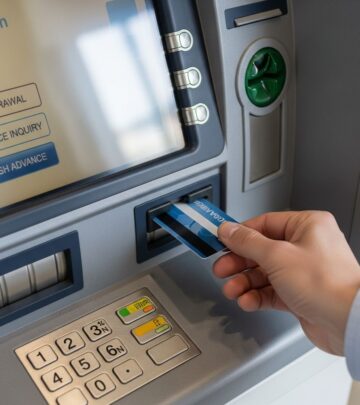
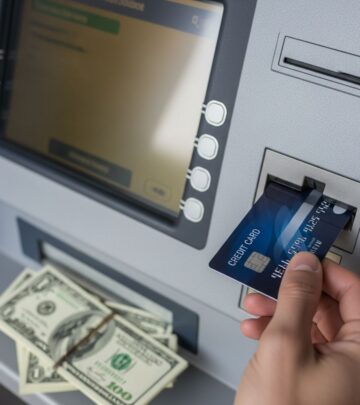
The most straightforward form of cash advance involves obtaining physical currency through various channels. You can visit an ATM and use your credit card with an assigned personal identification number to withdraw funds, similar to using a debit card. Alternatively, you may visit a bank branch in person and request cash from a teller by presenting your credit card and valid identification. Some credit card issuers also mail convenience checks to cardholders, which function like regular checks but trigger cash advance classification when deposited.
Peer-to-Peer Payment Transfers
Digital money transfer services that move funds between individuals, such as popular payment applications, may be categorized as cash advances by your credit card issuer. These transactions differ significantly from standard purchases because they represent a transfer of funds rather than payment for a tangible product or service. When you use your credit card to send money to another person through these platforms, your card issuer treats it as a cash advance rather than a typical purchase.
Gambling and Betting Activities
Transactions related to gambling operations consistently receive cash advance classification. This category encompasses casino gaming chips, racetrack wagers, and legal online betting platforms. Even purchasing lottery tickets using your credit card may be flagged as a cash advance by certain issuers. The rationale behind this classification stems from the nature of these transactions—they represent obtaining funds or chips rather than purchasing a traditional commodity.
Financial Instruments and Currency Conversions
Several specialized financial transactions fall under the cash advance umbrella. Obtaining travelers checks or money orders through your credit card counts as a cash advance. Similarly, purchasing foreign currency for international travel typically receives this classification. Wire transfers conducted through your credit card account also qualify as cash advances, as do purchases of prepaid cards or similar cash-equivalent instruments.
Cryptocurrency and Digital Assets
Modern financial innovation has expanded the definition of cash advances to include cryptocurrency purchases. When you buy Bitcoin, Ethereum, or other digital currencies using your credit card, issuers treat this as a cash advance rather than a standard purchase. This classification reflects the nature of cryptocurrency as a financial asset similar to currency itself.
Bill Payments and Debt Repayments
Certain bill payments made with your credit card may receive cash advance classification from your card issuer. This can include paying monthly utility bills, insurance premiums, or loan payments directly with your credit card. Additionally, using your credit card to pay down other debts, such as auto loans or other credit lines, may trigger cash advance treatment.
The Fee Structure of Credit Card Cash Advances
Credit card issuers impose significant fees on cash advances that substantially exceed the costs associated with standard purchases. Understanding this fee structure helps explain why financial experts recommend reserving cash advances exclusively for genuine emergencies.
Transaction Fees
Most credit card companies charge a transaction fee calculated as a percentage of the borrowed amount. Typically, this fee ranges from 3 to 5 percent of the cash advance total. However, many issuers establish a minimum fee threshold, meaning even small cash advances incur at least a $10 charge. For example, a $200 cash advance with a 5 percent fee would result in a $10 transaction cost. Some cards impose the greater of either the percentage-based fee or the flat minimum amount, ensuring the issuer collects meaningful compensation on all advances regardless of size.
Interest Rates
The interest rate applied to cash advances, known as the cash advance APR, typically exceeds the standard purchase APR by a substantial margin. While standard purchases might carry an APR of 15 to 20 percent, cash advances frequently incur interest rates of 25 to 30 percent or higher. Crucially, unlike many credit card purchases that benefit from a grace period before interest accrual begins, cash advance interest starts accumulating immediately from the date of the transaction.
Cash Advance Limits and Credit Implications
Credit card issuers impose specific limitations on the amount you can borrow through a cash advance, and these limits operate independently from your overall credit limit. Your cash advance limit typically represents a percentage of your total credit limit, often ranging from 20 to 50 percent depending on your card and issuer policies.
For instance, if your credit limit is $5,000 and your issuer caps cash advances at 30 percent, your maximum cash advance would be $1,500. However, if you already carry an existing balance, your available cash advance limit decreases proportionally to your remaining available credit.
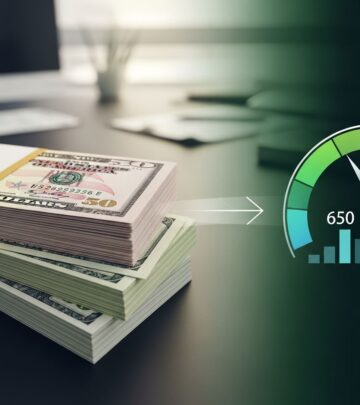
Cash advances also impact your credit utilization ratio, which represents the percentage of your total available credit currently in use. When you take a cash advance, the borrowed amount immediately increases your credit utilization, which can negatively affect your credit score if the ratio becomes too high. Additionally, cash advances do not earn rewards points or credit card cash back benefits, and they do not contribute toward meeting minimum spending requirements for sign-up bonuses.
Methods to Obtain a Cash Advance
Credit card issuers provide multiple channels through which cardholders can access cash advances:
- ATM Withdrawals — After establishing a PIN with your card issuer, you can use your credit card at any ATM displaying your card’s network logo. The withdrawal amount cannot exceed your cash advance limit or the ATM’s daily withdrawal maximum.
- Bank Teller Transactions — Visit any branch of your bank, credit union, or card issuer in person. Present your credit card and government-issued photo identification to request your desired cash advance amount.
- Online Account Access — Many issuers allow you to request a cash advance through their online banking platform or mobile application. The funds transfer to a linked checking account, which you can then access via ATM or debit card.
- Telephone Requests — Some card issuers permit cash advance requests over the phone, transferring funds directly to a designated bank account.
- Convenience Checks — Use the checks mailed by your card issuer to make payments directly to individuals or organizations, with the amount treated as a cash advance.
Comparing Cash Advance Costs Across Transaction Types
| Transaction Type | Typical Transaction Fee | Typical APR | Grace Period |
|---|---|---|---|
| ATM Cash Withdrawal | 3–5% of amount | 25–30% | None |
| Convenience Check | 3–5% of amount | 25–30% | None |
| Peer-to-Peer Transfer | 3–5% of amount | 25–30% | None |
| Standard Purchase | None | 15–25% | 15–25 days |
Why Cash Advances Prove So Costly
The combination of transaction fees, elevated APRs, and immediate interest accrual makes cash advances substantially more expensive than standard credit card purchases. Consider a practical example: borrowing $500 through a cash advance with a 5 percent fee and 29 percent APR costs you $25 immediately in transaction fees. If you take three months to repay the advance, you’ll pay an additional $36.25 in interest, bringing your total cost to $61.25 for accessing $500 in cash—a true cost of approximately 12 percent.
By comparison, a $500 purchase on your standard credit card at 20 percent APR incurs no transaction fee and no interest if you pay the full balance within the grace period. This dramatic difference in total cost explains why financial professionals universally recommend treating cash advances as genuine emergency resources rather than convenient funding sources.
Frequently Asked Questions About Cash Advances
Can I negotiate cash advance fees with my credit card issuer?
Cash advance fees are generally fixed by the card issuer and published in your cardholder agreement. Unlike purchase APR, which may be negotiable in some circumstances, cash advance fees typically cannot be reduced through discussion with customer service.
Do cash advances affect my credit score?
Yes, cash advances impact your credit score through increased credit utilization. Since the borrowed amount immediately counts against your available credit, taking a substantial cash advance can elevate your utilization ratio and temporarily lower your credit score.
Is there a better alternative to credit card cash advances?
For genuine emergencies, personal loans from traditional lenders typically offer better terms than cash advances, with lower APRs and no transaction fees. Additionally, negotiating payment plans with creditors, borrowing from friends or family, or seeking employer advances may prove more economical than cash advances.
What happens if I cannot repay a cash advance?
Unpaid cash advances remain on your credit card balance, continuing to accumulate interest at the elevated cash advance APR. This debt becomes subject to collection activities and significantly damages your credit score if payments are missed.
Strategic Considerations for Cash Advance Use
Given the substantial costs associated with cash advances, using this borrowing method should be reserved for genuine emergencies where no alternatives exist. Before accessing a cash advance, consider whether you could instead use savings, seek a personal loan from a bank or credit union, or explore payment plan options with creditors.
If you must use a cash advance, minimize the amount borrowed and prioritize rapid repayment to reduce total interest costs. Every additional month your cash advance remains unpaid exponentially increases the total cost of borrowing.
References
- What Is a Cash Advance? — Chime. https://www.chime.com/blog/what-is-a-cash-advance/
- What Is a Cash Advance on a Credit Card? — American Express. https://www.americanexpress.com/en-us/credit-cards/credit-intel/what-is-a-cash-advance/
- Credit Card Cash Advance: What It Is & How It Works — Chase Bank. https://www.chase.com/personal/credit-cards/education/basics/how-do-credit-card-cash-advances-work
- What Is a Cash Advance on a Credit Card? — TD Bank. https://www.td.com/us/en/personal-banking/learning/what-is-cash-advance-on-a-credit-card
- What Is a Cash Advance on a Credit Card? — Discover. https://www.discover.com/credit-cards/card-smarts/cash-advance-on-credit-card/
Similar Articles








Read full bio of medha deb