Credit Bureaus: 3 Major Agencies, How They Affect Your Score
Discover how credit bureaus shape your financial future by tracking credit history and empowering informed lending decisions worldwide.
Credit bureaus serve as essential intermediaries in the financial ecosystem, gathering vast amounts of data on individuals’ borrowing behaviors and compiling them into actionable insights for lenders and consumers alike. These organizations, also known as consumer reporting agencies, play a pivotal role in assessing creditworthiness, mitigating risks, and fostering economic stability.
The Fundamental Role of Credit Bureaus in Finance
At their core, credit bureaus collect information from a diverse array of sources, including banks, credit card issuers, public records, and collection agencies. This data encompasses payment histories, outstanding balances, and instances of delinquency or bankruptcy, which are then organized into comprehensive credit reports. These reports are not mere records; they form the foundation for credit scores—numerical representations of an individual’s credit risk that range typically from 300 to 850.
The process begins when creditors, referred to as data furnishers, submit updates on consumer accounts. Bureaus aggregate this information, verify its accuracy through standardized procedures, and make it available to authorized parties such as lenders, insurers, and employers. This system reduces information asymmetry, allowing lenders to make data-driven decisions rather than relying solely on personal relationships or incomplete data.
Major Credit Bureaus Operating in the United States
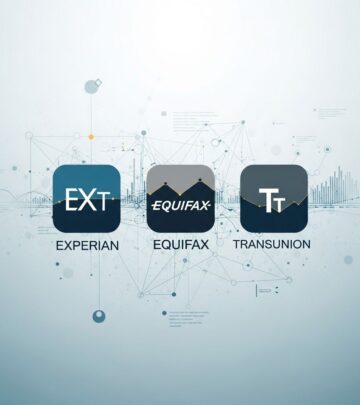
Three dominant credit bureaus—Equifax, Experian, and TransUnion—handle the majority of credit reporting in the U.S., covering data on over 250 million consumers. Each bureau operates independently but follows similar protocols for data collection and reporting.
- Equifax: Known for its extensive database, Equifax compiles borrowing and repayment histories from thousands of sources, providing reports used in mortgage underwriting and employment screenings.
- Experian: This bureau emphasizes credit monitoring services alongside traditional reporting, offering consumers tools to track changes in real-time.
- TransUnion: Specializing in fraud detection and tenant screening, TransUnion provides value-added services beyond basic credit reports.
While these bureaus do not create lending decisions themselves, their reports heavily influence outcomes for loans, rentals, and insurance premiums.
How Credit Information Flows Through Bureaus
The operational workflow of a credit bureau is a sophisticated blend of data ingestion, analysis, and dissemination. Financial institutions report monthly on account statuses, which bureaus then process using proprietary algorithms to detect patterns and anomalies.
| Stage | Description | Sources Involved |
|---|---|---|
| Data Collection | Gathering payment history, balances, and public records | Banks, retailers, courts |
| Verification | Cross-checking for accuracy and resolving disputes | Consumer inputs, furnishers |
| Report Generation | Compiling into standardized formats with scores | Internal algorithms |
| Distribution | Providing to permissible users | Lenders, landlords |
This structured approach ensures reliability, with bureaus undergoing regular audits and adhering to industry standards set by groups like the Consumer Data Industry Association.
Credit Reports vs. Credit Scores: Key Distinctions
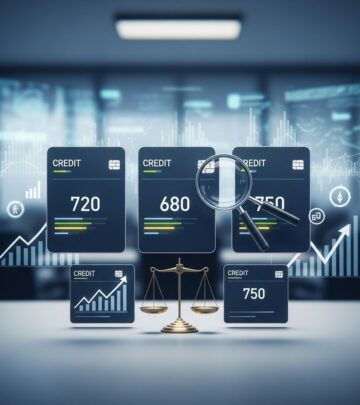
A common point of confusion lies between credit reports and credit scores. Reports are detailed dossiers listing all accounts, inquiries, and histories, while scores are predictive summaries derived from that data using models like FICO or VantageScore.
- Credit reports reveal the ‘what’—your full financial footprint.
- Credit scores indicate the ‘how risky’—a snapshot for quick assessments.
Consumers can access free weekly reports from AnnualCreditReport.com, authorized under federal law, to review and correct inaccuracies.
Regulatory Framework Governing Credit Bureaus
In the U.S., the Fair Credit Reporting Act (FCRA) of 1970 mandates accuracy, fairness, and privacy in credit reporting. Bureaus must investigate disputes within 30 days, delete obsolete information after seven years (or ten for bankruptcies), and obtain permissible purpose for disclosures.
Globally, regulations vary: India’s Credit Information Bureau (CIBIL) operates under Reserve Bank oversight to curb non-performing assets, while the World Bank advocates for transparent systems to enhance financial stability.
Global Perspectives on Credit Reporting Systems
Beyond the U.S., credit bureaus adapt to local needs. In developing markets, they often include non-financial data from utilities and telecoms to build profiles for unbanked populations. The World Bank distinguishes bureaus (private, detailed data) from public credit registries (government-run, focused on larger loans), noting bureaus’ role in supporting microfinance and retail lending.
For instance, the Philippines’ Credit Information Exchange System aggregates data for better risk assessment, promoting lending efficiency.
Benefits for Consumers and the Economy
Credit bureaus empower individuals by enabling credit monitoring, fraud alerts, and identity protection services. They also democratize access to credit, allowing lenders to serve customers nationwide without local ties.
Economically, accurate reporting prevents defaults, stabilizes banks, and facilitates cross-border finance. Studies show robust systems correlate with lower interest rates and broader credit availability.
Potential Drawbacks and Consumer Protections
Despite benefits, errors affect 20-30% of reports, potentially leading to denials or higher rates. Consumers should:
- Review reports annually.
- File disputes online or by mail.
- Freeze credit to prevent fraud.
Agencies must respond promptly, with escalation to the Consumer Financial Protection Bureau (CFPB) for unresolved issues.
Emerging Trends in Credit Bureau Services
Modern bureaus now offer AI-driven analytics, open banking integrations, and alternative data like rental payments to score thin-file consumers. Blockchain pilots promise enhanced security, while real-time reporting reduces lag in decision-making.
Frequently Asked Questions (FAQs)
What exactly is a credit bureau?
A credit bureau is a company that compiles your credit history from various sources into reports and scores used by lenders to evaluate risk.
How many credit bureaus are there in the U.S.?
There are three major nationwide ones: Equifax, Experian, and TransUnion, plus specialty agencies.
Can I get my credit report for free?
Yes, via AnnualCreditReport.com, weekly for free under federal law.
What if there’s an error on my report?
Dispute it directly with the bureau; they must investigate free of charge.
Do credit bureaus affect my credit score?
They provide the data; scoring models from FICO or others calculate the score.
Maintaining a Strong Credit Profile
To optimize your bureau records, pay bills on time (35% of score), keep utilization low (30%), limit new inquiries, and diversify credit types. Regular monitoring via apps from these bureaus can alert you to issues proactively.
In summary, credit bureaus are indispensable for a healthy credit market, balancing consumer empowerment with lender protection through meticulous data stewardship.
References
- Credit Bureau – Overview, Functions, and Regulation — Corporate Finance Institute. 2023. https://corporatefinanceinstitute.com/resources/commercial-lending/credit-bureau/
- Credit Bureau | LendingClub Glossary — LendingClub. 2023-01-29. https://www.lendingclub.com/glossary/c/credit-bureau
- credit bureau | Wex | US Law — Legal Information Institute, Cornell Law School. 2021-06. https://www.law.cornell.edu/wex/credit_bureau
- Credit Bureau – World Bank — World Bank. 2016. https://www.worldbank.org/en/publication/gfdr/gfdr-2016/background/credit-bureau
- What is a Credit Bureau and What Do They Do? — Equifax. 2024. https://www.equifax.com/personal/education/credit/report/articles/-/learn/what-is-a-credit-bureau/
- Credit bureau – Wikipedia — Wikipedia. 2024. https://en.wikipedia.org/wiki/Credit_bureau
- List of consumer reporting companies — Consumer Financial Protection Bureau. 2024. https://www.consumerfinance.gov/consumer-tools/credit-reports-and-scores/consumer-reporting-companies/
Similar Articles








Read full bio of Sneha Tete