Understanding Charge-Offs: Impact and Recovery
Learn what charge-offs mean, how they damage credit, and your options for resolution.

A charge-off represents one of the most significant negative marks that can appear on a credit report. When a creditor determines that a borrower is unlikely to repay their debt, they write off the account as a loss and report it to credit bureaus. However, this accounting action does not eliminate the borrower’s responsibility to repay. Understanding the mechanics of a charge-off, its consequences, and available remedies is essential for anyone facing this situation.
The Fundamentals of a Charge-Off
A charge-off occurs when a creditor formally acknowledges that a debt is unlikely to be collected and removes it from their active accounts as a financial loss. This is primarily an accounting classification that allows creditors to adjust their balance sheets to reflect the uncollectible nature of the debt. The charge-off typically happens after 120 to 180 days of consecutive missed payments, though some creditors may initiate the process sooner depending on their internal policies.
The critical distinction to understand is that a charge-off does not mean the debt disappears or is forgiven. The borrower remains legally obligated to repay the full amount owed, whether to the original creditor or to a third party that may purchase the debt. The charge-off is simply the creditor’s internal decision to stop actively pursuing collection through traditional means.
Timeline and Triggering Events
Most creditors follow a standardized timeline when considering a charge-off. After the first missed payment, the account is typically marked as delinquent. With each subsequent missed payment over the following months, the delinquency status becomes increasingly serious. By the time six months (approximately 180 days) have passed without payment, creditors commonly decide to charge off the account. Some creditors may charge off sooner, particularly if they determine that collection efforts are futile.
The creditor does not have a legal obligation to notify the borrower that an account has been charged off, though they must report this status to credit reporting agencies. This means borrowers may discover a charge-off only when reviewing their credit report or receiving communication from a collection agency.
How Charge-Offs Appear on Your Credit Report
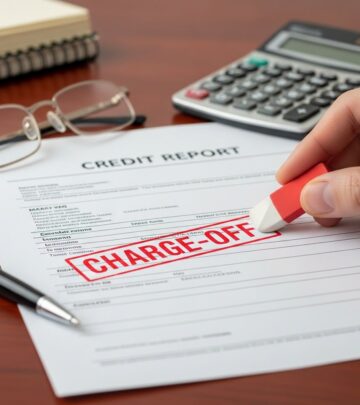
Once a creditor reports a charge-off to the credit bureaus, it becomes a permanent part of the borrower’s credit history. The charge-off entry typically includes details such as the account number, original creditor, outstanding balance, and the date the account became delinquent.
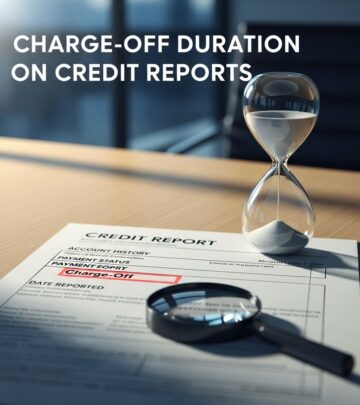
The timing of removal is governed by federal law. A charge-off remains on a credit report for up to seven years from the original delinquency date—that is, from the date of the first missed payment that led to the charge-off. This seven-year reporting period does not restart if the debt is sold to a collection agency or if the borrower makes a payment. The clock continues from the original date of delinquency.
Credit Score Deterioration
The presence of a charge-off on a credit report causes significant damage to credit scores. This derogatory mark signals to lenders that the borrower failed to meet their financial obligations, presenting an elevated risk for future lending decisions. The severity of the damage depends on several factors:
- The timing of the charge-off relative to the current date (older charge-offs have less impact)
- The number and nature of other negative items on the report
- The overall credit history and payment patterns
- The credit utilization and diversity of credit accounts
A charge-off can lower a credit score by 100 points or more, particularly if the borrower’s credit history was previously clean. For borrowers with already damaged credit, the additional impact may be somewhat less pronounced.
Charge-Offs Versus Collections: Understanding the Distinction
Many borrowers confuse charge-offs with collections accounts, though these are related but distinct entries. Understanding the difference is important for comprehending the full scope of a debt situation.
| Aspect | Charge-Off | Collections |
|---|---|---|
| Definition | Creditor writes off debt as uncollectible loss | Third party attempts to collect on behalf of creditor |
| Initiated by | Original creditor | Original creditor or debt buyer |
| Credit report impact | Single derogatory entry | Separate additional derogatory entry |
| Timeline | After 120-180 days of missed payments | May occur simultaneously or after charge-off |
When a creditor charges off an account and sells it to a collection agency, two separate entries often appear on the credit report. The original charged-off account balance typically changes to zero, while a new collection account entry appears with the collection agency’s contact information. Both entries are derogatory and both contribute to credit score damage.
Collection agencies are known for aggressive pursuit of payment. They employ telephone calls, letters, and other legal collection methods to recover the debt. Unlike the original creditor, the borrower can no longer negotiate directly with the creditor about the debt; all communications and settlement negotiations must occur with the collection agency.
The Financial and Legal Responsibilities
One of the most critical misunderstandings borrowers have is believing that a charge-off eliminates their legal obligation to pay. In reality, the charge-off is purely an accounting action by the creditor and does not absolve the borrower of responsibility.
The debt remains valid and enforceable. Creditors retain the right to pursue collection efforts through the original creditor’s collections department, through a third-party debt collection agency, or through legal action such as a lawsuit. In some states, creditors may pursue wage garnishment or bank account levies if they obtain a judgment against the borrower.
Additionally, the charge-off may have tax implications. If the creditor forgives the debt or if it is eventually settled for less than the full amount owed, the borrower may receive a Form 1099-C from the creditor, which reports the forgiven amount as taxable income.
Payment Considerations and Credit Report Updates
Borrowers facing charged-off accounts frequently ask whether paying the debt will improve their credit situation. The answer is nuanced and depends on the specific circumstances.
Should You Pay a Charged-Off Account?
Paying a charged-off account is generally advisable from a legal and financial perspective, even though it does not remove the charge-off from the credit report. When a charged-off account is paid, the entry is updated to reflect “paid charge-off” status. While still a derogatory mark, a paid charge-off is viewed more favorably by some lenders than an unpaid charge-off.
Before making a payment, borrowers should consider:
- Confirming that the debt is legitimate and not expired under the statute of limitations
- Negotiating a settlement for less than the full amount owed
- Requesting that the creditor or collection agency remove the item from the credit report (though this is rarely agreed to)
- Obtaining written verification that the payment satisfies the debt completely
- Confirming the tax implications, particularly if settling for less than the original amount
Statute of Limitations on Debt Collection
The statute of limitations on debt collection varies by state and by type of debt, typically ranging from three to ten years. Once this period expires, creditors may no longer pursue legal action to collect the debt, though the debt technically remains valid. Borrowers should research their state’s specific statute of limitations before deciding whether to pay an old charged-off account.
Removal and Dispute Options
While a charge-off will remain on a credit report for seven years, there are circumstances under which it may be removed sooner.
Disputing Inaccurate Charge-Offs
If a borrower believes a charge-off is inaccurate, they have the legal right to dispute it with the credit reporting agencies at no cost. Common grounds for disputes include:
- The account does not belong to the borrower
- The amount listed is incorrect
- The account was paid or settled before being charged off
- The original delinquency date is listed incorrectly
- The charge-off has already exceeded seven years and should have been removed
Upon receiving a dispute, the credit reporting agency must investigate the claim. If they determine the charge-off is indeed inaccurate, they must correct or remove it from the report. This process typically takes 30 to 45 days.
Automatic Removal After Seven Years
An accurate charge-off will automatically be removed from a credit report seven years after the original delinquency date. Borrowers should monitor their credit reports to confirm that the entry is actually removed on schedule. If it remains beyond seven years, this may constitute a reporting error and grounds for another dispute.
Recovery and Credit Rebuilding
While a charge-off creates serious short-term credit damage, recovery is possible over time. The impact of a charge-off gradually diminishes as time passes and as new positive credit activity is added to the report.
Strategies for Rebuilding Credit
Borrowers with charge-offs on their reports can take several steps to rebuild their credit profiles:
- Establish on-time payment history: Consistently paying all current obligations on time is the most important factor in credit recovery. This new positive history gradually offsets the negative charge-off entry.
- Reduce credit utilization: Keeping credit card balances low relative to credit limits demonstrates responsible credit management.
- Diversify credit types: Having a mix of installment loans, credit cards, and other credit accounts shows experience managing different forms of credit.
- Avoid new delinquencies: Any additional negative marks will further damage credit scores and restart recovery timelines.
- Monitor credit reports regularly: Catching and disputing errors promptly prevents additional credit damage.
Frequently Asked Questions
How long does a charge-off stay on my credit report?
A charge-off remains on a credit report for seven years from the original delinquency date. This seven-year period does not restart if you pay the debt, settle it, or if it is sold to a collection agency.
If I pay a charge-off, will it be removed from my credit report?
No. Paying a charge-off will not remove it from your credit report before the seven-year period expires. However, the account will be updated to show “paid charge-off,” which may be viewed somewhat more favorably by lenders than an unpaid charge-off.
Can a collection agency collect on a charged-off account?
Yes. When a creditor charges off an account, they may sell the debt to a collection agency. The collection agency then has the right to pursue collection efforts and may report the account to credit bureaus, creating a separate derogatory entry.
What is the difference between a charge-off and a write-off?
In accounting, both terms refer to removing an asset from balance sheets. However, a charge-off specifically refers to debt that is deemed uncollectible, while a write-off is a broader accounting term that can apply to various types of losses.
Can I negotiate a lower amount to settle a charge-off?
Yes. You can contact the creditor or collection agency holding the debt and attempt to negotiate a settlement for less than the full amount owed. However, any settled amount less than the original debt may be reported as taxable income on a Form 1099-C.
Will paying off a charge-off improve my credit score?
Paying off a charge-off will not immediately improve your score, as the entry remains on your report. However, a paid charge-off is generally viewed more favorably than an unpaid one, which may gradually help. The most significant improvement comes from the passage of time and the addition of new positive credit activity.
References
- What Is a Charge-Off? — PNC Insights. https://www.pnc.com/insights/personal-finance/borrow/what-is-a-charge-off.html
- What Is a Charge-Off? — Experian. May 29, 2024. https://www.experian.com/blogs/ask-experian/what-is-a-charge-off/
- What Is A “Charge Off” On My Credit Report? — Elder Justice New York. https://www.elderjusticeny.org/blog/chargeoffs
- What Is a Credit Card Charge-Off? — Discover. https://www.discover.com/credit-cards/card-smarts/credit-card-charge-off/
- Charge-off — Wikipedia. https://en.wikipedia.org/wiki/Charge-off
- Understanding charge-offs and how to manage them efficiently — LoanPro. https://loanpro.io/glossary/charge-offs
- What Is a Credit Card Charge Off? — Citi.com. https://www.citi.com/credit-cards/understanding-credit-cards/what-is-a-credit-card-charge-off
Similar Articles








Read full bio of Sneha Tete