Understanding Car Title Loans
Discover how car title loans provide quick cash using your vehicle as collateral, but weigh the high risks and costs involved.

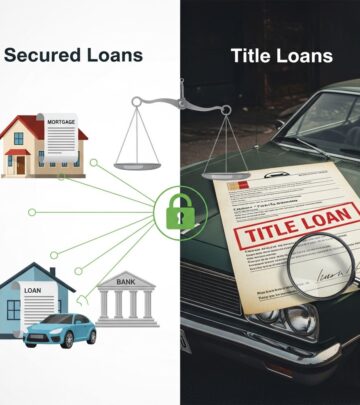
Car title loans represent a form of secured borrowing where individuals pledge their vehicle’s title in exchange for immediate funds. These loans appeal to those facing urgent financial needs or credit hurdles, providing rapid approval without stringent checks. However, their structure involves substantial risks, including potential vehicle loss and exorbitant costs. This article delves into the operational details, financial implications, eligibility factors, state-specific rules, and viable alternatives to empower informed decision-making.
The Fundamentals of Vehicle-Secured Lending
At their core, car title loans function by using an automobile’s ownership document as collateral. Lenders assess the vehicle’s market value, often based on tools like NADA guides, to determine the borrowable sum, typically 25% to 50% of that value. For a car worth $10,000, expect $2,500 to $5,000 in funding. Borrowers surrender the physical title, allowing the lender to place a lien, while retaining use of the vehicle during repayment.
The process unfolds swiftly: applicants present the vehicle for inspection, proof of insurance, identification, and sometimes income verification. Approval hinges more on asset equity than creditworthiness, enabling access for subprime borrowers. Funds disburse same-day or next-day, contrasting slower traditional loans. Repayment periods span 15 to 30 days, though extensions or rollovers exist, often amplifying debt through renewed fees.
Financial Mechanics and Cost Breakdown
Title loans carry steep pricing due to their unsecured-like risks despite collateral. Monthly interest hovers at 25%, equating to 300% APR—far exceeding credit card rates or even payday alternatives. Additional charges include origination fees, title processing, and late penalties, pushing total costs higher.
| Cost Component | Typical Range | Example on $1,000 Loan |
|---|---|---|
| Interest Rate (Monthly) | 10%-25% | $100-$250 |
| Finance Charge | $50-$300 | $150 |
| Processing Fees | $20-$100 | $50 |
| Total Repayment (30 days) | 125%-300% of principal | $1,300-$1,500 |
This table illustrates a $1,000 loan’s burden. Lenders must disclose APR and fees pre-contract, per federal truth-in-lending rules. Single balloon payments dominate, though installment variants stretch to 3-6 months at similar rates.
Eligibility Criteria and Application Process
- Ownership Proof: Vehicle must be lien-free or nearly paid off; title in applicant’s name.
- Vehicle Condition: Recent models (under 10 years) in good repair fetch better terms; high mileage reduces offers.
- Documentation: ID, registration, insurance, keys; minimal income proof suffices.
- Credit Irrelevance: No checks typical, broadening access but signaling high-risk product.
Online or in-store applications take minutes. Post-approval, sign agreements, hand over title, receive check or transfer. Retain driving rights, but default triggers repossession—often without court order in permitted states.
Risks and Consequences of Default
Failure to repay prompts swift action: lenders repossess, auction the vehicle, and apply proceeds to debt. Surplus rarely returns to borrowers; deficits may pursue collections. Beyond asset loss, impacts include credit dings from liens or judgments, complicating future borrowing. Debt cycles emerge via rollovers, where new loans cover old balances plus fees, trapping users in perpetual payments. Statistics show over 50% of title loans renew multiple times, per regulatory data.
State Regulations Governing Title Loans
Laws vary widely: 20+ states ban outright, others cap rates at 36% APR or limit terms. For instance, Texas allows 120% APR initially, dropping subsequently; California mandates 30-day max with renewal caps. Check state banking departments for local rules—federal oversight minimal beyond disclosures. Recent reforms target predatory practices, yet loopholes persist via tribal or out-of-state lenders.
Comparing Title Loans to Other Short-Term Options
| Loan Type | APR Range | Term Length | Credit Needed | Risk Level |
|---|---|---|---|---|
| Title Loan | 100%-300%+ | 15-30 days | None | High (Vehicle Loss) |
| Payday Loan | 300%-700% | 14 days | None | High (Bank Cycles) |
| Personal Installment | 10%-36% | 2-5 years | Fair-Good | Low |
| Credit Union Loan | 8%-18% | 1-5 years | Poor OK | Low |
| 0% Credit Card Advance | 0% intro | 12-21 months | Good | Medium |
Personal loans from banks or credit unions offer lower rates with longer terms, requiring credit but avoiding collateral forfeiture. Pawnshops provide asset-secured alternatives sans title surrender.
Strategies to Avoid Title Loan Pitfalls
- Exhaust free aid: Negotiate bills, seek utility assistance, family support.
- Build emergency funds incrementally for future resilience.
- Explore credit-builder loans to improve scores, unlocking better rates.
- Compare lender quotes; prioritize those with transparent terms.
- Calculate total costs: Ensure repayment fits budget without rollover reliance.
Real-World Scenarios and Borrower Experiences
Consider Jane, needing $800 for repairs: She borrows against her $4,000 car at 20% monthly. Repayment totals $1,040 in 30 days. Delays add $200 fees, snowballing to $1,500. Repossession follows, costing her transport and job access. Contrast with Mike opting for a credit union installment at 15% APR over 12 months—monthly $75 payments preserve equity.
Surveys indicate 20% of borrowers lose vehicles, underscoring perils. Success stories involve strict budgeting and one-time use only.
Frequently Asked Questions
Can I still drive my car with a title loan?
Yes, lenders permit usage during repayment, holding only the title.
Do title loans affect my credit score?
Directly, no—absent credit pulls. Defaults lead to negative marks via collections.
What if I can’t repay on time?
Rollovers or extensions available, incurring new fees; prolonged default risks repossession.
Are title loans legal everywhere?
No; banned in 20+ states. Verify local statutes.
How much can I borrow?
25%-50% of vehicle value, $100 to $10,000+ based on assessment.
When to Consider Alternatives First
Prioritize unsecured options if credit permits: balance transfers, salary advances, community loans. Non-profits like 211.org connect to aid. Long-term, credit counseling via NFCC.org rebuilds stability. Title loans suit dire, temporary gaps only when alternatives exhaust.
References
- Car Title Loans Explained — Consumer Financial Protection Bureau (consumer.gov). 2023. https://consumer.gov/cars/car-title-loans-explained
- Title loan — Wikipedia (sourced from regulatory data). 2024-03-15. https://en.wikipedia.org/wiki/Title_loan
- How Do Title Loans Work? — Experian. 2024. https://www.experian.com/blogs/ask-experian/how-do-title-loans-work/
- What Is a Title Loan and How Does It Work? — OneMain Financial. 2024-02-20. https://www.onemainfinancial.com/resources/loan-basics/what-is-a-title-loan-and-how-does-it-work
- How Do Title Loans Work, And Are They Worth The Risk? — Bankrate. 2025-01-10. https://www.bankrate.com/loans/auto-loans/car-title-loans/
Similar Articles








Read full bio of Sneha Tete