Understanding APR: Your Guide to Borrowing Costs
Demystify APR to make smarter decisions on loans, credit cards, and mortgages—compare costs accurately and save money long-term.
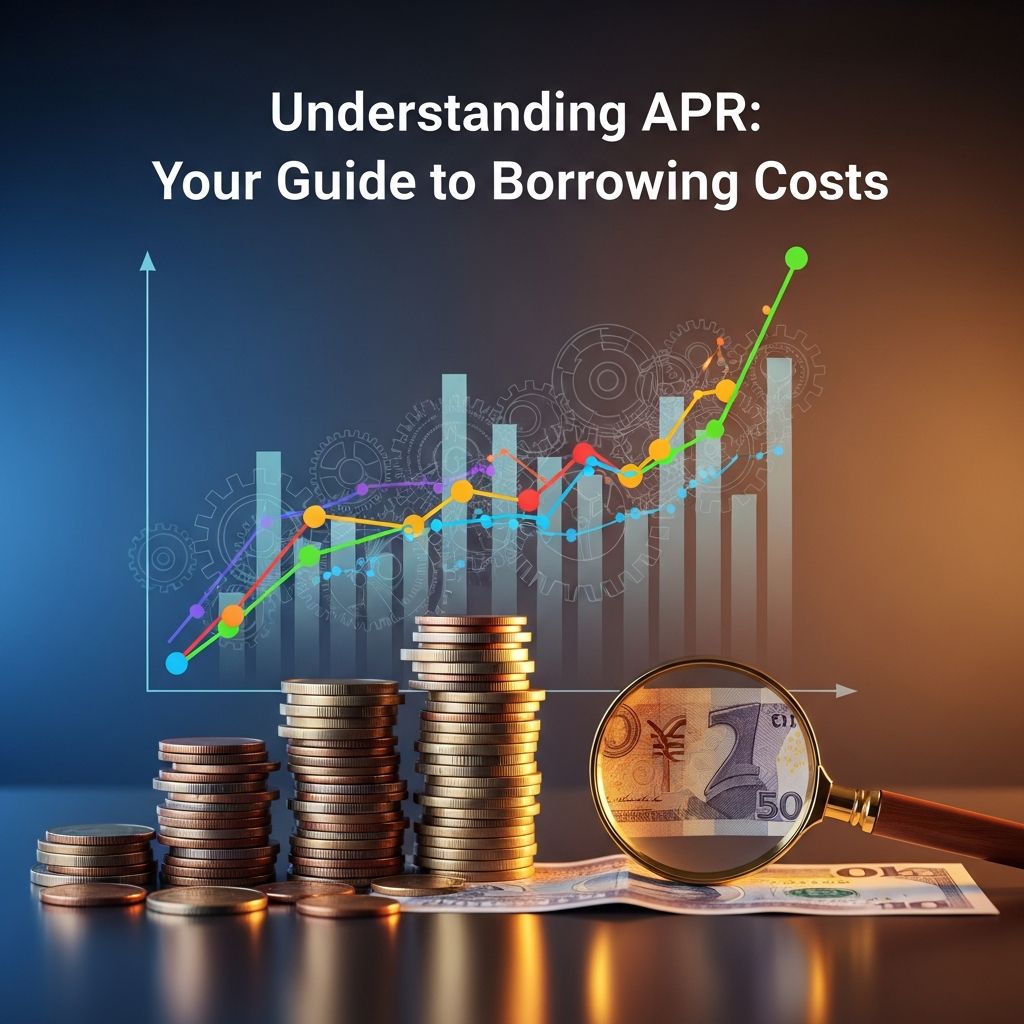
The
Annual Percentage Rate (APR)
serves as a standardized measure of the yearly cost of borrowing money, encompassing both interest and various associated fees. This figure, expressed as a percentage, enables consumers to evaluate and compare the total expense of different credit products effectively.Defining APR in Simple Terms
At its core, APR quantifies the true price of credit over a 12-month period. Unlike a basic interest rate, which only reflects the cost of borrowed funds, APR incorporates additional charges such as origination fees, closing costs, and discount points. For instance, on loans like mortgages or personal loans, these extras can significantly elevate the effective rate.
Congress mandates APR disclosure under the Truth in Lending Act to promote transparency, ensuring borrowers receive a comprehensive view of costs. This legal requirement levels the playing field, allowing apples-to-apples comparisons across lenders.
Key Components That Shape Your APR
- Interest Rate: The foundational percentage charged on the principal balance, calculated periodically (daily, monthly, or annually).
- Origination Fees: Upfront charges for processing the loan, often 1-5% of the borrowed amount.
- Closing Costs: Particularly relevant for mortgages, including appraisal fees, title insurance, and attorney costs.
- Discount Points: Optional prepaid interest to secure a lower rate; each point equals 1% of the loan amount.
- Other Fees: Mortgage insurance or broker fees, depending on the loan type.
These elements combine to form APR, providing a holistic snapshot. Note that for credit cards, APR typically mirrors the interest rate alone, excluding most fees unless specified.
APR Versus Interest Rate: Spotting the Differences
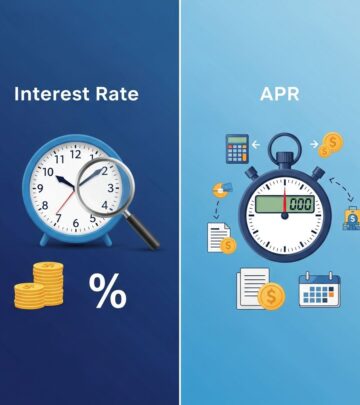
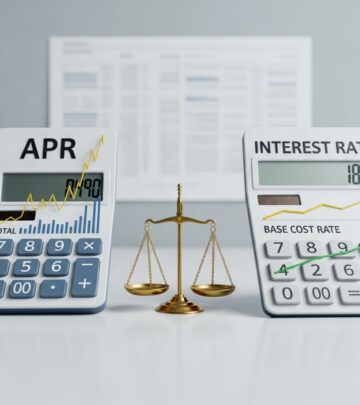
Many confuse APR with the interest rate, but they diverge in scope. The interest rate is purely the lender’s profit margin on the principal, while APR adds the full suite of loan expenses annualized.
| Aspect | Interest Rate | APR |
|---|---|---|
| Definition | Cost of borrowing principal only | Total yearly borrowing cost including fees |
| Includes Fees? | No | Yes (origination, closing, etc.) |
| Best For | Calculating monthly payments | Comparing loan offers |
| Typical Value | Lower than APR | Higher due to added costs |
For mortgages, APR often exceeds the interest rate by 0.5-1% owing to bundled fees. Credit cards sidestep this, as APR equates to the variable or fixed interest rate applied to balances.
How Lenders Calculate APR
APR computation follows strict formulas from Regulation Z, part of the Truth in Lending Act. It multiplies the periodic interest rate by payment periods annually, then amortizes fees into the total cost over the loan term.
Consider a $10,000 personal loan at 5% interest with $300 fees over 12 months: the APR might rise to 6.2%, reflecting the fees’ impact. Tools from the Consumer Financial Protection Bureau (CFPB) simplify verification.
Variable APRs, common on credit cards, fluctuate with the prime rate plus a margin tied to creditworthiness. Fixed APRs remain stable, offering predictability.
APR Across Common Credit Products
Credit Cards
Credit card APRs range from 15-30% typically, applied daily to unpaid balances. Pay in full monthly to sidestep charges entirely. Introductory 0% APR promotions last 12-21 months, ideal for large purchases if managed well.
Mortgages
Mortgage APRs incorporate extensive fees, aiding long-term cost comparisons. A 6% interest rate might yield a 6.4% APR with $5,000 closing costs on a $300,000 loan. Shorter terms amplify fee impact.
Auto and Personal Loans
These often feature simpler APRs, but watch for dealer add-ons inflating costs. Shop multiple lenders; a 0.5% APR drop on a $25,000 auto loan saves $600 over 5 years.
Why APR Matters for Your Wallet
Lower APRs slash total interest paid. On a $200,000 mortgage, dropping from 7% to 6.5% APR saves $30,000+ over 30 years. It empowers negotiation and reveals hidden fees.
Credit scores heavily influence APRs: excellent scores (740+) secure prime rates, while subprime scores face penalties up to 10% higher. Regular checks via Equifax or annualcreditreport.com maintain leverage.
Strategies to Secure the Lowest APR
- Boost your credit score through on-time payments and low utilization.
- Compare at least three lenders’ APRs, not just rates.
- Ask about waiving origination fees or points.
- Opt for shorter terms if affordable, as fees dilute less.
- Refinance when rates drop, but recalculate break-even points.
Pre-qualify without hard inquiries to gauge offers risk-free.
APR vs. APY: Earnings Perspective
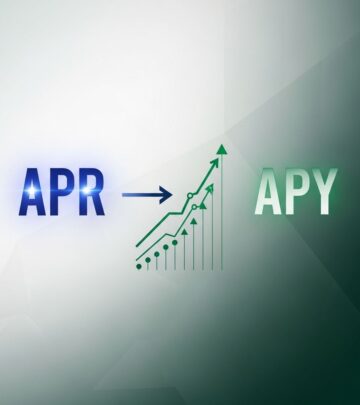
Don’t confuse APR (borrowing cost) with
APY
(Annual Percentage Yield), the growth rate on savings accounting for compounding. A 4% APY savings beats a 20% APR credit card debt every time.Frequently Asked Questions (FAQs)
What if APR is lower than the interest rate?
Rare, but possible with credits like rebates. Usually, APR exceeds due to fees.
Does APR change over time?
Fixed APRs don’t; variable ones adjust with market indexes.
Is APR the monthly payment basis?
No—payments derive from interest rate and amortization schedule.
How to calculate APR manually?
Use online calculators or CFPB tools for precision; formulas involve present value adjustments.
Does APR include insurance?
Not typically; optional products like PMI are separate unless lender-required.
Navigating APR Pitfalls
Teaser rates may spike post-promo. Introductory offers exclude fees sometimes. Always review the fine print and full disclosure. Long-term loans magnify small APR differences exponentially.
For 2026 borrowers, amid potential rate volatility, prioritizing APR remains crucial. Official tools from CFPB and lenders ensure informed choices.
References
- Annual percentage rate (APR) — Wex Legal Dictionary, Cornell Law School. 2021-12. https://www.law.cornell.edu/wex/annual_percentage_rate_(apr)
- What Is an Annual Percentage Rate (APR)? — Equifax. Accessed 2026. https://www.equifax.com/personal/education/credit-cards/articles/-/learn/what-is-apr/
- What is APR — Wells Fargo. Accessed 2026. https://www.wellsfargo.com/mortgage/learn/what-is-apr/
- Understanding APR (Annual Percentage Rate) — FHA.com. Accessed 2026. https://www.fha.com/define/apr
- What is the difference between a loan interest rate and the APR? — Consumer Financial Protection Bureau. Accessed 2026. https://www.consumerfinance.gov/ask-cfpb/what-is-the-difference-between-a-loan-interest-rate-and-the-apr-en-733/
- APR vs Interest Rate — Bank of America. Accessed 2026. https://www.bankofamerica.com/mortgage/learn/apr-vs-interest-rate/
- How APR Works and Your Credit Score Impact — Citizens Bank. Accessed 2026. https://www.citizensbank.com/learning/what-is-apr.aspx
Similar Articles








Read full bio of Sneha Tete