Understanding Annual Percentage Rate on Personal Loans
Learn how APR works, calculate it, and compare personal loan offers effectively.
What Is Annual Percentage Rate on Personal Loans?
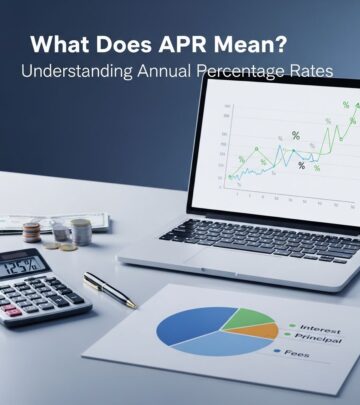
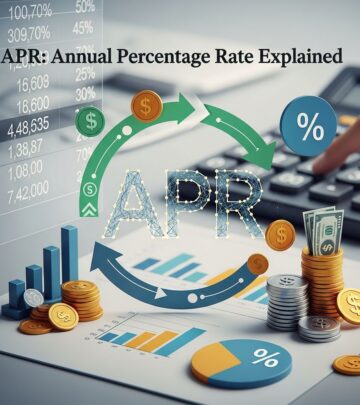
The annual percentage rate (APR) on a personal loan represents the total yearly cost of borrowing money, expressed as a percentage of the loan amount. Unlike the interest rate alone, the APR combines the interest rate charged by the lender with all additional fees and charges associated with the loan, providing a comprehensive view of what you’ll actually pay.
When you’re shopping for personal loans, understanding APR is crucial because it allows you to compare different loan offers on an apples-to-apples basis. Two lenders may quote different interest rates and fees, but by looking at their APRs, you can see which loan will truly cost you less money.
How Does APR Work on Personal Loans?
APR works by taking the base interest rate and adding all associated borrowing costs, then spreading those costs across the loan term on an annualized basis. Personal loans are typically fixed-rate installment loans, meaning your interest rate and APR won’t change over the entire repayment period.
The interest rate itself is determined by your credit score, credit history, debt-to-income ratio, and other financial factors assessed by the lender. Once the lender assigns an interest rate, they add any applicable fees to calculate your final APR.
Many lenders now display their APRs online, making it easier to compare multiple offers before you formally apply. Additionally, most lenders allow you to pre-qualify to check your estimated APR without affecting your credit score, giving you a risk-free way to explore your options.
Understanding APR vs. Interest Rate
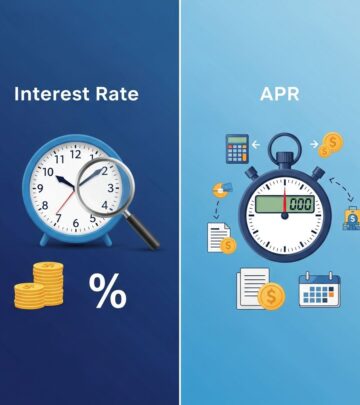
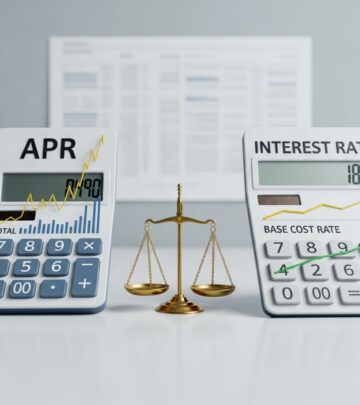
It’s important to distinguish between APR and interest rate, as these terms are often confused. The interest rate is simply the cost to borrow money expressed as a yearly percentage based on the principal loan amount—it’s the largest component of your loan’s cost. The APR, by contrast, is the effective rate after all loan expenses are factored in.
For example, if a lender quotes you a 10% interest rate on a $20,000 personal loan with 4% in fees, your APR will be approximately 11.71%—higher than the stated interest rate because of the additional costs.
This distinction matters significantly when comparing loans. Two lenders might offer similar interest rates but different fees, resulting in different APRs. By focusing on APR, you’re looking at the complete picture of borrowing costs.
What Costs Are Included in APR?
Several types of charges are factored into your APR calculation:
- Origination fees: These are upfront fees charged by the lender for processing and underwriting your loan, typically ranging from 1% to 12% of the loan amount. In some cases, lenders deduct this fee from your loan proceeds, so if you’re approved for $5,000, you may receive less than that amount.
- Administrative fees: Lenders may charge various administrative or processing fees, which are often calculated as a percentage of your loan amount.
- Interest charges: The core cost of borrowing, calculated on the principal amount.
It’s worth noting that while late fees and prepayment penalties may affect your total out-of-pocket costs, these are not factored into the APR calculation.
How to Calculate APR
Understanding the APR calculation can help you verify lender quotes and gain confidence in your borrowing decisions. Here’s the step-by-step process:
- Express your interest rate as a decimal (divide by 100)
- Multiply your rate by the principal amount you’re borrowing
- Multiply this result by the loan term in years
- Add all applicable loan fees to this amount
- Divide this total by the original loan amount
- Divide this result by the number of days in your loan term
- Multiply by 365
- Multiply by 100 to convert to a percentage
APR Calculation Example
Let’s walk through a practical example. Suppose you borrow $15,000 with a 13% interest rate, a three-year term, and a 9.99% origination fee:
- Interest rate as decimal: 0.13
- Interest cost: 0.13 × $15,000 = $1,950
- Total interest over 3 years: $1,950 × 3 = $5,850
- Origination fee: 9.99% × $15,000 = $1,498.50
- Combined fees and interest: $5,850 + $1,498.50 = $7,348.50
- Ratio to principal: $7,348.50 / $15,000 = 0.4899
- Daily rate: 0.4899 / 1,095 days = 0.000447397
- Annualized: 0.000447397 × 365 = 0.1633
- As percentage: 0.1633 × 100 = 16.33% APR
Notice that although the interest rate is 13%, the true cost of the loan when factoring in the origination fee is 16.33% APR.
Factors That Affect Your APR
Several factors influence the APR you’ll receive on a personal loan:
Credit Score and Credit History
Your creditworthiness is one of the most significant factors affecting your APR. Borrowers with excellent credit scores (720-850) typically qualify for estimated APRs around 11.81%, while those with fair credit (630-689) may face APRs near 17.93%, and borrowers with poor credit (300-629) could see rates around 21.65%.
Loan Term
The length of your repayment period affects your APR, with lower rates generally offered for shorter loan terms. Personal loans typically range from two to seven years, with shorter terms usually coming with more favorable rates.
Loan Amount and Fees
The amount you’re borrowing and the origination fee structure also impact your APR. Lender fees vary widely but commonly range from 1% to 12% of the loan amount. A higher origination fee will increase your APR, even if the base interest rate remains the same.
Income and Debt-to-Income Ratio
Lenders consider your income and existing debt obligations when determining your APR, as these factors indicate your ability to repay.
What Is the Average APR for Personal Loans?
According to recent data, the average APR for a personal loan is approximately 12.20% as of early 2026. However, APRs for personal loans can range significantly, from around 7% on the low end to as high as 36% on the upper end, depending on your creditworthiness and other factors.
As the Federal Reserve makes decisions about interest rates, advertised APRs tend to move accordingly. When the Fed cuts its target rate, lenders often lower their advertised rates as well. To secure the lowest available rates, you’ll need excellent credit and should compare multiple offers.
Comparing APRs: A Practical Example
Let’s say you’re comparing two personal loan offers for $5,000:
| Lender 1 | Lender 2 | |
|---|---|---|
| Interest rate | 10% | 11% |
| Origination fee | $250 (5% fee) | $100 (2% fee) |
| Monthly payment | $161 | $164 |
| APR | 13.4% | 12.4% |
Even though Lender 1 has a lower interest rate (10% vs. 11%), Lender 2 actually offers the better deal with an APR of 12.4% compared to 13.4%. This is because Lender 2’s lower origination fee outweighs the slightly higher interest rate.
How APR Impacts Monthly Payments and Total Costs
Your APR directly affects both your monthly payment and the total amount you’ll pay over the life of the loan. Consider these examples for a $15,000 personal loan with a 3-year term:
| APR | Monthly Payment | Total Interest Costs |
|---|---|---|
| 8% | $203 | $2,166 |
| 13% | $228 | $3,652 |
| 18% | $254 | $5,236 |
As you can see, a difference of just 5 percentage points in APR can significantly increase both your monthly obligation and total interest paid. A higher APR dramatically increases both metrics.
Tips for Getting the Best APR
To secure the most favorable APR on your personal loan, consider these strategies:
- Improve your credit score: Before applying, work on raising your credit score to qualify for lower rates. Even small improvements can result in meaningful savings.
- Compare multiple offers: Shop around with different lenders and carefully review their APRs rather than relying on advertised rates alone.
- Consider a shorter loan term: While monthly payments will be higher, shorter terms typically come with lower APRs.
- Borrow only what you need: The smaller the loan amount, the less you’ll pay in absolute interest and fees.
- Pre-qualify to check your estimated APR: Most lenders allow you to pre-qualify without a hard inquiry, letting you compare rates risk-free.
- Review all fees: Don’t focus solely on the interest rate; examine origination fees, administrative charges, and any other costs.
When to Choose a Higher APR
While the lowest APR is generally the best choice, there are limited situations where a higher APR loan might make sense:
- Better monthly cash flow: If a higher APR loan offers a longer term and significantly lower monthly payments that better fit your budget, the trade-off might be worthwhile.
- Lower upfront costs: If a lender with a slightly higher APR charges substantially lower origination fees, you might receive more of your approved amount in cash.
- Flexibility benefits: Some lenders with higher APRs may offer more flexible terms or fewer restrictions on prepayment.
Frequently Asked Questions
Q: What is the difference between APR and interest rate?
A: The interest rate is the basic cost to borrow money expressed as a percentage, while APR is the effective rate after all fees and charges are included. APR provides a more complete picture of your total borrowing costs.
Q: Is APR always higher than the interest rate?
A: Not necessarily. If a lender charges no fees, the APR equals the interest rate. However, because most lenders do charge fees (such as origination fees), the APR is typically higher than the stated interest rate.
Q: Can I negotiate my APR?
A: Your APR is primarily determined by your creditworthiness, but you can improve your position by raising your credit score before applying, comparing multiple lenders, or considering a shorter loan term—all of which may result in a lower APR.
Q: How often does APR change on a personal loan?
A: Personal loans typically have fixed APRs that don’t change over the loan term. Your monthly payment and APR remain constant from the first payment through loan payoff.
Q: Are late fees and prepayment penalties included in APR?
A: No, late fees and prepayment penalties are not factored into the APR calculation, though they can increase your total out-of-pocket costs if you incur them.
Q: What’s considered a good APR for a personal loan?
A: A good APR depends on current market rates and your credit profile. As of early 2026, the average is around 12.20%, with excellent credit borrowers typically qualifying for rates below 12% and poor credit borrowers facing rates above 20%.
References
- What Is APR On A Loan? Plus, How To Compare Rates — Bankrate. 2026-01-07. https://www.bankrate.com/loans/personal-loans/what-is-the-apr-on-a-personal-loan/
- What Is an Annual Percentage Rate (APR) on a Personal Loan? — NerdWallet. https://www.nerdwallet.com/personal-loans/learn/annual-percentage-rate-personal-loan
- APR: Why knowing the Annual Percentage Rate can help you make better borrowing decisions — Achieve. https://www.achieve.com/learn/personal-loans/what-is-apr
- What is APR and How Does It Work? — HFS FCU. https://hfsfcu.org/education/what-is-apr-how-does-it-work/
- What is APR — Wells Fargo. https://www.wellsfargo.com/mortgage/learn/what-is-apr/
- APR vs. Interest Rate on a Loan: Key Differences — Discover. https://www.discover.com/personal-loans/resources/consolidate-debt/apr-vs-interest-rate/
- What is the difference between a loan interest rate and the APR? — Consumer Finance Protection Bureau. https://www.consumerfinance.gov/ask-cfpb/what-is-the-difference-between-a-loan-interest-rate-and-the-apr-en-733/
Similar Articles








Read full bio of Sneha Tete