Adjustable-Rate Mortgages: 6 ARM Types And What They Mean
Complete guide to ARM loans, rate adjustments, and financial planning
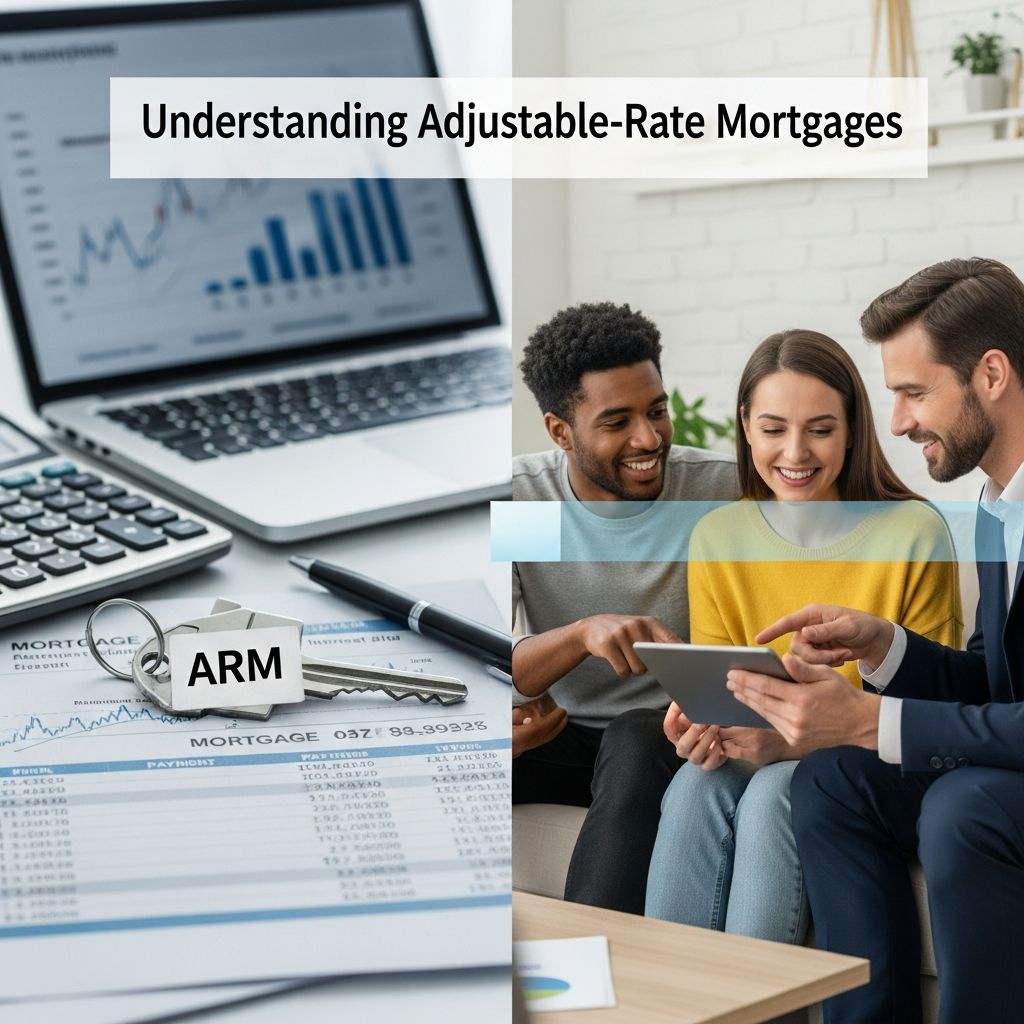
Understanding Adjustable-Rate Mortgages: A Comprehensive Overview
When searching for the right mortgage product, homebuyers face a critical decision between fixed-rate and variable-rate loan options. Among the most discussed alternatives to traditional fixed-rate mortgages is the adjustable-rate mortgage, commonly referred to as an ARM or variable-rate mortgage. This financing approach has attracted considerable interest among borrowers seeking lower initial payments, though it comes with both advantages and potential risks that warrant careful consideration.
What Defines an Adjustable-Rate Mortgage?
An adjustable-rate mortgage is fundamentally a home loan where the interest rate fluctuates over the loan’s lifespan in response to broader market conditions. Unlike traditional fixed-rate mortgages where your interest rate remains constant throughout the entire loan term, ARMs feature a dual-phase structure that separates the borrowing experience into distinct periods with different rate characteristics.
The primary appeal of adjustable-rate mortgages centers on their introductory rates, which are typically substantially lower than comparable fixed-rate mortgage offerings. This initial advantage makes ARMs particularly attractive to borrowers who anticipate relocating, refinancing, or selling their properties before the adjustment period commences.
The Two-Phase Structure of ARM Loans
Understanding how adjustable-rate mortgages function requires examining their fundamental structure, which divides the loan experience into two distinct operational phases.
The Fixed-Rate Introductory Phase
Every ARM begins with a fixed-rate period during which your interest rate remains constant and unchanged. This initial phase typically spans 3, 5, 7, or 10 years, though borrowers may negotiate different timeframes with their lenders. During this protective period, your monthly principal and interest payments remain identical from month to month, providing predictability and stability in your housing costs.
The duration of this introductory phase significantly influences the overall risk profile of your mortgage. Longer fixed periods provide extended protection against rate increases, while shorter periods offer lower initial monthly payments but expose you to adjustment risk sooner.
The Adjustment Phase
Once your fixed-rate period concludes, your mortgage enters the adjustment phase, where your interest rate can increase or decrease at regularly scheduled intervals. These adjustments typically occur either every six months or annually, though the specific adjustment frequency depends on your particular loan terms.
The adjustment phase continues for the remaining duration of your loan, usually extending across the final 20 to 25 years of a 30-year mortgage. During this extended period, your monthly payments may fluctuate substantially based on prevailing market interest rates, potentially creating significant variations in your annual housing expenses.
Decoding ARM Terminology and Naming Conventions
Mortgage lenders employ a standardized labeling system for adjustable-rate mortgages that immediately communicates the loan’s structural characteristics. This nomenclature consists of two numbers separated by a forward slash, such as 5/1, 5/6, 7/1, 7/6, 10/1, or 10/6.
The first number indicates the duration of your fixed-rate introductory period, measured in years. For example, a mortgage labeled as 5/1 ARM features five years of fixed-rate protection, while a 10/6 ARM provides ten years of fixed rates.
The second number specifies the frequency with which your interest rate adjusts following the initial period. A “1” indicates annual adjustments, while a “6” represents semi-annual adjustments occurring every six months. Therefore, a 5/6 ARM would maintain fixed rates for five years, then adjust every six months thereafter.
| ARM Type | Fixed Period | Adjustment Frequency | Common Use Case |
|---|---|---|---|
| 5/1 ARM | 5 years | Annual | Short-term owners |
| 5/6 ARM | 5 years | Every 6 months | Frequent adjusters |
| 7/1 ARM | 7 years | Annual | Medium-term owners |
| 7/6 ARM | 7 years | Every 6 months | Flexible buyers |
| 10/1 ARM | 10 years | Annual | Long-term owners |
| 10/6 ARM | 10 years | Every 6 months | Maximum protection |
How Interest Rates Adjust: The Index and Margin Framework
Your adjustable-rate mortgage’s interest rate after the initial period depends on two critical financial components that work together to determine your new rate. Understanding this mechanism is essential for anticipating potential payment changes.
The Index Component
The index represents a benchmark interest rate that fluctuates in response to broader economic and market conditions. Lenders typically tie ARM indices to established financial benchmarks such as the U.S. Treasury rates or the Secured Overnight Financing Rate. These indices move with overall market interest rates, so when national borrowing costs increase, your index increases as well.
The Margin Component
Complementing the index is the margin, a fixed percentage that your lender establishes at the time you originate your mortgage. This margin remains constant throughout your entire loan term and represents your lender’s profit component. While the index fluctuates with market conditions, your margin never changes, providing at least partial consistency in your rate calculations.
Rate Calculation Formula
Your adjusted interest rate is determined through a straightforward mathematical formula: Index Rate + Margin = Your New Mortgage Interest Rate. For example, if your margin is 2.5% and the current index rate is 3%, your adjusted rate would be 5.5%.
Interest Rate Caps: Your Protection Against Excessive Increases
Recognizing the potential for dramatic payment shock when interest rates adjust, ARM structures include protective mechanisms called interest rate caps. These caps establish maximum limits on how substantially your interest rate can increase at each adjustment period and over the life of your loan.
Rate caps are expressed as a series of three numbers, such as 2/2/5, each representing a different limitation phase.
Initial Adjustment Cap
The first number in your cap structure indicates the maximum percentage point increase permitted at your very first rate adjustment following the introductory period. Using the 2/2/5 example, your rate cannot increase more than 2% at your initial adjustment, regardless of how much the underlying index has risen.
Subsequent Adjustment Cap
The middle number establishes the ceiling for rate increases at each adjustment period after your initial adjustment. In the 2/2/5 structure, this typically standardizes at 2%, meaning your rate cannot jump more than 2% at any subsequent adjustment period.
Lifetime Adjustment Cap
The final number represents your lifetime protection ceiling—the absolute maximum your interest rate can increase over the entire loan term, measured from your original starting rate. The “5” in the 2/2/5 structure means your rate can never exceed your initial rate plus 5 percentage points, providing a critical ceiling regardless of market conditions.
These protective caps make interest rate adjustments more manageable by preventing the catastrophic payment increases that could otherwise occur during periods of rapidly rising interest rates.
Evaluating ARM Suitability for Your Financial Situation
Determining whether an adjustable-rate mortgage aligns with your financial goals and circumstances requires honest assessment of several factors.
Ideal ARM Candidates
ARMs work particularly well for borrowers in specific situations:
- Buyers confident in their ability to manage potential payment increases from rate fluctuations
- Homeowners planning to sell their properties before the adjustment period begins
- Borrowers who intend to refinance before rates adjust significantly
- Those seeking to minimize initial monthly payments during early homeownership years
- Investors comfortable with payment volatility in exchange for lower introductory rates
When ARMs May Present Challenges
Conversely, adjustable-rate mortgages may create difficulties for certain borrowers:
- Those planning to remain in their homes for 10+ years without refinancing
- Individuals with tight monthly budgets lacking flexibility for payment increases
- Borrowers uncertain about future income stability or employment
- Homeowners uncomfortable with payment unpredictability
- Those unable to qualify for favorable refinancing if rates spike dramatically
Conforming ARMs and Lending Standards
Not all adjustable-rate mortgages follow identical structures. Conforming ARMs represent loans meeting specific criteria established by major secondary mortgage market participants, including Fannie Mae and Freddie Mac. These standardized products can be sold by originating lenders to secondary market investors, often making them more accessible and competitively priced.
To qualify for a conforming ARM, borrowers typically must satisfy requirements including a minimum credit score of 620, a maximum debt-to-income ratio of 50%, and provide a down payment of at least 3%. These standardized criteria facilitate the secondary market’s ability to purchase and redistribute ARM loans among investors.
ARMs Compared to Fixed-Rate Mortgages
| Feature | Adjustable-Rate Mortgage | Fixed-Rate Mortgage |
|---|---|---|
| Initial Interest Rate | Lower, attractive rates | Higher, stable rates |
| Rate Stability | Changes over time | Remains constant |
| Monthly Payments | Fluctuate with adjustments | Never change |
| Predictability | Limited beyond fixed period | Complete predictability |
| Best For | Short-term owners | Long-term owners |
| Interest Rate Risk | High during adjustment phase | None |
Strategic Considerations When Selecting an ARM
Before committing to an adjustable-rate mortgage, conduct thorough analysis of multiple factors:
- Rate cap structure: Ensure you can afford payments at the lifetime cap maximum
- Your timeline: Confirm your expected occupancy aligns with the fixed-rate period
- Financial flexibility: Verify your budget can accommodate potential payment increases
- Market conditions: Consider current interest rate environment and economic forecasts
- Refinancing options: Evaluate whether refinancing opportunities will exist if rates spike
- Loan comparison: Calculate total costs comparing multiple ARM options and fixed-rate alternatives
Conclusion
Adjustable-rate mortgages represent a sophisticated financing tool offering lower initial costs in exchange for future rate volatility. Their dual-phase structure, protective rate caps, and standardized terminology provide transparency and manageability compared to other variable-rate products. However, they require careful consideration of personal circumstances, financial stability, and homeownership timelines. By understanding how ARMs function, how rates adjust, and whether your situation aligns with ARM characteristics, you can make informed decisions about whether variable-rate financing supports your homeownership objectives.
References
- What is an adjustable-rate mortgage (ARM)? — Rocket Mortgage. Accessed February 2026. https://www.rocketmortgage.com/learn/adjustable-rate-mortgage
- Adjustable Rate Mortgages (ARMs) Explained — Home Financial Credit Union VT. Accessed February 2026. https://www.hfcuvt.com/post/adjustable_rate_mortgages_explained.html
- What Is an Adjustable-Rate Mortgage? — PNC Insights. Accessed February 2026. https://www.pnc.com/insights/personal-finance/borrow/what-is-adjustable-rate-mortgage.html
- Considering an Adjustable-Rate Mortgage? Here’s What You Should Know — Freddie Mac. Accessed February 2026. https://myhome.freddiemac.com/blog/homebuying/considering-adjustable-rate-mortgage-heres-what-you-should-know
- What is the difference between a fixed-rate and adjustable-rate mortgage (ARM) loan? — Consumer Finance Protection Bureau. Accessed February 2026. https://www.consumerfinance.gov/ask-cfpb/what-is-the-difference-between-a-fixed-rate-and-adjustable-rate-mortgage-arm-loan-en-100/
Similar Articles








Read full bio of Sneha Tete