Understanding Credit Scores in the 670 Range
Navigate financial opportunities with a 670 credit score and learn pathways to improvement.
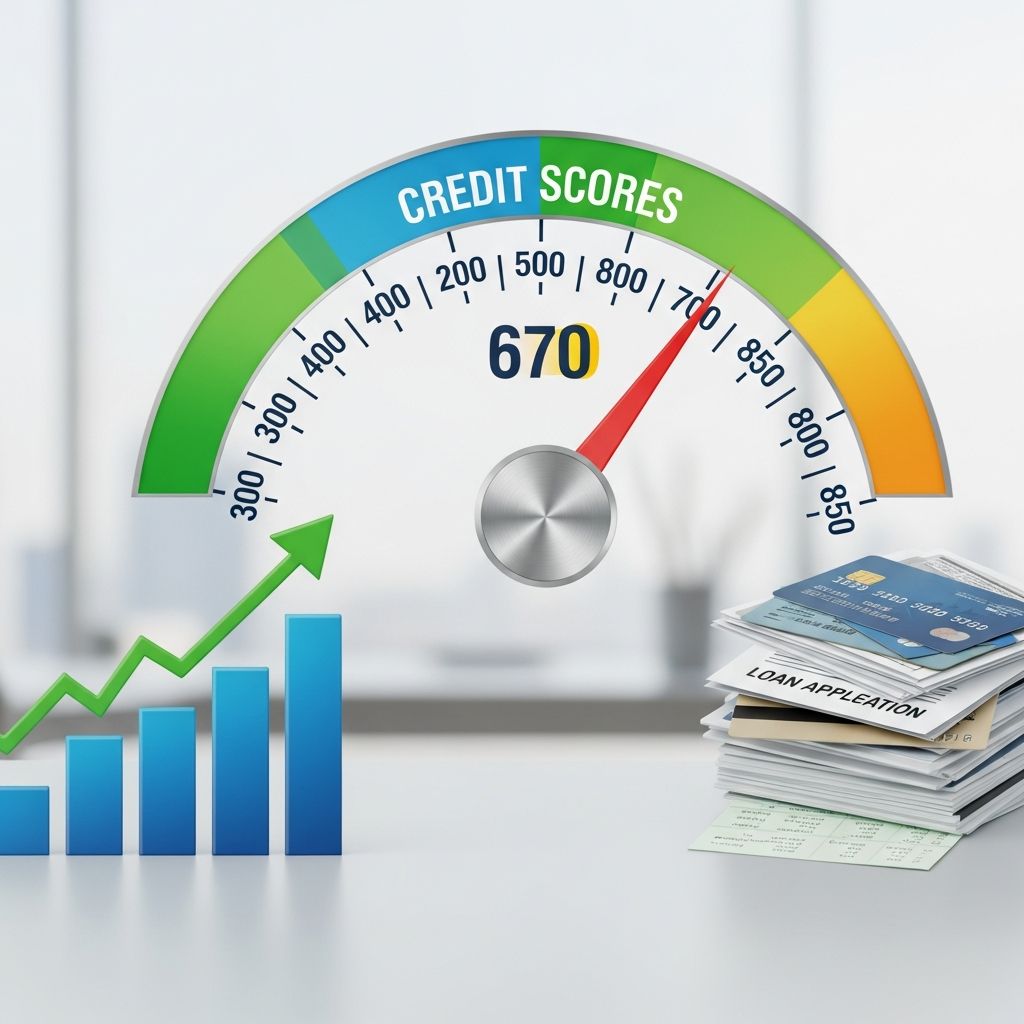
Your credit score serves as a numerical snapshot of your financial reliability and creditworthiness. A score of 670 places you at a pivotal position within the credit spectrum—one that opens certain doors while inviting you to explore pathways toward greater financial opportunity. Understanding what this score represents and how to strategically leverage or improve it is essential for making informed decisions about borrowing, credit products, and long-term financial planning.
Where Your Score Stands in the Credit Landscape
A credit score of 670 is classified as “good” according to the primary credit scoring models used by lenders and financial institutions. This categorization places your score within the range of 670-739 on the FICO scale, positioning you near the lower boundary of the good category while still representing a meaningful achievement in creditbuilding.
To contextualize this rating, it’s helpful to understand the broader credit score landscape. The average U.S. consumer maintains a FICO score of approximately 714, which falls squarely within the good range. Your 670 score is slightly below this average but demonstrates that you’ve established a track record of managing credit responsibly. Lenders view borrowers with scores in this range as generally acceptable prospects for credit extension, though they may exercise more caution than they would with higher-scoring applicants.
What a 670 Score Reveals About Your Credit Profile
The composition of your credit history at the 670 level tells an informative story. Research indicates that approximately 65% of individuals with a 670 FICO score have experienced at least one late payment (past due 30 days) in their credit history. This suggests that while your current performance may be solid, your past contains minor blemishes that have influenced your standing.
At this score level, your credit profile likely exhibits one of these characteristics:
- A relatively short credit history marked by responsible payment behavior and prudent credit management
- A longer credit history that includes occasional setbacks, such as missed or late payments, but demonstrates overall improvement and commitment to meeting obligations
- A tendency toward moderate-to-high credit utilization rates, suggesting you’re carrying balances closer to your limits than optimal
The typical consumer with a 670 score maintains approximately 4.3 credit card accounts and shows diversification in their credit mix, with roughly 66% holding auto loans and 36% carrying mortgages. This variety in credit types demonstrates your experience managing different borrowing scenarios.
Loan and Credit Product Eligibility at 670
One of the primary concerns for individuals at the 670 level is understanding what financial products and loans they can realistically access. The good news is that this score opens meaningful doors to major credit opportunities.
Mortgage Qualification Prospects
With a 670 credit score, you may qualify for mortgage financing, depending on other financial factors in your profile. Most conventional mortgage lenders view the 670-739 range as acceptable for borrowing consideration. However, your specific approval will depend on factors beyond your credit score, including your debt-to-income ratio, employment stability, savings reserves, and the size of your down payment. FHA loans, which are government-backed programs designed to help borrowers with lower credit profiles, often have minimum score requirements around 580, meaning you’re well-positioned for these options.
Auto Financing Availability
Auto lenders typically view 670 as an acceptable score for loan approval. Like mortgage lenders, they’ll evaluate your entire financial picture, but your score shouldn’t be a primary barrier to securing vehicle financing. Keep in mind that interest rates on auto loans are closely tied to credit scores, so while you’ll likely gain approval, the terms may not reflect the best possible rates available to those with higher scores.
Credit Card Access
Credit card issuers view 670 as a legitimate qualifying score. You should expect to gain approval for many mainstream credit card products, including some cards offering travel rewards, dining benefits, or cash-back incentives. However, the premium rewards cards with the most generous benefits packages typically target applicants with scores above 740, which means you may not qualify for the most elite offerings. The cards available to you will likely feature moderate rewards structures and reasonable annual percentage rates, though not the absolute lowest available in the market.
Interest Rate Implications of Your Score
One of the most tangible impacts of your 670 score manifests in the interest rates you’re offered. Lenders use credit scores as a primary mechanism for pricing risk, meaning lower scores correlate with higher borrowing costs.
With a score in the good range, you’ll qualify for significantly better rates than those offered to borrowers with fair or poor credit. However, you won’t access the absolute lowest rates available, which are typically reserved for those in the very good (740-799) or exceptional (800+) ranges. This difference may seem modest for a single loan but compounds substantially over the life of longer-term obligations like mortgages or student loans.
For example, a difference of just 0.5-1% on a 30-year mortgage can translate to thousands of dollars in additional interest paid over time. This reality underscores why incrementally improving your score toward the very good range can deliver meaningful financial benefits.
The Credit Utilization Challenge at 670
Credit utilization—the percentage of your total available credit limits that you’re currently using—significantly influences your credit score. This factor accounts for approximately 30% of your FICO calculation. For individuals at the 670 level, utilization rates tend to be higher than optimal, contributing to the lower end of the good range classification.
Financial experts recommend maintaining utilization below 30% across all accounts combined. If your accounts are consistently carrying balances above this threshold, you’re inadvertently suppressing your credit score. The positive aspect of this dynamic is its malleability—you can improve your score relatively quickly by paying down balances and reducing utilization, even without waiting for the passage of time.
Pathways to Score Improvement
A 670 score represents solid ground, but the jump to very good (740-799) or exceptional (800+) territory unlocks substantially better borrowing terms and financial opportunities. Here are the primary mechanisms for advancing your creditworthiness:
Payment History Excellence
Payment history constitutes approximately 35% of your FICO score—the single largest factor. This is also the most straightforward element to control. Moving forward, ensure that every payment, regardless of size, arrives on or before the due date. Setting up automatic payments can eliminate the risk of inadvertent late payments. If you have any past-due accounts currently, prioritize bringing them current and then maintaining perfect payment performance going forward. As late payments age (typically falling off your report after seven years), their impact gradually diminishes.
Strategic Debt Reduction
Beyond reducing utilization rates, systematically paying down total debt levels demonstrates your commitment to financial responsibility. This signals to lenders that you’re not accumulating new obligations and are instead managing existing ones more aggressively. Focus on paying more than minimums when possible, prioritizing high-utilization accounts first.
Credit Mix Optimization
Your credit portfolio should ideally include both revolving credit (credit cards) and installment loans (mortgages, auto loans, personal loans). If your profile lacks diversity—for example, if you only have credit cards—you might consider a small installment loan or ensuring you maintain both types of credit. However, avoid taking on debt solely to improve your score, as this could actually harm your overall financial health.
Limiting New Credit Inquiries
Each time you apply for new credit, lenders conduct a hard inquiry, which briefly impacts your score. While the effect is temporary, accumulating multiple inquiries in a short period can signal financial distress. Space out credit applications and avoid unnecessary applications.
Practical Considerations for Borrowing Decisions
With a 670 score, several strategic considerations should guide your borrowing decisions:
| Financial Product | Approval Likelihood | Interest Rate Expectation | Strategic Consideration |
|---|---|---|---|
| Mortgage | Good | Above average | Consider improving score before application to save on rates |
| Auto Loan | Good | Above average | Shop multiple lenders; rates vary significantly |
| Personal Loan | Good | Moderate-to-high | Consider consolidating high-interest debt |
| Credit Card | Good | Above average | Look for cards with reasonable benefits matching your spending |
Beyond Borrowing: Broader Financial Implications
Your 670 credit score influences dimensions of your financial life beyond loan qualification. Many insurance companies factor credit scores into risk assessment models, using them to help determine insurance premiums. A good credit score can help you secure lower insurance rates, potentially saving hundreds annually on auto, home, and other policies.
Additionally, landlords frequently review credit histories and scores when evaluating rental applications. A 670 score positions you as a reasonably dependable tenant, though property managers might hesitate if your score drops further into the fair range. This score level generally supports successful lease applications, particularly in competitive markets where your income and employment stability are also strong.
Maintaining Your Current Standing
While pursuing improvement, protecting your current 670 standing is equally important. The difference between remaining in the good range and slipping into fair (580-669) is significant in terms of lender perception and available products. Key protective measures include:
- Never missing payment deadlines, as even one late payment can significantly impact your score
- Monitoring your credit reports regularly for errors or fraudulent accounts
- Avoiding rapid increases in overall debt levels
- Maintaining active, positive credit accounts even if unused
Frequently Asked Questions About 670 Credit Scores
Is 670 considered good or bad?
A 670 score is categorized as “good,” falling within the 670-739 FICO range. While it’s below the U.S. average of 714, it’s substantially better than fair (580-669) or poor (300-579) ratings and enables access to most mainstream credit products.
Can I get a mortgage with a 670 score?
Yes, mortgage approval is generally possible with a 670 score, though specific terms depend on your overall financial profile. Lenders will examine your debt-to-income ratio, employment history, and down payment amount alongside your credit score.
What’s the fastest way to improve my 670 score?
The most immediate impact typically comes from reducing credit utilization below 30% and ensuring perfect payment performance going forward. These changes can show measurable improvement within 1-3 months.
How long will it take to reach 740+?
The timeline depends on your specific situation but typically ranges from 6-18 months if you maintain consistent responsible credit behavior and actively reduce debt.
Conclusion: Your 670 Score as a Starting Point
A 670 credit score represents meaningful progress on your financial journey. You’ve established yourself as a borrower worthy of mainstream credit access, with approval prospects for mortgages, auto loans, credit cards, and other financial products. While this range offers solid opportunities, recognizing that higher scores unlock better terms and more exclusive products should motivate your continued financial discipline.
Your score is not static—it reflects your current credit behaviors and history but remains subject to change based on your future actions. By focusing on on-time payments, managing utilization strategically, and maintaining a diversified credit mix, you can methodically advance toward the very good range, unlocking even greater financial flexibility and potentially saving thousands in interest costs over your lifetime.
References
- 7 Benefits of Building a Good Credit Score — Ally Bank. https://www.ally.com/stories/credit/benefits-of-a-good-credit-score/
- 670 Credit Score: Is it Good or Bad? — Experian. https://www.experian.com/blogs/ask-experian/credit-education/score-basics/670-credit-score/
- 670 Credit Score: A Guide to Credit Scores — Chase Bank. https://www.chase.com/personal/credit-cards/education/credit-score/670-credit-score
- What is a FICO Score and Why is it Important? — myFICO. https://www.myfico.com/credit-education/what-is-a-fico-score
- What is a Good Credit Score? — U.S. Bank. https://www.usbank.com/credit-cards/credit-card-insider/building-credit/what-is-a-good-credit-score.html
Similar Articles








Read full bio of Sneha Tete