669 Credit Score: What It Means And How To Improve
Navigate borrowing options and pathways to improve your fair credit standing

Your credit score is one of the most important numbers in your financial life. It influences whether lenders approve your applications, what interest rates you receive, and even affects decisions by insurance companies and landlords. If you have a score of 669, you’re in what’s commonly referred to as the “fair credit” range—a position that comes with both limitations and opportunities. Understanding where your score stands and what steps you can take will help you make informed financial decisions and plan a path toward stronger creditworthiness.
Where Your 669 Score Fits in the Credit Spectrum
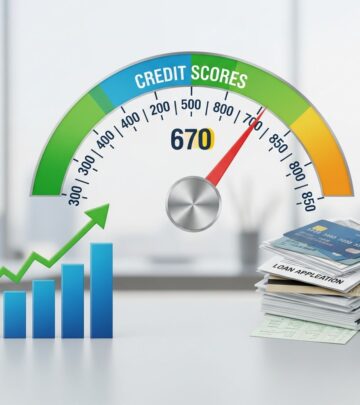
Credit scores range from 300 to 850, and they’re divided into distinct categories that tell lenders how reliably you’ve managed credit in the past. A 669 score places you in the fair credit category, specifically within the 580-669 range. While this score is below the national average—which stands around 714-717—it’s important to recognize that it’s not considered poor credit either.
Think of credit scores as a spectrum of financial trustworthiness. Borrowers with exceptional scores (800+) represent the most reliable borrowers in the eyes of lenders, while those with poor scores (300-579) face significant barriers to credit access. Your 669 score indicates that you’re a moderate-risk borrower—lenders see signs of past financial challenges or current debt concerns, but these don’t necessarily disqualify you from accessing credit products.
The key distinction is that having fair credit doesn’t lock you out of borrowing opportunities. Instead, it typically means you’ll encounter higher interest rates, stricter approval requirements, and fewer premium product options compared to borrowers with good or excellent credit.
How Lenders View Your Creditworthiness
When you apply for credit with a 669 score, lenders classify you as a subprime borrower—someone who represents greater financial risk than prime borrowers. This assessment is based on patterns they’ve observed in your credit history, which typically reflects one or more of the following:
- A higher debt-to-income ratio or excessive outstanding balances
- Late or missed payments on past credit accounts
- A limited credit history or recent negative events
- Hard inquiries from multiple creditors in a short timeframe
- Collections accounts or charge-offs
Lenders use this risk assessment to protect themselves. By charging higher interest rates to fair-credit borrowers, they compensate for the statistical likelihood that some borrowers in this category may default on their obligations. From your perspective, this means any credit you obtain will cost more in interest charges compared to what a prime borrower would pay for identical loans.
Credit Card Approval: What to Expect
The question many people ask is whether they can obtain a credit card with a 669 score. The answer is yes, though your options will be more limited than those available to borrowers with better credit.
Most credit card issuers don’t publicly disclose their minimum credit score requirements, but industry practice shows that some will approve applicants in the fair credit range. You’re unlikely to qualify for premium rewards cards offering travel benefits, cash back on all purchases, or exclusive perks. However, you may be approved for:
- Basic credit cards with modest credit limits and standard features
- Store credit cards from retail chains
- Secured credit cards that require a cash deposit
- Cards specifically designed for fair-credit borrowers
If you’re approved for a credit card, anticipate paying an annual percentage rate (APR) in the double digits. Compare multiple offers before accepting, as APRs can vary significantly even among fair-credit products. Additionally, watch for annual fees, which are more common on cards targeting this market segment.
Auto Loans and Vehicle Financing
Purchasing a vehicle when you have a 669 credit score is definitely possible, though financing costs will reflect your credit profile. The auto lending industry has proven particularly willing to extend credit to fair-credit borrowers, recognizing that the vehicle itself serves as collateral.
Interest rates on auto loans vary considerably based on credit tier. As of recent data, borrowers with prime credit (720+) receive rates around 5.34% for a 60-month new vehicle loan, while those in the 620-659 range face average rates of 11.76%, and those with 590-619 scores see rates around 15.92%. Your 669 score suggests you’d fall somewhere between these lower ranges, likely seeing APRs in the 9-12% range, though individual offers depend on factors like down payment size, loan term, and the lender.
To improve your financing terms, consider:
- Saving for a larger down payment to reduce the financed amount
- Shortening the loan term if your budget allows
- Shopping rates with multiple lenders, including credit unions and online lenders
- Getting a cosigner with better credit
Mortgage Options and Homeownership Possibilities
Homeownership with a 669 credit score is achievable through specific loan programs designed to accommodate fair-credit borrowers. Your primary pathway is through FHA (Federal Housing Administration) loans, which accept credit scores of 580 and above.
FHA loans offer meaningful advantages for fair-credit borrowers:
- Lower down payment requirements (as little as 3.5% of the purchase price)
- More flexible debt-to-income ratio requirements
- Established programs with standardized guidelines
However, these loans also come with trade-offs. FHA mortgages require mortgage insurance premiums—both an upfront insurance premium (typically 1.75% of the loan amount) and annual premiums based on your loan-to-value ratio. These insurance costs protect the lender but increase your monthly payment.
Conventional mortgages require credit scores of 620 or higher, so you technically qualify for conventional financing as well. However, conventional lenders typically charge higher interest rates for fair-credit borrowers and may require larger down payments (often 10-15%). Comparing FHA and conventional options specific to your situation is essential.
Understanding the Cost of Fair Credit
The financial impact of having fair credit rather than good credit extends across all borrowing categories. Consider this comparison over time:
| Loan Type | Fair Credit Rate (Est.) | Good Credit Rate (Est.) | Monthly Difference |
|---|---|---|---|
| Auto Loan ($25,000, 60-month) | 11% | 5.5% | $75-90 more |
| Mortgage ($300,000, 30-year) | 6.8% | 5.2% | $400-450 more |
| Credit Card APR | 22-24% | 14-16% | Varies by balance |
Over the life of a 30-year mortgage, this difference can amount to $150,000 or more in additional interest costs. This underscores why improving your credit score yields substantial financial benefits.
Beyond Loans: How Your Score Affects Your Wallet
Your credit score’s impact extends into non-lending areas that many people overlook. Insurance companies, for instance, often check credit scores when setting auto and homeowners insurance premiums. A 669 score may result in higher insurance costs than those offered to borrowers with good credit.
Utility companies may require security deposits for electricity, water, internet, or cable services if your credit score is fair. Prime borrowers often skip these deposits entirely. Similarly, cell phone companies consider credit scores when deciding whether to finance a new phone or require prepayment.
Landlords frequently review credit scores as part of tenant screening. While a 669 score won’t automatically disqualify you, it may lead to requests for a larger security deposit, a cosigner, or proof of higher income to offset perceived risk.
Strategic Steps to Elevate Your Credit Score
Improving from fair credit (580-669) to good credit (670-739) or beyond is an achievable goal that requires consistent action over time. The path forward involves addressing the factors that contribute to your current score.
Payment History Priority
Payment history comprises approximately 35% of your FICO score—the largest single factor. Establishing a pattern of on-time payments is your most powerful improvement tool. This means paying at least the minimum due by the due date on all accounts, every month. Even one late payment can damage your score significantly, while several consecutive on-time payments rebuild trust with lenders.
Debt Reduction Strategy
Credit utilization—the percentage of available credit you’re using—accounts for roughly 30% of your score. If you’re carrying balances near your credit limits, reducing these balances improves your score. Target bringing utilization below 30% on each account, and ideally below 10% for maximum impact. This might involve:
- Paying down existing balances using the avalanche method (highest interest first) or snowball method (smallest balance first)
- Requesting credit limit increases from existing issuers to lower utilization ratios
- Avoiding new charges while paying down existing debt
Credit Mix and Age Considerations
Lenders view borrowers who successfully manage different credit types—revolving credit like cards and lines of credit, plus installment loans like car or personal loans—more favorably. This accounts for 10% of your score. Similarly, the age of your accounts matters; older accounts demonstrate longer credit history and count for another 15%. Avoid closing old credit cards, even if you’ve paid them off, as closing accounts shortens your average account age.
Minimizing New Credit Inquiries
Hard inquiries (when a lender checks your credit during an application) can temporarily lower your score by a few points. Multiple inquiries in a short period look like financial desperation. Space out credit applications, and avoid shopping for credit you don’t need.
Timeline Expectations and Patience
Improving your credit score from 669 to 700+ typically requires 6-12 months of consistent responsible behavior, depending on what’s dragging your score down. If you have recent delinquencies or collections, improvement takes longer. Negative items fall off your credit report after seven years (ten years for bankruptcies), at which point your score typically improves noticeably.
The key is maintaining momentum. One missed payment can undo months of progress, so treat on-time payments as non-negotiable.
Frequently Asked Questions
Q: Will a 669 credit score prevent me from getting loans?
A: No. While you may face higher interest rates and stricter approval conditions, credit remains accessible. Most lenders will work with fair-credit borrowers.
Q: How long does it take to improve from 669 to good credit?
A: With consistent on-time payments and debt reduction, you could reach 700+ within 6-12 months, though individual timelines vary.
Q: Should I apply for multiple credit cards to improve my score?
A: No. Multiple applications generate hard inquiries that lower your score. Apply strategically for credit you actually need.
Q: Does checking my own credit score lower it?
A: No. Personal credit checks are soft inquiries and don’t affect your score. Check your credit annually at annualcreditreport.com.
Moving Forward with Purpose
A 669 credit score represents a transition point in your financial journey. It signals that past challenges exist, but it doesn’t define your financial future. By understanding what lenders see when they review your score, recognizing the real costs of fair credit, and committing to systematic improvement, you can move toward better financial opportunities and lower borrowing costs. Every on-time payment and every dollar of debt reduction takes you closer to the financial flexibility and savings that come with good or excellent credit.
References
- 669 Credit Score: What You Need to Know — Upstart Learn. 2022. https://www.upstart.com/credit-score/669-credit-score
- Benefits of a Good Credit Score – Personal Loans — Discover. https://www.discover.com/personal-loans/resources/learn-about-personal-loans/benefits-of-good-credit-score/
- What is an Excellent Credit Score? — Equifax. https://www.equifax.com/personal/education/credit/score/articles/-/learn/what-is-an-excellent-credit-score/
- What is a FICO Score and why is it important? — myFICO. https://www.myfico.com/credit-education/what-is-a-fico-score
- What is a Good Credit Score? — U.S. Bank. https://www.usbank.com/credit-cards/credit-card-insider/building-credit/what-is-a-good-credit-score.html
Similar Articles








Read full bio of medha deb