630 Credit Score: 6 Practical Steps To Improve Your Credit
Navigate financial opportunities with a 630 credit score and strategies for improvement
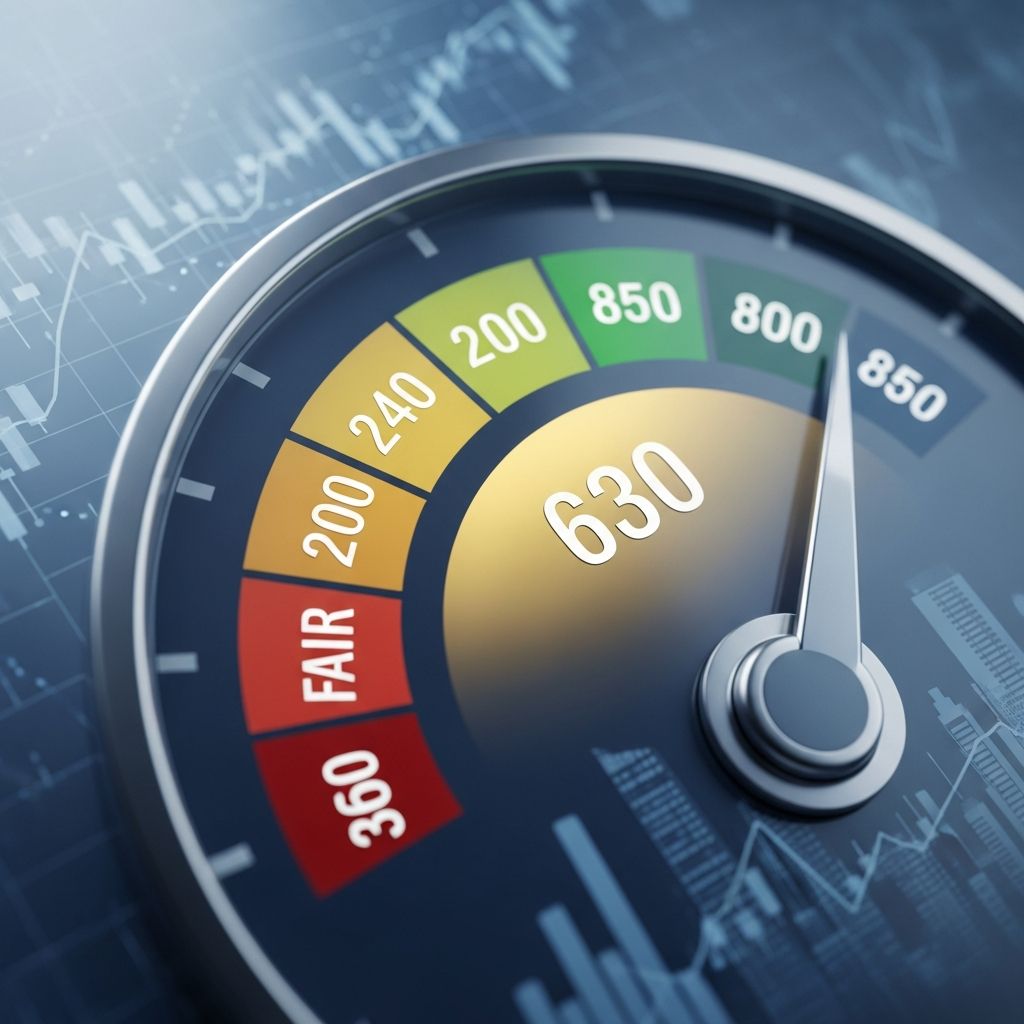
A 630 credit score sits in a critical middle ground within the credit spectrum. It’s neither excellent nor poor, but rather positioned in what financial institutions classify as “fair” credit territory. For millions of consumers, this score represents both current limitations and meaningful opportunities for advancement. Understanding what this score means, how it affects your borrowing capacity, and the concrete steps you can take to improve it are essential for making informed financial decisions.
Where Your 630 Score Fits in the Credit Landscape
Credit scoring systems use numerical ranges to categorize borrower risk. A 630 FICO score falls within the 580-669 band, which the credit industry designates as fair credit. This classification indicates that your credit profile shows some concerning elements to lenders, but you haven’t entered the territory of severely damaged credit. The distinction matters considerably because it determines which lending products remain accessible to you and at what cost.
To put this in perspective, a good credit score typically begins at 670 for FICO scores. This means you’re approximately 30-40 points away from crossing into that more favorable category. While this gap might seem small numerically, the practical implications for interest rates and approval odds are substantial. Many lenders use score thresholds as automatic decision points—crossing from 630 to 670 can mean the difference between approval and rejection for certain loan products.
Your 630 score indicates to lenders that you present a moderate level of risk. This doesn’t mean you’ve made catastrophic financial mistakes; rather, it suggests your credit history may contain late payments, high credit utilization, insufficient credit history, or a combination of factors that create uncertainty in a lender’s mind about your reliability.
The Impact on Borrowing Costs and Approval Odds
One of the most concrete consequences of carrying a 630 credit score relates to the interest rates available to you. Lenders price credit risk directly into the interest rates they offer, meaning your score substantially affects monthly payments across various loan types.
For auto financing specifically, the difference is particularly striking. Borrowers with prime credit (720 or higher FICO scores) received average APRs around 5.34% on 60-month new auto loans in recent years. Those with scores in the 620-659 range—where your 630 sits—faced average rates of 11.76%, more than double the prime rate. This translates to thousands of additional dollars paid over the life of a vehicle loan.
Beyond auto loans, a 630 score creates friction in several financial areas. Credit card approvals become less certain, with many premium cards automatically declining applications from this score range. The cards that do approve you typically come with higher annual percentage rates and annual fees. Mortgage qualification becomes possible but constrained, with higher rates and potentially larger down payment requirements. Even non-lending decisions get affected—insurance companies often charge higher premiums for individuals with fair credit scores, and landlords may view your application with skepticism.
Mortgage and Home Financing Options
Homeownership remains within reach with a 630 credit score, though the path differs from borrowers with excellent credit. Understanding your options requires knowing how different loan programs treat fair credit borrowers.
FHA Loans: A Practical Path Forward
Federal Housing Administration loans represent one of your strongest homeownership options at a 630 credit score. These government-backed loans have flexible credit requirements specifically designed to help borrowers with less-than-perfect credit histories. FHA loans typically require a minimum credit score of 580, meaning your 630 score qualifies comfortably. The down payment requirement can be as low as 3.5%, making homeownership more accessible than conventional loans would allow.
The trade-off involves mortgage insurance premiums (MIP), which get required for the life of most FHA loans. While this adds to your monthly payment, the overall package often provides better terms than conventional financing would offer at your credit score level. Many borrowers with 630 scores find that FHA loans deliver superior interest rates compared to what conventional lenders quote for their credit profile.
Conventional Loans: Limited But Possible
Conventional mortgages become more accessible at 630 than at lower scores, though terms won’t match those available to borrowers with good credit. You may encounter requirements for larger down payments or additional documentation demonstrating your ability to repay. Private mortgage insurance will likely be required, adding to monthly costs. Despite these challenges, conventional loans can work if you have strong compensating factors like stable employment or substantial savings.
Specialized Programs: VA and USDA Loans
If you qualify as a veteran or service member, VA loans offer exceptional benefits. These loans have no official minimum credit score requirement, and 630 sits well within the acceptable range. VA loans require zero down payment in most cases and carry no mortgage insurance, making them significantly advantageous compared to other options available at your score level. Similarly, USDA loans for rural properties can offer favorable terms for eligible borrowers with 630 credit scores.
Auto Loans and Vehicle Financing
Purchasing a vehicle with a 630 credit score is straightforward in terms of availability—most lenders will work with you. The challenge centers entirely on cost. Yes, you can obtain an auto loan, but expect interest rates substantially higher than borrowers with better credit pay.
When shopping for auto financing, multiple factors beyond your credit score influence approval and rates. Your employment stability, income level, down payment amount, and the vehicle you’re financing all matter. Some lenders specialize in subprime auto lending and actively compete for borrowers with fair credit. This competition can work in your favor if you shop multiple lenders rather than accepting the first offer.
The dramatic rate difference—over 6 percentage points higher than prime borrowers—means every dollar of principal costs significantly more by the loan’s end. A $25,000 vehicle financed at 11.76% versus 5.34% results in thousands of extra dollars paid. This reality underscores why improving your credit score before major purchases carries such practical value.
Credit Card Access and Revolving Credit
Credit cards present mixed opportunities at a 630 score. Traditional rewards cards and premium products will likely decline your application. However, secured credit cards and store-branded credit cards remain accessible options. Secured cards require a cash deposit that becomes your credit limit, reducing lender risk while you rebuild credit history.
The interest rates on approved credit cards will trend toward the higher end of available offers. Annual percentage rates of 20-25% are common for fair-credit borrowers. Additionally, annual fees may apply to cards you qualify for, further increasing the cost of carrying a balance. Despite these drawbacks, accessing credit card products serves an important strategic purpose: using them responsibly and paying balances on time directly improves your credit score.
Personal Loans and Debt Consolidation
Personal loans become available from both traditional banks and specialized lenders serving fair-credit borrowers. Interest rates will exceed those offered to borrowers with good credit, but personal loans can serve legitimate purposes—consolidating high-interest credit card debt into a single lower-rate payment, for example.
The key consideration involves ensuring any new loan genuinely improves your financial situation rather than simply shifting problems around. Taking a personal loan to consolidate credit card debt makes sense only if you simultaneously address the spending behaviors that created the debt. Otherwise, you’ll end up with both the loan payment and newly charged credit card balances.
Building the Foundation for Score Improvement
While understanding your current limitations matters, the more actionable knowledge involves knowing how to progress beyond a 630 score. Credit scores measure specific behaviors and patterns over time. Addressing these factors systematically produces measurable improvements.
Payment History: Your Strongest Lever
Payment history comprises the largest component of credit scoring formulas, typically accounting for 35% of your overall score. Every single on-time payment strengthens your profile, while late payments significantly damage it. The strategy here is straightforward but requires discipline: pay every bill, from credit cards to utilities to loan payments, by the due date every single month.
If you have delinquencies in your history, time works in your favor. The older a late payment becomes, the less it damages your score. A payment that’s now 18 months late hurts less than one that’s 3 months late. This means that even if you’ve had payment difficulties in the past, consistent on-time payments moving forward repair the damage gradually.
Credit Utilization: Using Less of Available Credit
Credit utilization—the percentage of available credit you’re actively using—comprises approximately 30% of your score. Lenders prefer to see utilization below 30%. If you have a $5,000 credit limit and carry a $4,500 balance, you’re utilizing 90%, which significantly damages your score. Reducing that same balance to $1,500 (30% utilization) on the identical account produces immediate improvement.
Improving utilization doesn’t always require paying down debt. Sometimes it means requesting higher credit limits from existing accounts or opening new accounts to increase total available credit. However, opening many accounts rapidly can temporarily hurt your score due to hard inquiries, so a measured approach works better than aggressive card application.
Credit Mix and Length of History
Demonstrating that you can manage different types of credit—installment loans, credit cards, and potentially mortgage or auto loans—shows lenders you can handle varied financial obligations. Similarly, credit history length matters; older accounts carry more weight than newer ones. This doesn’t mean closing old accounts—keeping them open actually helps by maintaining your average account age.
Common Misconceptions About Fair Credit
Myth: Your 630 score means you made poor financial choices. Reality: Scores reflect a snapshot of current risk, not your character or overall financial competence. A recent job change, medical emergency, or other life disruption can temporarily depress even responsible people’s scores.
Myth: Improving your score is a years-long process. Reality: Significant improvements can occur within 3-6 months of consistently paying bills on time and reducing credit utilization.
Myth: All lenders view 630 scores identically. Reality: Different lenders have different risk appetites. Subprime lenders actively seek fair-credit borrowers, while traditional banks may automatically decline. Shopping multiple lenders uncovers better offers.
Action Steps for Moving Forward
- Obtain your free credit reports from all three bureaus at AnnualCreditReport.com and review them for errors that could be disputing
- Set up automatic payments for all bills to eliminate the risk of missed payments
- Target credit card balances for paydown, prioritizing cards with highest utilization ratios
- Avoid new credit applications unless strategically necessary, as each inquiry slightly lowers your score
- Consider becoming an authorized user on someone else’s excellent credit account if possible, as their positive history can boost your score
- Explore credit-building products like secured credit cards or credit-builder loans that report to all three bureaus
The Bottom Line on 630 Credit Scores
A 630 credit score positions you closer to good credit territory than to severely damaged credit. This middle-ground status means significant financial opportunities remain available—homeownership, vehicle purchases, and credit access are all realistic goals. However, these opportunities come with notably higher costs than borrowers with good credit pay.
The practical strategy involves pursuing your immediate financial needs while simultaneously working toward score improvement. You can buy a home or vehicle with a 630 score, but every subsequent 10-20 point improvement meaningfully reduces your costs. The 30-40 points separating you from good credit could save thousands of dollars over the life of major loans.
Rather than viewing a 630 score as a permanent limitation, consider it a current position within an improvement trajectory. With focused effort on the specific behavioral factors credit bureaus measure, crossing into good credit territory becomes not just possible but likely within 6-12 months of disciplined financial management.
References
- 630 Credit Score: What You Need to Know — Upstart Learn. https://www.upstart.com/credit-score/630-credit-score
- What Home Loan Can You Get With a 630 Credit Score? — DSLD Mortgage. https://www.dsldmortgage.com/blog/what-home-loan-can-you-get-with-a-630-credit-score/
- 630 Credit Score: A Guide to Credit Scores — Chase Bank. https://www.chase.com/personal/credit-cards/education/credit-score/630-credit-score
- 630 Credit Score: Is it Good or Bad? — Experian. https://www.experian.com/blogs/ask-experian/credit-education/score-basics/630-credit-score/
- What does a 630 credit score mean? — Intuit Credit Karma. https://www.creditkarma.com/credit-scores/630
- What Is a Good Credit Score? — Experian. https://www.experian.com/blogs/ask-experian/credit-education/score-basics/what-is-a-good-credit-score/
- Understanding Your Credit Score and How to Improve It — DCU Financial Education Center. https://www.dcu.org/financial-education-center/credit-cards/understanding-your-credit-score-and-how-to-improve-it.html
Similar Articles








Read full bio of Sneha Tete