Types of Unemployment: Causes, Effects, and Solutions
Understand frictional, structural, and cyclical unemployment with real-world examples.

Understanding Types of Unemployment
Unemployment is a critical economic indicator that measures the percentage of people actively seeking work but unable to find employment. However, not all unemployment is created equal. Economists recognize distinct categories of unemployment, each with unique causes, durations, and economic implications. Understanding these different types helps policymakers develop targeted solutions and provides insight into the overall health of the labor market. The three primary types of unemployment—frictional, structural, and cyclical—form the foundation of unemployment analysis, though additional categories like seasonal and long-term unemployment provide further nuance.
The Three Main Types of Unemployment
Frictional Unemployment
Frictional unemployment represents the temporary period when workers transition between jobs or enter the job market for the first time. This type of unemployment occurs naturally and is considered a normal part of a functioning economy. It reflects the time required for job seekers and employers to find appropriate matches, acknowledging that both recruitment and job hunting are inherently time-consuming processes.
Common examples of frictional unemployment include:
- Recent college graduates seeking their first full-time position
- Workers who voluntarily leave their jobs to pursue better opportunities
- Individuals relocating to a new city and searching for local employment
- Professionals changing career paths and requiring time to transition
Frictional unemployment is generally short-term and not considered problematic. In fact, it indicates a dynamic labor market where workers actively seek improved positions and employers continuously recruit talent. Most economists view some level of frictional unemployment as healthy and inevitable in any economy.
Structural Unemployment
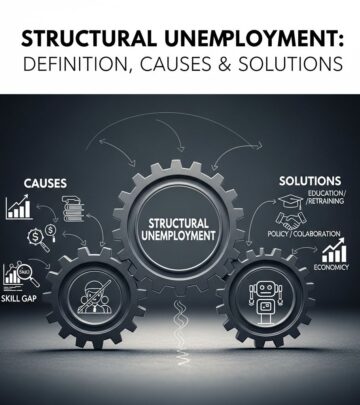
Structural unemployment occurs when workers’ skills or qualifications do not align with available job opportunities. Unlike frictional unemployment, which is temporary and involves job transitions, structural unemployment often persists for extended periods because it requires fundamental mismatches to be resolved. This type of unemployment typically results from significant economic shifts, including technological advancements, industrial restructuring, or shifts in consumer demand.
Key causes of structural unemployment:
- Technological innovation rendering certain skills obsolete (e.g., typewriter repair workers in the digital age)
- Industrial relocation or factory closures moving jobs to different regions
- Automation replacing manual labor in manufacturing and service sectors
- Shift from traditional energy sources to renewable energy, reducing mining employment
- E-commerce growth reducing retail employment in brick-and-mortar stores
Resolving structural unemployment typically requires retraining, education, geographic relocation, or policy interventions. Workers facing structural unemployment may need substantial support through job training programs and educational initiatives to acquire skills demanded by modern employers. This type of unemployment is sometimes called “technological unemployment” because technological innovation frequently drives structural changes in labor markets.
Cyclical Unemployment
Cyclical unemployment rises during economic downturns and recessions when consumer demand decreases, business revenues decline, and companies reduce their workforce across multiple industries simultaneously. This type of unemployment is directly tied to the business cycle and economic conditions.
Examples of cyclical unemployment:
- Construction and manufacturing layoffs during the 2008 financial crisis
- Restaurant, retail, and travel industry job losses during the COVID-19 pandemic
- Widespread employment reductions when credit markets freeze
- Corporate downsizing during periods of reduced consumer spending
Cyclical unemployment typically improves as the economy recovers and business activity increases. Government policies, stimulus programs, and economic recovery measures can help accelerate the return to employment. This type of unemployment is often temporary compared to structural unemployment, though severe recessions can cause prolonged displacement.
Additional Types of Unemployment
Seasonal Unemployment
Seasonal unemployment occurs when workers are laid off after the busy season ends in industries where employment fluctuates predictably throughout the year. This type of unemployment is expected and repeatable, following consistent patterns annually.
Industries commonly affected by seasonal unemployment:
- Agricultural workers hired during harvest seasons
- Lifeguards and camp counselors employed only during summer months
- Ski instructors and winter sports professionals
- Retail staff hired for holiday shopping seasons
- Tourism and hospitality workers in seasonal destinations
- Fishermen and maritime workers dependent on weather conditions
Seasonal unemployment is more predictable than other types, allowing workers and employers to plan accordingly. Many seasonal workers find supplementary employment during off-seasons or rely on savings to sustain themselves until work resumes. Some seasonal workers combine multiple part-time positions to maintain year-round income.
Long-Term Unemployment
The Bureau of Labor Statistics classifies individuals who have been unemployed for 27 weeks or more and actively sought employment within the past four weeks as long-term unemployed. This category of unemployment carries significant personal and economic consequences.
Effects of long-term unemployment:
- Increased difficulty finding new employment as job search duration extends
- Psychological impacts including depression and reduced self-esteem
- Erosion of job skills and industry knowledge
- Financial strain and accumulated debt
- Potential loss of health insurance and benefits
- Reduced likelihood of finding comparable employment at previous wage levels
Long-term unemployment typically results from combinations of cyclical and structural unemployment. Economic downturns may initially cause cyclical job losses, but as extended unemployment persists, skills become outdated and workers face structural barriers to reemployment. Retraining programs, job placement services, and targeted policy interventions can help address long-term unemployment challenges.
Voluntary vs. Involuntary Unemployment
Unemployment can also be categorized based on whether individuals chose to leave work or were forced to do so.
Voluntary unemployment occurs when individuals choose not to work or to leave employment for personal reasons, such as pursuing education, caring for family members, or seeking better job opportunities. This category reflects personal agency in employment decisions.
Involuntary unemployment happens when workers lose employment through no fault of their own, such as being laid off during company restructuring, fired due to performance issues, or displaced by automation. This category represents unemployment imposed by external circumstances beyond individual control.
Understanding Underemployment
Distinct from unemployment, underemployment occurs when individuals work fewer hours than desired or hold positions below their skill level and qualifications. While underemployed individuals technically have employment, they face reduced income and job satisfaction.
Visible underemployment involves working part-time despite desiring full-time employment. Underemployed workers may piece together multiple part-time positions to approximate full-time income.
Invisible underemployment occurs when individuals unable to find work in their chosen field accept positions misaligned with their experience and qualifications. For example, an engineer working as a barista represents invisible underemployment despite having employment.
Discouraged Workers and Labor Force Participation
An important but often overlooked category involves discouraged workers—individuals of working age who have abandoned active job searching following prolonged unsuccessful efforts. Although capable of working, discouraged workers do not appear in official unemployment statistics because they are not actively seeking employment.
The number of discouraged workers typically increases during economic downturns when job opportunities contract and repeated rejection dampens motivation to continue searching. These individuals represent hidden unemployment not reflected in standard unemployment rates. Understanding discouraged worker statistics provides a more complete picture of labor market distress.
Natural Unemployment and the NAIRU
Natural unemployment represents the combination of frictional and structural unemployment—the lowest unemployment level a healthy economy can sustain without triggering inflation. This rate is ever-present because workers continuously transition between jobs (frictional) and job requirements constantly evolve due to technological change (structural).
The Non-Accelerating Inflation Rate of Unemployment (NAIRU) closely relates to natural unemployment, representing the unemployment level at which inflation remains stable. When actual unemployment falls below the NAIRU, wage pressures typically emerge, potentially driving inflation higher.
Measuring Unemployment: BLS Categories
The U.S. Bureau of Labor Statistics provides six alternative measures of labor underutilization to capture unemployment comprehensively:
| Measure | Definition |
|---|---|
| U-1 | Unemployed 15 weeks or longer |
| U-2 | Job losers and those completing temporary jobs |
| U-3 | Total unemployed (official unemployment rate) |
| U-4 | Unemployed plus discouraged workers |
| U-5 | Unemployed, discouraged workers, and marginally attached to labor force |
| U-6 | Unemployed, marginally attached workers, and part-time employees for economic reasons |
Economic and Social Impacts of Unemployment
Unemployment affects not only individual workers but also broader economic conditions. Extended unemployment reduces consumer spending, business revenues, and tax collections while increasing government expenditures on unemployment benefits and social services. Long-term unemployment can contribute to additional cyclical unemployment as reduced spending creates ripple effects throughout the economy.
The psychological and social impacts of unemployment extend beyond financial hardship, affecting mental health, family stability, and community well-being. Understanding different unemployment types helps policymakers design appropriate interventions addressing specific labor market challenges.
Frequently Asked Questions
Q: What is the difference between frictional and structural unemployment?
A: Frictional unemployment is temporary and occurs during normal job transitions, typically lasting weeks or months. Structural unemployment results from skill mismatches or economic shifts and often requires retraining or relocation to resolve.
Q: How does cyclical unemployment relate to the economy?
A: Cyclical unemployment rises during recessions when businesses reduce staff due to declining demand and recovers during economic expansions. It directly reflects business cycle conditions.
Q: Can seasonal unemployment be reduced?
A: While seasonal patterns are inherent to certain industries, workers can mitigate seasonal unemployment by developing skills applicable to off-season employment or by finding supplementary work during slow periods.
Q: What distinguishes involuntary from voluntary unemployment?
A: Involuntary unemployment occurs when workers are laid off or fired through no fault of their own, while voluntary unemployment happens when individuals choose to leave employment for personal reasons.
Q: Why are discouraged workers not counted in official unemployment statistics?
A: Discouraged workers are not actively seeking employment, so they fall outside the labor force definition used by the Bureau of Labor Statistics. However, they represent real unemployment not captured by standard rates.
Q: How can structural unemployment be addressed?
A: Structural unemployment can be addressed through job training programs, education initiatives, apprenticeships, relocation assistance, and policies encouraging economic diversification in affected regions.
References
- Different Types of Unemployment & Measures — 365 Financial Analyst. 2025. https://365financialanalyst.com/knowledge-hub/economics/different-types-of-unemployment/
- Table A-15. Alternative measures of labor underutilization — U.S. Bureau of Labor Statistics. 2025. https://www.bls.gov/news.release/empsit.t15.htm
- Understanding the Different Types of Unemployment and What To Do If You’re Affected — National Debt Relief. 2025. https://www.nationaldebtrelief.com/blog/lifestyle/career/understanding-the-different-types-of-unemployment-and-what-to-do-if-youre-affected/
- Unemployment: Its Measurement and Types — Reserve Bank of Australia Education. 2025. https://www.rba.gov.au/education/resources/explainers/unemployment-its-measurement-and-types.html
- Types of Unemployment — EconPort. 2025. http://www.econport.org/content/handbook/Unemployment/Types.html
Similar Articles








Read full bio of Sneha Tete